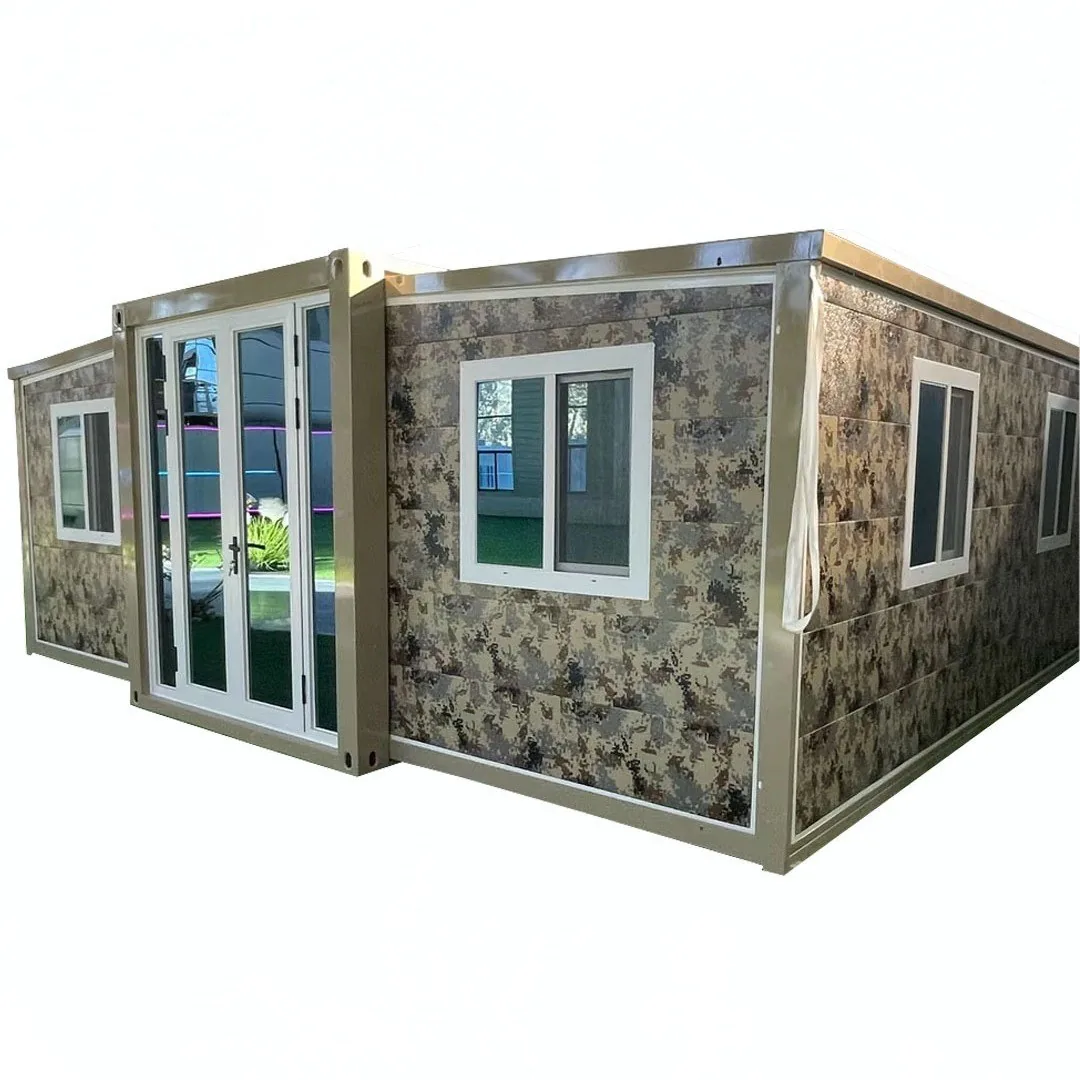
HG Prefab foldable expandable container homes — built to last, delivered worldwide.
Chile is a long, narrow country with an extraordinary range of building conditions packed into it: the hyper-arid Atacama mining belt in the north, the Mediterranean central valley around Santiago, the cool wet lake district around Puerto Varas, and the wind-swept Austral road country of Patagonia. That variety is exactly why folding container homes work well here. A unit arrives as one sealed steel package on a truck, opens into a finished insulated house in a single day, and can be placed where there is no reliable contractor within a two-hour drive. The house is the easy part. What decides whether the project is pleasant or painful is customs classification, the tax calculation, and the last few hundred kilometres of road.
This guide walks through the five things that determine a smooth Chilean import: how the unit is classified and declared to the Servicio Nacional de Aduanas, what duty and IVA you can expect, which checkpoint agencies touch the shipment, how to choose between San Antonio, Valparaíso and the Iquique free zone, and how to plan inland delivery and site works from the coast to Santiago, La Serena, Concepción and Patagonia. It is written for buyers working through an agente de aduanas and is general guidance — every rate, code and permit must be confirmed against the current official schedules before you pay for anything. Start with our container home shipping guide for folded dimensions, trade terms and freight basics, then come back here for everything Chile-specific.
What Arrives: Folded Envelope, Expanded Footprint and Unit Price
The most useful thing about a folding unit for import planning is how much smaller it travels than it lives. A 40FT model that opens to roughly 5.9 m × 12.2 m and about 76 m² of floor area ships as a package about 2.15 m wide and 12.0 m long — inside standard road widths, inside a standard container envelope, and handled at the terminal like ordinary container or flat-rack cargo. A 20FT model folds to roughly 2.15 m × 5.9 m and opens to about 36 m²; a 30FT model folds to roughly 2.50 m × 7.0 m and opens to about 56 m².
Factory prices are simple and stable: 20FT $7,200–$9,800, 30FT $10,500–$14,500, 40FT $12,500–$16,500, ex-works from China. You can browse every configuration — /products lists all 20FT, 30FT and 40FT folding models — before committing to a size, and it is worth doing that before you measure your access road rather than after. Popular configurations for Chilean buyers include the 40FT white gable unit for central-valley family homes, the 30FT white unit as a two-bedroom lakeside rental, and the compact 20FT classic white unit as a site office or caretaker cabin on a mining or vineyard property. Freight, insurance, duty, IVA, broker fees and inland transport are all additional to the factory price, and together they typically add 60 to 110 per cent depending on destination and the exchange rate on the day.
HS Classification: Where a Prefab Home Sits in the Chilean Tariff
Prefabricated buildings are classified under HS heading 9406 in essentially every customs territory, and Chile follows that convention. Your broker determines the Chilean eight-digit subheading that is actually printed on the declaración de importación, and that line drives the ad-valorem duty rate and any non-tariff requirement attached to the import.
Get the subheading confirmed in writing before the unit loads. Confirming costs nothing, and it removes the risk of a classification dispute at the port — which is precisely where demurrage and storage charges begin to accumulate. Chile's general ad-valorem duty is 6 per cent, but many lines enter at reduced or zero rates under Chile's network of trade agreements, so the realistic planning band for a folding unit is 0–6 per cent, and the only way to know where you sit is a confirmed subheading plus the right origin documentation.
Who is allowed to import
To import commercially in your own name you generally need a Chilean tax identity (RUT) with the activity properly registered, an electronic signature recognised by the tax authority, and — in practice — an agente de aduanas holding a licence to present the declaration on your behalf. Buyers without Chilean tax residency typically import through a Chilean company, through their broker's representation, or under a temporary-admission route if the unit is for a defined project and will leave. For payment mechanics on larger orders, see our letter of credit guide.
Checkpoints: SAG, PDI and What They Actually Inspect
Two agencies beyond customs are worth knowing before your unit lands.
SAG (Servicio Agrícola y Ganadero) is Chile's agricultural and livestock service, and it is the one that most often touches a containerised building shipment. Its concern is biosecurity: wood packaging, dunnage, pallets, crating and any plant-derived material. Chile requires wood packaging to be treated and marked to the international standard for phytosanitary measures in wood packaging (commonly referred to as ISPM 15 or NIMF 15), with the stamp legible on the wood itself. If the crate or the pallet set cannot be identified as treated, SAG can order treatment, re-export or destruction — all at your cost and all measured in days at the terminal. Tell your supplier you want compliant, clearly stamped wood packaging and a declaration in the document set; do not ship a folding unit with untreated timber crating.
PDI (Policía de Investigaciones) handles immigration and international policing functions at border crossings, ports and airports, so if you are travelling to receive the unit, or if a foreign crew is coming to install it, expect identity and entry formalities through PDI channels. On the road itself, the checkpoints you meet are generally Carabineros controls, which are routine but do add time to a long haul. Neither is a barrier to importing — they are simply time items to build into the schedule, and a reason not to book the crane for the same hour the truck leaves the port.
Duties, IVA and Realistic Landed Cost
Chile's tax stack on an import is straightforward once you know the order of operations. Duty is calculated on the customs value, IVA is then charged on the customs value including duty, freight and insurance, and local charges sit on top. The standard IVA rate is 19 per cent, and it is recoverable by VAT-registered businesses in the normal way — which matters if you are buying units as rental stock rather than as a private dwelling.
| Cost line | 20FT | 30FT | 40FT | Basis and notes |
|---|---|---|---|---|
| Factory price (FOB China) | $7,200–$9,800 | $10,500–$14,500 | $12,500–$16,500 | Folding unit with standard interior finish; excludes all logistics and taxes |
| Ocean freight, China → San Antonio / Valparaíso | $2,200–$3,800 | $2,600–$4,600 | $3,000–$5,400 | Asia–South America west coast service; varies sharply with season and bunker rates |
| Marine insurance | $60–$120 | $90–$160 | $100–$180 | Typically a small percentage of CIF value; always insured, never waived |
| Import duty (ad valorem) | 0–6% | 0–6% | 0–6% | General rate is 6%; preferential or zero rates may apply by subheading and origin |
| IVA (value-added tax) | 19% | 19% | 19% | Applied to customs value including duty, freight and insurance; recoverable for VAT-registered buyers |
| Agente de aduanas, port handling, storage | $600–$1,400 | $700–$1,600 | $800–$1,800 | Broker fee plus terminal charges; every extra day of storage widens this line |
| Inland haulage and crane day | $700–$2,500 | $900–$3,000 | $1,000–$3,500 | Santiago is cheapest; La Serena, Concepción and Patagonia cost more by distance and route |
| Estimated landed cost | $13,000–$21,000 | $17,500–$29,000 | $20,500–$33,000 | Indicative planning range in USD; request a written quote in CLP from your broker and forwarder |
Treat these as planning bands, not a quotation. Ocean freight on Asia–west-coast-South-America services is volatile, the CLP/USD rate moves the local-charge lines, and the single biggest variable is how many days the unit sits in the terminal waiting on documents. Ask your broker for a written landed-cost estimate in CLP before dispatch, and ask your forwarder to quote the same unit through both San Antonio and Valparaíso — the difference is sometimes a few hundred dollars and occasionally far more.
Choosing a Gateway: San Antonio, Valparaíso and ZOFRI Iquique
San Antonio is Chile's largest container port and sits about 110 km from Santiago on the central coast. For any destination in the central valley — Santiago itself, the Casablanca and Colchagua wine valleys, the coast around Algarrobo — it is almost always the default: most sailings from China, the densest truck supply, and the shortest haul.
Valparaíso is roughly 120 km from Santiago and is a strong alternative when San Antonio is congested or when your forwarder's service calls there instead. Compare both on total delivered cost rather than ocean freight alone; the inland leg and the terminal's dwell time usually decide it.
ZOFRI (Zona Franca de Iquique) is the wildcard and it genuinely suits some projects. Under the free-zone regime you can land the unit in Iquique and hold it under a suspension of duty and IVA while you finish permits, sell it on, or re-export it. For mining suppliers in the north, or for buyers who want to defer tax on a speculative purchase, that is a real cash-flow advantage. The counterweight is geography: Iquique is around 1,800 km north of Santiago, so for a central-valley site the extra haulage usually cancels the benefit. For an Antofagasta, Calama or Atacama site, the opposite is true.
On the Chinese side, folding units normally load at Shanghai, Ningbo, Qingdao or Shenzhen, whichever your factory is closest to and whichever service gives the cleanest transit. Transit to the Chilean west coast is commonly around 30 to 40 days depending on service and transhipment — longer than an Asia–Mexico or Asia–US west coast run, so plan the calendar accordingly.
Inland Delivery: Santiago, La Serena, Concepción and Patagonia
Chile's trunk road, Ruta 5, is good and the folded envelope travels on it without special escort in most configurations. The difficulty is always the ends.
Santiago and the central valley is the easy case: a few hours from either port, plenty of crane and telehandler supply, and the widest choice of installers. If your plot is in the wine country or on the coast around Santo Domingo or Zapallar, the same applies with an extra hour.
La Serena and the north-central coast is roughly 470 km north of Santiago, all of it on Ruta 5. The road is fine; the schedule is not, because a crane booked in Santiago and driven north is a two-day commitment. Book locally where you can, or accept the travel charge.
Concepción and the Biobío region is roughly 500 km south of Santiago on Ruta 5. Similar logic: good road, and either a long haul from the port or a local machine booking in Concepción.
Patagonia is the one that needs real planning. South of Puerto Montt, Ruta 5 ends and the Carretera Austral begins; Coyhaique and the Aysén region are reached by a combination of road and ferry crossings, and Punta Arenas is normally reached through Argentine territory or by sea. Ferry bookings are seasonal, weather-dependent and capacity-limited, and winter windows can close with little notice. If your site is south of Puerto Montt, build the ferry reservation into the schedule before the unit ships, and have a fallback window.
Whichever region, the pad and the lift follow the same rules. A folded multi-tonne unit cannot be manoeuvred by hand: build the pad inside the machine's rated reach from where the truck can legally stand, on compacted load-bearing ground, with overhead clearance checked. Then schedule machine and truck in the same window — roughly 30 to 60 minutes to offload and set, then about two hours for four workers to unfold and assemble the main structure. Our folding container home site prep checklist covers the pad, access and services in the order they need doing, and the crane and forklift offloading guide covers lifting lugs, forklift pockets, reach and exclusion zones.
Seismic Design and Anchoring
Chile is one of the most seismically active countries on earth, so it is reasonable that this is the first question Chilean engineers ask. The reassuring answer is that a light, stiff, ductile steel frame performs well under seismic demand — far better than heavy masonry, because the forces a structure attracts during an earthquake scale with its mass.
What your reviewer will actually want is documentation and an anchoring design. Chilean seismic design follows NCh433 together with the Ordenanza General de Urbanismo y Construcciones, and the two items that decide whether the package passes are the anchoring calculation tying the unit to its foundation and the structural drawings with steel grade certificates. Handle it in three steps: ask the factory for the structural drawings, steel specifications and load ratings at quotation stage; have a Chilean engineer design the foundation for your specific soil and the anchoring that connects the unit to it; and submit both together when you apply for the municipal permit. Doing this after the unit lands is the expensive way round.
Specifying the Unit for Chilean Service
Two specification items consistently pay for themselves on Chilean orders, and both are decided before production rather than after arrival.
Voltage and sockets. Chile runs on 220 V at 50 Hz, and Chilean sockets are the Type C two-round-pin and Type L three-pin-in-line patterns. Order the distribution board, protection devices and socket bodies configured for that standard and your electrician's final connection is a straightforward termination rather than a rewire. See our voltage and plug standards guide for the regional comparison.
Condensation control for the south. From the Biobío region southward — the lake district around Puerto Varas, Chiloé, Aysén and Patagonia — the climate is cool, wet and persistently humid. A steel-framed, well-insulated building in that environment will condense on cold internal surfaces unless you design for it: specify a continuous vapour barrier on the warm side of the insulation, break the thermal bridges at the steel members, and provide controlled ventilation rather than sealing the envelope tight. This is the single most common comfort complaint in southern Chilean installs and it is a specification issue, not a defect. Our mould prevention guide and thermal bridge guide cover the detail; for remote southern plots also review septic system options and our customization options for what can be built in at the factory.
Permits at Destination
Customs clearance makes the house yours; local permits make it legal to occupy. Expect a municipal building permit supported by the structural and anchoring package, an electrical sign-off by a licensed Chilean electrician, and — for rural plots — sanitation approval for your waste-water design. Coastal and lakefront sites can attract additional layers, and protected areas are their own process. Start the permit conversation before the unit ships, not after it lands.
Timeline Summary
- Weeks 1–2. Confirm model and price band (20FT $7,200–$9,800; 30FT $10,500–$14,500; 40FT $12,500–$16,500), lock specifications for 220 V / 50 Hz Chilean service, and confirm folded shipping weight.
- Weeks 2–4. Broker confirms the HS 9406 subheading and the applicable duty rate; forwarder quotes San Antonio versus Valparaíso, and ZOFRI if relevant; SAG-compliant wood packaging confirmed with the factory.
- Weeks 4–8. Production, typically 15–30 days, with factory QC and container loading or flat-rack securing.
- Weeks 8–14. Ocean transit from Shanghai, Ningbo, Qingdao or Shenzhen to the Chilean west coast — commonly around 30–40 days depending on service.
- Terminal. Clearance with the Servicio Nacional de Aduanas, usually 2–6 working days once documents are complete; SAG inspection if selected.
- Inland. Haulage 1–3 days to Santiago, 2–4 days to La Serena or Concepción, and longer with ferry-dependent routing into Patagonia; then machine offload and unfolding on the same visit.
Planning a Chilean import?
HG Prefab, manufactured by Henan Huangang Machinery Equipment Co., Ltd., supplies 20FT, 30FT and 40FT folding expandable container houses to Chilean buyers with the factory documentation customs and your reviewer need: folded dimensions, shipping weights, steel specifications and certificates, electrical drawings configurable to 220 V / 50 Hz Chilean sockets, SAG-compliant wood packaging, and lifting-point layouts for your crane booking. Send your nearest port and plot location for a landed-cost estimate. Email hgmechequip@gmail.com or WhatsApp +86 191 0388 7380. Full model range on the products page.
Get a Quote Browse modelsFrequently Asked Questions
Do I need a crane to install a folding container home in Chile?
Yes — a crane or forklift is required to offload the folded unit from the truck. Once it is set in position, four workers can unfold and assemble the main structure in about 2 hours. In Chile, book a mobile crane (grúa horquilla or camión grúa) through a rental company in Santiago, La Serena or Concepción for the same window as the truck, confirm the folded shipping weight from the packing list before booking, and check overhead clearance along the access road — low rural wiring and vineyard trellises are the usual obstructions.
Which HS code applies to a folding container house imported into Chile?
Prefabricated buildings are declared under HS heading 9406, and your agente de aduanas confirms the Chilean eight-digit subheading used on the declaración de importación before the shipment is presented to the Servicio Nacional de Aduanas. That subheading sets the ad-valorem duty rate and any non-tariff requirement, so get it confirmed in writing before the unit loads rather than assuming a rate quoted for another country.
What import duty and IVA will I pay in Chile?
Chile levies a general ad-valorem duty of 6% on most goods, but many lines enter at reduced or zero rates under Chile's trade agreements, so a folding container home under HS 9406 typically lands somewhere between 0% and 6% depending on the confirmed subheading and origin documentation. On top of duty, IVA (value-added tax) is charged at the standard 19% rate on the customs value including duty, freight and insurance. Add the agente de aduanas fee, port handling and storage, and inland transport to reach the true landed cost.
Can I import through the Iquique free zone (ZOFRI) instead of San Antonio?
Yes. ZOFRI, the free zone of Iquique, lets you land the unit and hold it under a duty and IVA suspension while you complete permits, sell it on, or re-export it, which can help mining and northern-desert projects. The trade-off is distance: Iquique is roughly 1,800 km north of Santiago, so if your site is in the central valley the extra haulage usually cancels the cash-flow benefit. Compare total landed cost through ZOFRI against a direct San Antonio or Valparaíso import before you decide.
Does a folding container home meet Chilean seismic requirements?
The steel frame of a folding unit handles seismic demand well because it is light, stiff and ductile, but compliance is a local-permit question rather than an import question. Chilean seismic design follows NCh433 together with the Ordenanza General de Urbanismo y Construcciones, and the two things your reviewer will ask for are the anchoring design that ties the unit to its foundation and the structural drawings with steel grade certificates. Order the anchoring package and foundation design from a Chilean engineer for your specific soil, and ask the factory for the load ratings and steel certificates at quotation stage.