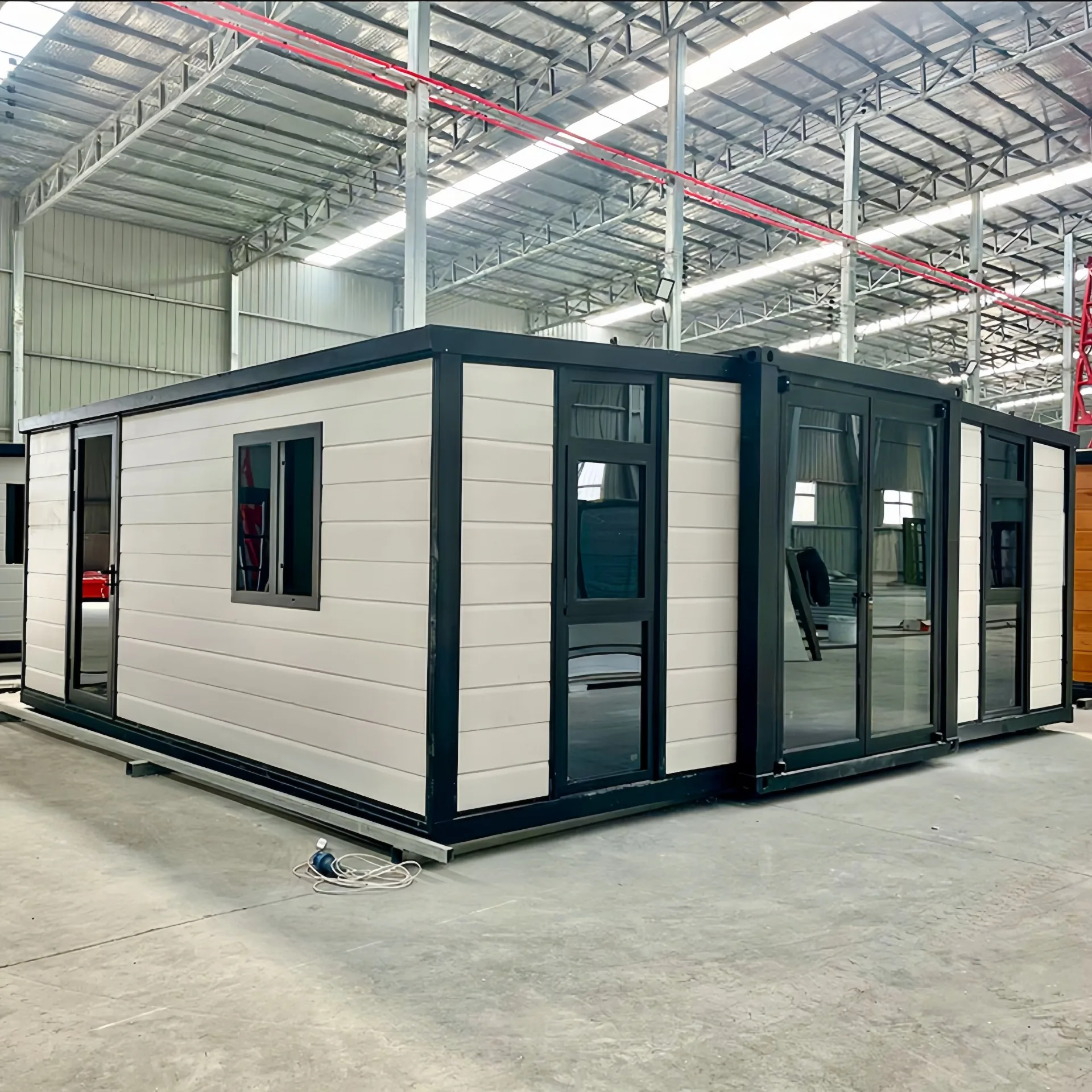
HG Prefab foldable expandable container homes — built to last, delivered worldwide.
Vietnam is one of the shortest, least complicated sea routes we ship. A folding container home leaving Shanghai, Ningbo, Shenzhen or Qingdao reaches Hai Phong in a matter of days rather than the three to five weeks a Pacific crossing takes, which means a buyer in Quang Ninh, Da Nang or Ba Ria-Vung Tau can go from deposit to standing house faster than almost anywhere else HG Prefab delivers. The demand is easy to understand: homestay clusters in the northern highlands, beach bungalows along the central coast, eco-resorts in Phu Quoc and Con Dao, worker accommodation on industrial estates outside Binh Duong and Bac Ninh, and coffee-plantation retreats in the Central Highlands.
What still surprises buyers is that a short voyage does not automatically mean a simple import. Vietnamese customs runs on an electronic declaration system, duty depends on which preferential regime your paperwork qualifies for, VAT is calculated on a dutiable value that includes freight, and the last stretch from port gate to hillside plot is where most schedules slip. This guide covers the five things that decide whether a Vietnamese import goes smoothly: classification, duty and origin evidence, the declaration process itself, port and inland routing, and how to set the unit up so it survives a tropical monsoon climate. It is general guidance. Every rate, form and permit should be confirmed against current regulations with your customs broker before you pay for anything. Start with our container home shipping guide for folded dimensions, trade terms and freight basics, then come back here for everything Vietnam-specific.
What Arrives: Folded Envelope, Expanded Footprint and Unit Price
The reason a folding unit suits Vietnamese sites so well is how much smaller it travels than it lives. A 40FT unit that opens to roughly 5.9 m × 12.2 m and about 76 m² of floor area ships as a package about 2.15 m wide and 12.0 m long — inside standard road widths, inside a standard container envelope, and handled at the port like ordinary break-bulk or flat-rack cargo. A 30FT unit folds to about 2.50 m × 7.0 m and opens to roughly 7.0 m × 8.0 m and about 56 m². A 20FT unit folds to about 2.15 m × 5.9 m and opens to roughly 5.9 m × 6.1 m and about 36 m².
Factory prices are straightforward and stable: 20FT $7,200–$9,800, 30FT $10,500–$14,500, 40FT $12,500–$16,500, ex-works China for the folding unit with its standard interior finish. Everything else in this article — freight, insurance, duty, VAT, broker fees, port handling, inland haulage, crane hire and foundation — sits on top of that number. You can browse every configuration, including our 40FT glass-front folding model and the 30FT woodgrain residence layout, on the /products page before deciding which size will actually travel well on your access road. Once the unit is en route, the folded shipping weight is confirmed on the packing list, and that single number drives your crane booking at the destination.
HS 9406: Classification, MFN Duty and the ACFTA Preferential Rate
Prefabricated buildings are classified under HS heading 9406 in Vietnam, as they are in most customs territories. Your customs broker selects the eight-digit Vietnamese subheading that is actually printed on the declaration, and that line determines two different duty rates: the MFN rate (thuế suất MFN, the standard most-favoured-nation rate applied to imports from WTO members) and the ACFTA preferential rate available under the ASEAN-China Free Trade Area when valid origin evidence is presented.
Get the subheading confirmed in writing before the unit loads. It costs nothing to confirm and it removes the risk of arriving at the port with a classification disagreement, which is exactly where storage charges and demurrage begin to accumulate. Because Vietnam is a short voyage away, buyers sometimes let the paperwork drift until the vessel is already berthed — a mistake that is far more expensive here in percentage terms, since freight is a smaller share of total cost and every extra day in the terminal is a larger share.
Form E: the document that changes the duty rate
The Form E certificate of origin is the instrument used for China-ASEAN preferential trade, and for a Chinese-made folding container home arriving in Vietnam it is the difference between the MFN rate and the preferential rate. Three practical points matter more than anything else on the form. First, ask for it when you place the order, not after the vessel sails; retroactive origin documents are a recurring cause of lost preference. Second, the consignee, goods description and value must be consistent across the commercial invoice, the bill of lading and the Form E — inconsistency is the most common reason a preference claim is refused. Third, the direct-consignment rule applies: the shipment should travel from China to Vietnam without passing through a third country under a transaction that breaks the chain.
Your broker declares the preference claim on the electronic declaration itself. If the Form E is missing, mismatched or late, the MFN rate applies and the difference is simply money you paid unnecessarily.
VAT and the Rest of the Tax Line
Vietnam applies value-added tax on imports alongside duty. For budgeting purposes work on 8–10% VAT depending on the reduction policy in force at the time of import — Vietnam has used periodic VAT reduction measures in recent years, and the rate actually applied is the one in force on the date of import, not the one quoted when you ordered. Your broker will tell you the current figure and apply it to the dutiable value, which includes the customs value plus import duty and certain handling charges.
Beyond duty and VAT, budget for these items, all of which are variable by port and by broker:
- Customs broker fee and declaration handling — the fee for preparing and transmitting the VNACCS/VCIS declaration and attending inspection if the declaration is selected for it.
- Terminal handling, port charges and container-related fees — quoted by the terminal and the shipping line; ask for them before the vessel sails.
- Storage and demurrage — purely avoidable cost. Every day the unit sits in the terminal because a document is missing is a line you did not budget for.
- Inland transport, crane hire and foundation — covered in detail below, and usually a larger share of total cost on a Vietnamese project than buyers expect.
Ask your broker for a landed-cost estimate before dispatch, in Vietnamese dong and in US dollars. A useful rule of thumb while you wait for real quotes is ocean freight of roughly $600–$1,800 for a single unit on Asia-Vietnam services — a short-sea route, dramatically cheaper than a trans-Pacific crossing — plus duty and VAT on the dutiable value, plus $250–$900 for inland haulage and $250–$700 for crane or forklift hire. Real quotes always beat rules of thumb, but they stop surprises.
Customs Declaration Through VNACCS/VCIS
Vietnam's automated cargo and port consolidation system, VNACCS/VCIS, is the electronic platform on which import declarations are lodged and processed. In practice you will not touch it: a licensed customs broker (đại lý hải quan) transmits the declaration on your behalf, receives the system response, and handles any inspection. What you control is whether the broker has a complete document set early enough to lodge before the vessel berths.
Documents you must have ready
- Commercial invoice with buyer details matching your Vietnamese business registration or import mandate, goods description, unit price and Incoterm.
- Packing list stating dimensions, folded shipping weight and contents — the same weight your crane contractor needs.
- Bill of lading, corrected and released to your broker before arrival.
- Form E certificate of origin if you intend to claim the ACFTA preferential rate.
- Insurance certificate covering the ocean leg; optional but recommended.
- Import declaration lodged by your broker on VNACCS/VCIS, with the classification, value and preference claim recorded.
Declarations are routed into different levels of documentary and physical checking depending on risk profile. A clean, consistent document set with a confirmed classification and a valid Form E is what keeps a shipment in the fastest lane. For payment mechanics on larger or repeat orders, see our letter of credit guide.
Choosing a Port: Hai Phong, Cat Lai or Da Nang
Vietnam's three practical gateways for a folding unit are defined almost entirely by where the plot is, because inland haulage on Vietnamese roads can take longer than the sea leg itself.
- Hai Phong (northern Vietnam). The natural gateway for Hanoi, Hai Phong city, Quang Ninh and Ha Long, and the northern industrial provinces. Best choice for hill-tribe homestay projects in the northern highlands and for anything north of Vinh. Road links to Hanoi are fast; beyond that, mountain roads slow the last leg considerably.
- Cat Lai, Ho Chi Minh City (southern Vietnam). The main container terminal complex serving Ho Chi Minh City and the southern industrial belt. Choose it for Dong Nai, Binh Duong, Vung Tau, the Mekong Delta, and for island projects heading south toward Phu Quoc and Con Dao where a coastal feeder is involved.
- Da Nang (central Vietnam). The right answer for Da Nang, Hoi An, Quang Nam, Hue and the central coast, and for Central Highlands destinations reached overland from the coast. Also the port most exposed to typhoon season, so check the seasonal window when you plan the sailing.
Ask your forwarder to quote the same unit through two gateways when your site sits between catchment areas. The difference in inland haulage for a Central Highlands or Central Coast site often exceeds the difference in ocean freight, and it is the part buyers forget to compare.
Landed Cost Breakdown
The table below is a planning worksheet, not a quotation. Ranges are typical for a single folding unit delivered to a Vietnamese coastal or provincial site; your broker, forwarder and local contractors supply the real numbers.
| Cost line | What it covers | Typical range (USD) | Notes for Vietnam |
|---|---|---|---|
| Factory price, FOB China | Folding unit with standard interior finish | 20FT $7,200–$9,800 30FT $10,500–$14,500 40FT $12,500–$16,500 | Ex-works; excludes every line below. Locked at order with the specification sheet |
| Ocean freight | Asia–Vietnam short-sea service to Hai Phong, Cat Lai or Da Nang | $600–$1,800 | Short voyage. Flat-rack or open-top surcharge applies where the folded unit cannot be containerised |
| Marine insurance | All-risk cover for the sea leg | $60–$180 | Roughly 0.3–0.6% of invoice value plus freight |
| Import duty, HS 9406 | MFN rate or ACFTA preferential rate with a valid Form E | 0–10% of CIF value | The Form E is what moves you from the MFN rate to the preferential rate. Confirm the subheading in writing first |
| VAT on import | Applied to the dutiable value including duty | 8–10% of dutiable value | Rate depends on the reduction policy in force at the date of import |
| Customs broker and declaration | VNACCS/VCIS electronic declaration, document set, attendance | $120–$400 | Ask whether inspection attendance is included or billed separately |
| Port handling and terminal charges | THC, terminal operations, documentation | $180–$450 | Quoted by terminal and line; request before the vessel sails |
| Inland trucking | Port gate to site, typically 50–400 km | $250–$900 | Provincial and mountain roads, bridge ratings and ferry crossings drive the spread |
| Mobile crane or forklift hire | Offload the folded unit and set it on the piers | $250–$700 | Required. Machine and truck must be booked in the same window |
| Concrete pier foundation | Six to twelve piers, rebar, anchor bolts, labour | $600–$2,000 | Pier depth and diameter depend on soil; coastal and delta soils need more |
| Tropical package | Typhoon anchoring, marine-grade anti-rust coating, extract ventilation | $300–$1,200 | Strongly recommended for central-coast and island sites |
| Contingency | Storage, demurrage, re-delivery, permit fees, currency movement | 5–10% of landed cost | Shrinks to near zero when documents are complete before berthing |
Read across the table and the shape of a Vietnamese import becomes clear: the sea leg is cheap and fast, the tax line is where the real money sits, and the foundation and anchoring package is the single most valuable thing you can spend on after the house itself.
Inland Transport and Crane Booking
The last stretch — port gate to pad — is where Vietnamese projects most often lose days. Plan it in three parts.
Route survey
Survey the route from the port to the plot with the folded dimensions in hand. Vietnamese roads present a specific set of constraints: narrow provincial roads and commune lanes that a 12 m folded package negotiates only with care, low bridges and weight-restricted culverts, ferry crossings in the Mekong Delta, toll stations on the expressways, and soft shoulders that will not carry a loaded low-bed. In the Central Highlands and the northern mountains, gradient and switchback radius matter more than distance. Schedule the offload outside peak monsoon weeks and outside typhoon warnings when you can.
The pad, the piers and the lift
A folded several-tonne unit cannot be manoeuvred into place by hand. Build the pad inside the machine's rated reach from where the truck can legally stand, on compacted load-bearing ground, with overhead clearance checked. Book a mobile crane or a high-capacity forklift for the same window as the truck, using the confirmed folded shipping weight from the packing list — never an estimate. Then allow roughly 30 to 60 minutes to offload and set, and about 2 hours for four workers to unfold and assemble the main structure. Our folding container home site prep checklist covers the pad, access and services in the order they need to be done, and the crane and forklift offloading guide covers lifting lugs, forklift pockets, reach and exclusion zones.
Building for a Tropical Climate
Vietnam is not a temperate market, and a folding unit specified for Europe will not perform the same way on the central coast. Five items deserve attention before production, because each is far cheaper to build in at the factory than to retrofit on site.
Typhoon anchoring
Central Vietnam and the northern coast sit in the typhoon belt, with the storm season running roughly from mid-year into the late autumn months. Anchor the base frame into the concrete piers with cast-in or drilled anchor bolts rather than relying on the unit's own weight, and specify the anchor size and spacing from the wind rating for your province. Ground anchors and tie-down straps add a second layer of security on exposed ridgelines and beachfront plots. On an island or exposed coastal site, treat the anchoring design as structural work and have it reviewed locally. See our coastal beachfront guide for exposure planning.
Rust prevention
Salt-laden air and year-round humidity attack steel continuously. Specify a marine-grade coating system with generous dry-film thickness, pay attention to the cut edges, the folded hinge lines and the underside of the base frame where water sits, and plan a wash-down and touch-up regime from the first year. Drainage matters as much as paint: the piers should keep the base frame clear of standing water, and the site should shed water away from the unit rather than toward it.
Ventilation and mould control
Mould is the most common complaint in tropical container homes, and it is almost always an air-movement problem rather than a material problem. Specify cross-ventilation through opposing openings, extract fans in the kitchen and bathroom, a roof build-up with a real thermal break, and a dehumidification strategy for the months when the unit is closed up. Anti-mould interior coatings and a breathable finish help, but they are secondary to keeping air moving through the space.
220 V sockets and electrical service
Vietnamese grid supply is 220 V / 50 Hz, and the sockets in common use include the round two-pin European type and, in newer buildings, the earthed Schuko style, with flat-pin plugs still found in older installations. Order the unit pre-wired for 220 V / 50 Hz with the socket types you actually use, and specify the air-conditioning circuit and condensate drain at the factory so the installer has nothing to improvise. See our customization options for what can be specified and built in before production.
Foundation on concrete piers
Concrete piers are the default foundation for a folding unit in Vietnam and for good reason: they lift the steel base frame above standing water and monsoon run-off, they suit the soft delta and coastal soils that make a full slab expensive, they allow services to run beneath the floor, and they can be built by a small local crew without heavy formwork. Size the piers for your soil, cast anchor bolts in position from a template, and add a termite barrier at ground level.
Permits at Destination: Permanent Works Versus Temporary Structures
Customs clearance makes the house yours; local permission makes it legal to occupy. Vietnamese practice distinguishes between permanent construction and temporary works, and the distinction changes what you must file.
- Land-use rights. Confirm the land-use rights certificate (commonly called the sổ đỏ) covers the plot and permits the use you intend. Resort, eco-tourism, agricultural and residential land categories carry different permissions, and building accommodation on land zoned for something else is the most common cause of a stalled project.
- Construction permit. Permanent structures generally require a construction permit (giấy phép xây dựng) from the competent local authority, supported by drawings and, where required, a design review. Temporary works are treated differently and may in some cases be filed rather than permitted — but that is a determination for the local authority, not for you to assume.
- Temporary-structure strategy. Where a project is genuinely temporary — a seasonal resort, a site office, a phased development — ask the local authority how a temporary structure is registered. A folding unit is well suited to this route, and it is a legitimate question to put to the authority in writing before the unit ships.
- Utilities. Confirm grid power at the plot or design off-grid with solar and storage — see our solar power setup guide and off-grid water guide. In rural provinces, rainwater harvesting is often the practical water answer.
- Fire safety and insurance. Accommodation intended for guests can attract fire-safety review. Order the structural and electrical documentation package with the unit so you can respond to any request without a delay.
Timeline Summary
- Weeks 1–2. Confirm model and price band (20FT $7,200–$9,800; 30FT $10,500–$14,500; 40FT $12,500–$16,500), lock the specification for 220 V / 50 Hz service, request the Form E certificate of origin, and confirm the folded shipping weight.
- Weeks 2–4. Broker confirms the HS 9406 subheading, the MFN rate and the ACFTA preferential rate; forwarder quotes Hai Phong versus Cat Lai versus Da Nang; local authority consulted on permit versus temporary structure.
- Weeks 4–8. Production, typically 15–30 days, with factory QC and container loading or flat-rack securing.
- Weeks 7–10. Ocean transit from Shanghai, Ningbo, Shenzhen or Qingdao — commonly around 4–10 days on short-sea services.
- Terminal. VNACCS/VCIS declaration and clearance, usually 1–3 working days once documents are complete; avoid anything that extends storage time.
- Inland. Haulage, usually 1–3 days by destination, then crane or forklift offload and unfolding on the same visit.
Planning a Vietnamese import?
HG Prefab, manufactured by Henan Huangang Machinery Equipment Co., Ltd., supplies 20FT, 30FT and 40FT folding expandable container houses to Vietnamese buyers with the factory documentation customs and local review actually need: folded dimensions, shipping weights, steel specifications and coating data, electrical drawings configurable to 220 V / 50 Hz, anchor-bolt layouts for concrete piers, and lifting-point drawings for your crane booking. Send your nearest port and plot location for a landed-cost estimate. Email hgmechequip@gmail.com or WhatsApp +86 191 0388 7380. Full model range on the products page.
Get a Quote Browse modelsFrequently Asked Questions
Do I need a crane to install a folding container home in Vietnam?
Yes — a crane or forklift is required to offload the folded unit from the truck. Once it is set in position, four workers can unfold and assemble the main structure in about 2 hours. In Vietnam, book a mobile crane or a high-capacity forklift through a local rental company in Hai Phong, Da Nang or Ho Chi Minh City for the same window as the delivery truck, confirm the folded shipping weight on the packing list before you book the machine, and build the pad inside the machine's rated reach so the unit lands exactly where it will stay.
Which HS code is used for a folding container house imported into Vietnam?
Prefabricated buildings are declared under HS heading 9406, and your customs broker selects the eight-digit Vietnamese subheading used on the VNACCS/VCIS declaration. That subheading drives the MFN duty rate and the ACFTA preferential rate, so have it confirmed in writing before the unit loads. Classification disputes at the port are what generate storage and demurrage charges, and they are entirely avoidable with a written confirmation.
Can I claim ACFTA preferential duty with a Form E certificate of origin?
Yes, if the shipment qualifies. A Form E certificate of origin issued for China-ASEAN trade, with direct consignment from China to Vietnam and a declaration that matches the commercial invoice, lets your broker claim the ACFTA preferential rate instead of the MFN rate. Ask for the Form E when you place the order, not after sailing, and make sure the consignee, description and value are consistent across the invoice, bill of lading and certificate.
How much VAT and import duty will I pay importing into Vietnam?
Budget for import duty on HS 9406 at either the MFN rate or the lower ACFTA preferential rate if a valid Form E is presented, plus VAT at 8-10 per cent depending on the reduction policy in force at the time of import, applied to the dutiable value including duty. Add customs broker fees, port handling and terminal charges, and inland transport. Your broker can issue a landed-cost estimate before the unit ships; ask for it in Vietnamese dong and in US dollars.
How long does it take to ship a folding container home from China to Vietnam?
Production is typically 15 to 30 days depending on customisation, ocean transit from Shanghai, Ningbo, Shenzhen or Qingdao to Hai Phong, Cat Lai or Da Nang is usually around 4 to 10 days on short-sea services, customs clearance through VNACCS/VCIS normally takes 1 to 3 working days once the declaration is accepted, and inland transport plus crane offload and unfolding adds a further 1 to 3 days.