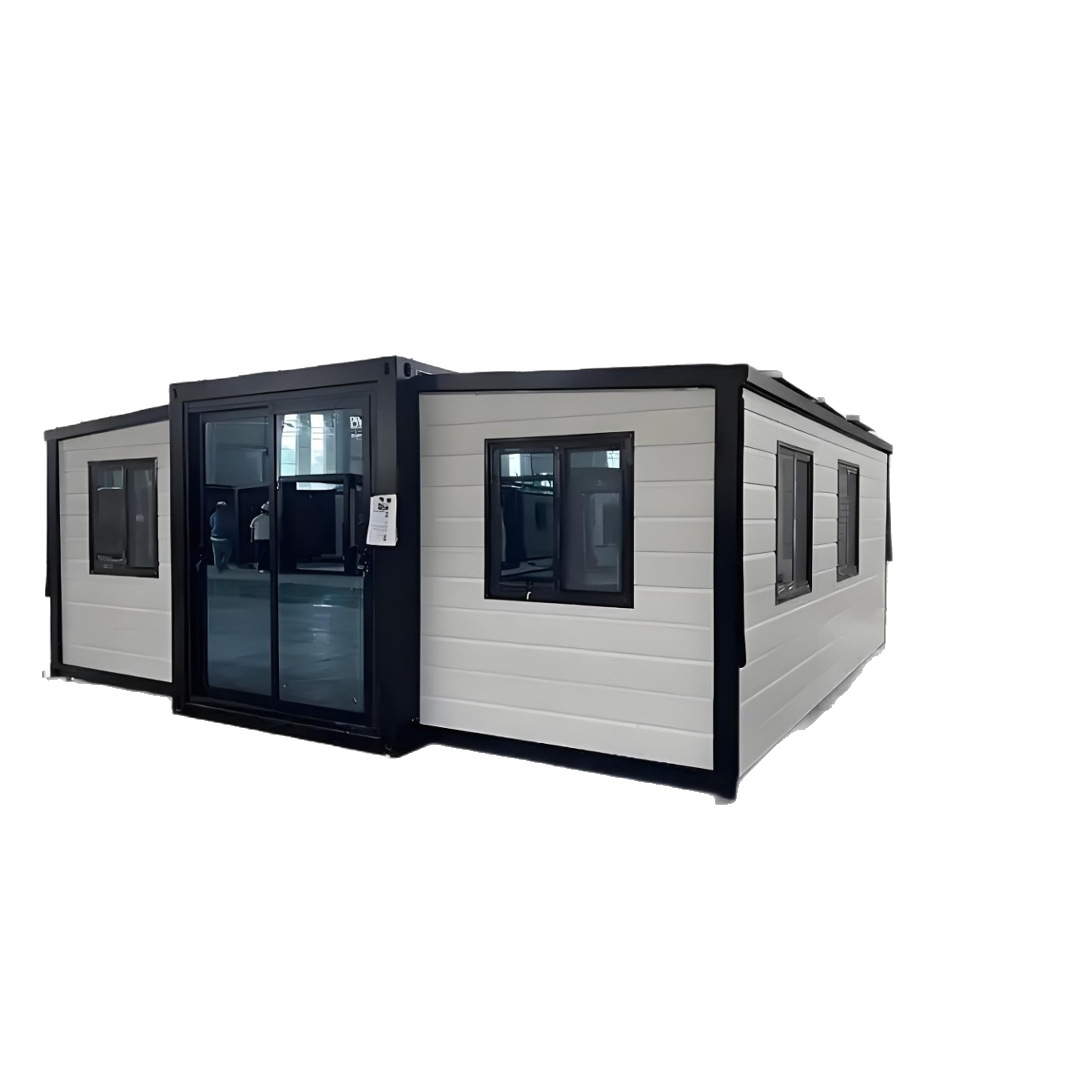
HG Prefab foldable expandable container homes — built to last, delivered worldwide.
A folding expandable container house is one of the few building types you can sell, fold down, truck away and reassemble somewhere else. That property alone creates a genuine resale market. Site cabins come back to the yard when the project ends, rental fleets rotate stock every few seasons, homeowners upgrade from a 20FT to a 40FT, and every one of those units lands back on the second-hand market. For buyers, that means a well-kept unit can be had for roughly half the price of new. For sellers, it means the purchase decision has a real exit value rather than a demolition bill. This guide explains what a used unit is actually worth, how to inspect one before paying, what refurbishment really costs, and where buyers and sellers actually meet.
Why a Second-Hand Market Exists for Folding Container Homes
Traditional site-built additions have no resale market at all: their value is tied to the land. A relocatable unit behaves more like plant equipment or a vehicle. It has a serial number, a service history and a value separate from the ground it stands on. Four forces keep the used market liquid:
- Project cycles. Construction site offices, workforce accommodation and event facilities are bought for a two to five year job. When the job ends, the units are released at once, often in batches of five or twenty.
- Rental fleet rotation. Operators of glamping parks and workforce camps replace stock on a three to five year cycle to keep their offer looking fresh, and sell the outgoing units as a single lot.
- Upgrade moves. Owners who started with a single 20FT often move to a 30FT or 40FT once the use proves itself, releasing a structurally healthy young unit into the market.
- Low transport cost. Because the unit folds to a fraction of its deployed width, a used unit can be transported economically over long distances, so supply is regional rather than purely local.
The practical consequence for buyers is that the used market is rarely empty, but good units go quickly. The ones that sit unsold usually have documentation problems, structural rust, or transport damage rather than cosmetic wear.
What a Used Folding Container Home Is Actually Worth
Resale pricing in this sector tracks condition, not age. A cleaned, resealed five-year-old unit with records routinely out-sells a neglected two-year-old unit. The table below uses current new-build pricing as a baseline and typical observed retention rates.
New vs. used price benchmarks
| Size | New price 2026 | Resale after 1 year | Resale after 3 years | Typical retention at 3 yrs |
|---|---|---|---|---|
| 20FT | $7,200–$9,800 | $5,400–$7,400 | $4,300–$5,900 | 55–65% |
| 30FT | $10,500–$14,500 | $7,900–$10,900 | $6,300–$8,700 | 55–65% |
| 40FT | $12,500–$16,500 | $9,400–$12,400 | $7,500–$9,900 | 55–65% |
These figures assume a structurally sound unit with intact seals, working systems and transferable documentation. Deduct further for each unresolved defect: rusted hinge assemblies, delaminated floor panels, water staining at roof-to-wall joints, or an electrical installation with no certification.
The depreciation curve, and where it flattens
Depreciation is steepest in year one, simply because the buyer could otherwise order a new unit for a known price. After roughly three years the curve flattens sharply: the unit has proven it will survive folding and transport, the replacement cost of an equivalent new unit has crept upward, and the remaining value sits mostly in the steel frame rather than in finishes. Units in the seven to ten year band still trade at roughly 40–50% of original price if the frame and floor are sound, and that residual tends to hold for many more years.
What lifts — and kills — resale value
- Lifts value: original specification sheets and electrical certification, photos documenting the fold and transport cycle, a dry stored winter, recent resealing of all joints, upgraded insulation, documented plumbing layout, and any factory-applied cladding rather than field-added finishes.
- Kills value: rust at the hinge line or corner castings, standing water history in the floor build-up, delaminated composite panels, unsealed field-made penetrations through the roof, evidence of overloading during transport, and missing or mismatched serial identification.
Ask every seller for the model and size designation before negotiating. Confirming that a listed unit matches a current catalogue model such as the 20FT folding container house, 30FT unit or 40FT unit tells you exactly which spare parts and panel sizes fit it, which matters more than paint colour.
How to Inspect a Used Unit Before You Buy
Inspect the unit in daylight, dry, and preferably deployed rather than folded. Budget one to two hours; a structural defect missed here can cost more than the unit.
Structural checks
- Folding hinges and pivot pins: the highest-stress parts of the whole design. Look for rust blooms, elongated holes, cracked welds or shiny metal where parts have been rubbing. Any hinge that was cut and re-welded is a serious red flag.
- Roof beam and corner posts: sight along the roof line for sag, and check that all four corners are square. A unit that has been lifted incorrectly will show deformation at the lifting points and will never seal correctly again.
- Floor decking and chassis: walk the whole floor and listen for soft spots or drumming. Press a screwdriver into suspect areas near the door threshold and the bathroom zone, where water collects.
- Fold cycles: ask how many times the unit has been folded and unfolded. A unit folded ten times and stored under cover often beats one deployed once and left in a coastal yard.
Envelope, systems and interior checks
- Panel joints and seals: check all seals for shrinkage, tearing or gaps, especially around doors and windows and along the roof seam. Silicone that has been repeatedly patched usually signals a persistent leak rather than careful maintenance.
- Water staining: look for tide marks at the base of wall panels, rust trails below windows, and discoloured insulation visible behind any removed trim.
- Electrical: confirm the voltage and frequency the unit was built for, test every circuit including the RCD or residual current device, and check that cable entries are grommeted rather than bare.
- Plumbing: pressurise the lines and leave them for thirty minutes. Check the water heater, all traps and the waste connection for leaks, and confirm that pipework in exterior walls is insulated.
- Doors and windows: open and close every one. Misalignment usually indicates frame distortion, which is expensive to correct.
- Documentation: request the original build specification, wiring diagram and any inspection certificates. A seller who cannot produce them either never had them, or is selling something they did not own outright.
Where to Buy and Sell Used Container Homes
Buying channels
Used units reach the market through plant and equipment auctions, specialist container brokers, construction rental companies releasing fleet stock, and direct classified listings. Brokers charge a margin but usually pre-inspect units and can arrange transport; auctions are cheaper but typically sell strictly as-is with no structural warranty. Whichever route you use, insist on seeing the unit deployed at least once, and never transfer funds before you have a serial number you can check against the build records.
How to price and list a unit for sale
Sellers consistently underperform by listing a bare unit with two photographs taken on a phone at dusk. A listing that sells quickly and at the top of its bracket contains:
- Deployed and folded exterior photos from all four elevations, plus interior shots of kitchen, bathroom and electrical panel.
- Size designation, year of manufacture, fold cycle count, insulation specification and electrical rating.
- At least one photo showing the hinge assemblies clean and close up.
- An honest defect list. Buyers discount far more for surprises discovered during inspection than for defects disclosed upfront.
- A clear statement of whether transport and the offload crane are included in the asking price.
Pricing strategy: list slightly above your walk-away number, hold firm for the first two weeks, then step down in roughly 5% increments. Units priced at or below 55% of the equivalent new price generally move within a month; above 75%, only immaculate, near-new units sell.
Refurbishing a Used Unit: Budget and Payback
Cosmetic refurbishment is where the used market offers its best value. Typical costs in 2026:
- Deep clean, joint resealing and exterior repaint: $800–$2,000.
- Full interior refresh: floor covering, wall panels, fixtures and lighting, $1,200–$4,500.
- Mechanical refresh: water heater, pump, LED lighting package and partial rewiring, $900–$3,000.
- Structural repair: hinge replacement or floor section renewal, $1,500–$6,000 and only worth doing on a larger unit with a sound frame.
The economics favour refurbishment when purchase plus refurbishment lands at least 25% below the new equivalent. Compare directly against the new prices above: a used 40FT at $8,300 plus $3,000 of work is still well under the $12,500–$16,500 cost of a new 40FT. But if you find structural rust or water-damaged panels, walk away — those repairs erase the saving and leave you with a unit nobody will buy back.
Moving and Reinstalling a Second-Hand Unit
Transport is the part buyers underestimate most. The unit must be folded, lifted onto a truck, secured, hauled, then offloaded at the new site. Budget $800–$2,500 for a regional move and considerably more for container shipping or difficult access. Check route restrictions for abnormal loads, since even a folded unit exceeds standard trailer width.
At the new site the pad or foundation must be ready before the truck arrives. Yes — a crane or forklift is required to offload the folded unit from the truck. Once it is set in position, four workers can unfold and assemble the main structure in about 2 hours. Services connections, foundation anchoring and any interior finishing then follow, usually over one to three further days. If you are comparing resale models, you can review the full current range on our products page to see which sizes share transport dimensions and parts with the used unit you are considering.
Need a folding container house?
HG Prefab manufactures 20FT, 30FT and 40FT folding expandable container houses with galvanised hinge assemblies, replaceable composite panels and documented electrical and plumbing specifications — which is exactly what protects resale value.
Browse modelsFrequently Asked Questions
Can a used folding container house be moved and reinstalled?
Yes — a crane or forklift is required to offload the folded unit from the truck. Once it is set in position, four workers can unfold and assemble the main structure in about 2 hours.
How much value does a folding container home lose in the first years?
A well-maintained unit typically keeps about 75-80% of its purchase price after one year and about 55-65% after three years, then the curve flattens. Structural condition and documentation matter far more than the age of the unit itself.
What should I check before buying a second-hand container home?
Check the folding hinge pins and roof beam for rust or deformation, then the composite panel joints, seals and any soft or stained floor areas. Ask for photos of the unit folded, in transit and unfolded, plus the electrical, plumbing and insulation specification sheets.
Is refurbishing a used unit cheaper than buying new?
Usually yes for cosmetic work. Cleaning, resealing, repainting and replacing interior finishes costs roughly $1,200-$4,500 and can lift a tired unit back into the upper half of its size bracket. Structural damage, failed floor decking or water-damaged panels erase that advantage quickly.
How do I know whether asking price reflects real condition?
Compare it against new pricing for the same size, then discount for each disclosed defect using the refurbishment figures above. A 30FT at more than 75% of new only makes sense if it is nearly new with complete documentation; anything above that is better bought new, since a new unit ships with a factory guarantee and no inspection risk.
Need a folding container house?
Contact HG Prefab on WhatsApp +86 191 0388 7380 or email hgmechequip@gmail.com for a fast quote.