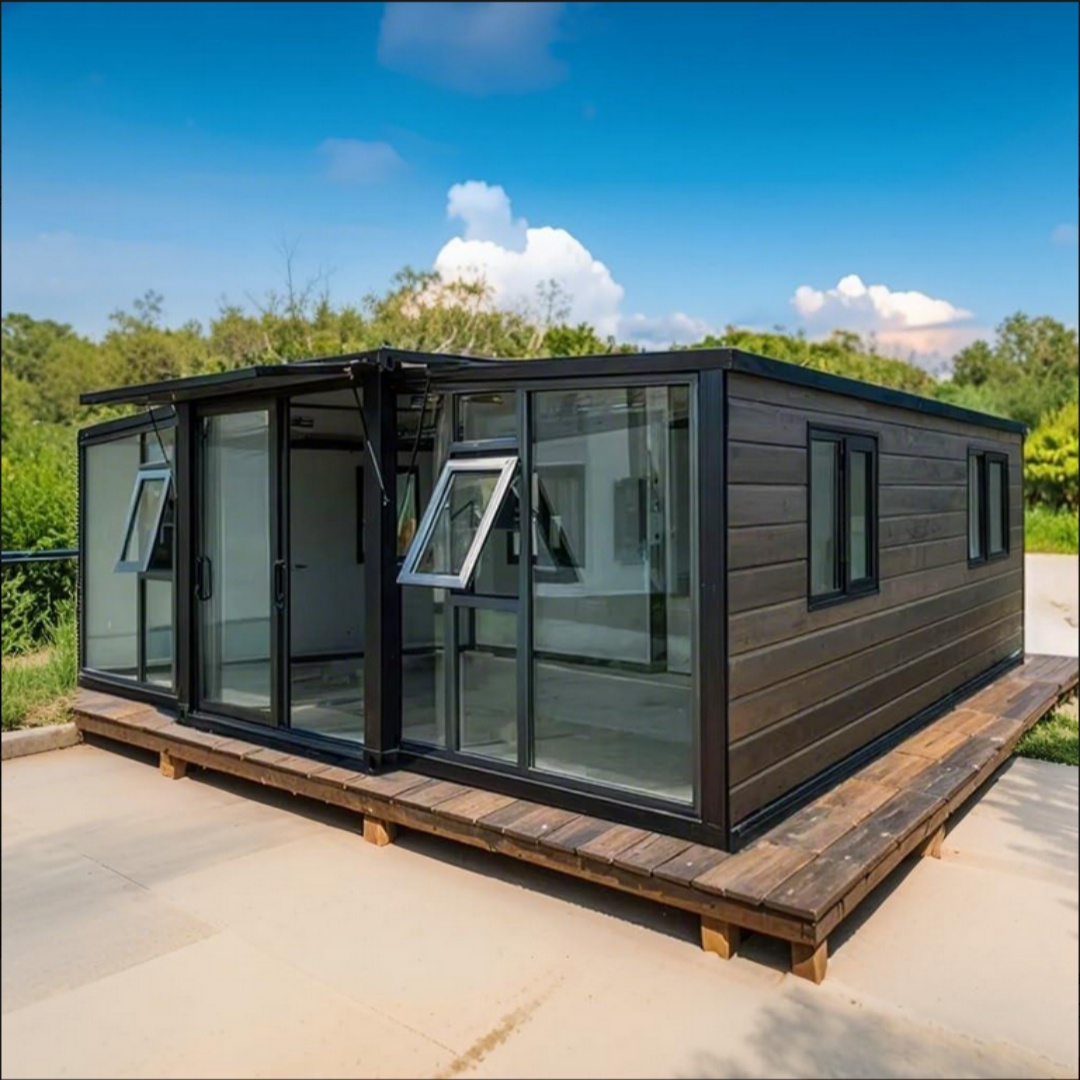
HG Prefab foldable expandable container homes — built to last, delivered worldwide.
You have chosen your model and confirmed the spec — now the shipping question arrives: how does a folding container home travel from our factory in China to your site, what does freight really cost, and what happens on delivery day? This guide walks through the entire journey so you can budget accurately and avoid surprises.
Why folding container homes ship cheaply
The fold-flat design is a freight advantage, not just a packaging trick:
- A folded 20FT unit occupies exactly one standard container slot — two 20FT units share a single 40HQ, roughly halving per-unit ocean freight.
- 30FT and 40FT units fold into compact profiles that fit standard containerized shipping plans.
- Multi-unit orders (worker camps, rental fleets, resort projects) benefit from consolidated loading with a per-unit loading plan we prepare before dispatch.
Ocean freight: typical ranges by region
Freight changes with fuel, season and port congestion, but recent shipments from China fall into these planning ranges per 20FT-equivalent slot:
| Destination region | Typical ocean freight range | Transit time |
|---|---|---|
| Southeast Asia | $300 – $800 | 7–14 days |
| Middle East (Jebel Ali, Dammam) | $800 – $1,800 | 18–30 days |
| Australia / New Zealand | $900 – $2,000 | 18–30 days |
| West Coast North America | $1,500 – $3,500 | 20–35 days |
| Europe (Rotterdam, Hamburg) | $1,800 – $4,000 | 30–45 days |
| Africa (Mombasa, Lagos, Durban) | $1,500 – $3,800 | 25–45 days |
Ask your freight forwarder for a live quote — and remember these are port-to-port figures excluding local duties, inland haulage and destination charges.
Customs and import paperwork
Container homes typically clear customs as prefabricated buildings, HS code 9406. Documents we supply with every order:
- Commercial invoice and packing list
- Bill of lading (B/L) or air waybill
- Certificate of origin (Form A / FTA versions where applicable)
- Product drawings and material specifications (often required by customs and building authorities alike)
Check your country's import duty and VAT/GST on HS 9406 before ordering — rates vary from zero in many free-trade scenarios to 10–20% elsewhere. Your customs broker can confirm in minutes.
Incoterms: FOB vs CIF vs DDP
- FOB: we deliver to the Chinese port; you control the main voyage with your own forwarder. Usually the cheapest route for experienced importers.
- CIF: we arrange ocean freight to your destination port. Convenient, but destination charges remain yours.
- DDP: door-to-door including duties — the simplest option where available, at a premium.
Delivery day: plan the crane
This is the step buyers most often underestimate. A crane or forklift is required to offload the folded unit from the truck. Once the unit is set in position, four workers can unfold and assemble the main structure in about two hours. Before delivery day:
- Book a mobile crane or heavy forklift (typically 8–20 ton capacity) for the offload window.
- Confirm truck access: turning radius, overhead cables, ground bearing capacity.
- Mark the exact position of each unit on your prepared foundation.
- Have your electrician and plumber ready for next-day utility hookups.
Typical total timeline
| Stage | Duration |
|---|---|
| Production (standard spec) | 15–25 days |
| Quality inspection & folding | 2–3 days |
| Ocean transit | 7–45 days by region |
| Customs clearance at destination | 3–10 days |
| Inland delivery + crane offload + unfolding | 1–2 days |
Get a quote with freight included
Tell us your nearest port and model choice — we reply within 24 hours with unit price, loading plan and shipping options.
Browse models