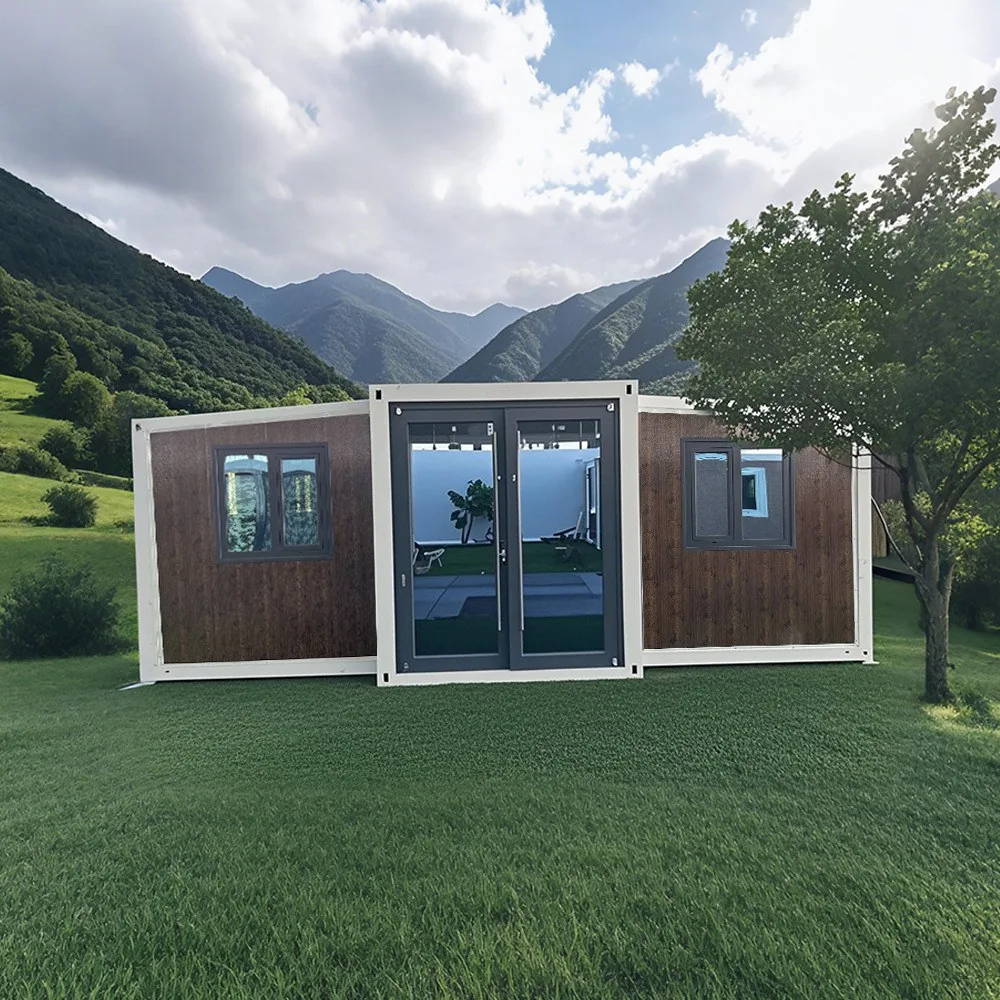
HG Prefab foldable expandable container homes — built to last, delivered worldwide.
A folding container home is one of the easiest buildings in the world to take off-grid, because it arrives as a compact, self-contained steel box with a roof you can walk on, a short cable run from roof to distribution board, and a factory-finished interior that already knows where its appliances go. The hard part is not the hardware. The hard part is the arithmetic, and getting it wrong is expensive in both directions: an undersized bank means a generator running every evening, while an oversized one can add more to the budget than the house itself.
This guide walks through the calculation in the order an engineer would do it — load audit, usable capacity, chemistry, inverter, array, autonomy, then the wiring and protection details that a steel building makes slightly different from a timber one. If you have not yet mapped your circuits, start with our container home electrical load guide, and if you have already chosen panels and mounting, our solar power setup guide covers the roof-side installation detail this article only summarises.
Step 1: Build the Load Audit in Watt-Hours
Every credible battery calculation begins with a list, not a product. Battery capacity is energy (watt-hours or kilowatt-hours), not power (watts), so the only figure that matters at this stage is how many watt-hours each appliance consumes in a day.
Read the rating plate, not the marketing
For each item find the running watts on its rating plate or label — not the starting watts, not the "equivalent" figure on the box, and not the figure printed on the packaging of an LED bulb. Multiply running watts by the number of hours it genuinely runs in a 24-hour period. A 60 W fan that runs eight hours is 480 Wh; the same fan on a thermostat that cycles it for three hours is 180 Wh. Honesty at this step is worth more than any amount of later cleverness.
Counts twice for motor loads
Fridges, freezers, water pumps and air conditioners do not run continuously. A modern inverter fridge with a good door seal might run 8 to 12 hours out of 24 in a temperate climate and 14 to 18 hours in the tropics, and it draws more per hour when the ambient temperature is high or the door is opened often. If you cannot measure it, budget 1.0 to 1.5 kWh per day for a domestic fridge-freezer, and more for an older unit sited in direct sun.
Phantom and inverter loads
Two loads are routinely forgotten. The first is standby: routers, satellite boxes, chargers, alarm panels, smart switches, induction hob clocks and the inverter's own idle draw, which can be 15 to 40 W for a large unit and is running all 1,440 minutes of the day. Thirty watts of continuous standby is 720 Wh per day — more than the lighting in most small homes. The second is the inverter's conversion loss: budget 10 to 15 per cent on top of the AC load to cover DC-to-AC conversion, cable losses, charge and discharge inefficiency and the battery management system's own consumption.
| Load | Running watts | Surge / start factor | Typical hours per day | Watt-hours per day |
|---|---|---|---|---|
| LED lighting (whole unit) | 40-90 W | 1x | 4-6 h | 200-500 Wh |
| Inverter fridge-freezer | 90-150 W | 3-7x for 2-3 s | 8-16 h duty cycle | 1,000-1,800 Wh |
| Laptop and phone charging | 60-120 W | 1x | 4-8 h | 250-700 Wh |
| Router, alarm, standby loads | 15-40 W | 1x | 24 h | 350-950 Wh |
| Water pump (pressure pump) | 400-900 W | 3-5x for 2-3 s | 0.3-0.8 h | 150-700 Wh |
| Washing machine (one cycle) | 500-2,000 W | 2-3x | 0.5-1 h | 500-1,500 Wh |
| Induction hob (two rings, 20 min) | 1,800-3,600 W | 1.2x | 0.3-0.6 h | 600-2,000 Wh |
| Air conditioner (small inverter unit) | 700-1,600 W | 2-4x for 2-3 s | 3-8 h | 2,500-9,000 Wh |
| Inverter idle draw | 15-40 W | 1x | 24 h | 360-960 Wh |
Step 2: Convert Daily Watt-Hours Into Usable Battery kWh
Once the load audit totals, say, 10,000 Wh per day, four multipliers take you from that figure to the nameplate capacity you should buy.
Simultaneity and losses
Add 10-15 per cent for system losses (inverter efficiency, cable voltage drop, battery round-trip losses, temperature derating). Then consider simultaneity: the load audit already uses real run-hours, so do not apply a diversity factor on top of it unless you deliberately overstated run times. What you should do is identify the worst hour — the hour with the highest simultaneous wattage — because that number sizes the inverter, not the battery.
Depth of discharge: the number that halves your bank
Batteries are rated in nameplate kWh but you can only use part of it. Depth of discharge (DoD) is the fraction you may safely take out. Lead-acid chemistry is damaged by deep cycles: AGM and gel are normally limited to 50 per cent DoD, which means you must buy twice the nameplate capacity you actually intend to use. LiFePO4 is routinely discharged to 80-90 per cent, so almost everything you buy is usable.
Days of autonomy
Autonomy is how many consecutive sunless days the bank must cover on its own. Two days is the standard off-grid figure; three is sensible in monsoon, hurricane or high-latitude winter conditions; one is only defensible where a grid connection or generator can carry the gap reliably. The formula in full:
Nameplate kWh = (daily kWh × autonomy days × 1.15 loss factor) ÷ DoD
Worked example: 10 kWh per day, two days of autonomy, LiFePO4 at 0.9 DoD gives (10 × 2 × 1.15) ÷ 0.9 = 25.6 kWh nameplate. With AGM at 0.5 DoD the same requirement becomes 46 kWh — nearly double the purchase, roughly triple the weight, and a shorter service life.
Step 3: Choose the Chemistry
The chemistry decision drives cost, weight, usable capacity, lifespan and where the bank can physically live. For a folding container home, weight and volume matter more than in a conventional build, because the unit is lifted as a single package and its floor and frame have a designed payload.
| Parameter | LiFePO4 (LFP) | AGM / Gel (VRLA) | Flooded lead-acid |
|---|---|---|---|
| Usable DoD | 80-90% | 50% | 50% |
| Cycle life at rated DoD | 4,000-6,000 cycles | 600-1,200 cycles | 800-1,500 cycles with care |
| Usable kWh per 10 kWh nameplate | 9 kWh | 5 kWh | 5 kWh |
| Approx. weight per 10 kWh nameplate | 80-110 kg | 250-300 kg | 300-400 kg |
| Round-trip efficiency | 92-96% | 80-85% | 75-85% |
| Max charge rate | 0.5-1C (full in 1-2 h) | 0.2-0.3C (4-6 h) | 0.1-0.2C |
| Charging below 0 °C | Stop, or use a self-heating pack | Possible, at reduced rate | Possible, at reduced rate |
| Ventilation required | No gassing in normal use | Minimal; vented enclosure advised | Yes — hydrogen gassing |
| Maintenance | None | None | Regular watering and cleaning |
| Indicative cost per usable kWh | $350-$650 | $250-$450 | $180-$320 |
| Cost over 10 years (2 cycles/week) | Lowest — one bank | High — 1-2 replacements | High — plus maintenance labour |
Read the last two rows together. AGM is cheaper per usable kWh on the day you buy it, and more expensive per usable kWh over a decade, because you buy roughly twice the capacity and replace it once or twice. LiFePO4 also holds its voltage flat under load, so lights do not dim and inverters do not trip on low-voltage cut-out as the bank empties — a real behavioural difference that lead-acid owners notice immediately.
Two cases still favour lead-acid. The first is a genuinely tight up-front budget where the bank can be expanded later. The second is prolonged sub-zero operation: LiFePO4 must not be charged below 0 °C without a self-heating pack or a low-temperature cut-off, so in an unheated high-altitude or high-latitude unit, either specify heated batteries or keep the bank inside the conditioned envelope. Venting and safety rules for any chemistry are covered in our plumbing and electrical guide.
Step 4: Size the Inverter for Surge, Not Just for Continuous Load
The inverter is specified with two numbers, and the second one is the one that gets forgotten.
Continuous rating
The continuous rating must exceed the total wattage of everything that can plausibly run simultaneously. Take the worst hour from your load audit, not the daily total. In practice: 3 kW covers most 20FT units without air conditioning or electric cooking; 5 kW covers most 30FT units including a washing machine and induction hob; 6-8 kW suits a 40FT home with air conditioning and a full kitchen.
Surge rating and motor starting
Compressors, pumps and motors draw three to seven times their running current for two to three seconds at start-up. A fridge that runs on 120 W may demand 700 W for an instant, and a pressure pump drawing 800 W can ask for 3 kW to break away. Specify an inverter whose surge rating is at least twice its continuous rating and which will hold that surge for three seconds or more. A 5 kW inverter with a 10 kW / 3 s surge will start a pump and a fridge together; a 5 kW inverter with a 5.5 kW / 1 s surge will not, and no amount of extra battery capacity will fix it.
Waveform, voltage and charger integration
Choose a pure sine wave inverter. Modified sine wave units are cheap, and they make motors run hot and noisy, cause transformer-based power supplies to buzz, and can damage some electronics and variable-speed appliances over time. Then decide the architecture: a hybrid inverter/charger combines the inverter, the solar charge controller and the AC battery charger in one box, taking grid or generator input to top up the bank automatically — that is almost always the right answer for a container home. Finally, pick the DC bus voltage: 48 V is the standard for anything above roughly 3 kW, because current, cable size and losses all fall as voltage rises. A 5 kW load at 12 V is over 400 A, which is not a cable, it is a busbar.
Step 5: Size the Array That Refills the Bank
A battery bank that cannot be refilled is just an expensive delay. Array sizing starts from the solar resource, expressed as kWh produced per kWp installed per day.
| Scenario | Daily load | Battery (LiFePO4, 0.9 DoD, 2 days) | Inverter | Array required at 4 kWh/kWp/day | Typical result |
|---|---|---|---|---|---|
| 20FT weekend cabin | 3-5 kWh/day | 8-13 kWh nameplate | 3 kW continuous / 6 kW surge | 1.0-1.6 kWp | 3-4 × 450 W panels |
| 30FT full-time residence | 8-14 kWh/day | 20-36 kWh nameplate | 5 kW continuous / 10 kW surge | 2.5-4.0 kWp | 6-9 × 450 W panels |
| 40FT family home with cooling | 15-30 kWh/day | 38-77 kWh nameplate | 6-8 kW continuous / 12-16 kW surge | 4.5-9.0 kWp | 10-20 × 450 W panels |
| 40FT hybrid (grid/generator assist) | 15-25 kWh/day | 10-20 kWh nameplate, 1 day autonomy | 6 kW continuous / 12 kW surge | 3.0-5.0 kWp | 7-12 × 450 W panels |
Yield per kWp per day ranges from roughly 3 kWh in northern Europe or a cloudy winter to 5-5.5 kWh in the tropics and deserts; 4 is a defensible planning figure for a mid-latitude site with a well-oriented, unshaded roof. The array must satisfy both the daily energy requirement and the battery's charge rate limit — a large bank on a long string of sunless days needs a charging window wide enough to refill it, which usually means sizing the array for the winter month, not the annual average.
Check three practical limits before ordering. First, roof area: a 20FT unit offers roughly 13-14 m² of usable roof, which is about 2.5-3 kWp of panels once walkways and edge setbacks are allowed for; a 40FT unit roughly doubles that. Second, wind uplift: panels on a lightweight steel roof must be fixed into the structural members with a documented fixing pattern, and the whole assembly must be engineered for the local design wind speed. Third, shading: one shaded cell in a series string can drag the whole string down, so keep panels clear of vents, parapets, antenna masts and tree shade through the middle of the day.
MPPT, PWM and string voltage
Use an MPPT controller. It converts excess panel voltage into charging current and typically harvests 20-30 per cent more energy than a PWM controller from the same panels, which is a larger gain than most panel upgrades you could buy with the same money. Size the controller against the array's open-circuit voltage at the lowest expected temperature — cold panels produce higher voltage, and an undersized voltage rating is a fire risk, not a nuisance — and against the array's short-circuit current with a 1.25 safety factor. Panels in series raise voltage and keep cable size down; panels in parallel keep output when part of the array is shaded.
Step 6: Backup Math — Autonomy, Generator and Hybrid
The last decision is what happens when the arithmetic meets a week of weather. There are three honest answers, and they are not mutually exclusive.
- More battery. The cleanest backup, silent and instant, but the most expensive per kWh of insurance. Going from two to three days of autonomy adds roughly 50 per cent to the battery budget.
- A generator. Far cheaper per kWh of capacity and the standard answer for long-run risk. A 3-5 kW inverter generator should be sized to run the whole house load and charge the bank at the same time, which normally means the generator's continuous output should be at least 1.5 times the inverter charger's AC input draw. Our backup generator guide covers sizing, fuel storage and changeover switching in detail.
- A grid or shore connection. Where a utility supply exists, a hybrid inverter with an AC input gives you unlimited autonomy for the price of a cable, and the bank only covers outages and the overnight peak.
Autonomy days should be chosen from the weather record, not from optimism. Two days is standard; three is the right figure where the unit sits through a monsoon season, a hurricane belt or a high-latitude winter with sustained cloud. If you choose one day of autonomy, you have implicitly chosen a generator, so buy the generator at the same time and budget for its fuel.
Installation Notes for a Steel Building
A container home changes a few electrical assumptions that solar installers used to timber houses sometimes miss.
Earthing and bonding
The steel frame is an excellent earth electrode and should be bonded to the installation's protective earth at a single designated point using a dedicated earthing boss, not a self-tapping screw into paint. Solar panel frames, the inverter chassis, the battery enclosure and the AC distribution board all bond back to that point. Rubber-gasketed glass and painted coatings mean nothing can be assumed conductive — bonding is a deliberate connection, not an incidental one.
Cable sizing and voltage drop
Solar and battery cables are sized for current and voltage drop, and DC runs are far less forgiving than AC. Keep the total round-trip drop under 3 per cent on the DC side and under 5 per cent on AC. That means short runs, correctly rated fine-strand cable, and the bank mounted as close as practical to the inverter. Every joint must be crimped with a proper tool and torque-checked — a high-resistance DC joint gets hot, and a hot joint at 48 V with several hundred amps available is a fire, not a fault code.
Protection, disconnects and ventilation
Install over-current protection sized to the cable on every DC circuit, a two-pole DC isolator between array and controller, a battery main fuse within 300 mm of the positive terminal, and an AC residual-current device on the inverter output. Surge protection on both the DC and AC sides is cheap insurance for a tall metal structure on an exposed site. Mount the bank in a ventilated, secure enclosure — LiFePO4 does not gas in normal use but still wants airflow and a stable temperature, and lead-acid of any kind must never be installed in a sealed living volume.
Weight and payload
A 25 kWh LiFePO4 bank weighs 200-280 kg; the AGM equivalent weighs 600-750 kg. On a folding unit that is lifted as a single package, that mass matters twice: once for the lifting machine's rated capacity and once for the floor's distributed load. Confirm the battery location with the factory before drilling the floor, and keep heavy banks low and close to the unit's structural members.
What It Costs in Context
HG Prefab factory prices for the folding unit itself are 20FT $7,200–$9,800; 30FT $10,500–$14,500; 40FT $12,500–$16,500, ex-works, before freight, taxes and local compliance. A complete off-grid power system typically lands as follows: LiFePO4 storage at $350–$650 per usable kWh, a hybrid inverter/charger at $900–$3,500 depending on rating, panels at $180–$420 each for 450-550 W modules, and mounting, protection, cabling and labour at roughly 25–40 per cent of equipment cost. A well-balanced 30FT system — about 25 kWh of LiFePO4, a 5 kW hybrid inverter and 3 kWp of panels — is therefore broadly comparable in cost to the house it powers, and it is the difference between a building and a home you can actually live in.
The mistake to avoid is not buying too little solar. It is buying batteries first and discovering the array cannot refill them. Size in the order shown here: load, then battery, then array, then backup.
Sizing an off-grid system for your unit?
HG Prefab, manufactured by Henan Huangang Machinery Equipment Co., Ltd., builds 20FT, 30FT and 40FT folding expandable container houses with documented folded shipping weights, factory lifting lugs and forklift pockets, and roof structures prepared for solar mounting. Send your appliance list, location and autonomy target for a battery and inverter sizing review. Email hgmechequip@gmail.com or WhatsApp +86 191 0388 7380. Full model range on the products page.
Get a Quote Browse modelsFrequently Asked Questions
How many kWh of battery do I need for a 20FT, 30FT or 40FT folding container home?
Start from a load audit in watt-hours per day, not from the unit's length. A 20FT weekend cabin running lights, a fridge, phones, a laptop and a water pump typically lands at 3-5 kWh per day, a 30FT full-time residence with induction cooking or a washing machine at 8-14 kWh per day, and a 40FT home with air conditioning at 15-30 kWh per day in warm climates. Multiply the daily figure by your autonomy days (2 is normal, 3 for storm or monsoon risk), then divide by depth of discharge — 0.9 for LiFePO4, 0.5 for AGM or gel — and add 15 per cent for losses. On that basis a 30FT home at 10 kWh per day needs roughly 25 kWh of nameplate LiFePO4 capacity for two days of autonomy.
What size inverter do I need, and why does the surge rating matter?
Size the inverter two ways and take the larger result. Continuous rating must exceed the sum of everything likely to run at once — 3 kW covers most 20FT units, 5 kW most 30FT units, and 6-8 kW a 40FT home with air conditioning. Surge rating must exceed the starting current of the largest motor: a fridge or pump compressor can draw three to seven times its running wattage for two to three seconds, and that is why a correctly sized continuous rating still trips. Choose a pure sine wave unit with a surge rating at least twice its continuous rating and a hold time of three seconds or more, on a 48 V DC bus for anything above about 3 kW.
LiFePO4 or AGM: which battery chemistry should I choose for a container home?
LiFePO4 for almost every installation. A 10 kWh LiFePO4 bank gives about 9 kWh usable at 90 per cent depth of discharge and 4,000-6,000 cycles; the same 10 kWh in AGM gives about 5 kWh usable at 50 per cent depth of discharge and 600-1,200 cycles. LiFePO4 weighs roughly a third as much, holds its voltage flat under load, charges three to five times faster and needs no maintenance. AGM still makes sense where the up-front budget is tight, where the bank sits in an unheated space below freezing for long periods, or where a local supplier can replace a failed unit the same day. Flooded lead-acid needs ventilation and regular watering and is not recommended inside a sealed steel living space.
How many solar panels do I need to recharge the battery bank?
Divide your daily kWh by the yield per kilowatt-peak installed per day: about 3 kWh per kWp in northern Europe or a cloudy winter, 4 as a mid-latitude planning figure, and 5-5.5 in the tropics and deserts. A 30FT home using 10 kWh per day needs about 2.5 kWp at 4 kWh per kWp, before losses — so specify 3 kWp, which is six to seven 450 W panels. Check the array against the battery's charge rate limit, confirm the roof area can carry the panels and their wind uplift, and keep the strings clear of shading through the middle of the day.
Do I need a crane to offload a folding container home?
Yes — a crane or forklift is required to offload the folded unit from the truck. Once it is set in position, four workers can unfold and assemble the main structure in about 2 hours. Book the machine for the same window as the truck, confirm its rated capacity against the folded shipping weight and the reach from where the truck can stand to the pad, and have the pad poured and cured so the solar equipment can be commissioned on the same visit.