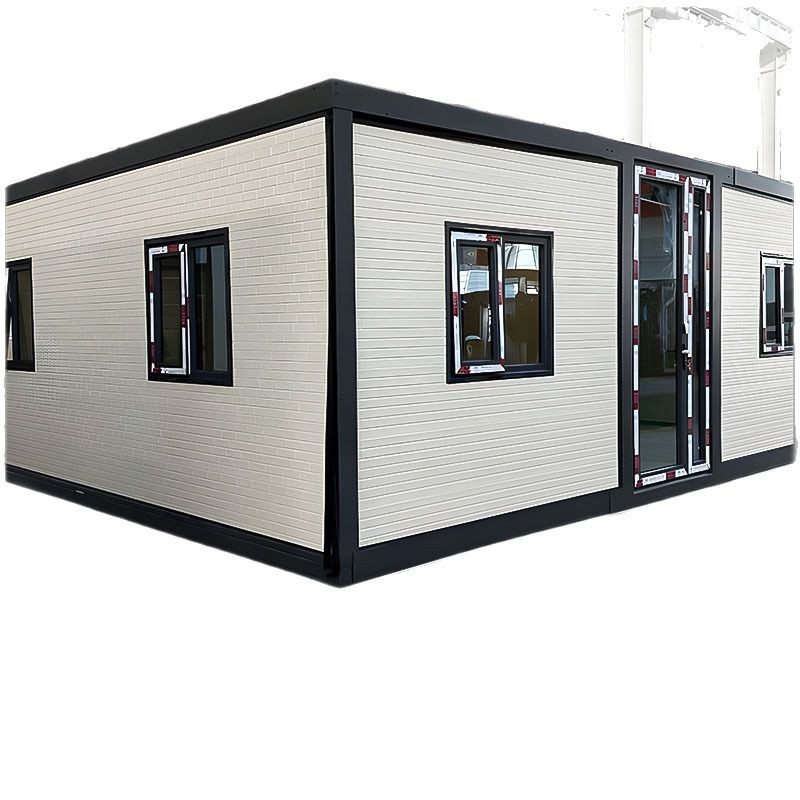
HG Prefab foldable expandable container homes — built to last, delivered worldwide.
Steel is an excellent conductor of sound. If your container home sits near a road, a construction site or a noisy neighborhood, you will hear it — unless you plan your soundproofing from the start. This guide breaks down what actually works for folding container homes, with real STC ratings and material recommendations.
Understanding STC and How It Applies to Container Homes
Sound Transmission Class (STC) rates how well a wall assembly blocks airborne sound. Higher is better. A standard single-layer steel wall with thin insulation might rate STC 28–32 — enough to hear a conversation next door. With proper acoustic treatment, the same wall can reach STC 45–50, which reduces normal speech to a murmur.
| STC rating | What you hear through the wall | Typical container home wall assembly |
|---|---|---|
| STC 28–32 | Loud speech clearly audible | Bare steel + thin foam panel |
| STC 38–42 | Loud speech muffled | Steel + 50mm rock wool + drywall |
| STC 45–50 | Only loud bass audible | Steel + 75mm rock wool + resilient channel + double drywall |
| STC 50+ | Most sounds inaudible | Double steel + cavity insulation + double drywall on channels |
Where Container Home Noise Comes From
Airborne Sound
Traffic, voices, music, machinery — transmitted through walls, windows and roof. This is what most people think of as "noise."
Structure-Borne Sound
Vibrations traveling through the steel frame itself — footsteps, slamming doors, rain on the roof. Steel transmits these efficiently, so decoupling is key.
Flanking Paths
Gaps around windows, doors, vents and electrical boxes let sound bypass even the best wall. A 1% gap can reduce a wall's effective rating by 5–10 STC points.
Materials That Actually Work
1. Rock Wool Insulation (A1 fire-rated)
Dense mineral wool absorbs mid-to-high frequency sound and provides fire safety. 50–75mm in wall cavities is the baseline. Our standard units already include rock wool — see our insulation guide for thermal and acoustic details.
2. Resilient Channels
These metal strips create a decoupled layer between the drywall and the steel frame, breaking the vibration path. They add 5–8 STC points for about $2–$4 per square meter.
3. Double-Layer Drywall
Two layers of 12mm gypsum with staggered joints add mass and dampen resonance. Combined with resilient channels, this is the single most cost-effective upgrade.
4. Acoustic Window Glazing
Double-glazed windows with different pane thicknesses (e.g., 6mm + 4mm) and an argon-filled gap reduce airborne noise by 8–12 dB compared to single glass. This matters most if you face a road.
5. Door Seals and Sweeps
A solid-core door with perimeter seals and a drop sweep closes the biggest flanking gap. Cost: $30–$80 in materials.
Roof and Floor: Often Overlooked
Rain on a steel roof is surprisingly loud — 70+ dB in a storm. A suspended ceiling with acoustic tiles reduces this by 10–15 dB. For the floor, a floating engineered board on an acoustic underlay decouples footstep noise from the steel base.
Cost vs. Benefit: What to Prioritize
| Upgrade | STC improvement | Est. cost per m² | Priority |
|---|---|---|---|
| Fill cavities with rock wool | +5–8 | $5–$8 | Essential (usually standard) |
| Resilient channels + double drywall | +8–12 | $8–$15 | High |
| Acoustic double-glazed windows | +6–10 (airborne only) | $40–$80/m² window area | High if road-facing |
| Suspended acoustic ceiling | +10–15 (roof noise) | $15–$25 | Medium |
| Door seals and sweeps | +3–5 | $30–$80 total | Easy win |
If You Live Near a Road
Traffic noise is mostly low-frequency (engine rumble, tire drone) — and low frequencies pass through walls more easily than high frequencies. If your unit faces a busy road, prioritize acoustic windows first, then wall mass, then a well-sealed entrance vestibule. Positioning the bedroom on the opposite side from the noise source is free and effective.
Want a quieter container home?
We can add resilient channels, double drywall and acoustic glazing to your unit at the factory.
Browse models