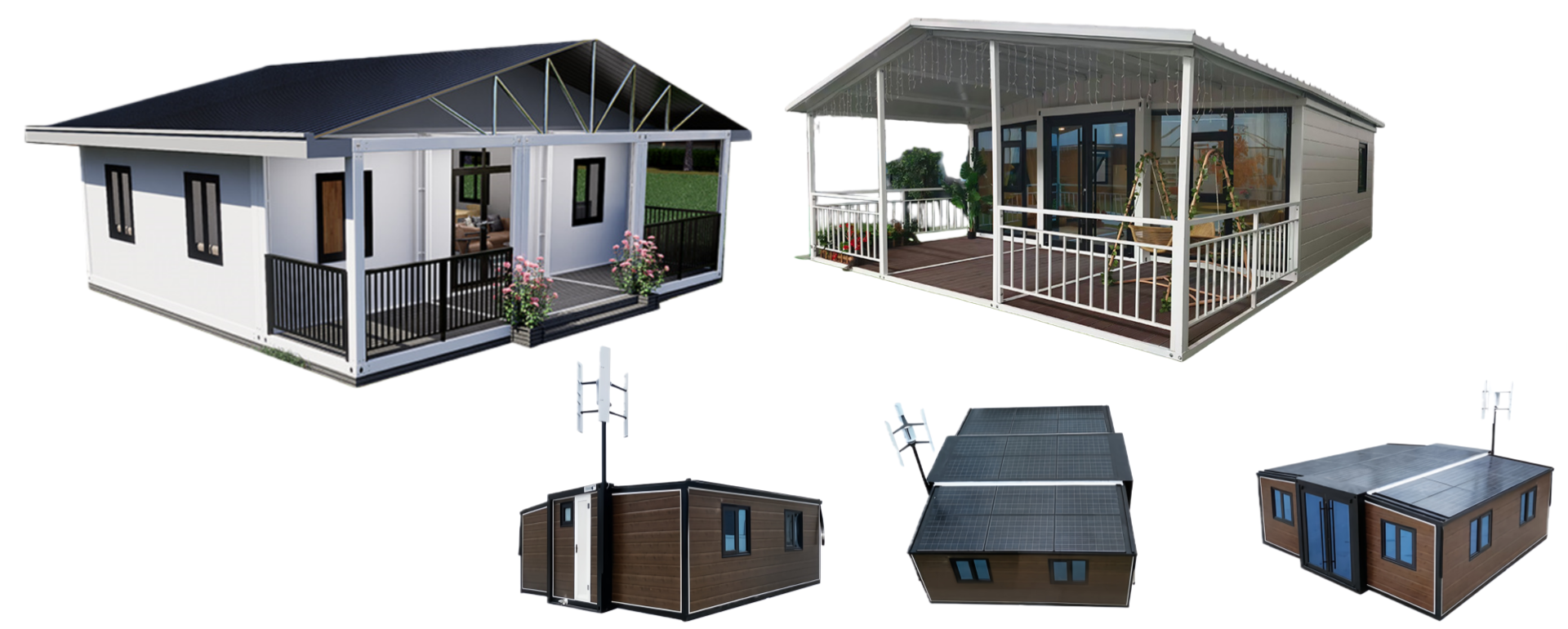
HG Prefab foldable expandable container homes — built to last, delivered worldwide.
Importers, building-material traders and small property developers keep asking the same question about folding container homes: is this a product worth carrying, or a passing trend? The category has now been through enough real projects to answer that. A folding unit deploys in hours instead of weeks, ships folded so freight per unit stays low, and lands at a price point that ordinary buyers and small businesses can reach without bank finance. For a dealer, that combination means fast stock turn, a demonstrable product and a margin that survives after freight, duties and local assembly labour are paid. This guide is written for companies that want to sell, stock or rent folding container homes rather than buy one. It compares the three commercial models, sets out the factory-direct pricing structure and realistic dealer margins, explains how minimum order quantities and container consolidation actually work, and lists the support Henan Huangang Machinery Equipment Co., Ltd. (brand: HG Prefab) provides to its dealer network.
Why Folding Container Homes Are a Growth Category
A dealer's first question should always be about demand durability. Four demand streams are currently pulling this product into import markets, and none of them depend on a single country's housing cycle.
Housing Shortages and Entry-Level Buyers
In many markets the gap between household formation and completed housing supply has widened for a decade, and the buyers hit hardest are first-time households, rural families and workers relocating for jobs. A conventional build takes 9 to 18 months and requires contractor coordination most buyers cannot manage. A folding container home is delivered as one product with one invoice, a known lead time, and a price that sits far below a conventional house of the same floor area. That makes it a stock item your sales team can quote and close in days rather than a design project that runs for months. For a dealer, speed of quotation is the competitive advantage: the buyer comparing you against a local builder is comparing a fixed delivered price against an estimate that will move.
Speed of Installation as a Sales Argument
Deployment speed is what makes the product sell itself on a show yard. A folded unit arrives on a single truck, is offloaded with a crane or forklift onto a prepared pad, and the main structure is unfolded and assembled by four workers in about 2 hours. Interior finishing, services connection and site works follow over the next few days. In practice this means a buyer who signs on Monday can be sleeping in the unit the same week, and a commercial buyer can have revenue-generating space before a conventional fit-out would have finished permitting. Demonstrating that speed publicly, on video, is the single most effective piece of marketing a new dealer can produce.
Disaster Relief and Reconstruction Pipelines
Governments, insurers, NGOs and humanitarian contractors maintain standing requirements for rapidly deployable shelter after floods, earthquakes, fires and storms. These buyers purchase in volume, repeat, and care about documentation, packing density and deployment speed rather than showroom finish. For a dealer this is a tender business rather than a retail one: you need technical files in the local language, a packing plan showing how many folded units fit per container, and the ability to quote large quantities on short notice. Winning one national framework agreement can anchor an entire year of container orders.
Resorts, Glamping Sites and Workforce Camps
Tourism operators are buying folding units for glamping pods, beach and mountain cabins, and seasonal staff accommodation, because they can add capacity incrementally instead of committing to a hotel-scale build. Mining, construction, agriculture and logistics companies buy the same units for remote workforce housing and site accommodation. Both segments value the same things a dealer values: repeatable specification, short lead times, easy relocation and repairable structures. They also tend to order in multiples, which is exactly what makes container economics work.
Commercial applications overlap heavily with these segments, from site offices to pop-up retail and rental cabins; see Container Homes for Business: Site Cabins, Offices & Rental Income for the buyer-side view.
Three Dealer Models Compared
Most new partners start in one of three models. The right choice depends on how much capital you can commit, whether you already own a yard or showroom, and how quickly your sales team can build a pipeline.
| Model | Upfront investment | Margin space | Inventory risk | Best for |
|---|---|---|---|---|
| Order-based agent (per-order commission) | Very low — samples, marketing material and local approvals only | 8-15% commission per closed order | None — no stock is held | Importers, trading companies and building-material dealers testing the category |
| Stocking distributor | Medium — one to three containers of inventory plus yard space | 25-40% gross margin, market dependent | Medium — capital is tied up in units until sold | Established building-material and housing dealers with a yard, showroom and sales team |
| Rental fleet operator | High — eight to twenty or more units plus transport and handling equipment | Payback in 12-24 months, then a strong annual yield on the fleet | Low to medium — units stay on your books and earn repeatedly | Property developers, campsite and resort operators, plant-hire and accommodation companies |
Order-Based Agent
The agent model carries almost no financial risk. You market the product, quote from factory price lists, and place an order only once a customer has signed. Your return is a commission on each order rather than a trading margin, and your exposure is limited to marketing spend and the time your team invests. It suits companies already selling construction products who want to add a line without changing their balance sheet. The trade-off is control: you cannot promise immediate delivery, and your customer sees a factory lead time plus shipping on every deal.
Stocking Distributor
A stocking distributor buys a container or more, holds units in a yard, and sells from stock at a full trading margin. This is where the 25-40% gross margin range comes from, and it is the model most dealers move into once they have closed their first few units and understand which sizes and configurations sell locally. It requires working capital, secure outdoor storage, and honest forecasting: carry too many slow configurations and your cash sits in the yard. The compensation is that you can offer immediate delivery, which is often decisive against competitors quoting eight to twelve weeks.
Rental Fleet Operator
In the rental model you keep ownership and sell nights, months or project duration instead of units. Revenue per unit over its life can exceed the outright sale price several times over, but the business is operations-heavy: transport, offload equipment, site preparation, cleaning, maintenance and damage control. It suits operators who already run equipment hire, campsites or workforce accommodation, because the trucks, the crews and the customer relationships already exist. Many dealers use a hybrid approach: sell most units outright and keep a small demonstrator fleet for short-term hire, which doubles as a sales pipeline.
Factory-Direct Pricing and What Dealers Actually Earn
Dealer economics start from the factory gate. Current ex-works reference pricing for HG Prefab folding expandable container houses is 20FT $7,200–$9,800; 30FT $10,500–$14,500; 40FT $12,500–$16,500 depending on size, finish level and internal configuration. Dealer pricing is set from that base according to model and committed volume, and it is quoted ex-works so that freight, insurance, duties and local handling are added transparently on top.
Your landed cost is the factory price plus sea freight per unit, import duty and local taxes, port and inland handling, and the labour and materials for assembly and finishing. Because the units ship folded, freight per unit is low relative to a volumetric prefab module, and that is precisely what protects the trading margin. In most markets the arithmetic leaves a typical dealer gross margin of 25-40%, varying with local competition, duty rates, how much finishing you do in-house, and whether you bundle site works and services connections into the sale. Markets with high conventional building costs and no local prefab manufacturing support the top of that range; markets with several competing importers tend to compress it.
Practical pricing rules that hold up in most territories:
- Quote delivered and installed, not ex-works. Buyers compare against a finished local build. A quote that excludes freight and foundation work invites an apple-to-oranges comparison and leaves margin on the table.
- Protect the floor on your hero size. Publish a clear entry price for the size you sell most, and hold it. Discounting below it damages the category for every dealer in your market.
- Price the services separately. Foundation, electrical connection, plumbing connection and interior finishing vary enormously per site; bundling them into a fixed package is the fastest way to lose margin.
- Make options the margin. Upgraded cladding, solar packages, extra glazing, kitchen and bathroom fit-out, decks and canopies carry better percentage margins than the base unit and are easier to upsell.
- Hold a reserve for warranty and snagging. Set aside a small percentage of every sale for warranty parts and site rectification. Dealers who budget for it keep their reputation; dealers who do not end up arguing with customers.
Model-by-model details matter when you build a local price list: see 20FT folding container homes, 30FT folding container homes and 40FT folding container homes for the configurations most dealers stock.
MOQ and Container Consolidation Logic
Minimum order quantity is where most new dealers expect a problem and find a solution, because the product folds. A folded unit occupies a fraction of the volume of the same unit deployed, so several folded units travel in one 40ft shipping container instead of one module filling it. Exact quantity depends on the unit size, the internal fit-out and the packing configuration: as a working rule, a 40ft container typically takes two folded 40FT units, or a larger number of folded 20FT units. Your sales engineer will produce a packing plan for your specific order before you commit to freight.
That packing density is what makes a low entry point commercially sensible. Instead of requiring a dealer to fill a container with one product line, the first shipment can mix sizes — for example a 20FT display unit, a 30FT mid-size unit and a 40FT family or commercial unit — so you can test which configuration your market prefers without over-committing to any single size. It also means freight cost per unit is predictable enough to quote before the container sails.
Consolidation rules to plan around:
- Mix sizes in the first container to learn your market instead of guessing it; standardise on the best sellers from the second container onward.
- Standardise interior configuration once you know what sells. Customised interiors slow production and complicate packing plans.
- Book spare parts with the first shipment. Door hardware, seals, panel fasteners, hinges and electrical consumables are cheap to add to a container and expensive to air-freight later.
- Check port handling capacity early. Confirm that your discharge port and inland route can handle the folded package dimensions and weights before ordering.
- Plan the second container before the first sails. Lead times mean a sold-out yard costs you the following quarter's sales, not just one order.
What HG Prefab Provides to Dealers
Support is the part of a supplier relationship that decides whether a dealer survives the second year. Henan Huangang Machinery Equipment Co., Ltd. supplies its dealer network with the following, set out in the dealer agreement:
- Factory-direct pricing with volume tiers, quoted ex-works and held stable for the period of the agreement.
- OEM and private-label branding: your logo on exterior panels and doors, your own colour scheme and cladding choice, branded fascias and entrance canopies, and documentation printed with your company identity. Branding is applied in production, so it must be confirmed with the order.
- English technical documentation and installation manuals covering structure, services, maintenance and spare parts, plus model drawings and specification sheets your team can localise.
- Remote installation guidance by video call, so your first assembly crew is supervised by the people who build the units rather than learning on a customer's site.
- Spare parts supply shipped with your container or dispatched on request, with a published parts list and lead times.
- Sample and display unit support, including specification guidance on which configuration to show first and how to present it on a yard or at trade exhibitions.
- Quotation templates, product photography and specification sheets so your sales team can respond to enquiries without waiting for factory input on every line.
Localisation: Display Units, Ground Preparation and After-Sales
The product is manufactured in one place and sold in many, so local execution decides the customer experience. Three investments separate dealers who build a repeat business from those who sell one container and stop.
Show a Unit, Do Not Just Describe One
A folding container home is a physical purchase; buyers want to stand inside it, open the doors and feel the panel stiffness. Keep at least one assembled unit on your yard as a permanent demonstrator, furnished and finished to your recommended specification. Expect to discount that unit eventually and treat the discount as marketing spend, because it converts far better than any brochure. Where a permanent display is not possible, take the unit to regional trade shows, agricultural fairs and building exhibitions — the product's ability to be assembled on site in hours makes it a natural exhibition attraction.
Prepare the Ground Before Delivery
Most site problems are ground problems, not product problems. Deliver a simple site preparation checklist with every quotation: a firm, level pad or pier foundation sized to the deployed footprint, access wide enough for the delivery truck and the offload equipment, service routes for power and water, and drainage that keeps water away from the base. Survey the route before delivery day. On the day itself, yes — a crane or forklift is required to offload the folded unit from the truck. Once it is set in position, four workers can unfold and assemble the main structure in about 2 hours, so the site must already be ready when the truck arrives.
Build the After-Sales Network Before You Need It
Plan for service from the first sale: a trained two-to-four person assembly crew, a small stocked parts shelf, a named contact for warranty claims, and a documented handover process including a customer signed completion record. Dealers who can promise a 48-hour response to a service call win repeat orders and referrals; dealers who cannot lose the referral network that would have funded their growth. If you cover a large territory, appoint sub-dealers or service partners early and give them a defined margin and a defined territory so they do not compete with you on price.
From Enquiry to First Container: Five Steps
- Send a market brief. Tell us your country, target segments, expected annual volume and whether you intend to stock, rent or sell per order. Volume intent matters more than first-order size when setting dealer terms.
- Confirm configuration and documentation. Choose the sizes and interior layouts to stock, confirm your branding and colour scheme, and receive the English technical files, drawings and quotation templates.
- Sign the dealer agreement. Territory, price tier, branding terms, warranty responsibilities and support scope are set in writing before the first invoice.
- Place the first container. Approve the packing plan, book freight, arrange port handling and offload equipment, and prepare the display pad while the container is in transit.
- Launch locally and report back. Assemble the demonstrator, train the assembly crew with remote guidance, run the first marketing push, and feed sold-configuration data back so the second container matches demand.
Most new dealers complete steps one to three within two to four weeks, and receive the first container within the production and shipping window quoted at order confirmation.
Ready to discuss dealer terms?
HG Prefab (Henan Huangang Machinery Equipment Co., Ltd.) supplies 20FT, 30FT and 40FT folding expandable container houses to dealers, distributors and rental fleet operators worldwide, with factory-direct pricing, OEM branding, English technical documentation, remote installation guidance and spare parts supply.
Browse modelsRequest Your Dealer Quotation
If you are evaluating the category, the fastest next step is a dealer quotation rather than a retail price. Send your company profile, target country and segments, expected annual volume and the model you intend to run — order-based agent, stocking distributor or rental fleet operator — and we will return a factory-direct price tier, a first-container packing plan and the dealer support scope for your territory. Email hgmechequip@gmail.com or message us on WhatsApp at +86 191 0388 7380 to request your dealer quotation, sample unit pricing and the English technical documentation pack.
Frequently Asked Questions
What is the minimum order to become a dealer?
The lowest-commitment route is the order-based agent model, where you sell from samples and marketing material and place each order against a confirmed customer contract, so no minimum stock is required. Stocking distributors normally start with one consolidated 40ft container, typically two to four folded units depending on size and internal configuration. Both routes are open to new dealers, and the first container can mix 20FT, 30FT and 40FT units.
Can I sell the homes under my own brand?
Yes. HG Prefab supports OEM branding for dealers, including your logo on the exterior panels and door, your own colour scheme and cladding option, branded fascias and entrance canopies, and manuals printed with your company identity. Branding is applied during production, so it must be confirmed with the order rather than added afterwards.
What support does HG Prefab provide to dealers?
Dealers receive factory-direct pricing, OEM branding, English technical documentation and installation manuals, remote installation guidance by video, spare parts supply, and sample or display unit support. Henan Huangang Machinery Equipment Co., Ltd. also provides model drawings, specification sheets and quotation templates so your sales team can price projects locally without waiting for factory input on every enquiry.
How is the unit delivered and installed?
Units ship folded and flat-packed, with several folded units consolidated into one 40ft shipping container depending on size and configuration. Yes — a crane or forklift is required to offload the folded unit from the truck. Once it is set in position, four workers can unfold and assemble the main structure in about 2 hours, after which the local trades complete the electrical, plumbing and interior finishing work.