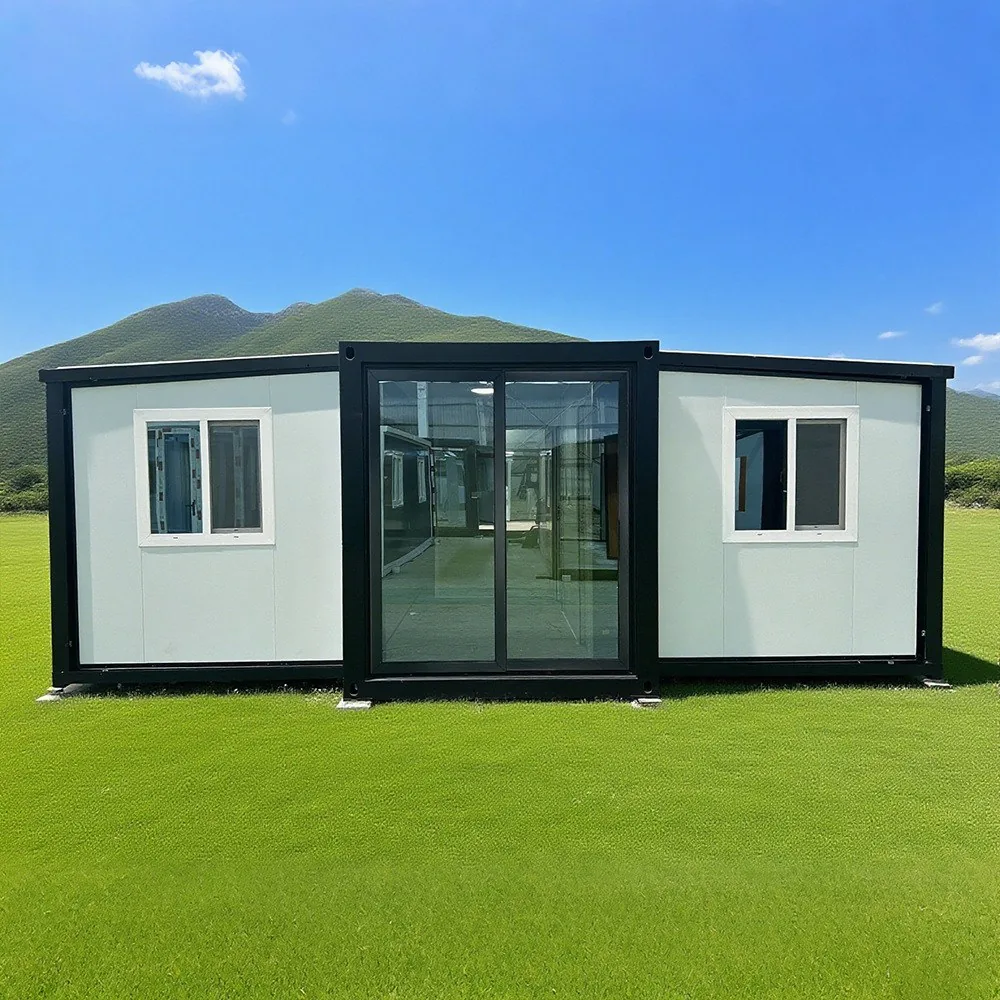
HG Prefab foldable expandable container homes — built to last, delivered worldwide.
Kenya is one of the fastest-moving markets we ship to, and the brief is almost always the same: a family plot in Kiambu or Machakos, a farmhouse outside Nakuru, a lakeside rental near Kisumu, a beach plot north of Mombasa or down at Diani, a safari camp in Laikipia or a staff block on a flower farm in Naivasha. The appeal is straightforward. A folding container home arrives as one sealed steel package, opens into a finished house in a single working day, and costs far less than conventional construction on a plot where good contractors are booked out for months. What slows buyers down is never the house itself. It is the Kenya Bureau of Standards paperwork, the tax stack, and the 500 kilometres of road between the coast and the plot.
This guide covers the six things that decide whether a Kenyan import goes smoothly: what physically arrives and what it costs at the factory gate, how the KEBS PVoC programme and its Certificate of Conformity work before the vessel sails, how the unit is classified and valued under HS 9406, which duties and levies you will actually pay, how to route from Chinese ports to the Port of Mombasa and onward upcountry, and how to prepare the site, the power and the ground so installation day runs to plan. It is general guidance written for buyers working through a licensed clearing agent — every rate, fee and standard should be confirmed against the current official schedule before you commit money. Start with our container home shipping guide for folded dimensions and trade terms, then come back here for everything Kenya-specific.
What Arrives: Folded Envelope, Expanded Footprint and Unit Price
The single most useful fact for import planning is how much smaller a folding unit travels than it lives. A 40FT unit that opens to roughly 5.9 m × 12.2 m and about 76 m² of floor area ships as a package about 2.15 m wide and 12.0 m long — inside standard road widths, inside a standard container envelope, and handled at Kilindini Harbour like ordinary break-bulk or flat-rack cargo. That is what makes inland haulage on Kenyan roads realistic rather than a special-permit operation. Once the unit is en route, the folded shipping weight is documented on the packing list and confirmed by the factory dispatch team; that number drives your crane or forklift booking at the destination, and it is the number your clearing agent needs for the customs entry as well.
| Model | Folded transport footprint | Expanded size | Floor area | Factory price (FOB China) | Kenyan use case |
|---|---|---|---|---|---|
| 20FT folding expandable unit | 2.15 m × 5.9 m | 5.9 m × 6.1 m | ~36 m² | $7,200–$9,800 | Farm manager's house, caretaker unit, coast rental studio |
| 30FT folding expandable unit | 2.50 m × 7.0 m | 7.0 m × 8.0 m | ~56 m² | $10,500–$14,500 | Two-bedroom family home, safari camp manager's house, Airbnb unit |
| 40FT folding expandable unit | 2.15 m × 12.0 m | 5.9 m × 12.2 m | ~76 m² | $12,500–$16,500 | Three-bedroom family house, lodge unit, site office with accommodation |
You can browse the full range — /products lists every 20FT, 30FT and 40FT folding model — before fixing the size that will actually travel well on your access road. Two of the most frequently shipped configurations are the 30FT white folding unit, which suits a two-bedroom family layout, and the 40FT glazed unit, which works well as a main house or a lodge reception-and-suite building. Prices above are ex-works factory prices for the folding unit and its standard interior finish; freight, insurance, duty, VAT, IDF, RDL, agency fees and inland transport are all additional.
KEBS and PVoC: Pre-Export Verification of Conformity
Kenya's KEBS (Kenya Bureau of Standards) runs a PVoC — Pre-Export Verification of Conformity to Standards — programme for imports into the country. In plain terms, for regulated product categories the goods are inspected and tested in the country of export before they ship, and a Certificate of Conformity (CoC) is issued. The importer presents that CoC at the Kenyan border; goods that should have one and do not are stopped and subjected to destination inspection, with a financial penalty calculated on the customs value plus the inspection cost and the delay. Confirm the current penalty basis with KEBS or your agent rather than relying on a figure quoted in an old forum post.
How the PVoC sequence runs in practice
- Confirm scope first. Before anything else, ask your clearing agent or KEBS directly whether your declaration — a prefabricated folding building under HS 9406 — falls within the regulated list for the PVoC route. If it does not, get that answer in writing so you are not caught later.
- Apply through an appointed inspection agent. KEBS appoints international inspection companies to carry out PVoC work in the exporting country. Your application is submitted with the pro-forma invoice, packing list and product details.
- Documentation review. The agent reviews test reports, technical files and any standards marks already held. Where existing accredited test evidence is acceptable, it can be leveraged rather than repeated.
- Physical inspection. An inspector attends the factory to verify the unit, its markings, its configuration and its conformity to the applicable Kenya Standards before loading.
- CoC issuance. Once the file and the inspection are satisfactory, the CoC is issued to the importer. It is tied to the shipment, so apply in good time and keep the certificate with the shipping documents.
The practical consequence for a folding unit is timing: the inspection happens in China, before the vessel sails. Build the PVoC application into weeks two to four of the schedule, alongside production, not after it. Waiting until the unit is loaded at Qingdao or Ningbo is too late, and the cost of getting it wrong is a container sitting at the port accruing storage.
What inspectors look at on a folding unit
Expect attention on electrical safety and components, the build specification and materials, labelling and marking of the product, and the identity of the goods against the invoice description. This is where factory-side preparation pays off. Order the unit with the Kenya electrical specification built in (see the wiring section below), keep the material certificates and test reports together as one document pack, and make sure the commercial invoice description matches what is physically shipped. Our factory QC guide covers the documentation set we issue with every unit.
HS 9406 Classification and Customs Value
Prefabricated buildings are classified under HS heading 9406 in essentially every customs territory, and Kenya, as an East African Community member applying the EAC Common External Tariff, follows the same convention. Your clearing agent determines the ten-digit national tariff line actually entered in the KRA system, and that line fixes the duty rate and any non-tariff requirements attached to your import.
The second number that matters is customs value. Kenya applies the WTO valuation rules, and the value is normally built from the transaction value — the invoice price — with the international freight and insurance added to reach a CIF-style base. Every percentage-based charge below is then calculated on that base, which is why a modest under-declaration is never worth the risk and why an accurate commercial invoice protects you.
Who may import
To clear a commercial shipment in your own name you need a KRA PIN (Kenya Revenue Authority personal or corporate tax identification), and the declaration is lodged through the national single window operated by KenTrade. Importers without a PIN, or without a track record of importing, generally clear through a licensed clearing and forwarding agent, who acts on your behalf under a power of attorney. For payment mechanics and documentary credits, see our letter of credit guide.
Duties, VAT and Levies: The Full Tax Stack
Kenya's tax stack on an import is layered, and each layer has its own basis. The lines below are the ones your agent will enter; treat the percentages as items to confirm, not as guarantees.
| Charge | Basis of calculation | Typical planning range (USD) | Notes for folding-unit imports |
|---|---|---|---|
| Factory price (FOB) | Model and specification | 20FT $7,200–$9,800 · 30FT $10,500–$14,500 · 40FT $12,500–$16,500 | Invoiced by HG Prefab / Henan Huangang Machinery Equipment Co., Ltd. |
| Ocean freight, China to Mombasa | Per unit, by size and season | $2,200–$5,400 | Shanghai, Ningbo, Qingdao or Shenzhen to Kilindini Harbour; ask for both direct and transhipment services |
| Marine insurance | Percentage of invoice value | $40–$120 | Optional but strongly recommended for the ocean leg |
| Import duty | EAC Common External Tariff rate on the confirmed 9406 line, applied to customs value | Confirm current rate with your agent | The single largest variable; get the tariff line confirmed before you price the project |
| VAT | 16 per cent of the customs value plus duty and applicable levies | 16% | Recoverable for registered VAT taxpayers using the unit in a taxable business; not recoverable for pure private use |
| IDF (Import Declaration Fee) | Percentage of the customs value, subject to a minimum in KES | Confirm current rate | Declared through the KenTrade single window; your agent handles it |
| RDL (Railway Development Levy) | Percentage of the customs value | Confirm current rate | Applies to imports cleared through the Kenyan system, not to a rail shipment you have booked |
| KPA handling, CFS and terminal charges | Port and container freight station tariffs | $300–$900 | Every extra day in the terminal is a charge — clear fast |
| Clearing and forwarding agent fee | Per entry | $250–$700 | Worth paying well; a good agent is the difference between two days and two weeks |
| Inland haulage, Mombasa to destination | Distance, route and machine hire | Nairobi $900–$1,800 · Nakuru $1,200–$2,200 · Kisumu $1,600–$2,800 | Road, or road plus standard-gauge rail to the Nairobi inland depot |
| Crane or forklift day plus crew | Machine class and hours | $400–$1,200 | Required for offloading; book the machine for the same window as the truck |
| Concrete piers and site works | Local contractor, soil conditions | $1,200–$3,500 | Pier count and depth depend on the soil; see the site-prep section |
Add it together and the pattern is consistent: a 40FT unit standing on piers in Nairobi typically lands at around two to two and a half times the factory price, with the tax stack and the inland leg each contributing roughly a third of the uplift. Coastal deliveries skip most of the inland leg; Kisumu and western Kenya add the most. Ask your agent for a pro-forma duty and tax computation in KES before the unit ships — the KRA system will produce the payable figure, and seeing it early stops surprises at the port.
The Clearing Agent: Why This Is the Role That Matters
In Kenya, the clearing and forwarding agent is not a convenience; it is the mechanism. A good one will confirm the tariff line, apply for the IDF and lodge the declaration through the single window, arrange any KEBS or other agency release, coordinate with the port and the container freight station, pay the assessed taxes on your account, and release the unit to your transporter. Choose one before the vessel sails, not after it berths.
Documents you must have ready
- Commercial invoice with importer details matching the KRA PIN, a clear description of the folding unit, unit price and Incoterm.
- Packing list stating folded dimensions, folded shipping weight and contents — the same number your crane contractor needs.
- Bill of lading, corrected and released to your agent before the vessel berths.
- Certificate of Conformity (CoC) where the PVoC route applies, plus the supporting test reports.
- Certificate of origin, issued by the competent Chinese authority.
- Insurance certificate for the ocean leg.
- Import declaration and IDF lodged through the KenTrade single window by your agent.
Our customs broker and freight forwarder guide explains how to brief an agent and how to read the quote they send back; it is worth ten minutes before you appoint one.
Routing: From Chinese Ports to the Port of Mombasa
The Port of Mombasa — Kilindini Harbour, operated by the Kenya Ports Authority — is East Africa's main gateway and the natural entry point for a unit coming from China. Most sailings originate at Shanghai, Ningbo, Qingdao or Shenzhen, and the choice is usually made on transit time and transhipment pattern rather than on price alone.
| Origin port in China | Typical routing to Mombasa | Indicative transit | Planning notes |
|---|---|---|---|
| Shanghai | Direct service or transhipment via a Far East / Indian Ocean hub | ~18–28 days | Most frequent sailings; best choice when production finishes early in the month |
| Ningbo – Zhoushan | Direct or one transhipment via Singapore / Colombo / Jebel Ali | ~19–30 days | Competitive rates, good availability of flat-rack and break-bulk slots |
| Qingdao | Usually one transhipment | ~20–32 days | Convenient for northern production schedules; book early for out-of-gauge space |
| Shenzhen / Yantian | Direct or transhipment | ~18–28 days | Fastest option for southern factories; check cut-off times carefully around public holidays |
Two routing questions to put to your forwarder. First, ask whether a direct service is genuinely available for your sailing window, because a transhipment that looks fine on paper can add a week at the hub. Second, ask for the free-time and demurrage terms at the Kenyan end in writing — storage at the port is the cost that escalates fastest when documents are late. Buyers in western Kenya sometimes compare Mombasa against Dar es Salaam; for Kisumu, the comparison can be genuine, but weigh the transit-bond and cross-border paperwork before choosing the shorter road.
Inland Delivery: Nairobi, Nakuru and Kisumu
From the port gate, the plan is the part most likely to lose days. Work it backwards from the pad.
Mombasa to Nairobi
The A109 and the standard-gauge railway both connect the coast to the capital, and the choice is usually about timing and final position rather than price. Road haulage on a low-bed or flat-bed trailer suits plots that are off the rail corridor. Rail to the Nairobi inland container depot, then a short road leg, works well for plots inside the city and can reduce road time substantially. Either way, the unit arrives folded, on a single trailer, inside standard road width.
Nairobi to Nakuru and the Rift Valley
Nakuru, Naivasha and the wider Rift Valley add a further leg along the A104 and the A8. This is good road by regional standards, but check two things: the last stretch to the plot, which is frequently murram and turns to soup in the long rains, and the bridge and culvert ratings on any district road you plan to use. Schedule delivery outside the April–May long rains and the October–December short rains wherever the site allows it.
Kisumu and western Kenya
Kisumu means the longest haul: Mombasa to Nairobi, then up the escarpment through Kericho, or Nairobi to Nakuru and across to the lakeside. Budget two to four days of road time after clearance and survey the final approach in person. A folded unit is far easier to move than a volumetric modular box precisely because it travels within standard road width, but the last two kilometres of a lakeside plot are still the part that decides whether the truck makes it.
Site Preparation: Concrete Piers, Termites and Moisture
A folding unit does not need a full slab, and on Kenyan soils that is an advantage. The standard approach is a set of concrete piers — pad footings cast on a compacted base, positioned to the unit's load points, with the unit set level on them so air can move underneath. Piers cost less, cure faster, and keep the steel frame clear of standing water, which matters enormously in a climate with two rainy seasons.
Soil: the black-cotton problem
Much of Kenya sits on expansive black-cotton clay that swells when wet and shrinks when dry, cracking shallow foundations. Take the pier design to a local structural engineer who knows the ground on your specific plot, and expect deeper piers and a wider bearing pad than you would use on free-draining soil. Our foundation comparison walks through the options, and the site prep checklist sets out the order the work needs to happen in. For sloping plots in the highlands or on the escarpment, see the sloped terrain guide.
Termites
Kenya has aggressive subterranean termite species, and they are the one local hazard that surprises overseas buyers. The steel frame itself is not food for termites, but any timber in the fit-out, the packaging, the skirting and the stored materials are. Specify pre-treated timber for any decking or interior joinery, keep the ground clear of timber offcuts and formwork around the pad, avoid bridging the gap between soil and frame with untreated wood, and apply a soil treatment around the pier line as your contractor recommends. Good under-floor ventilation is the cheapest long-term deterrent, which is another argument for piers over a slab.
Moisture and coastal corrosion
On the coast, salt-laden humid air attacks steel far faster than inland air. For Mombasa, Kilifi, Diani and Lamu sites, specify a marine-grade coating system, keep the unit clear of direct sea spray where the plot allows it, and plan the under-floor ventilation generously. Inland and in the highlands, humidity is the issue rather than salt: cross-ventilation, a proper vapour-control build-up in the wall panel, and a functioning extract in the kitchen and bathroom. Our tropical and humid climate guide and mould prevention guide cover the ventilation and detailing in depth, and the pest-proofing guide covers termite and rodent detailing.
Electrical Work: 240 V, 50 Hz, UK-Style Sockets
Kenya runs on 240 V, 50 Hz single-phase supply with the British-derived BS 1363 three-pin rectangular-pin socket and fused plug, and installation practice follows the BS 7671 wiring rules with RCD or ELCB protection and proper earthing. That is good news for a Chinese-built folding unit, because the specification can be built in at the factory: distribution board, circuit layout, protective devices, earthing arrangement, socket and switch types, and the pre-run circuits for air conditioning, water heating and a solar inverter.
Specify it at order stage. Order the unit pre-wired to the Kenyan arrangement and the only work left on site is the final connection by a licensed Kenyan electrician to the Kenya Power supply, or to your generator and solar system if you are designing off-grid. Doing this after clearance means buying UK-pattern accessories locally and paying someone to re-terminate a brand-new installation. Our voltage and plug standards guide and electrical load planning guide give you the detail to hand your electrician. If the plot has no grid connection, see the solar power setup guide — Kenya has some of the best solar irradiation in the region and most upcountry and coastal units we ship are at least partly solar.
Timeline Summary
- Weeks 1–2. Confirm model and price band (20FT $7,200–$9,800; 30FT $10,500–$14,500; 40FT $12,500–$16,500), lock the 240 V / 50 Hz Kenyan electrical specification, confirm folded shipping weight, appoint a clearing agent.
- Weeks 2–4. Agent confirms the HS 9406 tariff line and current duty rate; PVoC application and CoC inspection arranged in parallel with production; KRA PIN and single-window registration verified.
- Weeks 4–8. Production, typically 15–30 days, with factory QC, document pack and loading.
- Weeks 7–11. Ocean transit from Shanghai, Ningbo, Qingdao or Shenzhen to Mombasa, commonly about 18–28 days depending on service and transhipment.
- Terminal. Clearance, usually 3–7 working days once documents are complete; every additional day is storage.
- Inland. Mombasa to Nairobi 1–3 days by road or road plus rail; Nakuru add 1–2 days; Kisumu 2–4 days.
- On site. Roughly 30–60 minutes to offload and set with a crane or forklift, about 2 hours for four workers to unfold and assemble the main structure, then 2–5 days for services, interior finishing touches and the electrical connection.
Planning a Kenyan import?
HG Prefab, manufactured by Henan Huangang Machinery Equipment Co., Ltd., supplies 20FT, 30FT and 40FT folding expandable container houses to Kenyan buyers with the factory documentation KEBS, KRA and your clearing agent need: folded dimensions, shipping weights, steel specifications, material certificates, electrical drawings configurable to 240 V / 50 Hz with BS 1363 sockets, and lifting-point layouts for your crane booking. Send your plot location and nearest main road for a landed-cost estimate to Mombasa, Nairobi, Nakuru or Kisumu. Email hgmechequip@gmail.com or WhatsApp +86 191 0388 7380. Full model range on the products page.
Get a Quote Browse modelsFrequently Asked Questions
Do I need a crane to install a folding container home in Kenya?
Yes — a crane or forklift is required to offload the folded unit from the truck. Once it is set in position, four workers can unfold and assemble the main structure in about 2 hours. On Kenyan sites, book the machine for the same window as the truck, confirm the folded shipping weight from the packing list before you book, and build the pad inside the machine's rated reach because many upcountry plots have soft black-cotton soil that will not carry a loaded crane.
Is a KEBS PVoC Certificate of Conformity required for a folding container home imported into Kenya?
Kenya runs a Pre-Export Verification of Conformity (PVoC) programme administered by KEBS, and regulated imports must arrive with a Certificate of Conformity (CoC) issued by an appointed inspection agent before shipment. Whether a folding unit under HS 9406 sits on the regulated product list should be confirmed with KEBS or your clearing agent before the unit loads; if a CoC is required, apply early, because the inspection happens in China before the vessel sails. Shipments that arrive without a required CoC are normally stopped for destination inspection and attract a financial penalty calculated on the customs value, so confirm the current rule rather than assuming.
Which HS code and which taxes apply to a prefabricated house imported into Kenya?
Prefabricated buildings are declared under HS heading 9406, and your clearing agent confirms the ten-digit East African Community tariff line that fixes the duty rate. Budget for import duty under the EAC Common External Tariff, VAT at the standard 16 per cent rate, the Import Declaration Fee (IDF) and the Railway Development Levy (RDL), both levied as a percentage of the customs value, plus Kenya Ports Authority handling, container freight station charges and your agent's fee. Your agent runs the calculation in the KRA system and gives you a payable figure before release.
How much does it cost to ship a folding container home from China to Mombasa?
For a single folding unit, budget roughly $2,200 to $5,400 for ocean freight from Shanghai, Ningbo, Qingdao or Shenzhen to the Port of Mombasa depending on size and season, plus marine insurance, then duty, 16 per cent VAT, IDF and RDL on the customs value, then port and clearing charges. Inland haulage from Mombasa to Nairobi typically runs about $900 to $1,800, with Nakuru and Kisumu higher, and a crane or forklift day plus crew adds roughly $400 to $1,200. As a planning rule, a 40FT unit standing on piers in Nairobi usually lands at around two to two and a half times the factory price.
Can the unit be supplied pre-wired for Kenyan 240 V power and UK-style sockets?
Yes. Kenyan installations run at 240 V, 50 Hz, single phase, with BS 1363 three-pin rectangular-pin sockets and fused plugs, and practice follows the British-derived BS 7671 wiring rules with RCD or ELCB protection and proper earthing. HG Prefab builds the distribution board, circuit layout, earthing and socket types to your specification before the unit ships, so the only work left on site is the connection to the Kenya Power supply or to your generator and solar system. Specifying this at order stage is far cheaper than rewiring after the unit has cleared customs.