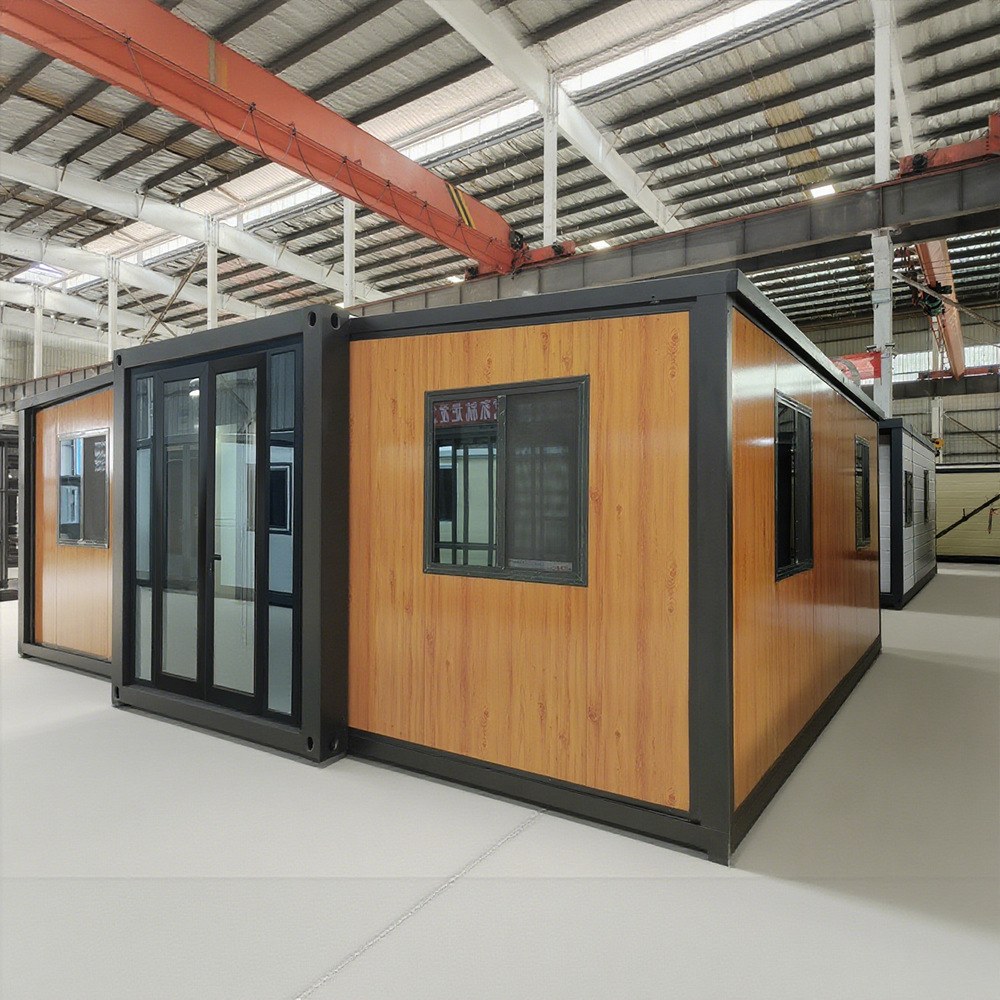
HG Prefab foldable expandable container homes — built to last, delivered worldwide.
If you are buying a folding container house from an export factory such as HG Prefab (Henan Huangang Machinery Equipment Co., Ltd.), insurance is usually the last thing on your mind — and often the first thing that gets forgotten after the unit is delivered. The good news is that insurance for folding container homes is simpler than most buyers think. A folding container house is a steel-framed prefab building, not a complicated vehicle or a conventional wood-frame dwelling, so underwriters can rate it predictably. This guide explains what a container home policy covers, what it costs to insure a 20FT/30FT/40FT folding container house, and how to keep the premium low.
Why a Folding Container House Needs Its Own Policy
Many buyers assume their existing homeowners policy covers a newly installed backyard unit. In most cases it does not — a detached steel building with its own foundation and address usually sits outside a standard policy's "dwelling" definition. Consider these gaps:
- Transit: damage between the port and your site during trucking and offloading is covered only if you arrange cargo or inland-transit cover.
- Structure: the steel frame, wall panels, roof and installed glazing need their own sum-insured if the unit is not automatically covered as an extension of a main home.
- Contents: furniture and appliances inside the unit are often excluded from a land-only policy unless separately scheduled.
- Liability: visitors, guests or site workers injured at the unit are usually not covered by your car or basic property policy.
- Loss of use / rental income: if you rent the unit as a cabin and it burns down, a dwelling policy pays the rebuild — not the weeks of missed bookings.
A standalone policy for the unit, or a scheduled-property endorsement on your main policy, closes every one of these gaps.
What Container Home Insurance Covers
A correctly written policy for a folding container home bundles several coverages:
- Dwelling / structure: steel frame, insulated walls, roof, floor, doors, windows, and factory-installed plumbing and electrical systems.
- Detached structures and site improvements: decks, pergolas, fencing and the gravel pad or foundation.
- Personal contents: furniture, kitchen appliances, electronics and clothing.
- Personal liability: injury to guests or damage they cause, and injury to site workers during delivery and assembly.
- Additional living expense or fair rental value: covers hotel stays or lost rental income while the unit is being repaired.
- Optional endorsements: flood, earthquake, and windstorm in coastal zones are almost always separate add-ons.
The most important rule is to state the real use of the unit. An owner-occupied guest house, a short-term rental cabin and a site office are rated differently, and hiding the true use is the number-one cause of denied claims.
How Insurers Classify a 20FT, 30FT or 40FT Folding Unit
Classification drives price. Most insurers treat a folding container house in one of four ways:
| Classification | Typical Use | Premium Effect |
|---|---|---|
| Accessory dwelling unit (ADU) | Guest house, granny flat on an owned lot | Lowest — treated like a small dwelling |
| Prefab / manufactured dwelling | Owner-occupied primary or seasonal home | Low — steel frame is fire- and termite-resistant |
| Short-term rental cabin | Airbnb-style glamping or holiday rental | Moderate — contents turnover and guest liability |
| Business / commercial building | Site office, clinic, canteen, shop | Rated on commercial lines |
The classification can improve over time. A unit delivered as a "temporary structure" should be re-rated as a dwelling once it sits on a permanent foundation and passes the local permit inspection. Insurers also look at how the building is installed. Because a crane or forklift is required to offload the folded unit from the truck, professional delivery and a documented two-hour four-person assembly procedure lower the installer-risk that underwriters price into a policy.
What It Costs to Insure a Folding Container House (2026)
Premiums depend on location, use, deductible and the insured sum. The unit itself is inexpensive relative to a framed house, and that keeps premiums modest. Use these ranges as a planning guide:
| Unit | Replacement value (unit) | Owner-occupied (year) | Short-term rental (year) |
|---|---|---|---|
| 20FT (36 m²) | $7,200–$9,800 | $300–$550 | $600–$950 |
| 30FT (56 m²) | $10,500–$14,500 | $380–$700 | $750–$1,150 |
| 40FT (76 m²) | $12,500–$16,500 | $450–$850 | $900–$1,400 |
Figures assume a typical deductible of $1,000, contents of $5,000–$15,000 and a $1M liability limit. A 20FT folding container home priced at $7,200–$9,800 usually costs less than $1,000 a year even when rented out — a small price for protecting a six-figure site investment.
How to Insure an HG Prefab Folding Container Home: 8 Steps
- Collect your export documents — commercial invoice, packing list and HG Prefab structural documentation prove the replacement value of a 20FT/30FT/40FT unit.
- Decide the use first — primary home, guest ADU or rental cabin; the use you declare sets the whole rating.
- Inventory the contents — photograph appliances, furniture and fixtures with receipts.
- Get three to five quotes — describe the unit accurately as a "single-storey steel-framed modular dwelling, folding expandable type."
- Check when cover starts — arrange inland-transit cover so the unit is insured from the port to your site, including crane or forklift offloading.
- Document delivery day — film the offload and the roughly two-hour assembly, and keep the delivery receipt.
- Add optional risks — earthquake or flood endorsements where the site needs them; see our seismic design guide for bracing details that insurers reward.
- Review at year one — once the unit is permitted and on a permanent foundation, ask for a re-rate as a dwelling.
Money-Saving Tips That Actually Work
- Bundle policies — adding the unit to your existing land, farm or homeowners policy usually earns a multi-policy discount of 10–20%.
- Raise the deductible — moving from $500 to $1,500–$2,500 can cut the premium by 15–30%.
- Fit security — deadbolts, motion lights and a monitored alarm or camera system qualify for credits in most regions.
- Anchor and brace properly — documented foundation anchorage and seismic or wind bracing can earn engineering-based credits.
- Add fire safety — smoke detectors, fire extinguishers and an electrical certificate all reduce risk scores.
- Buy replacement cost, not actual cash value — the extra premium is small, but it avoids depreciation arguments on a $7,200–$16,500 structure.
- Stay claim-free — small claims below the deductible should be paid out of pocket to protect your claims history.
- Shop the policy every two years — container and prefab rates are still new, and one insurer often undercuts another by a wide margin.
Common Claim Mistakes and Exclusions
Read the exclusions before you sign. Most container home policies will not pay for gradual corrosion, rust or wear, damage from improper installation, damage during unpermitted use, flood, or earth movement — unless an endorsement was purchased. Disclose short-term rental activity in writing, keep the unit anchored to an approved foundation, and maintain the roof coating and exterior paint to avoid corrosion disputes. A little documentation on day one prevents the most expensive arguments on the day you claim.
Need a folding container house?
HG Prefab manufactures 20FT, 30FT and 40FT folding expandable container houses with the structural documentation insurers want — shipped flat-packed worldwide.
Browse modelsFrequently Asked Questions
Can I insure a folding container house as a permanent home?
Yes. Once a 20FT/30FT/40FT folding container house sits on a permanent foundation and is permitted as a dwelling, insurers rate it as an accessory dwelling unit or prefab dwelling, with annual premiums typically from $300–$850 depending on size, location and contents.
Is a steel container home cheaper to insure than a wood-frame house?
Usually yes for the same floor area. The steel frame is non-combustible and resistant to termites and rot, which lowers the risk score. Location, use and local catastrophe risk still matter more than the frame material alone.
Do I need separate insurance for earthquake or flood on my container home?
Standard property policies exclude flood and earth movement. If your site is in a seismic zone or floodplain, buy those as endorsements — and follow our anchoring and bracing guidance so the unit actually qualifies for the coverage it claims.
Do I need a crane or forklift to install my folding container home?
Yes — a crane or forklift is required to offload the folded unit from the truck. Once it is set in position, four workers can unfold and assemble the main structure in about 2 hours.
How should I describe my container home to an insurer?
Use this wording: a single-storey, steel-framed modular prefab dwelling of the folding expandable type, delivered flat-packed and expanded on site to 36–76 m², bolted to a concrete or engineered foundation. Attach the manufacturer invoice and structural documents as proof of value.