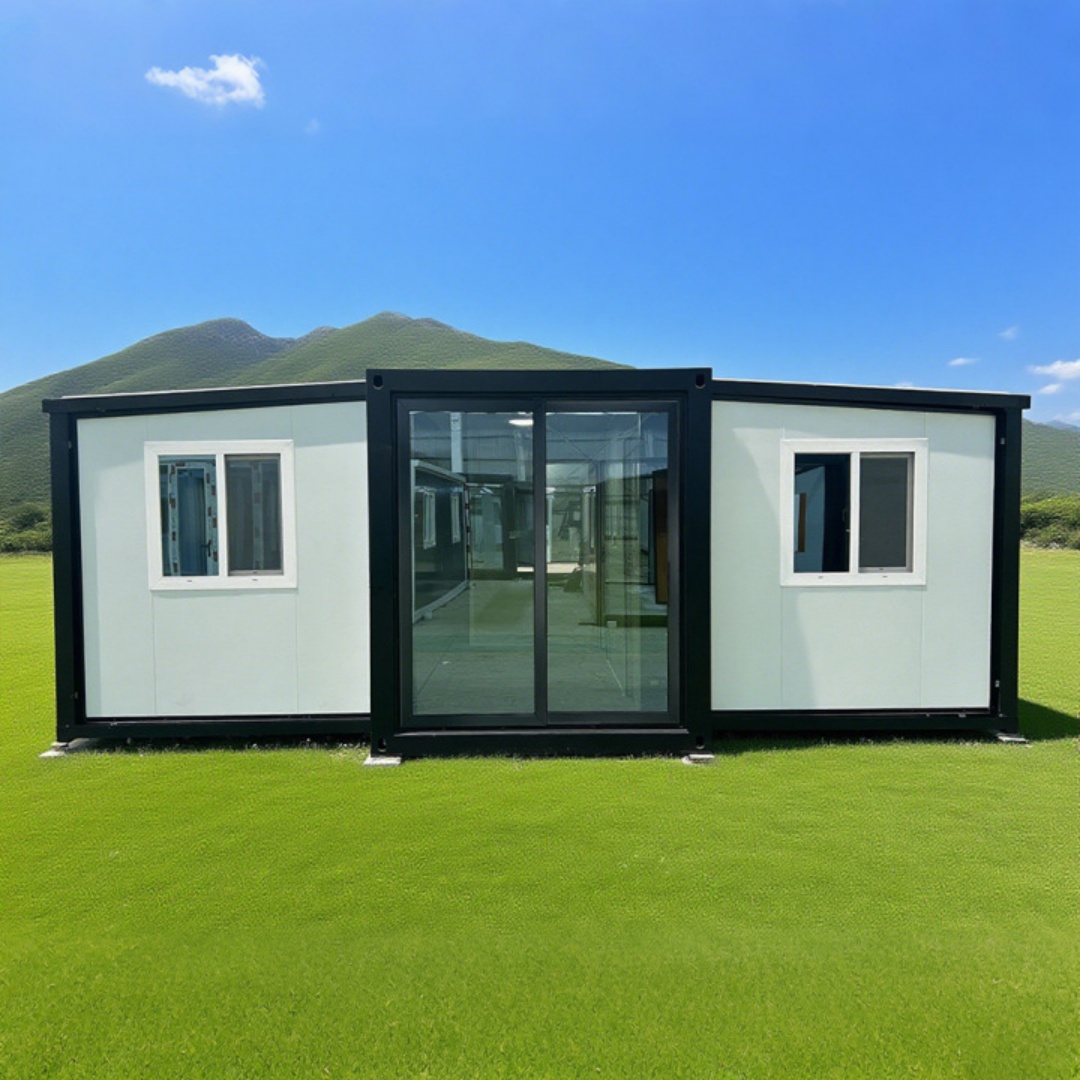
The 40FT model — maximum space, maximum rental income potential.
At $7,200 to $16,500 for a complete, factory-finished folding container home, HG Prefab units are already one of the most affordable housing options on the market. But even at these prices, many buyers want to understand their financing options: How do you pay? Can you get a loan? Does it make financial sense to rent the unit out? This guide breaks down every angle of container home financing — payment terms, bank loans, leasing, rental income and the ROI math that makes prefab homes such a compelling investment.
The price ladder: what you are financing
Before looking at financing methods, here is what you are buying. All prices are ex-factory:
| Model | Expanded area | Price range | Cost per m² |
|---|---|---|---|
| 20FT folding container home | ~36 m² | $7,200 – $9,800 | $200 – $272 |
| 30FT folding container home | ~56 m² | $10,500 – $14,500 | $188 – $259 |
| 40FT folding container home | ~76 m² | $12,500 – $16,500 | $164 – $217 |
Compare that to conventional construction at $150-$300/m² in most markets — before you add the cost of land, permits, and months of construction. The 40FT, at $164-$217/m² delivered as a finished unit, is often 30-50% cheaper per square metre than a comparable stick-built home. See our detailed cost breakdown for the full analysis.
HG Prefab payment terms
Our standard payment structure is designed to protect both sides and keep your cash flow manageable:
- 30% deposit on order confirmation — covers raw materials (steel, panels, insulation, fixtures) and starts production.
- 70% balance before shipment — paid when the unit passes factory QC and photos/videos are sent for your approval.
- Payment methods: Bank telegraphic transfer (T/T) or Letter of Credit (L/C) for larger orders.
- Bulk orders: For orders of 5+ units, we can negotiate milestone payments tied to production stages (e.g. 30% deposit, 30% after framing, 30% before shipment, 10% after arrival).
This means you only need 30% of the purchase price to get production started. On a $12,000 30FT unit, that is a $3,600 deposit to begin building your home.
Bank loans and mortgages for container homes
Financing a prefab home through a bank is possible, but the path depends on how your country classifies the structure:
Chattel loan (personal property)
In many jurisdictions, a folding container home that sits on piers or a non-permanent foundation is classified as personal property (like a caravan or mobile home) rather than real estate. This means you would apply for a chattel loan or personal loan rather than a mortgage. These loans typically have shorter terms (5-15 years) and slightly higher interest rates, but the application process is faster and does not require land title.
Conventional mortgage (real estate)
If you place the unit on a permanent foundation (concrete slab with footings) and your local building authority classifies it as a permanent dwelling, you may qualify for a conventional mortgage or a construction-to-permanent loan. This is more common for ADU (accessory dwelling unit) applications on land you already own. Requirements vary — talk to a local lender about whether a prefab steel home qualifies.
Home equity loan
If you already own property with equity, a HELOC or home equity loan is often the simplest way to fund a container home. You borrow against your existing property at mortgage-level interest rates and use the funds to purchase the unit outright. This is particularly common for buyers adding a granny flat or ADU to their existing property.
Leasing and rent-to-own
Some commercial finance companies offer equipment leasing for prefab structures. Under a lease arrangement, you pay a monthly fee for the use of the unit, with an option to purchase at the end of the lease term (typically 3-7 years). This can be attractive for businesses using the unit as a pop-up shop or site office — the lease payments are a business expense, and the unit generates revenue from day one.
Rental income: the ROI multiplier
The most compelling financial case for a container home is its rental income potential. Because the purchase price is so low relative to the living space provided, the rental yield is extraordinary compared to conventional real estate:
| Model | Purchase price | Monthly rent (typical) | Annual yield | Payback period |
|---|---|---|---|---|
| 20FT (studio) | $7,200 – $9,800 | $500 – $1,200 | 61% – 150% | 6 – 16 months |
| 30FT (1-2 bed) | $10,500 – $14,500 | $800 – $2,000 | 66% – 152% | 5 – 15 months |
| 40FT (2-3 bed) | $12,500 – $16,500 | $1,000 – $2,500 | 73% – 173% | 5 – 14 months |
Note: Rental rates vary significantly by location. The figures above represent mid-range estimates for suburban/rural rentals in markets where container homes are legally permitted as dwellings.
Even at the conservative end of these ranges, a 30FT unit purchased for $12,000 and rented at $800/month generates $9,600/year — a payback of roughly 15 months. In high-demand rental markets (holiday areas, mining towns, university districts) where rent can exceed $2,000/month, payback can be as fast as 6 months.
Airbnb and short-term rental
Short-term holiday letting typically commands 2-4x the nightly equivalent of long-term rent. A 40FT unit in a tourist area might earn $100-$200/night on Airbnb. At 60% occupancy (18 nights/month), that is $1,800-$3,600/month — potentially paying back the entire purchase price in 4-9 months. The steel construction, fire-rated insulation and lockable security make container homes well-suited to unattended short-term rental.
The total cost of ownership: beyond the purchase price
When budgeting, remember to factor in costs beyond the unit price:
- Shipping: Freight from factory to your port — varies by destination, calculated per container. Two 20FT units share one 40HQ container for efficient freight.
- Foundation: $800-$3,000 for a concrete slab or pier system. See our foundation guide.
- Crane and installation: A crane or forklift is required to offload the folded unit from the truck — budget $200-$800 locally. Four workers unfold and assemble the main structure in about 2 hours.
- Utility connections: Water, drainage, electrical and (if applicable) gas hookup by local trades. See our plumbing and electrical guide.
- Import duties: Check your country's tariff for HS code 9406 (prefabricated buildings).
- Permits: Varies — see our permits guide.
A realistic all-in budget for a 30FT unit delivered, installed and connected is typically $15,000-$22,000 — still a fraction of conventional construction for the same living space.
Case study: the granny flat that paid for itself
A client in Australia ordered a 40FT folding container home ($14,500 ex-factory) to use as a granny flat on their existing property. Total all-in cost including shipping, foundation, crane, utility connections and permits was approximately $21,000. They rented the unit to a long-term tenant at $350/week ($1,500/month). The unit paid back its total cost in 14 months of rental income, and has been generating pure profit since — all from an asset that can be folded up and relocated if needed.
Want a tailored quote and ROI analysis?
Send us your model preference, destination and intended use (residential, rental, commercial). We will provide a price quote and a simple ROI projection within 24 hours.
Browse all models