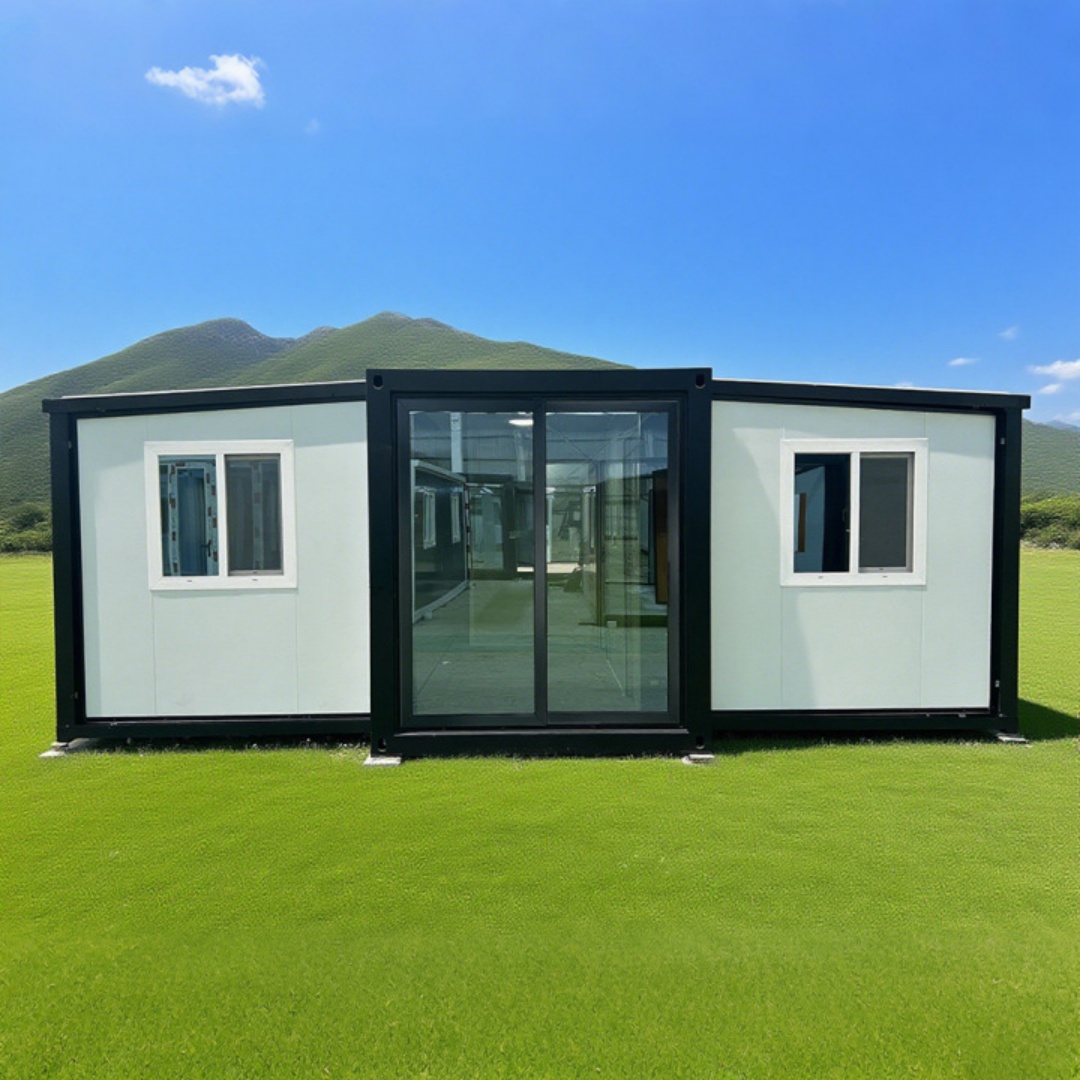
HG Prefab foldable expandable container homes — built to last, delivered worldwide.
Tool hire is a logistics business disguised as a shop. The money is made on utilisation, so the two things that matter most are how fast a customer can be served and how fast a returned machine can be checked, cleaned, refuelled and put back on the shelf. A folding container home gives a small hire operation a purpose-built trade counter with lockable, weather-tight storage attached, at a fraction of the cost of a unit on an industrial estate. This guide covers sizing, counter flow, racking and floor loads, fuel and battery storage, servicing and cost for a 20FT, 30FT or 40FT HG Prefab folding container house used as a tool or equipment hire depot.
Why a Container Works as a Hire Depot
Hire businesses need three things that containers supply cheaply:
- Lockable, weather-tight storage. Tools and small plant are the stock, and the loss rate on an unsecured yard is what kills small operators. A steel box with a steel door is a genuine deterrent.
- A counter at the yard gate. Customers arrive with a van and a trailer. Serving them from a counter that faces the yard removes the double handling that a shop unit in town forces on you.
- A workshop that is not a workshop. Most hire depots only need to wash, fuel, check and tag equipment, not to rebuild it. A compact servicing bench in the same building is enough.
Day one is straightforward. Yes — a crane or forklift is required to offload the folded unit from the truck. Once it is set in position, four workers can unfold and assemble the main structure in about 2 hours. Racking and the counter can then go in the same week and the depot can be trading within a fortnight.
Sizing and Layout: Counter, Store and Service Bench
Divide the unit into three bands, front to back: the customer counter, the pick-and-return aisle, and the servicing bench with the consumables store behind it.
| Unit size | Floor area | Layout | Suitable scale |
|---|---|---|---|
| 20FT | ~14 m² | Counter plus a single 4 m racking run and a small bench | Two-van owner-operator, garden and small tool hire |
| 30FT | ~21 m² | Counter, two aisle runs, bench and consumables rack | Small town depot with 100–200 hire lines |
| 40FT | ~28 m² | Counter, three runs, servicing bench, store and staff nook | Busy depot with 300+ lines and a delivery round |
Layout rules that keep serving time down:
- Counter faces the yard. Put the service window and the collection door on the same elevation the vans use. Every step a customer has to walk with a mixer or a plate compactor costs you a minute.
- One-way flow. Returns come in through a marked door to the checking bay, hires go out through the counter side. Mixing the two means returned dirty equipment sits in the customer's path.
- Aisle width: 900 mm absolute minimum, 1,200 mm where a pallet truck or a wheeled generator moves. Heavy lines belong at the door end, not the far end.
- Bench position: the servicing bench must have 1.5 m of clear approach so a machine can be wheeled onto it and blown down without blocking the aisle.
- Consumables at the counter: blades, drill bits, abrasives, chains and safety kit are the highest-margin items in a hire depot. A pegboard or a 300 mm shelf run within arm's reach of the till doubles as a retail wall.
- Outside: mark a wash-down pad, a fuel point and a loading zone on the apron. The apron is part of the depot, and a poor apron layout undoes a good internal layout.
Racking, Floor Loads and Heavy Equipment
Containers are strong, but the strength is in the frame, not in a thin floor panel, and hire stock is unusually dense:
- Floor loading. A standard folding container floor is generally designed for evenly distributed domestic loads. Point loads from pallet racking feet, a compressor or a plate compactor must be spread with steel plate or load-spreading beams of at least 300 × 300 mm, bolted through the floor into the frame.
- Racking: a 2.5 m high boltless or pallet racking run at 300–500 kg per shelf is enough for most hire stock. Fix the racking to the wall or to a floor rail so nothing topples when a machine is dragged out in a hurry.
- Heavy lines: mixers, breakers, compactors and gen-sets belong on the ground-floor footprint beside the door, on a steel plate, not on a shelf above head height. Lifting a 60 kg breaker down from waist height every day is how staff get injured.
- Long items: scaffold towers, ladders, pipe benders and props need a 3–4 m clear bay with wall brackets. In a 20FT unit, store the long goods horizontally at low level and keep the top of the run for light, hand-carried tools.
- Small parts: a 24-drawer cabinet per category (fixings, blades, seals, batteries) beats mixed bins, and it makes stocktake quick enough to be done weekly.
- Yard storage: large plant bought for long-term hire usually lives outside. The container then serves as the counter, the small-item store and the servicing base rather than trying to shelter everything.
Fuel, Battery and Hazardous Goods Storage
Hire equipment arrives wet and often arrives with fuel still in it, so the depot must handle flammables lawfully:
- Fuel store: keep petrol and mixed two-stroke in a separate, ventilated, fire-rated cabinet or an external bunded store. Never keep petrol inside the occupied part of the unit, and never store it near the electrical panel or the battery charging cabinet.
- Bunding: a 1,000 L IBC or drum store must be bunded to at least 110% of the largest container. Put it on the apron, under a simple canopy, with a lock and a spill kit beside it.
- Batteries: charger cabinets for tool batteries should be metal, ventilated, and at least 2 m from an exit route — the same rules as e-bike charging. Log damaged packs and quarantine them outside in a metal container away from combustible material.
- Safety data: keep a clearly labelled file for oils, adhesives, sealants and solvents with a current safety data sheet for each, and store them in a lockable cabinet with secondary containment.
- Fire equipment: extinguishers at the door, at the counter and beside the fuel store, matched to the risk. Add a fire blanket and a spill kit, and check them on a schedule that is written down and signed.
- Ventilation: any space that stores or refuels equipment must be mechanically ventilated. Fuel vapour is heavier than air and collects in the bottom 300 mm of a steel box, which is exactly where a spark from a bench grinder lands.
Trade Counter Systems, Security and Yard Flow
Hire software, not paperwork, is what lets a small depot grow:
- Hire management: a cloud or local system with barcode scanning, contract generation, damage deposits, agreed return dates and automatic overdue alerts. Scan on both hire-out and return; that single discipline prevents most disputes and most stock losses.
- Counter hardware: a compact PC or tablet, a receipt printer, an A4 printer for contracts, a barcode scanner, a card reader and a UPS. Allow 6–8 A of protected supply at the counter.
- Condition records: photograph every high-value machine at hire-out with a dated image. It takes 20 seconds and settles nearly every argument about pre-existing damage.
- Security: steel doors with night shutters, an alarmed perimeter, motion sensors inside, CCTV over the counter, the door and the fuel store, and a safe or a bolted cash drawer. Most theft from a hire depot happens during loading, so watch the apron as closely as the store.
- Access control: a single staff entry with key or code logging, and a policy that the yard gate is closed and latched whenever the counter is unattended.
- Comfort: a 32–40 A sub-panel for a 20FT depot, 63 A for a 40FT depot, plus heating, a warm-water hand basin, task lighting at 500 lux on the bench and 750 lux over the checking bay. Staff who cannot wash their hands warm or see under a machine will not look after the stock.
Cost Breakdown and Build Sequence
Typical 2026 figures for a container tool hire depot, on top of the unit price:
- Container unit: 20FT $7,200–$9,800; 30FT $10,500–$14,500; 40FT $12,500–$16,500 depending on size and finish.
- Pad, apron, wash-down point and loading zone: $2,500–$9,000.
- Racking, shelving, bins and drawer cabinets: $1,500–$6,000.
- Trade counter, service window and store fit-out: $1,800–$5,500.
- Electrical sub-panel, lighting, HVAC and hand basin: $3,000–$8,000.
- Fuel store, bunding, battery charging cabinet and fire equipment: $2,000–$8,000.
- Hire software, POS, scanners and CCTV: $1,500–$7,000.
- Permits, planning and hazardous-goods notification: $800–$4,000.
Total fit-out typically lands at $12,000–$24,000 for a 20FT depot, $18,000–$36,000 for a 30FT unit and $26,000–$52,000 for a 40FT depot with a servicing bench and staff nook, excluding hire stock itself.
Build in the right order and the business opens sooner: prepare the pad and the apron first, install the fuel store and bunding before the first machine arrives, and order racking so it lands the same week as the unit. HG Prefab can factory-prep the counter opening, racking fixing rails, floor load-spreading plates, sub-panel position, duct sleeves and the extraction point for the servicing bench, so the depot can be fitted out in one visit instead of three.
Henan Huangang Machinery Equipment Co., Ltd. (HG Prefab) manufactures folding expandable container homes in 20FT, 30FT and 40FT sizes and ships them flat-packed worldwide. For a hire depot project, send us your line list, the heaviest items you intend to store indoors, your fuel and battery volumes and your site plan, and we will confirm the right size, floor reinforcement and services layout.
Email hgmechequip@gmail.com or message us on WhatsApp at +86 191 0388 7380. You can also browse the full range at products.html or request a quotation at contact.html.
Need a folding container house?
HG Prefab manufactures 20FT, 30FT and 40FT folding expandable container houses with factory-prepared counter openings, racking rails, reinforced floor zones, fuel store penetration sleeves and electrical sub-panel layouts for tool hire depots — shipped flat-packed worldwide.
Browse modelsFrequently Asked Questions
What size container do I need for a tool hire depot?
A 20FT unit at about 14 m² fits a counter, one 4 m racking run and a small bench, which suits a two-van owner-operator. A 30FT takes two aisle runs and a consumables rack, and a 40FT accommodates three runs plus a servicing bench, store and staff nook.
How is a container tool hire depot delivered and set up?
Yes — a crane or forklift is required to offload the folded unit from the truck. Once it is set in position, four workers can unfold and assemble the main structure in about 2 hours. Racking, the counter and the servicing bench can then be installed the same week.
Can I store petrol and tool batteries in a container depot?
Fuel and batteries need separation from the occupied area. Keep petrol in a ventilated, fire-rated cabinet or an external bunded store with the bund at 110% of the largest container, and put battery chargers in a metal, ventilated cabinet at least 2 m from an exit route, with damaged packs quarantined outside.
How much floor load can a container hire depot take?
The floor handles domestic distributed loads, but hire stock creates concentrated point loads. Spread racking feet, compressors and compactors with steel plate or beams of at least 300 × 300 mm bolted through the floor into the frame, and keep heavy machines at floor level near the door rather than on high shelving.