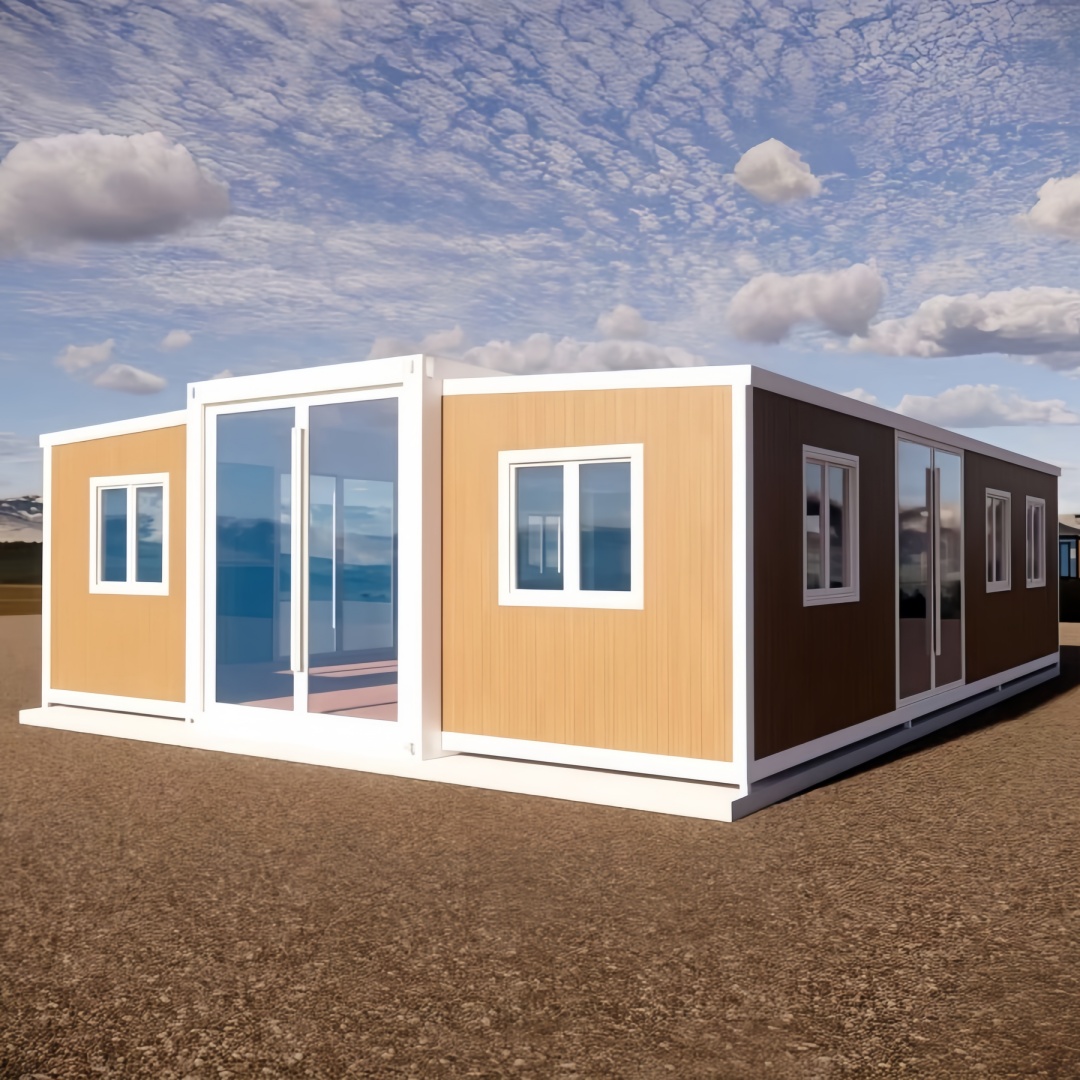
HG Prefab foldable expandable container homes — built to last, delivered worldwide.
The container-home vs traditional-house debate usually gets emotional — one side loves the novelty, the other dismisses it as a fad. Let's skip the opinions and compare hard numbers: cost per square meter, build time, durability, flexibility and resale. By the end you'll know exactly which approach fits your project.
Cost per square meter
| Container home (HG Prefab) | Traditional build | |
|---|---|---|
| Cost per m² (finished) | $100 – $220 | $150 – $300+ |
| 20FT / 36 m² unit | from $7,200 | n/a (no comparable build) |
| 40FT / 76 m² home | from $12,500 | $12,000 – $23,000+ (structure only) |
| Hidden extras | Foundation + utilities + freight | Labor, site prep, plumbing, electrical, finishes |
For a finished, move-in-ready structure, container homes typically come in 30–50% cheaper per square meter — and the gap widens in regions with expensive labor.
Build time: two hours vs two seasons
This is where the container home wins by the widest margin.
- HG Prefab container home: The unit arrives fully assembled and finished from the factory. On site, unfolding takes about two hours with a crane and a small crew. Hook up utilities and move in — typically 1–3 days total.
- Traditional house: From breaking ground to keys-in-hand usually takes 6–18 months, with weather delays, subcontractor scheduling and inspection queues.
A 100x time saving has real value — for housing, for rental income, and for site accommodation that needs to be operational this week, not next year.
Durability and lifespan
- Structure: A galvanized steel frame with painted panels resists rot, termites and fire (A1 rock wool core). A properly maintained unit lasts 40–50 years.
- Traditional house: Timber frames typically last 50–100 years with maintenance, but are vulnerable to termites, rot and fire damage.
- Extreme weather: Steel-frame units handle high winds and seismic movement well when anchored correctly.
Flexibility and relocation
This is the container home's superpower. A foldable unit can be folded, transported and re-erected on a new site — ideal for:
- Construction crews moving between projects.
- Rental property owners who want to relocate units to high-demand areas.
- People who may move in a few years and want their home to come with them.
A traditional house is permanently fixed to its land; its value moves with the property market.
Where traditional construction still wins
- Complex architecture: Unusual shapes, basements and large multi-story designs suit conventional building.
- Financing: Traditional builds are easier to finance in some regions; container homes may need different lending routes.
- Perception: In conservative neighborhoods, resale buyers may prefer a traditional home — though container-home resale is rising fast.
- Local approval: Some jurisdictions still make container homes harder to permit, even though this is changing.
Who should choose which
Choose a container home if: you want speed, budget control, mobility, or a self-contained unit for a site, rental, or holiday use. Choose traditional construction if: you need a complex permanent structure, plan to live in one place for 20+ years, or your financing requires it. Many buyers do both — a container home as a granny flat or studio alongside a main house.
Compare your actual project numbers
Send us your location and requirements — we'll give you a delivered price for a container home so you can compare it directly with your local builder's quote.
Browse models