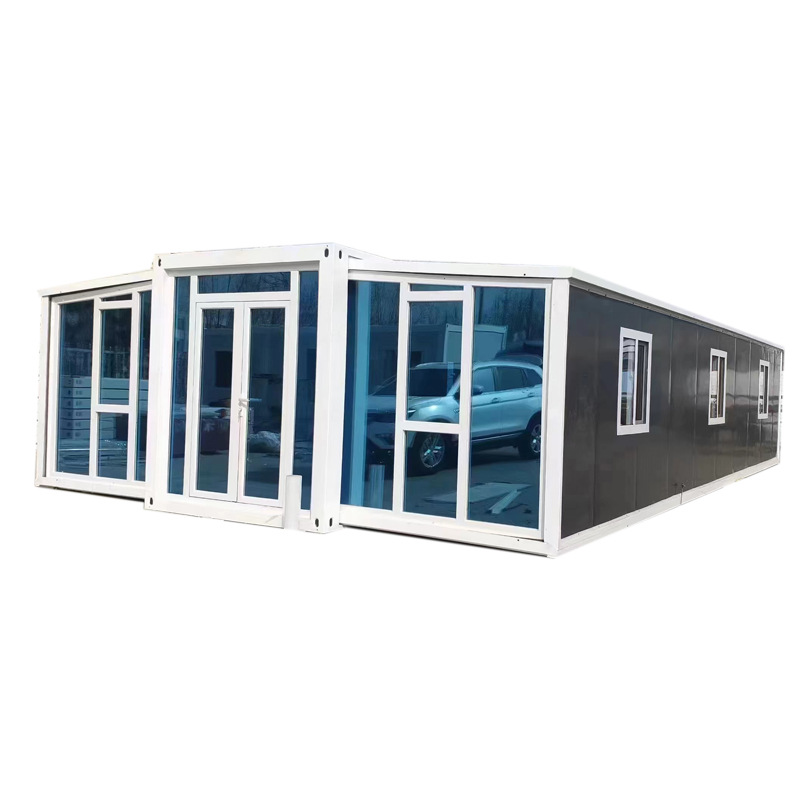
HG Prefab foldable expandable container homes — built to last, delivered worldwide.
Wine does not ask for much, but it asks for it every single hour of the year: a stable temperature, the right humidity, darkness, and no vibration. A cellar dug into a hillside gets all of that for free. A steel box bolted onto a concrete pad in full sun gets none of it, which is exactly why a container wine cellar has to be engineered rather than merely furnished. The good news is that a folding container home starts closer to a proper cellar than most buildings do. Its steel shell is airtight, its wall build-up can carry a thick insulation layer, and it has no damp ground contact to fight. Once the envelope, the cooling unit and the racking are specified together, a 20FT, 30FT or 40FT HG Prefab unit stores wine as reliably as a traditional cellar and costs a fraction of the build.
This guide walks through the climate targets, the insulation and vapour strategy, the cooling equipment, realistic bottle counts for each unit size, tasting room design, and the full budget for a container wine cellar and tasting room.
Why a Folding Container Home Works for Wine
Three properties make folding expandable container units unusually well suited to wine storage, and one property makes them difficult. Understanding both sides is what separates a cellar that protects a collection from one that quietly destroys it.
- Airtight envelope: welded steel panels with factory-sealed joints leak far less than a stud wall. An airtight cellar holds humidity, so the cooling unit is not constantly fighting dried-out air and the corks stay swollen.
- Deep insulation cavity: the wall build-up accepts 75–100 mm of rock wool or PIR, giving R-values that keep a small cooling unit inside its duty cycle even in hot climates.
- No ground moisture: sitting on piers or a pad, the unit has no wicking foundation. Traditional below-grade cellars spend their whole life managing damp; a container cellar does not.
- The difficulty — thermal mass is low: a thin steel box heats and cools fast. A summer afternoon can drive the interior up several degrees in an hour if the roof and the sun-facing wall are not detailed properly. Insulation thickness, radiant shading and correct cooling capacity solve this, but they are not optional.
The other practical advantage is placement. A cellar does not need to be under the house. Putting it 30 m away on a shaded part of the property, next to the vineyard rows or beside the driveway where guests arrive, is simply a matter of where you set the pad.
Climate Control Fundamentals
Every decision downstream — insulation thickness, cooling unit size, door specification, lighting — follows from the four targets below. Write them down before you order equipment.
Temperature
Hold the storage zone at 12–14 °C for long-term ageing, and 10–12 °C if you are laying down wine for a decade or more. Sparkling wine and champagne are happiest at the cooler end of that band. What matters more than the setpoint is stability: keep daily swings under 1–2 °C and never allow more than 3 °C in 24 hours. Repeated expansion and contraction of the wine pushes against the cork, breaks the seal, and lets oxygen in. A cellar that sits steadily at 14 °C is better for wine than one that cycles between 11 °C and 17 °C.
Humidity
Target 55–75% relative humidity. Below 50% corks begin to dry, shrink and admit air; above 80% you grow mould on labels, racking and cartons, and the collection starts to look unsellable long before it tastes wrong. Around 65–70% is the practical sweet spot. Because the container shell is airtight, humidity is mostly a matter of not removing it — oversized cooling that short-cycles condenses water out of the air and dries the room. Size the unit to run long, gentle cycles rather than short, hard ones.
Light, Vibration and Air
- Light: wine is damaged by UV even through clear glass. Use LED fittings only, no windows in the storage zone, and keep illuminance low — enough to read a label, nothing more. Motion-sensor switching means the lights are off almost all the time, which also removes a heat source.
- Vibration: continuous low-level vibration disturbs sediment and slows clarification. Mount the condensing unit on rubber isolators outside the cellar, never bolt the compressor to a cellar wall, and keep racking off any shared structure with a generator or pump.
- Air quality: wine breathes through the cork, so the cellar must not smell of paint, solvent, diesel or stored cardboard. Finish interior surfaces with low-VOC products, store nothing but wine in the cellar zone, and provide a small filtered fresh-air change.
Insulation and Vapour Control
In a container cellar, the envelope is the cooling system's best friend. Every watt of heat you stop at the wall is a watt the compressor never has to remove, and in hot climates the envelope is the single biggest variable in running cost.
- Wall and roof build-up: 75–100 mm rock wool or PIR on all six faces. Do not skip the roof — on a summer day it carries the largest heat load in the entire box.
- Vapour barrier: a continuous polyethylene or foil membrane on the warm side of the insulation, taped at every joint and at every penetration. A gap in the barrier means condensation inside the wall cavity, and inside a wall cavity you get rust and mould rather than a second chance.
- Thermal breaks: break the steel-to-steel path at the frame with a rigid thermal spacer. Steel conducts roughly 300 times better than insulation, so unbroken members become fins that dump heat straight into the cellar.
- Shading: a roof overhang, a pergola, or orientation with the long axis out of the afternoon sun reduces peak load by 20–40%. Shade is free capacity; buy it before you buy a bigger compressor.
- Door: an insulated exterior-grade door with magnetic gasket seals and a sweep. Cheap internal doors are the most common source of temperature swings in small cellars.
- Floor: insulate under the floor and finish with a sealed, non-slip surface. Wine is stored on racks, not on the ground, so the floor mainly needs to tolerate humidity and washing.
Unit Sizes and Storage Capacity
Choose the unit by bottle count first and tasting room size second. Storage is what you cannot easily add later, while a tasting counter can always move outdoors under a canopy. The table below gives realistic figures for racking on two long walls plus the end wall, using standard individual-bottle racking at roughly 12 bottles per running metre of wall per row.
| Unit size | Floor area | Bottle capacity | Tasting seats inside | Best fit |
|---|---|---|---|---|
| 20FT | ~14 m² | 900–1,600 | 2–3 at a counter | Private collector, vineyard sample library |
| 30FT | ~21 m² | 2,000–2,600 | 4–6 at a bar | Small winery club room, restaurant cellar |
| 40FT | ~28 m² | 3,200–4,000 | 10–12 in a separate room | Commercial tasting room with split zones |
The 40FT unit is where the layout genuinely changes. Only at 28 m² can you build a full insulated partition and run two independent climate zones — a 12–14 °C cellar and a 20–22 °C tasting room — without compromising either. In a 20FT or 30FT unit the honest choice is to keep tasting outside on a deck or under an awning and dedicate every square metre inside to storage.
Racking Layout and Capacity Details
Racking is where most container cellars lose 30% of their potential capacity to poor planning. Work from these rules:
- Racking depth: 300–350 mm for single bottles, 550–600 mm for double-deep diamond bins. Nothing else in the cellar needs to be deeper.
- Aisle width: 900 mm minimum for one person to pull a bottle; 1,100 mm if two guests will walk the aisle during a tour.
- Bottom row: start 150 mm off the floor. It protects against any water on the floor and keeps the lowest bottles in the coolest, most stable air.
- Top row: stop at 1,800 mm so everything is reachable without a step ladder in a narrow aisle.
- Materials: powder-coated steel, aluminium or untreated hardwood. Avoid chipboard and MDF — at 70% humidity they swell and sag within a few seasons.
- Mixed formats: reserve at least 15% of the racking as diamond bins or larger openings for magnums, champagne and odd-shaped bottles. A cellar full of single-bottle slots looks tidy and then fails the first time you buy a case of magnums.
- Zoning: group by drinking window, not by region. Keep the bottles you will open this year closest to the door so the cellar door is not standing open for five minutes while you hunt.
Designing the Tasting Room
Bar and Service
A tasting counter needs 600 mm of depth per side if guests sit facing the host, 700 mm if glassware, spittoons and a tablet are on the same surface. Plan for 600 mm of counter length per seated guest. Behind the bar, allow a 900 mm working aisle, a small sink with a glass rinser, and under-counter storage for stemware. Keep a dedicated refrigerator for white and sparkling service at 6–10 °C — serving-temperature storage is separate from cellar storage, and trying to make one fridge do both is a common and expensive compromise.
Lighting and Acoustics
Use warm 2700–3000 K LED at 100–150 lux in the tasting room, dimmable, with the fittings shielded so no light spills into the storage zone. Glass and hard surfaces make small rooms loud; a fabric-wrapped acoustic panel or two, plus a rug under the tasting table, brings a 10–12 seat room down to a level where people can actually talk. Ventilation matters too: six guests and open bottles need 3–5 air changes per hour in the tasting zone, supplied quietly and filtered so cooking and perfume odours never reach the cellar air.
Costs, Delivery and Setup
Budget the whole project, not just the box. The container is typically 25–40% of a finished cellar and tasting room.
- Container unit: 20FT $7,200–$9,800; 30FT $10,500–$14,500; 40FT $12,500–$16,500 depending on size and finish.
- Cellar cooling system: $1,800–$5,500, sized to the envelope rather than to the room volume.
- Insulation upgrade and vapour barrier: $1,200–$3,500.
- Racking: $40–$120 per bottle position installed; $6,000–$20,000 for a full 40FT fit-out.
- Insulated door, partition and finishes: $2,000–$7,000.
- Tasting bar, sink and glassware storage: $2,500–$9,000.
- Electrical, lighting and pad or piers: $3,000–$8,000.
- Running cost: a well-insulated 40FT cellar draws roughly 2–5 kWh per day for cooling.
Installation is fast. Yes — a crane or forklift is required to offload the folded unit from the truck. Once it is set in position, four workers can unfold and assemble the main structure in about 2 hours. Racking, cooling and the tasting bar follow over the next one to three days.
Sequence the site work so the pad or piers and the electrical supply are ready before the truck arrives, and place the unit on the shaded side of the property if you have the choice. Tell your sales engineer where the cellar zone, the partition and the condensing unit will go, and HG Prefab can factory-prep the insulation build-up, the vapour barrier detailing, cable penetrations and the condensing unit mounting position so the cooling contractor can start the day after assembly instead of cutting into finished panels.
Need a folding container house?
HG Prefab manufactures 20FT, 30FT and 40FT folding expandable container houses with factory-prepared insulation build-ups, vapour barriers, cable penetrations and mounting positions for cellar cooling equipment — shipped flat-packed worldwide.
Email hgmechequip@gmail.com or WhatsApp +86 191 0388 7380.
Browse modelsFrequently Asked Questions
What temperature and humidity should a container wine cellar hold?
Aim for a steady 12–14 °C with 55–75% relative humidity. Stability matters more than the exact number: a swing of more than 3 °C per day pushes corks in and out and ruins the seal, so the insulation envelope and the cooling unit must be sized together.
How is a folding container wine cellar delivered and installed?
Yes — a crane or forklift is required to offload the folded unit from the truck. Once it is set in position, four workers can unfold and assemble the main structure in about 2 hours. The cellar cooling unit, racking and tasting bar are fitted afterwards, usually within one to three days.
How many bottles fit in a 20FT, 30FT or 40FT container wine cellar?
A 20FT cellar holds roughly 1,100 to 1,600 bottles with racking on two walls, or about 900 if you keep a small tasting counter inside. A 30FT holds 2,000 to 2,600 bottles plus a four to six seat bar, and a 40FT holds 3,200 to 4,000 bottles with a separate ten to twelve seat tasting room.
Can the cellar and the tasting room share one cooling system?
They should not. The cellar needs 12–14 °C year round while people are comfortable at 20–22 °C, so a single system would either chill the guests or warm the wine. Use a dedicated cellar cooling unit for the storage zone and a separate mini split for the tasting room, with an insulated partition and a sealed door between them.