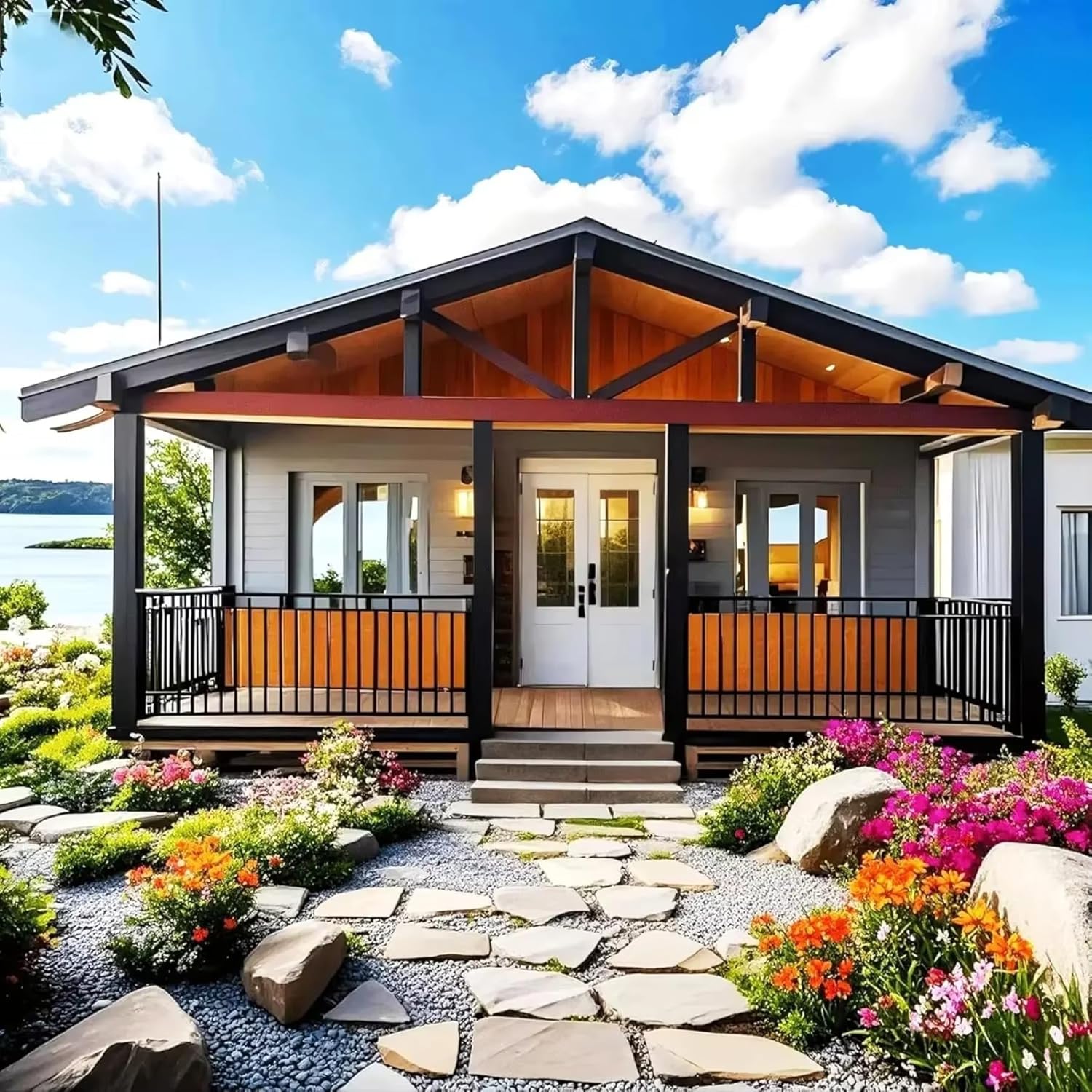
HG Prefab foldable expandable container homes — built to last, delivered worldwide.
More buyers are choosing off-grid container homes — not out of necessity, but for freedom. A foldable container home is naturally suited to remote sites: it arrives complete, sets up in about two hours, and can be paired with solar, battery and water systems to run entirely independently. This guide covers everything you need to plan an off-grid setup.
Can a container home really run fully off-grid?
Yes. A well-insulated container home is small, airtight and energy-efficient, which makes it far easier to power than a conventional house. A typical 20FT or 30FT unit needs 2 – 6 kW of solar and 5 – 15 kWh of battery storage, depending on climate and appliances. With a backup generator or hybrid inverter, you can cover weeks of cloudy weather without the grid.
Solar power: sizing your system
| Lifestyle | Solar array | Battery | Inverter |
|---|---|---|---|
| Weekend cabin (lights, fridge, phone) | 2 – 3 kW | 5 – 10 kWh | 3 – 5 kW |
| Full-time 1–2 people | 4 – 5 kW | 10 – 15 kWh | 5 – 8 kW |
| Family + AC / heating | 6 – 10 kW | 15 – 30 kWh | 8 – 12 kW |
- Panels: Monocrystalline panels are most efficient per square meter — ideal for container roofs. For a 20FT roof you can fit roughly 2 – 3 kW of panels.
- Batteries: LiFePO4 (lithium iron phosphate) is the standard today — safe, long-lived (3,000+ cycles) and maintenance-free.
- Inverter: A hybrid (solar + grid + generator) inverter gives the most flexibility.
Water supply and storage
Plan for 80 – 150 liters per person per day for full comfort, less with conservation habits.
- Tank options: Rainwater collection from the roof, or a poly/steel tank beside the unit (500 – 5,000 L depending on needs).
- Pressure: A small 12V or 240V pressure pump delivers mains-like pressure from the tank.
- Filtration: A sediment filter + UV or reverse osmosis unit makes rainwater safe to drink.
Wastewater and sanitation
- Composting toilet: The simplest off-grid solution — no water, no plumbing, and the compost can fertilize your garden.
- Septic system: For permanent sites, a small septic tank with a soak-away handles greywater and blackwater legally.
- Greywater: Shower and sink water can be filtered and reused for irrigation.
Heating and cooking off-grid
- Heating: A diesel or wood heater is the most reliable off-grid heat source; heat-pump (air-con) units are efficient if you have enough battery.
- Cooking: LPG/propane gas is the standard off-grid cooking fuel; induction cooktops work well on larger battery banks.
- Hot water: A 20 – 40 L electric water heater, or a solar thermal panel, keeps showers comfortable.
HG Prefab off-grid options
HG Prefab offers ready-to-fit off-grid packages that arrive with the unit:
- Solar-ready roof: Reinforced roof mounting points and pre-run cable conduits.
- Solar package: Panels, LiFePO4 batteries, hybrid inverter, mounting rails and wiring.
- Water package: Tank, pump, filters and plumbing manifolds.
Because the packages are designed for the unit, installation is straightforward for any local electrician — no retrofitting required.
Plan your off-grid setup
Tell us your location, climate and how many people will live there — we'll size the right solar and water package for your container home.
See the solar-ready model