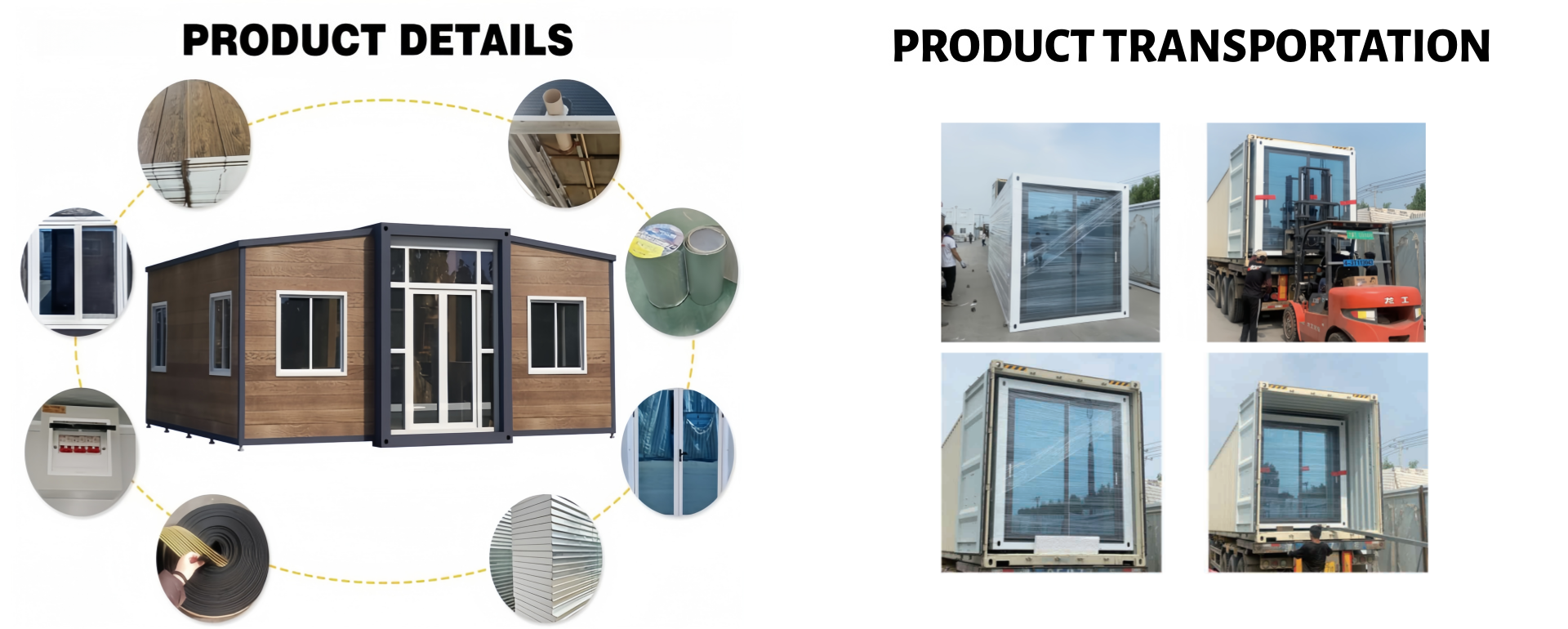
A folded container home ships like a standard container — this is what keeps freight costs low.
The single biggest variable in a container home project is not the house itself — it is getting it from the factory to your site. The good news: foldable container homes are designed for exactly this. They collapse into standard container footprints, which means shipping is predictable, efficient and far cheaper than shipping an assembled house.
Here is how the process works, step by step.
Step 1: Understand the folded size of your home
Because the unit folds flat, freight is charged on the folded volume, not the expanded size:
- 20FT model — folds to a standard 20FT container footprint. Two 20FT units fit in one 40HQ container, which is the most cost-efficient way to ship.
- 30FT model — folds to a 30FT footprint, shipped individually.
- 40FT model — folds to a standard 40FT container footprint, shipped as a full container load.
Most HG Prefab orders leave the factory as breakbulk or container loads from Chinese ports such as Qingdao, Shanghai or Ningbo.
If you are ordering multiple units, ask us about mixed loads — combining sizes in a single container can cut per-unit freight by 20–30%.
Step 2: Choose your trade terms (FOB, EXW, CIF, DDP)
Trade terms define who pays for what, and where responsibility transfers from seller to buyer. The four you will see most often:
| Term | Who covers | Best for |
|---|---|---|
| EXW (Ex Works) | Buyer arranges everything from the factory door | Experienced importers with own forwarder |
| FOB (Free On Board) | Seller delivers to the port and loads; buyer pays ocean freight and the rest | Most first-time importers — the default choice |
| CIF (Cost, Insurance, Freight) | Seller pays freight and insurance to the destination port | When you want the seller to handle shipping |
| DDP (Delivered Duty Paid) | Seller delivers to your door, duties included | Buyers who want a fixed, all-in price |
Most HG Prefab customers start with FOB and use their own freight forwarder, or ask us for a DDP quote if they prefer one fixed price delivered to their door. Tell us your port and we will quote both options.
Step 3: Customs paperwork
Your forwarder or customs broker will need four core documents. We provide all of them with every order:
- Commercial invoice — value, description and quantity of the goods.
- Packing list — what is inside each package, with weights and dimensions.
- Bill of lading (B/L) — the shipping contract and proof of cargo ownership.
- Certificate of origin — used to claim preferential duty rates under free trade agreements.
Also confirm the HS code for prefabricated buildings in your country. Most customs authorities classify prefab buildings under HS 9406 ("Prefabricated buildings"). Duty rates vary by country — from 0% in many markets to 10–15% in others — and some countries add VAT/GST on top. Your local broker can confirm the exact rate before you ship.
Step 4: Port fees and local delivery
Once the container arrives, expect the following destination costs (they vary by port):
- Terminal handling charges and demurrage if the container sits at the port
- Customs clearance fees paid to your broker
- Import duty and VAT/GST assessed by customs
- Trucking from the port to your site
- If needed, a small crane or forklift to position the unit on site
Ask your forwarder for a full breakdown before shipping so there are no surprises. A good rule of thumb: budget 5–15% of the goods value for destination-side fees, depending on your country's duty regime.
Step 5: On-site installation
When the unit reaches your site, installation is quick:
- Level the ground or place concrete pads/piers.
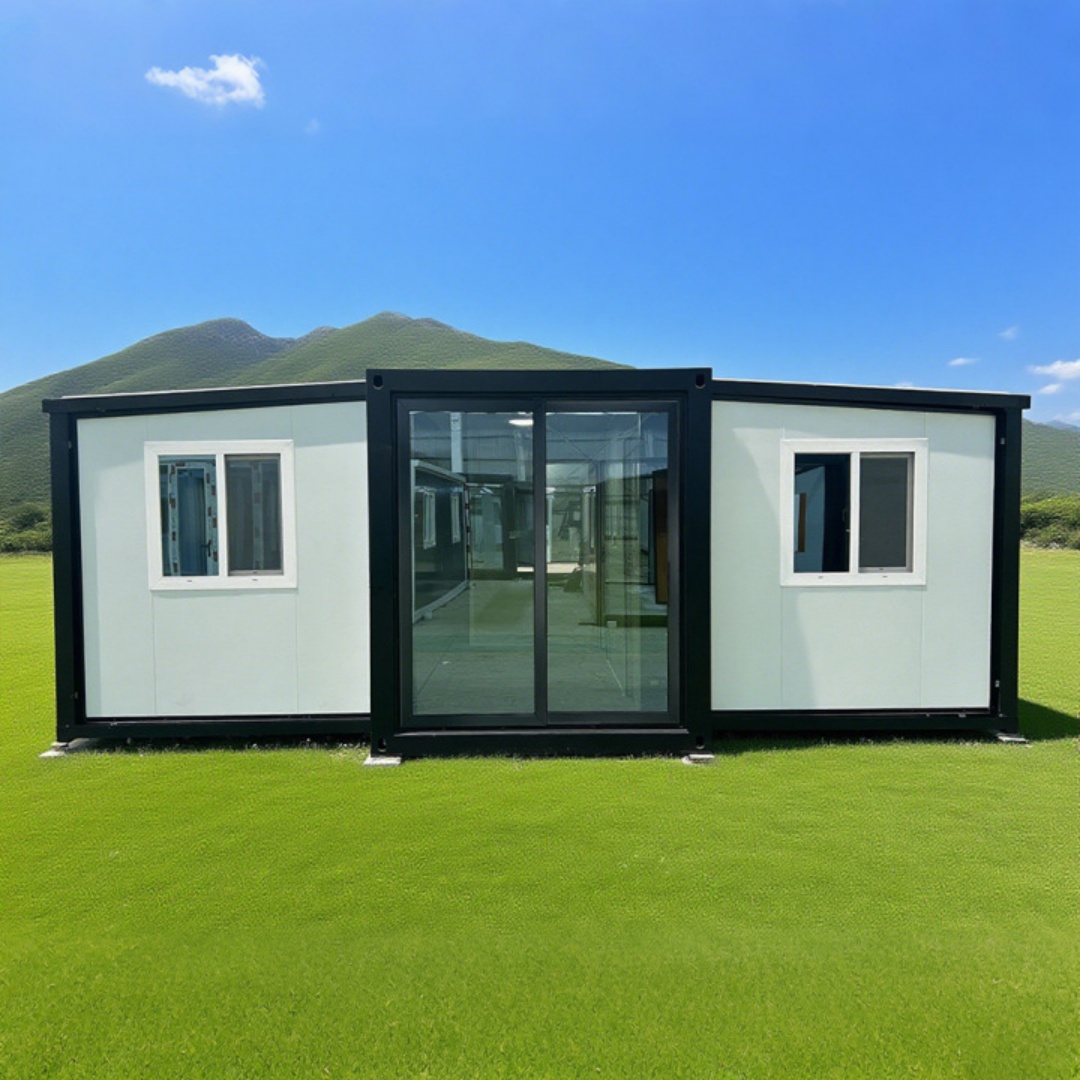
- Lift the folded unit off the truck with a forklift or crane.
- Unfold the walls and lock the roof into place.
- Connect water, power and sewage.
Most HG Prefab units are installed in hours with a small crew, and we provide assembly drawings and instructions with every shipment. Need help? We can arrange remote guidance or, for larger projects, introduce you to local installation partners.
Common questions
How long does shipping take?
Sea freight from China typically takes 20–45 days depending on the destination port. Production itself usually adds 15–30 days depending on customization. Ask us for a current timeline for your port.
Is insurance included?
Ocean freight insurance is optional but strongly recommended. Under FOB terms you can arrange it with your forwarder; under CIF/DDP we arrange it for you.
Can I combine a container home with other cargo?
Yes — if you are importing other items, ask us about packing your unit together with other goods to use the container space efficiently.
Get a landed-cost estimate for your port
Send us your country and nearest port, and we will quote the home, freight and options — FOB or DDP, your choice.
Browse all models