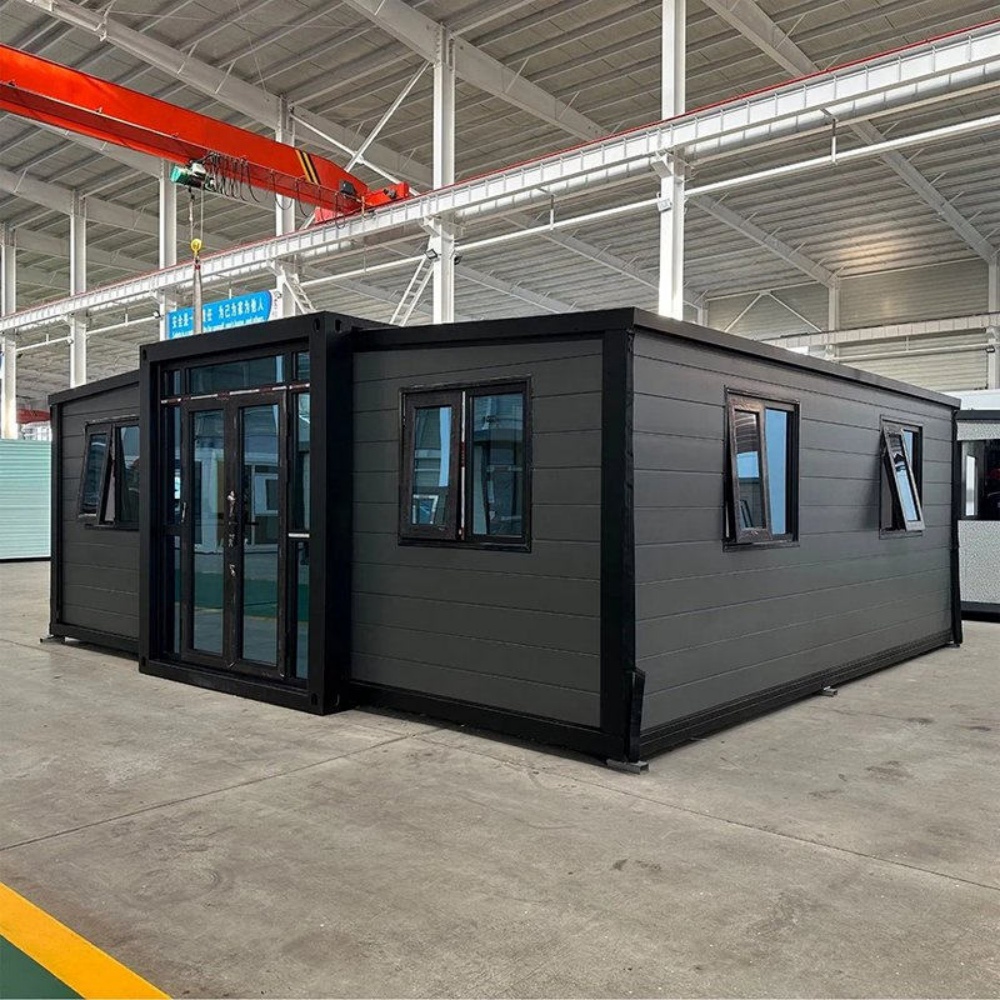
HG Prefab foldable expandable container homes — built to last, delivered worldwide.
Bicycle repair is a small-footprint trade with a large storage problem. Every customer bike waiting for parts occupies floor area for days, and e-bikes add a battery charging load that most small retail units were never wired for. A folding container home answers both: it is a steel workshop with lockable overnight capacity, it can be placed beside a bike path or a supermarket car park instead of on expensive high-street frontage, and it can be moved when the lease or the trail changes. This guide covers layout, tooling, e-bike safety and cost for a container bike repair hub built on a 20FT, 30FT or 40FT HG Prefab unit.
Why a Container Beats a Leased Shop
Three economics make the container format work for independent mechanics:
- Site cost. A yard, car park corner or trailhead pad costs a fraction of high-street rent, and the unit itself is a one-off purchase rather than a decade of lease payments.
- Purpose-built workshop. A steel shell accepts a tool wall, workstand anchors and a wash bay without landlord permission, and heavy loads bolt straight through the floor into the frame.
- Secure storage. Customer bikes stay inside a lockable steel box, which reduces insurance premiums and makes overnight drop-off practical — the single most requested service in urban bike repair.
Setup is fast. Yes — a crane or forklift is required to offload the folded unit from the truck. Once it is set in position, four workers can unfold and assemble the main structure in about 2 hours, so a hub can be trading within a fortnight of the pad being ready.
Workshop Layout and Workstand Positions
Lay the shop out around the workstand, not around the counter. A stand needs roughly 1.5 m of clear space on the drive side and 900 mm behind for the mechanic to walk around a bike.
| Unit size | Floor area | Workstands | Best configuration |
|---|---|---|---|
| 20FT | ~14 m² | 2 | Repair-only bench shop with counter and 10-bike store |
| 30FT | ~21 m² | 3 | Repairs plus wheel bench and small parts retail |
| 40FT | ~28 m² | 4–5 | Full service centre with fitting bay, wash point and 20-bike store |
Practical layout rules from working shops:
- Stand spacing: 1.8–2.2 m centre to centre. Closer and mechanics collide; wider wastes floor.
- Circulation: keep a 900 mm clear aisle from the entry to the counter so a customer can walk in with a bike without passing through a repair zone.
- Wheel bench: a 1.2 × 0.6 m bench with a truing stand and a dish gauge belongs opposite the workstands, with the wheel storage rack above it.
- Floor: rubber tile over a sealed substrate, with a drip tray under each stand. Bolt stand plates through the floor into the steel frame — a stand that tips with a bike clamped in it is a serious injury risk.
- Bike queue: mark two floor positions for intake and hand-over so the counter never becomes a bike park.
Tool Walls, Parts and Secure Parking
A repair hub lives or dies on how quickly a mechanic finds a tool and a part.
- Tool wall: perforated board or a magnetic panel covering 3–4 m² behind the workbench, with 80–120 hooks or magnetic holders. Group by system: drivetrain, brakes, wheels, suspension, e-bike.
- Fast-moving parts: brake pads, cables and housings, inner tubes, chains, cassettes, brake fluid and sealant. Hold 2–3 of each common size and order the rest overnight.
- Special tools: drawered cabinet for bearing presses, headset tools, bleed kits and torque wrenches. Lockable, because they are the most valuable and most stolen items in the shop.
- Bike storage: two-tier vertical racks store roughly one bike per metre of wall. A 20FT unit holds about 10 bikes, a 40FT about 20, which becomes meaningful revenue once you charge for winter storage and servicing.
- Intake system: a simple ticketing flow with a job number, photos at intake and a barcode tag on the bike. It prevents nearly all disputes about pre-existing damage.
E-Bike Charging, Battery Storage and Fire Safety
E-bike service is now the growth side of the trade, and battery handling drives the fire risk assessment:
- Charging cabinet: a steel cabinet rated for internal fire containment, ventilated, on a non-combustible base and positioned within 2 m of an exterior door. Never charge batteries in a living space or a sleeping area.
- Circuit capacity: a typical charger draws 2–4 A. Twelve simultaneous charge points need a dedicated 32–48 A circuit, so size the sub-panel for the fleet you plan to service, not for the two bikes you start with.
- Timed charging: run chargers on a timer and never unattended overnight in an unmonitored space. Temperature sensors or a smoke detector inside the cabinet give early warning of thermal runaway.
- Damaged batteries: quarantine in a metal container outside the unit, away from combustible material, and dispose of through a licensed recycler.
- Fire equipment: a lithium-rated extinguishing agent or aerosol unit at the cabinet, plus the standard extinguishers at the door and a documented evacuation route.
Confirm the local fire code for battery storage before ordering the unit — several jurisdictions now require a separate cabinet or an external store for e-bike batteries.
Power, Water and the Wash Bay
A repair hub needs more services than a retail container, but less than a commercial kitchen:
- Electrical: 60–100 A sub-panel. Put a 16 A outlet at every workstand, plus 230 V (or 110 V) bench sockets, strip lighting at 800 lux over the work areas and an exterior socket for a pressure washer.
- Compressed air: a small quiet compressor at 8 bar for tyre inflation and blow-down. Store it in a cupboard or outside to keep noise away from the bench.
- Water: a 25 mm supply feeding a deep sink, a 10 L under-sink heater and one hose point. Hot water transforms drivetrain cleaning and shortens every service.
- Wash bay: a corner of a 40FT unit works well. Slope the floor 1:80 to a sump, fit a sand and oil interceptor, and keep degreasers in a bunded tray. Never let wash water reach a storm drain.
- Drainage: connect to the sewer if allowed; otherwise use a holding tank sized for a week of washing and pump out on a service contract.
Permits, Budget and Installation
Most jurisdictions treat a bike workshop as light industrial or service commercial use, which is usually easier to zone than retail or food. Expect a permit for the structure, an electrical inspection and, in some areas, a trade-waste or wash-water discharge approval. Check the fire code for battery storage before you commit to the site.
Typical 2026 costs for a container bike repair hub:
- Container unit: 20FT $7,200–$9,800; 30FT $10,500–$14,500; 40FT $12,500–$16,500 depending on size and finish.
- Workstands, benches and tool wall: $1,500–$4,000.
- Hand and special tools: $4,000–$12,000 for a properly equipped shop.
- Bike racks and storage: $800–$3,000.
- E-bike charging cabinet and fire equipment: $1,500–$5,000.
- Electrical, lighting and compressed air: $2,500–$6,000.
- Wash bay, plumbing and drainage: $2,000–$6,000.
- Foundation, delivery and site works: $1,500–$4,000.
Order the service trenches before the unit lands: water, power and drainage are far cheaper to prepare on an open pad than to route afterwards. Tell your sales engineer where the workstands and wash bay will sit, and HG Prefab can factory-prep floor reinforcement plates, the sub-panel position and drain penetrations so the shop is productive from the first week.
Need a folding container house?
HG Prefab manufactures 20FT, 30FT and 40FT folding expandable container houses with factory-prepared service penetrations, reinforced floor plates and electrical sub-panel positions for repair and service businesses — shipped flat-packed worldwide.
Browse modelsFrequently Asked Questions
How much space does a container bike repair shop need?
A 20FT unit at about 14 m² fits two workstands, a counter and roughly ten bikes in storage. A 30FT takes three stands plus a wheel bench, and a 40FT allows four to five stands, a fitting bay, a wash point and about twenty bikes.
How is a container bike repair hub delivered and installed?
Yes — a crane or forklift is required to offload the folded unit from the truck. Once it is set in position, four workers can unfold and assemble the main structure in about 2 hours, so the shop can be fitted out and trading within a fortnight of the pad being ready.
How many e-bikes can I charge at once in a container shop?
Plan the circuit around the fleet, not the first two bikes. Each charger draws 2–4 A, so twelve simultaneous charge points need a dedicated 32–48 A circuit. Charge inside a fire-rated ventilated steel cabinet on a non-combustible base, close to an exterior door.
Do I need a wash bay in a container bike workshop?
It is one of the highest-value additions. A corner wash point with a 1:80 sloped floor, a sump and a sand and oil interceptor speeds up every service. If a sewer connection is not permitted, use a holding tank sized for a week of washing.