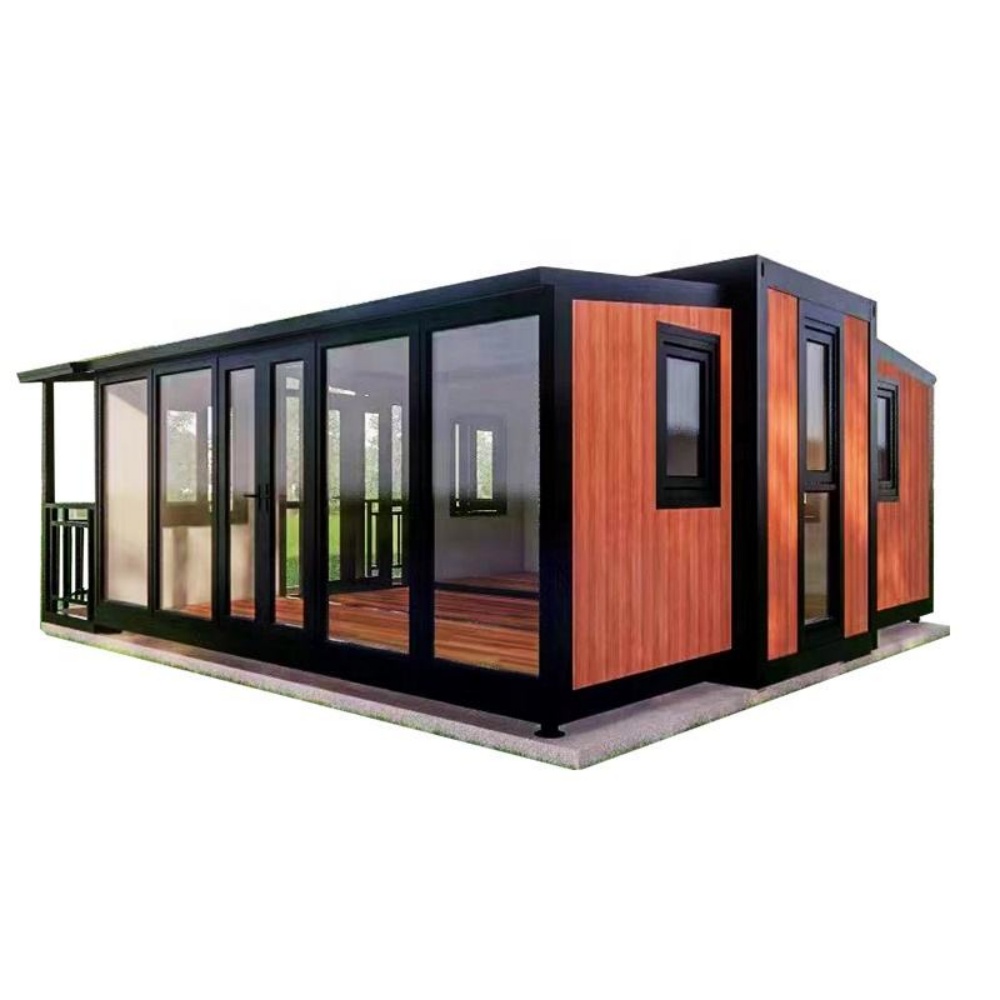
HG Prefab foldable expandable container homes — built to last, delivered worldwide.
Boats and watersports kit are the worst tenants a building can have. They arrive wet, dripping salt and lake water onto the floor, they bring sand, weed and the damp that grows mould in a week, and they sit unused for eight months of the year in the one season when the structure has to work hardest. A folding container home handles that combination better than a timber shed for three reasons: the steel shell does not rot or feed mould, the floor is a sealed steel deck that can be washed down to a drain, and the whole unit can be closed to a level that keeps out rodents, birds and casual theft. It also lands on the sites where boats actually live — a marina quay, a sailing club compound, a lakeside campsite, a harbour yard or a residential driveway — instead of forcing owners to drive to a distant industrial storage unit. This guide covers sizing, ventilation, doors, racking, frost protection and cost for a container boat and watersports store built on a 20FT, 30FT or 40FT HG Prefab folding container house.
Why a Container Works for Boat and Watersports Storage
Four properties of the folded steel shell matter more for wet, seasonal storage than for almost any other use:
- It does not rot and it does not feed mould. Timber sheds and plywood linings absorb water, swell in winter and become a food source for mould and insects. A steel shell with a sealed deck and an insulated, vapour-controlled lining stays dry on the inside once the dew point is managed, and it can be cleaned rather than replaced.
- A washable deck. Sand, weed, mud and fish residue all end up on the floor. A sealed deck, coved skirting and a channel drain let the whole store be hosed out at the end of the season instead of being scraped.
- Security and weather protection. A lockable steel structure with a good roller shutter is a serious deterrent to outboard theft, which is one of the most commonly stolen items in any harbour. At the same time the shell keeps UV, hail and driven rain off covers, sails and hulls.
- Speed and relocatability. Marinas re-plan their compounds, sailing clubs change their winter sites and seasonal businesses follow the water. A unit that can be set on a pad, commissioned in weeks and moved later fits that pattern far better than a permanent building with foundations.
Assembly on site is quick. Yes — a crane or forklift is required to offload the folded unit from the truck. Once it is set in position, four workers can unfold and assemble the main structure in about 2 hours, after which the shutter door, lining, racking and ventilation are fitted over the following days.
Sizing: Which Craft Fits Which Unit
Work backwards from the largest hull and the longest spar. A boat stored in a container must have clearance on all four sides, or it will be damaged on every entry and exit, and the doorway — not the floor area — is usually the binding constraint.
| Unit size | Floor area | Realistic contents | Best use |
|---|---|---|---|
| 20FT | ~14 m² | 1–2 jet skis or tenders up to 4 m, 6 kayaks on wall racks, outboards and gear | Private owner, lakeside house, sailing club overflow |
| 30FT | ~21 m² | A boat to 6 m on a trailered trolley, 8–10 kayaks or paddleboards, sail and cover store | Sailing club winter store, marina rental unit, campsite watersports base |
| 40FT | ~28 m² | Two 6 m boats, or a 7–8 m day boat with the outboard removed, plus full racking | Commercial marina store, boatyard and rental fleet winter lay-up |
Dimensions and handling details that decide whether the store really works:
- Doorway width: specify at least 2.4 m clear for a trailered boat and 3.0 m for a 40FT commercial store. A roller shutter costs a little more than a personnel door but it converts the whole module into a loadable bay rather than a cupboard.
- Clear height: 2.4 m minimum for a boat on a trolley, and 2.6 m if the outboard stays on the transom or if you want kayak racks above the hull. Check the folded unit's delivered height against your site access before ordering.
- Manhandling clearance: 700–900 mm around a hull on a trolley, 600 mm between rack rows, and a dedicated 1.2 m turning zone just inside the shutter so a trolley can be swung without touching the frame.
- Racking: heavy-duty wall racks at 900 mm and 1,600 mm centres for kayaks and paddleboards, mast brackets low and horizontal, and shelf bays at 400 mm for outboards, tanks and toolboxes. Bolted steel racking is fixed through the frame, not into the lining.
- Cradles and chocks: cradle the hull rather than standing it on its keel on a hard deck, and strap everything down. A boat that shifts in a winter storm damages itself and the structure.
- Circulation: keep a 900 mm walkway from the entrance to the far corner so nothing has to be unloaded to reach what is behind it.
Ventilation, Humidity and Frost Protection
This is the difference between a store that protects boats and a store that destroys them. A sealed steel box in a marine climate is a condensation machine: warm moist air meets a cold steel wall and the moisture lands on the hull, the mast and the outboard.
- Control the dew point, not just the temperature. Hold relative humidity at 45–60%. Above 65% mould and mildew appear on covers and upholstery; below 40% timber and varnish dry out and crack.
- Ventilate deliberately: low-level inlet vents on the prevailing wind side and high-level outlets on the sheltered side give 4–6 air changes per hour without power. Fit insect mesh to every opening, because a store full of canvas and rope is an attractive home for wasps and rodents.
- Dehumidify: a 20–50 L per day desiccant or refrigerant dehumidifier with a humidistat and permanent drain is the single most valuable piece of equipment in a wet-climate store. In a 30FT or 40FT unit, two smaller units placed at opposite ends beat one large unit.
- Insulate and control the vapour: line walls and ceilings with 50–75 mm insulated panels and seal joints, so the cold steel surface stays on the outside of the envelope where the condensation belongs. An unlined container drips onto whatever is stored inside it.
- Frost protection: keep the store above 2–5 °C with a small thermostatically controlled heater if engines, batteries or water systems stay inside. Drain raw-water systems, remove batteries or fit a maintenance charger, and leave the outboard tilted and drained so trapped water cannot split a housing or a gearcase.
- Lay-up routine: a written winter checklist is worth more than any component. Wash and dry the hull, drain and fog the engine, loosen covers rather than sealing them tight, and leave an air gap under cushions and fenders so air can move across every surface.
Roller Shutter Doors, Racking and Handling
The door and the floor are the parts of a boat store that get used every day, so they deserve more thought than the walls.
- Roller shutter specification: an insulated or double-skin shutter on a galvanised guide track, sized to the full clear opening, with a floor bolt and a lockable handle. Manual shutters to 4 × 3 m are practical with a chain hoist; anything larger should be electrically driven with a manual override for power cuts.
- Threshold detail: lay the exterior apron flush with the container deck so trolleys and boat trailer wheels roll in without a step, and fall the apron away from the door so water cannot run under the shutter.
- Floor: a sealed anti-slip coating with a channel drain across the doorway and a silt trap before it leaves the store. A ridged floor that holds water in the corrugations is a corrosion accelerator, so build the interior level and drained.
- Racking and storage fit-out: wall racks for kayaks and boards, a sail and cover loft with ventilation beneath, a bunded shelf for fuel and oil, and a locked cabinet for outboards. Keep fuel in a bunded, ventilated position outside the main storage volume if local rules require it.
- Lifting and manoeuvring: a small gantry or a pair of overhead lifting points rated to the heaviest hull saves two people per launch. If the store is on a quay, plan the level difference between the store floor and the pontoon so a trolley can roll directly on and off.
- Service area: a corner for a pressure washer, a hose reel and a work bench turns the store into a genuine maintenance room rather than a shed, which is what owners actually pay for.
Cost Breakdown, Permits and Installation
Typical 2026 figures for a container boat and watersports store:
- Container unit: 20FT $7,200–$9,800; 30FT $10,500–$14,500; 40FT $12,500–$16,500 depending on size and finish.
- Insulated lining, vapour control and sealed floor coating: $3,000–$9,000.
- Roller shutter door, track, apron and drainage: $2,500–$9,000.
- Ventilation, insect mesh and dehumidification: $1,500–$6,000.
- Racking, cradles, chocks and lifting points: $2,000–$8,000.
- Electrical supply, lighting, sockets and heater: $1,500–$5,000.
- Pad, ground works and apron: $2,000–$8,000.
- Security, alarm, CCTV and signage: $1,000–$4,000.
- Permits, marina consent and consultants: $500–$4,000.
Total fit-out typically lands at $12,000–$25,000 for a 20FT private store, $20,000–$38,000 for a 30FT club or marina unit and $30,000–$55,000 for a 40FT commercial store with racking and a powered shutter, on top of the unit price.
Two points decide how the project runs. First, check the ground: a loaded store concentrates weight on a small footprint, so a marina quay or a soft lakeside pad may need a proper concrete slab or screw piles rather than a gravel base, and any consent for a structure in a floodplain or a protected waterfront should be secured before delivery. Second, confirm access twice — once for the delivery truck and the offload, and once for the boat trolleys that will use the store afterwards. HG Prefab can factory-prep the door opening, the channel drain sleeve, the ventilation and duct positions, the electrical board and reinforced zones for bolted racking and lifting points, so the store is usable within days of assembly. Email hgmechequip@gmail.com or message WhatsApp +86 191 0388 7380 to plan a size, layout and door configuration.
Need a folding container house?
HG Prefab manufactures 20FT, 30FT and 40FT folding expandable container houses with factory-prepared shutter openings, drain sleeves, ventilation penetrations, electrical boards and reinforced racking zones for storage, marine and light-industrial use — shipped flat-packed worldwide. Contact hgmechequip@gmail.com or WhatsApp +86 191 0388 7380.
Browse modelsFrequently Asked Questions
What size boat fits in a container boat store?
A 20FT unit takes tenders and jet skis up to about 4 m or six kayaks on wall racks, a 30FT unit takes a boat up to 6 m on a trolley plus eight to ten kayaks or paddleboards, and a 40FT unit takes two 6 m boats or a 7–8 m day boat with the outboard removed. Doorway width and clear height usually limit the craft before floor area does.
How is a container boat store delivered and installed?
Yes — a crane or forklift is required to offload the folded unit from the truck. Once it is set in position, four workers can unfold and assemble the main structure in about 2 hours. The roller shutter, insulated lining, racking and ventilation are then fitted over the following days.
How do I stop mould and condensation in a container boat store?
Hold relative humidity at 45–60% with a humidistat-controlled dehumidifier on a permanent drain, provide low-level inlets and high-level outlets for 4–6 air changes per hour, line the walls and ceiling with 50–75 mm insulated panels and seal the joints, and never store a hull or covers while they are still wet.
How do I protect a boat engine and water systems over winter?
Keep the store above 2–5 °C with a thermostatic heater, drain and fog the engine, tilt the outboard so trapped water cannot split the housing or gearcase, remove batteries or fit a maintenance charger, and leave an air gap under cushions, fenders and covers so air can move across every surface.