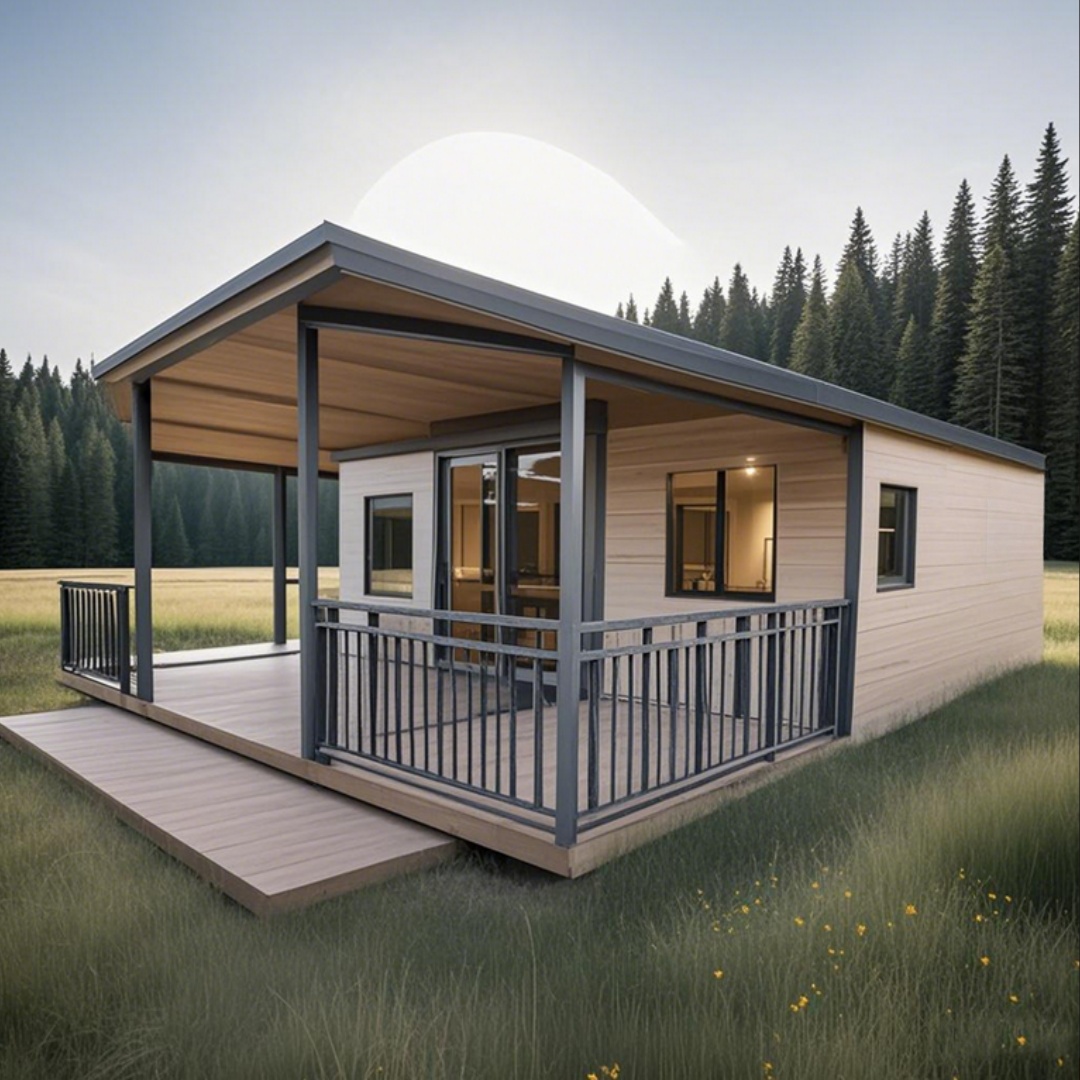
HG Prefab foldable expandable container homes — built to last, delivered worldwide.
There is a moment every hunter or angler recognizes: the truck is unloaded, the fire is going, the gear is stacked, and you realize that the cabin behind you is half-rotten, leaking, or has been broken into again. A traditional timber hunting cabin takes three seasons to build and a steady diet of stain and bug spray to keep alive. A folding container house turns that problem around. An HG Prefab 20FT, 30FT or 40FT unit arrives flat-packed, is set in position on a small pier foundation, and becomes a steel-walled, lockable retreat that handles snow, rain, salt spray and a long empty winter without complaint. This guide covers the layout, power, water, security and seasonal maintenance choices that make a folding container house work as a hunting cabin or fishing lodge.
Why a Folding Container House Fits a Hunting or Fishing Site
Most off-season retreats sit on rough ground, hours from a lumber yard, and weeks between visits. Three properties of a steel-framed folding container home map directly onto that reality:
- Durability. A galvanized steel frame and color-coated steel panels shrug off rain, snow, falling branches and the freeze-thaw cycle that destroys timber cabins. The same shell that survives a 40,000 km container ship voyage survives an unattended winter.
- Security. Steel doors with multi-point locks, fixed steel window frames and the option of steel shutters turn the unit into a vault between hunting seasons. There is nothing for a chainsaw or pry bar to bite into easily.
- Transportability. A 20FT or 30FT unit folds flat and rides on a single standard flatbed. A crane or forklift is required to offload the folded unit from the truck. Once it is set in position, four workers can unfold and assemble the main structure in about 2 hours — which means a remote site with no road access for a crane still gets a one-day install.
For fishing lodges along rivers, lakes or coastal flats, the same points apply with one addition: salt air. The factory color-coated steel panel system used on HG Prefab units is rated for coastal atmospheres when washed twice a year, and stainless-steel fasteners are available for high-salt sites.
Choosing the Right Unit Size
Three sizes cover almost every hunting or fishing use case. The rule of thumb is to match the unit to the largest group that will use it at peak season, not to the average weekend.
- 20FT — 14 m² of floor when unfolded. Works as a single-room gear shed, a one-person hunter's cabin, or a satellite bunk beside a larger lodge. Sleeps two on a bunk bed if you add a small fold-down kitchenette.
- 30FT — 21 m². The most popular hunting cabin size: a main room with a double bunk, a kitchenette, a small wood stove and a separate gear vestibule. Sleeps four comfortably for a long weekend.
- 40FT — 28 m². A genuine family fishing lodge: a living area, a separate sleeping room with a queen, a small bathroom with shower, and a mudroom for wet boots. Sleeps four to six and works for shoulder-season rentals.
The same shell works as a base camp for outfitters, a lake-side fishing shack, or a single-season hunting lease. Browse the full lineup on the HG Prefab product page.
Hunting & Fishing Unit Comparison
The table below compares the three unit sizes for typical hunting and fishing use, including sleeping capacity, generator size, water tank, and indicative pricing. Prices are FOB ranges for standard configurations and exclude shipping, taxes, optional upgrades and on-site work.
| Use case | Unit | Sleeps | Generator | Water tank | Price range |
|---|---|---|---|---|---|
| Gear shed / solo hunter | 20FT | 1–2 | 2 kW portable | 500–1,000 L | $7,200–$9,800 |
| Bunkhouse for 3–4 hunters | 30FT | 3–4 | 3–4 kW | 1,000–2,000 L | $10,500–$14,500 |
| Family fishing lodge | 40FT | 4–6 | 4–6 kW hybrid | 2,000–3,000 L | $12,500–$16,500 |
The 30FT bunkhouse is the most versatile hunting cabin size: large enough for a small group, small enough to heat cheaply with a single propane heater or small wood stove, and priced in the middle of the range.
Foundation, Site Prep and Access
A folding container house is forgiving on site work, but a few basics keep it level and dry for decades:
- Pier blocks. Six to nine concrete pier blocks (300 × 300 mm) under the corner and mid-span posts lift the unit 20–30 cm off the ground and keep the steel floor frame away from standing water. Material cost is roughly $30–$60 per pier.
- Sonotube ring. For a permanent lodge, pour concrete sonotubes below the frost line at each post. A 300 mm diameter tube 1.2 m deep is typical in cold climates.
- Skid base. On a true rough-country site, four 200 mm timber or steel skids let the unit be dragged into final position with a small winch or ATV. Skids also make it possible to relocate the cabin after a few seasons.
- Access road. The folded unit rides on a standard flatbed that needs a 4 m wide, 4.5 m high clearing. Plan a turn-around at the cabin site for the delivery truck.
Delivery day sets the schedule. Yes — a crane or forklift is required to offload the folded unit from the truck. Once it is set in position, four workers can unfold and assemble the main structure in about 2 hours, so pour piers and stock pier blocks before the truck arrives.
Foundations for Wet, Soft or Coastal Sites
For a lake shore, river bank or coastal flat, raise the unit an extra 20 cm and add a slight gravel pad (50–100 mm crushed stone) under the footprint to drain melt-water and rain away from the steel floor frame. In tidal zones, anchor the pier blocks with rebar into the substrate or specify helical piers. A level, well-drained pad is the single biggest factor in how long a steel cabin lasts on a wet site.
Power: Generators, Solar and Hybrid
Most hunting and fishing sites have no grid power. Three setups cover the typical loads (LED lights, fridge, small heater fan, phone charging):
- Portable generator. A 2–4 kW gasoline or propane inverter generator with a 10–15 L tank runs lights, a 12 V compressor fridge and a small fan for 8–12 hours per tank. Quiet inverter models (under 60 dB) keep neighbours happy on shared leases. Expect $600–$2,000 for a quality unit.
- Solar + battery. A 600–1,200 W rooftop solar array feeding a 2–4 kWh lithium battery bank handles lights, fridge and phone charging silently between trips. Add a small 1–2 kW inverter generator as a backup for cloudy weeks. Total package $2,500–$6,000.
- Hybrid. A solar array with a dual-fuel generator that only runs when the battery drops below 30% — common on permanent fishing lodges where summer AC or winter heating matters.
For step-by-step wiring and breaker sizing, see our plumbing & electrical guide.
Water: Tanks, Pumps and Off-Grid Supply
A clean water supply is the difference between a usable cabin and a constant jug-hauling chore. Plan water like you plan fuel:
- Tank size. Plan 60–80 L per person per day for cooking, drinking and washing. For four hunters over three days, that's 720–960 L; a 1,000–2,000 L food-grade tank beside the unit handles most trips with margin.
- Pump. A 12 V diaphragm pump (5–10 L/min) draws from the tank to a small pressure accumulator and feeds the kitchen tap and shower. A 200 W solar panel keeps the battery topped up.
- Rainwater backup. The same folded-unit steel roof that sheds snow is a clean catchment surface for a small gutter and first-flush diverter system. A 1,000 L slimline tank beside the downpipe gives a free top-up between visits. See our off-grid water guide for sizing.
- Winterizing. For shoulder-season hunting, run the supply line inside the cabin wall cavity and add a 12 V heat tape to the exterior pipe run. Drain the tank and pump if the cabin sits through a hard winter.
Heating, Cooling and Ventilation
The 50–75 mm rock-wool wall insulation that ships standard on HG Prefab units holds interior heat well. The right heater depends on trip length:
- Propane heater. A 3–4 kW vented propane heater with a small wall flue is the workhorse of weekend hunting cabins. A 9 kg bottle runs 4–5 nights at low setting. Cost $250–$500.
- Small wood stove. A 5–8 kW wood stove with a through-wall flue is the classic hunting-cabin solution for cold climates. Requires a non-combustible hearth pad and a 100 mm clearance to the wall panels. Use double-wall flue pipe through the steel roof panel.
- Summer ventilation. Cross-ventilation through opposite windows is usually enough in the shoulder seasons; add a 12 V roof fan for hot lake-side afternoons.
For extreme cold or extreme heat performance, see our extreme climates guide.
Security Between Trips
An unattended cabin in hunting country is a target. Plan security before the first trip:
- Door hardware. Replace the standard lockset with a heavy deadbolt and add a steel lock box over the door handle — the same shield used on intermodal containers. Cost $80–$200 per door.
- Window shutters. Internal steel shutters on every window block entry even if the glass is broken. On a 20FT gear shed, a single steel security door and no openings at all is a common choice.
- Cameras. A small cellular-linked CCTV camera with a solar panel records any visit and sends an alert to the owner's phone. Useful for theft, but also for documenting wildlife around the cabin. Expect $200–$600 for a complete system.
- Vermin control. Fine mesh screens on every vent, a sealed waste pipe and a small bait station in the gear vestibule keep mice and squirrels out over a long winter.
For a deeper look at hardening a container home against intrusion, weather and wildlife, see our security guide.
Seasonal Maintenance Checklist
A folding container house needs far less maintenance than a timber cabin, but a 30-minute walk-through each season prevents small issues becoming long ones:
- Pre-season (open-up). Check roof seals, gutter hangers and pier blocks for frost heave; wash exterior walls; test the generator under load; refill the water tank and shock-chlorinate if it has sat stagnant.
- Mid-season. Vacuum the floor, check window and door seals, run the propane heater briefly to confirm flue draft, and clear the gutter of any debris.
- Close-up. Drain the water tank and pump, shut off propane at the bottle, lock all openings, set the CCTV, and leave two silica-gel buckets inside to absorb any moisture ingress.
- Annual. Touch up any scratched exterior paint to prevent rust, re-caulk around windows every 5–7 years, and inspect pier blocks for cracking or settlement.
- Every 10 years. Check the roof panel fasteners and re-tighten or replace any that have loosened under thermal cycling.
Layout Ideas by Use Case
A few common interior layouts that work in HG Prefab units:
20FT Solo Hunter / Gear Shed
A single open room with a fold-down bunk along one long wall, a 600 mm-deep shelf-and-rod system along the opposite wall for rifles and rods, a small propane heater, and a 12 V compressor fridge in the corner. Leave the door vestibule empty for boots and packs.
30FT Bunkhouse (Most Popular Hunting Cabin)
Two single bunks at one end with a curtain divider, a kitchenette (two-burner propane, sink, 80 L fridge) along the wall, a small wood or propane heater in the middle, and a separate gear vestibule at the door. A fold-down table seats four for cards and meals.
40FT Family Fishing Lodge
A queen bed at one end behind a partition wall, two bunks in a small alcove for kids, a compact bathroom with shower and composting toilet, a kitchen with full-size propane range, and a living area with a small couch and wood stove. Glass double doors at the end open onto a deck overlooking the lake.
Planning a hunting cabin or fishing lodge?
HG Prefab manufactures 20FT, 30FT and 40FT folding expandable container houses with optional off-grid power kits, plumbing penetrations, heavy-duty door hardware and security packages — shipped flat-packed worldwide.
Browse modelsFrequently Asked Questions
Are folding container houses warm enough for a winter hunting trip?
Yes. HG Prefab units ship with 50–75 mm rock-wool wall insulation and similar roof insulation, which keeps the interior 15–20°C above outside air when heated by a small propane heater. Add weatherstripping around the doors and an insulated sub-floor, and a 30FT bunkhouse stays comfortable down to roughly -20°C.
How do I get power at a remote hunting or fishing site?
The most common setups are a portable gasoline generator (2–4 kW), a solar array of 600–1,200 W with a 2–4 kWh lithium battery bank, or a hybrid of both. For weekend trips, a 3 kW generator with a 10 L fuel tank is usually enough for lights, fridge and a small heater fan.
Can a folding container home be locked up and left for months between trips?
Yes. The galvanized steel shell, steel doors and lockable vinyl windows make HG Prefab units as secure as a small metal building. Add a heavy steel shipping-container lock box over the door handle, a CCTV camera with cellular uplink, and vermin-proof screens on every opening, and the cabin can sit unattended for an entire off-season.
How much water do I need to store at a hunting or fishing cabin?
Plan 60–80 L per person per day for cooking, drinking and washing on a fully off-grid weekend. For four hunters over three days, that's 720–960 L. A 1,000–2,000 L food-grade tank beside the unit, plus a roof-collected rainwater backup, is enough for most trips.
What foundation does a container hunting cabin need?
For a seasonal site, six to nine concrete pier blocks at the corner and mid-span posts are usually enough. For a permanent installation, a ring of concrete sonotubes below the frost line is recommended. Either way, the unit must be level and lifted 20–30 cm off the ground to keep the steel floor frame dry.