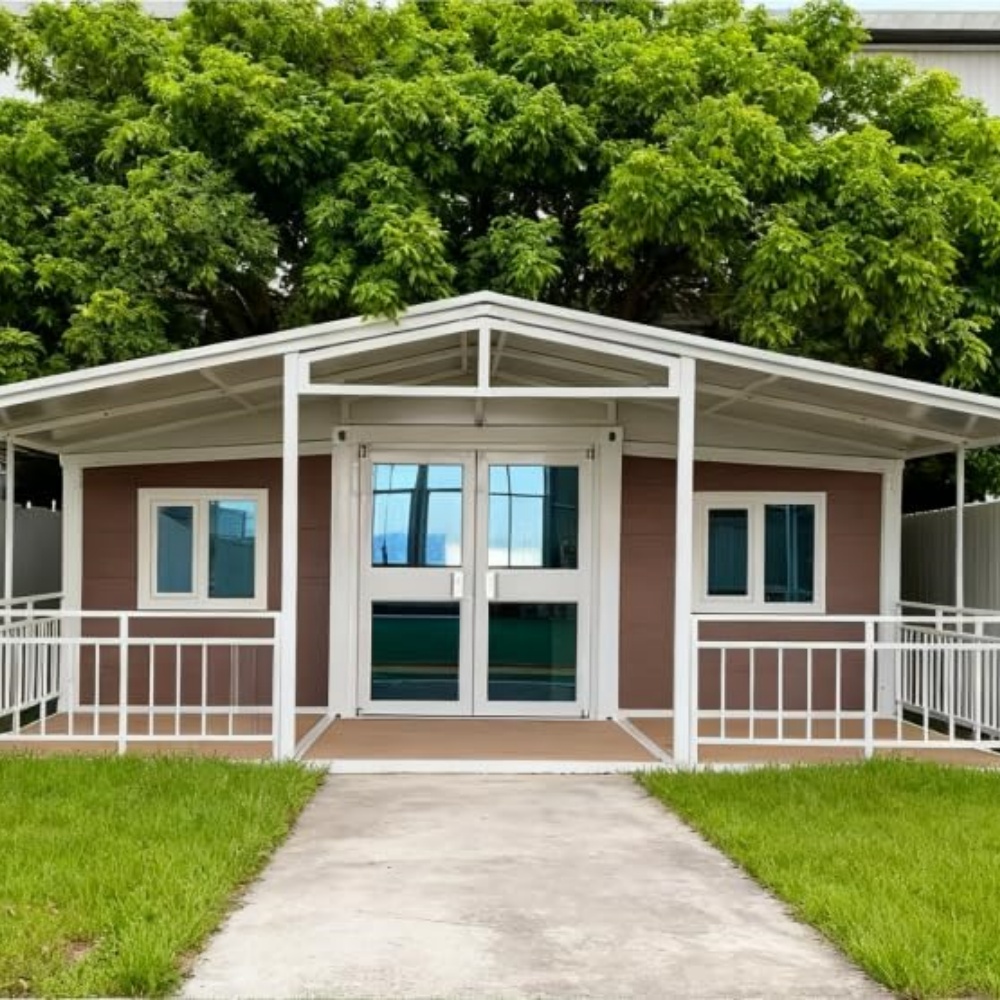
HG Prefab foldable expandable container homes — built to last, delivered worldwide.
Snow resorts run on equipment, and equipment needs a building: skis and boards to store, patrol gear to secure, rental fleets to dry overnight, and staff who need a warm room between shifts. A folding container home delivers all four functions at a cost and speed that conventional mountain construction cannot match — critical where the building season is measured in weeks between snowmelt and first snowfall. This guide covers the cold-climate specification, drying-room design, sizing by role and deployment for 20FT, 30FT and 40FT HG Prefab units at altitude.
What a Snow Resort Needs From an Equipment Room
Mountain conditions punish ordinary buildings. The equipment room spec starts from what the resort actually stores and who works in it:
- Gear security — rental fleets and patrol medical kits represent six figures of inventory. Welded steel walls, steel shutters and multi-point locks are the baseline; a container shell delivers them as standard.
- Wet-to-dry cycle — every evening, hundreds of boots, gloves and skis come in soaked and must be dry by 8 a.m. That drives ventilation and heating more than any other factor.
- Staff welfare — lift operators and instructors need a heated break room with drying hooks; a cold staff is a safety problem on the hill.
- Short build window — the unit ships flat-packed and installs between seasons: a crane or forklift is required to offload the folded unit from the truck, and once it is set in position, four workers can unfold and assemble the main structure in about 2 hours. No concrete crew spends the summer on site.
- Summer relocation — a folding unit can lift out at season's end if the resort reconfigures lifts or trails, an option fixed buildings never offer.
Cold-Climate Specification: Insulation, Heating and Thermal Bridging
A standard unit kept comfortable at −20°C needs the cold-climate package ordered at the factory:
- Insulation upgrade — 75–100 mm rock wool in walls, roof and floor instead of the standard fill. Rock wool holds its R-value when damp, which matters in a room full of melting snow. For insulation fundamentals see our insulation guide and cold-climate guide.
- Thermal-bridge control — the steel frame conducts heat; ask for thermal-break strips on external framing and an insulated floor buildup so boots do not stand on a cold deck.
- Triple-glazed windows — standard double glazing fogs and ices at altitude; triple glazing on any habitable window keeps interior surfaces above condensation point.
- Heating — a 9–12 kW electric inverter heat pump covers a 20FT/30FT unit down to −25°C; below that, or off-grid, a vented diesel heater (5–8 kW) with an external exhaust is the mountain standard. Never use unvented heaters in a sealed steel room.
- Snow load — confirm the roof rating against the site's ground snow load; steep-slope sites may need snow fences above the unit to prevent slab avalanches onto the roof. See our wind and load rating guide.
Wet Gear Drying and Ventilation Design
The drying function is what separates a good equipment room from a damp box:
- Zoned layout — an entry vestibule ("wet room") with a grated floor drain receives boots and outer layers; the dry zone beyond holds racks and staff space. A divider wall with a transfer grille keeps the wet air where it belongs.
- Boot and glove dryers — forced-air drying racks (12–40 pairs) on a timer cost $800–$3,000 and cut overnight drying from 12 hours to 2–4; they are the single best-fit investment in this building type.
- Exhaust ventilation — the wet room needs 150–250 m³/h of exhaust with make-up air from the dry zone, so moisture exits the building instead of condensing on steel walls.
- Ski and board storage — wall-mounted vertical racks hold 20–30 skis per 4 m of wall; overhead racks between roof purlins double capacity. Keep metal edges off the painted floor with rubber mats.
- Floor drainage — a factory-cut floor drain in the vestibule connects to a frost-protected line or a heated gravel soakaway; a frozen drain is the most common winter failure in mountain buildings.
Sizing the Room to Its Role
| Unit size | Floor area | Best resort role | Capacity |
|---|---|---|---|
| 20FT | ~14 m² | Lift-base gear drop + staff drying room | 20–30 skis, 24 boot pairs |
| 30FT | ~21 m² | Ski patrol station with med bay and gear wall | Full patrol kit + 2-person med room |
| 40FT | ~28 m² | Rental fleet hub with workshop bench and office | 60–100 skis/boards + tuning bench |
Combine roles across units: one 40FT rental hub, two 20FT drying rooms at mid-mountain lift stations, and a 30FT patrol station near the summit. Because units are identical, the resort's maintenance team learns one building type and spares are shared across the fleet.
Deployment, Anchoring and Budget
Mountain sites compress the deployment checklist into the short summer window. Prepare helical piles or a compacted pad with the four corner points level within 5 mm; helical piles suit slopes and frozen ground better than excavation. Run power and drain lines before delivery, then schedule the lift: a crane or forklift is required to offload the folded unit from the truck, and once it is set in position, four workers can unfold and assemble the main structure in about 2 hours. Anchor all four corner castings against uplift — mountain gusts exceed the wind loads of valley sites, and hold-downs rated for the site's design wind speed are mandatory in most jurisdictions. For winterization beyond the building itself, see our winterization guide.
Cost Breakdown
- Container unit with cold-climate package: 20FT $7,200–$9,800; 30FT $10,500–$14,500; 40FT $12,500–$16,500, plus $1,500–$3,500 for insulation and glazing upgrades.
- Drying racks and boot dryers: $1,500–$5,000 per room.
- Helical piles and anchoring: $2,500–$6,000 per unit on slope sites.
- Power supply or upgrade: $1,500–$6,000 depending on distance to the resort grid.
- Racks, mats and workshop fit-out: $2,000–$8,000.
A typical three-building setup (rental hub, patrol station, drying room) lands between $55,000 and $110,000 installed — and every building returns each summer if the mountain plan changes, which is why more resorts now treat equipment rooms as relocatable assets rather than fixed construction.
Operating the Building Through the Season
A mountain equipment room earns its keep through daily routine. Open the vestibule and check the exhaust fan before the first lift spins — a blocked intake with overnight frost kills airflow for the whole day. Run the boot dryers on a morning timer that finishes two hours before rental opening, so boots are warm, not just dry. Sweep meltwater from the wet room at midday and last sweep before close, because refrozen slush at the door is a liability claim waiting to happen. Weekly, clear snow and ice buildup from the exhaust termination and the heat-pump outdoor unit; a buried discharge vent pushes moist air into the building instead of out of it. At season end, drain all water lines with compressed air, leave door seals unbroken by propping one door, and photograph the interior for the asset register. Resorts that run this fifteen-minute-per-day routine report drying-room equipment lasting eight to ten seasons, and units that lift off the mountain each spring show almost no weathering compared with fixed buildings of the same age.
Need a folding container house?
HG Prefab manufactures 20FT, 30FT and 40FT folding expandable container houses with cold-climate insulation packages, triple glazing and factory-cut floor drains for snow resorts, patrol stations and rental hubs — shipped flat-packed worldwide.
Browse modelsFrequently Asked Questions
Can a folding container home handle heavy snow loads?
Yes with the right specification. Confirm the roof rating against the site's ground snow load before ordering, use the 75–100 mm rock wool cold-climate package, and install snow fences above the unit on steep-slope sites. Anchors must be rated for mountain wind uplift.
How do you dry ski boots and gloves in a container equipment room?
Zone the unit with a wet entry vestibule with a floor drain and a dry storage zone, then install forced-air boot and glove dryers on a timer ($800–$3,000) with 150–250 m³/h exhaust ventilation. Wet gear dries in 2–4 hours instead of overnight.
Is a crane required to install an equipment room at a ski resort?
Yes — a crane or forklift is required to offload the folded unit from the truck. Once it is set in position, four workers can unfold and assemble the main structure in about 2 hours, which suits the short mountain building season.
What size unit does a ski resort equipment room need?
A 20FT works as a lift-base gear drop and staff drying room for 20–30 skis. A 30FT suits a ski patrol station with a med bay. A 40FT serves as a rental fleet hub for 60–100 skis and boards with a tuning bench.