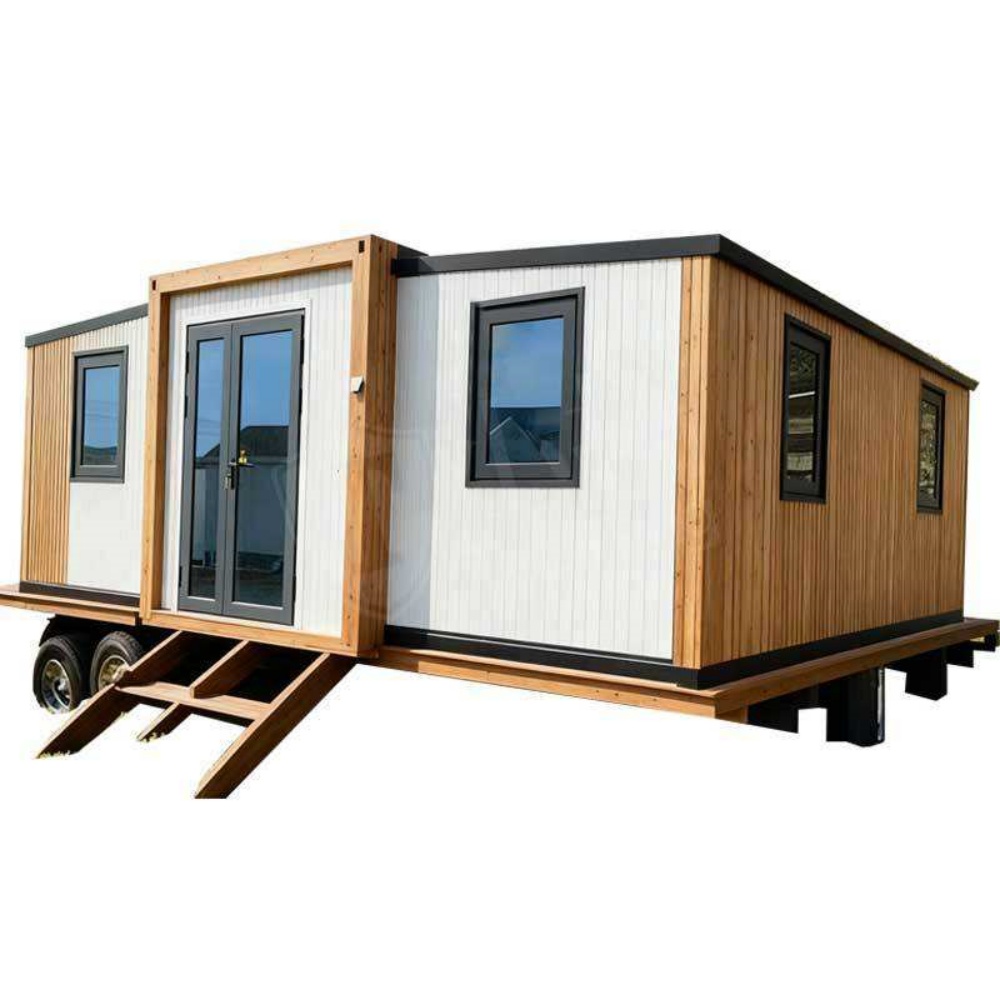
HG Prefab foldable expandable container homes — built to last, delivered worldwide.
A car wash is a water and drainage business that happens to clean cars. Most independent operators fail not because the cleaning is poor but because the pad floods, the effluent discharge is illegal, or the bay is unusable for three months of winter. A folding container home solves those three problems at once: a washable steel shell, a floor that can be sloped to a sump, and a footprint small enough to place on a garage forecourt, a fuel station corner or a yard beside a retail park. This guide covers bay dimensions, water supply and recycling, drainage and oil separation, lighting, freeze protection, effluent permits and cost for a 20FT, 30FT or 40FT HG Prefab folding container house used as a car wash or detailing bay.
Why a Container Works as a Wash Bay
Five properties of a folded steel box line up with the demands of vehicle cleaning:
- Water-tolerant shell. A sealed epoxy floor with PVC or aluminium-skinned wall panels takes constant splash without the swelling, mould and rot that end a timber or drywall building within two seasons.
- Drainage built in. The floor can be factory-finished with a 1:100 fall to one or two sumps, so the bay drains completely and customers are never standing in an inch of dirty water.
- Compact footprint. A bay needs roughly 4 m of length per vehicle, not a warehouse. A 40FT unit fits two hand-wash positions or one full detailing bay on a plot that would never justify a conventional building.
- Factory services. Water inlets, drain penetrations, the electrical sub-panel and lighting positions are prepared before delivery, which removes the most expensive and slowest week of the project.
- Relocatable. Fuel stations, dealerships and shopping centres run short leases. The unit moves with the business instead of being written off at the end of a term.
Delivery day is predictable. Yes — a crane or forklift is required to offload the folded unit from the truck. Once it is set in position, four workers can unfold and assemble the main structure in about 2 hours. After that the water, drainage and electrical connections are completed by the relevant trades.
Bay Dimensions and Layout
Size the bay by the service you intend to sell, not by the plot you happen to have:
| Unit size | Floor area | Configuration | Throughput |
|---|---|---|---|
| 20FT | ~14 m² | One detailing bay with dry finishing corner | 3–5 cars/day |
| 30FT | ~21 m² | One hand-wash bay plus equipment store and dry bay | 8–14 cars/day |
| 40FT | ~28 m² | Two hand-wash positions, or one bay plus interior vacuum and dry zone | 15–25 cars/day |
Layout rules from working bays:
- Vehicle envelope: allow 5.5 × 2.4 m per bay, plus 800 mm of working space each side when staff wash by hand. A light van needs 6.2 m of length.
- Clear opening: a roll-up door at 3.0–3.2 m clear height and 2.6–3.0 m clear width, or an open front with a 600 mm side screen. A tracked canopy outside the door adds covered drying space for far less than a longer unit.
- One-way flow: entry, wash, dry, exit. Reversing inside a wet bay causes most damage claims in this trade.
- Operator position: a 250 mm raised dry platform or a corner pod keeps the attendant clear of the splash zone and next to the controls and the till.
- Queue discipline: mark two waiting positions outside the bay so the access road never becomes a car park.
Water Supply, Recycling and Drainage
Water is the largest recurring cost of a wash bay, and the drain is the largest compliance risk. Deal with both in the design, not after opening:
- Supply: a hand lance flows 8–12 L/min, a pressure washer 6–10 L/min. A single bay needs a 25 mm supply at 3–4 bar; two bays need 32 mm and a break tank to protect the mains.
- Reclaim: a settlement tank, filtration and ozone or biological treatment recovers 70–80% of wash water. A 2,000–3,000 L reclaim set typically pays for itself within two to three years on metered water.
- Final rinse: always use fresh water, ideally with a spot-free reverse osmosis stage, because recycled water leaves mineral marks on dark paint.
- Drainage: a 1:100 fall to two 100 mm floor drains, connected to a 300–600 L settlement interceptor, then an oil and water separator before discharge. Sludge must be pumped out and disposed of by a licensed contractor.
- Freeboard and bunding: keep the bay floor 50 mm below the surrounding slab and bund the pad so a spill or a blocked drain cannot run into the road.
- Winter salt: grit and salt from winter roads settles fast. A 600 mm deep sump with a removable basket is easier to clean than a shallow gully.
Never discharge wash water containing detergent and oil to a storm drain. It is prohibited almost everywhere, it is easy to trace back to a yard, and the fines are far larger than the cost of an interceptor.
Lighting, Heating and Freeze Protection
A dark bay produces complaints about swirl marks and missed dirt, so lighting is part of the service, not a building detail:
- Task lighting: 750–1,000 lux at 1 m working height, IP65 rated, 5000 K at CRI 90 so paint defects and missed film are visible before the customer finds them.
- Supplementary inspection: two portable or rail-mounted scuff lights angled along the panels reveal holograms and sanding marks that ceiling light alone will never show.
- Ventilation: 10–15 air changes per hour removes humidity and stops condensation dripping on a freshly dried car. An extract fan at high level with a low-level make-up louvre works better than an open door.
- Heating: a sealed bay loses heat quickly when the door opens. Size 3–6 kW of electric heating for a 20FT detailing bay, or use a warm-air curtain over the opening in a hand-wash bay.
- Freeze protection: lag and trace-heat all exposed pipework, insulate the reclaim and break tanks, keep the drain slope steep enough that water never stands, and fit a frost stat that holds the bay at 5 °C overnight.
- Cold-climate option: a 40 mm insulated panel package, double-glazed service window and a 4 kW heater keep a bay usable through a continental winter.
Permits, Effluent Rules and Neighbours
A wash bay is a light industrial use with a wet discharge. Expect four approvals:
- Zoning or planning: vehicle servicing and washing is rarely permitted without consent in a residential or pure retail zone. Commercial, industrial or highway-service zonings are the realistic targets.
- Trade effluent consent: most water authorities require a permit naming the discharge volume, the maximum daily flow, pH limits, suspended solids and hydrocarbon concentration. Approval usually requires a drainage plan showing the interceptor and separator.
- Building and trade permits: electrical, plumbing and the potable water cross-connection check. An air gap or a reduced-pressure zone valve between the reclaim system and the mains is normally mandatory.
- Noise: pressure washers and air blowers reach 85–95 dB at 1 m. Confirm the distance to the nearest dwelling, set operating hours, and specify quieter machines if the property line is within 30 m.
Tell the neighbours before the first car arrives. An operator who publishes hours, keeps the pad clean and answers complaints quickly rarely becomes a planning problem.
Cost Breakdown and Build Sequence
Typical 2026 figures for a container car wash or detailing bay, on top of the unit price:
- Container unit: 20FT $7,200–$9,800; 30FT $10,500–$14,500; 40FT $12,500–$16,500 depending on size and finish.
- Slab, falls, bunding and apron: $2,500–$8,000.
- Drains, interceptor and oil separator: $2,000–$6,000.
- Water supply, break tank and reclaim system: $3,500–$12,000.
- Electrical sub-panel, lighting and ventilation: $2,500–$6,500.
- Heating and freeze protection: $800–$3,500.
- Permits, effluent consent and drainage design: $1,500–$6,000.
Total fit-out commonly lands at $12,000–$25,000 for a 20FT detailing bay, $20,000–$38,000 for a 30FT hand-wash bay and $28,000–$55,000 for a 40FT two-position site, excluding tools and chemicals.
Sequence the work around the offload: pour and cure the pad with the falls built in, open the water and drainage trenches, and book a crane or forklift for the delivery day. HG Prefab can factory-prep the sump penetrations, water inlet positions, sub-panel location and roof-mounted extraction sleeve so the wash equipment can be installed as soon as the unit is unfolded, instead of after a second round of cutting and resealing.
Henan Huangang Machinery Equipment Co., Ltd. (HG Prefab) manufactures folding expandable container homes in 20FT, 30FT and 40FT sizes and ships them flat-packed worldwide. For a wash or detailing bay project, send us your plot plan, the number of bays you need, your water supply details and the effluent limits you must meet, and we will confirm the right size, drain layout and ventilation package before the pad is poured.
Email hgmechequip@gmail.com or message us on WhatsApp at +86 191 0388 7380. You can also browse the full range at products.html or request a quotation at contact.html.
Need a folding container house?
HG Prefab manufactures 20FT, 30FT and 40FT folding expandable container houses with factory-prepared sump penetrations, water inlet positions and electrical sub-panel layouts for car wash and detailing bays — shipped flat-packed worldwide.
Browse modelsFrequently Asked Questions
What size container do I need for a car wash bay?
A 20FT unit at about 14 m² is enough for a single detailing bay with a dry finishing corner. A 30FT fits one hand-wash bay plus equipment storage, and a 40FT suits two hand-wash positions or one bay with an interior vacuum and dry zone.
How is a container car wash bay delivered and installed?
Yes — a crane or forklift is required to offload the folded unit from the truck. Once it is set in position, four workers can unfold and assemble the main structure in about 2 hours. After that the water, drainage and electrical connections are completed by the relevant trades.
Can I discharge car wash water to a drain?
Not to a storm drain. Wash water contains detergent, oil and solids, so it normally needs a settlement interceptor and an oil and water separator before discharge, plus a trade effluent consent naming flow, pH and hydrocarbon limits. Sludge must be removed by a licensed contractor.
How do I stop a container wash bay freezing in winter?
Trace-heat and lag all exposed pipework, insulate the reclaim and break tanks, keep floors sloped so no water stands, specify a 40 mm insulated panel package, and fit a frost stat that holds the bay at about 5 °C overnight with the doors closed.