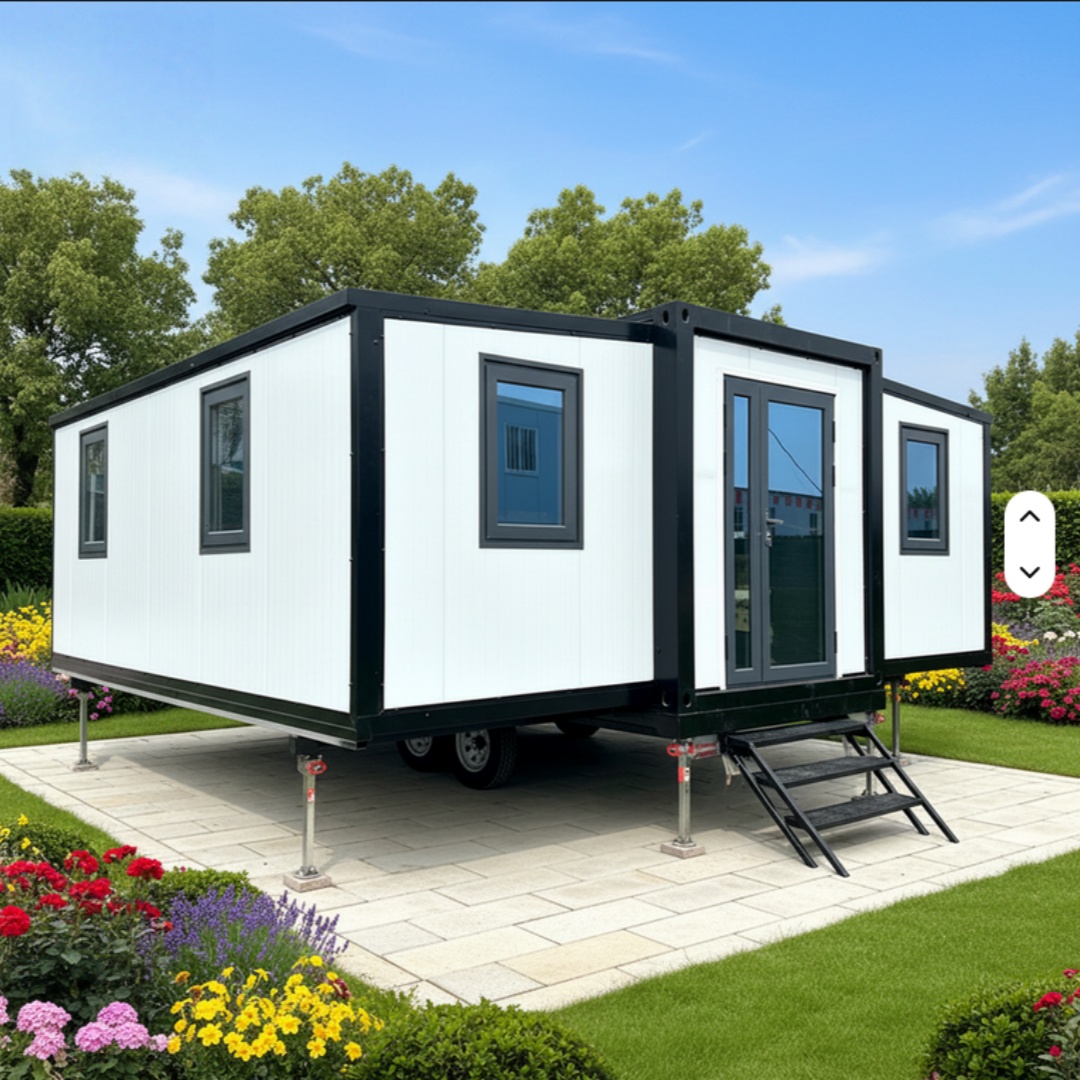
HG Prefab foldable expandable container homes — built to last, delivered worldwide.
The exterior of a folding container home is the first thing buyers, guests and neighbors see. While the steel box underneath provides structure, the finish color and cladding material determine curb appeal, weather resistance and long-term maintenance. This guide covers exterior color strategies and cladding options for 20FT, 30FT and 40FT HG Prefab container homes.
Why Exterior Finish Matters
Container home exteriors must perform three jobs:
- Weather protection — the finish is the first barrier against rain, sun, salt, snow and wind.
- Thermal performance — light colors reflect heat; dark colors absorb it. The right color can reduce cooling loads by 10–20%.
- Aesthetic identity — cladding turns an industrial steel box into a home, office, café or classroom that fits its surroundings.
HG Prefab units leave the factory with a corrosion-resistant primer and a standard paint coat. Buyers can upgrade to custom colors, wood-look cladding, metal panels or composite boards.
Factory Paint Systems
The simplest exterior finish is a high-quality metal paint applied directly to the corrugated steel walls. Factory spray application gives even coverage and strong adhesion.
- Standard polyester paint: 5–8 year color life, good UV resistance, lowest cost
- PVDF / fluoropolymer paint: 15–20 year color life, excellent UV and chalk resistance, premium cost
- Epoxy primer + polyurethane topcoat: high chemical and abrasion resistance, common for industrial sites
Popular colors include charcoal grey, forest green, warm white, navy blue and terracotta. Brighter accent colors work well on doors, window frames and end panels.
Wood Cladding
Wood cladding softens the industrial look of steel and helps container homes blend into residential neighborhoods. Common choices include cedar, pine, larch and thermally modified wood.
- Cost: $8–$18 per sq ft installed
- Pros: natural beauty, renewable material, good insulation value
- Cons: requires staining or oiling every 2–4 years, can rot in humid climates if not maintained
- Best for: residential homes, cabins, Airbnb units in temperate climates
Use treated or durable hardwood species in tropical or coastal environments. Leave a ventilated air gap between wood and steel to prevent condensation.
Metal Panel Cladding
Standing-seam metal panels, aluminum composite panels and corrugated metal sheets create a modern, industrial aesthetic. They are extremely durable and low maintenance.
- Cost: $6–$14 per sq ft installed
- Pros: fireproof, rot-proof, long life (30–50 years), wide color range
- Cons: can dent, industrial look may not suit all neighborhoods
- Best for: commercial projects, modern homes, coastal and harsh climates
Metal panels can be installed horizontally or vertically. Hidden-fastener systems give the cleanest appearance.
Fiber Cement and Composite Boards
Fiber cement boards and wood-plastic composite (WPC) panels combine the look of wood with lower maintenance. They are popular in humid and termite-prone regions.
- Cost: $7–$16 per sq ft installed
- Pros: rot-proof, insect-resistant, available in many colors and textures
- Cons: heavier than metal, some composites fade over time
- Best for: residential projects in humid climates, schools, clinics
Composite boards can mimic timber, stone or modern panels. They install over battens with a ventilated cavity.
Exterior Finish Comparison
| Finish | Lifespan | Maintenance | Cost per sq ft | Best Climate |
|---|---|---|---|---|
| Factory paint | 5–20 years | Wash, touch-up | $1–$4 | All |
| Wood cladding | 15–30 years | Oil/stain every 2–4 years | $8–$18 | Temperate |
| Metal panels | 30–50 years | Occasional wash | $6–$14 | Coastal, harsh |
| Fiber cement | 25–50 years | Wash, paint after 10–15 years | $7–$16 | Humid |
| WPC composite | 15–25 years | Wash | $7–$16 | Humid, termite |
Color Strategy by Climate
- Hot climates: white, light grey, beige and pastel shades reflect solar heat. A white roof can reduce interior temperatures by 5–10°C.
- Cold climates: darker walls and roofs absorb more winter sun, helping passive heating. Charcoal, deep green and navy work well.
- Coastal climates: light colors show salt less and reflect UV. Choose PVDF or powder coatings for salt resistance.
- Urban environments: matte charcoal, anthracite and concrete grey give a contemporary look that fits modern developments.
Weatherproofing Details
A beautiful exterior fails if water gets behind it. Key details include:
- Air gap — cladding should sit on battens with a 20–40 mm ventilated cavity to let moisture escape.
- Flashing — metal flashing at roof edges, window heads and base channels directs water out.
- Sealant — high-quality neutral-cure silicone at panel joints and around penetrations.
- Drainage plane — a breathable membrane behind cladding adds a second moisture barrier.
- Roof overhang — a 300–500 mm roof overhang protects walls from driving rain and reduces splash-back.
Branding and Commercial Projects
For retail, office and school projects, the exterior can carry brand colors, logos and signage. Metal panels and composite boards accept printed graphics and cut lettering. For pop-up shops and cafés, a bold color scheme helps attract foot traffic.
See our pop-up retail guide for commercial fit-out ideas.
Exterior Budget by Unit Size
- 20FT unit: ~35–45 m² wall/roof area — factory paint $300–$1,000; cladding $2,500–$7,000
- 30FT unit: ~50–65 m² wall/roof area — factory paint $500–$1,500; cladding $3,500–$10,000
- 40FT unit: ~65–85 m² wall/roof area — factory paint $700–$2,000; cladding $5,000–$14,000
These ranges include material and basic installation. Complex geometries, large roof overhangs and premium finishes increase cost.
Need a folding container house?
HG Prefab manufactures 20FT, 30FT and 40FT folding expandable container houses with custom exterior colors, cladding and finishes — shipped flat-packed worldwide.
Browse modelsFrequently Asked Questions
What is the best exterior cladding for a container home?
Metal panel cladding is the most durable and low-maintenance option, lasting 30–50 years. For a warmer residential look, wood cladding or fiber cement boards are excellent if climate and maintenance are suitable.
How long does factory paint last on a container home?
Standard polyester factory paint lasts 5–8 years. Premium PVDF or fluoropolymer paint systems last 15–20 years with minimal fading.
What color should I choose for a hot climate?
Light colors such as white, light grey, beige and pastels reflect solar heat and reduce cooling loads. A white roof can lower interior temperatures by 5–10°C.
Does cladding need an air gap behind it?
Yes. A 20–40 mm ventilated air gap behind cladding allows moisture to escape and prevents condensation on the steel wall. This extends the life of both the cladding and the container.
Can I match my brand colors on a commercial container unit?
Yes. Metal panels, composite boards and factory paint can be produced in custom colors. Logos and signage can be added for retail, office and school projects.