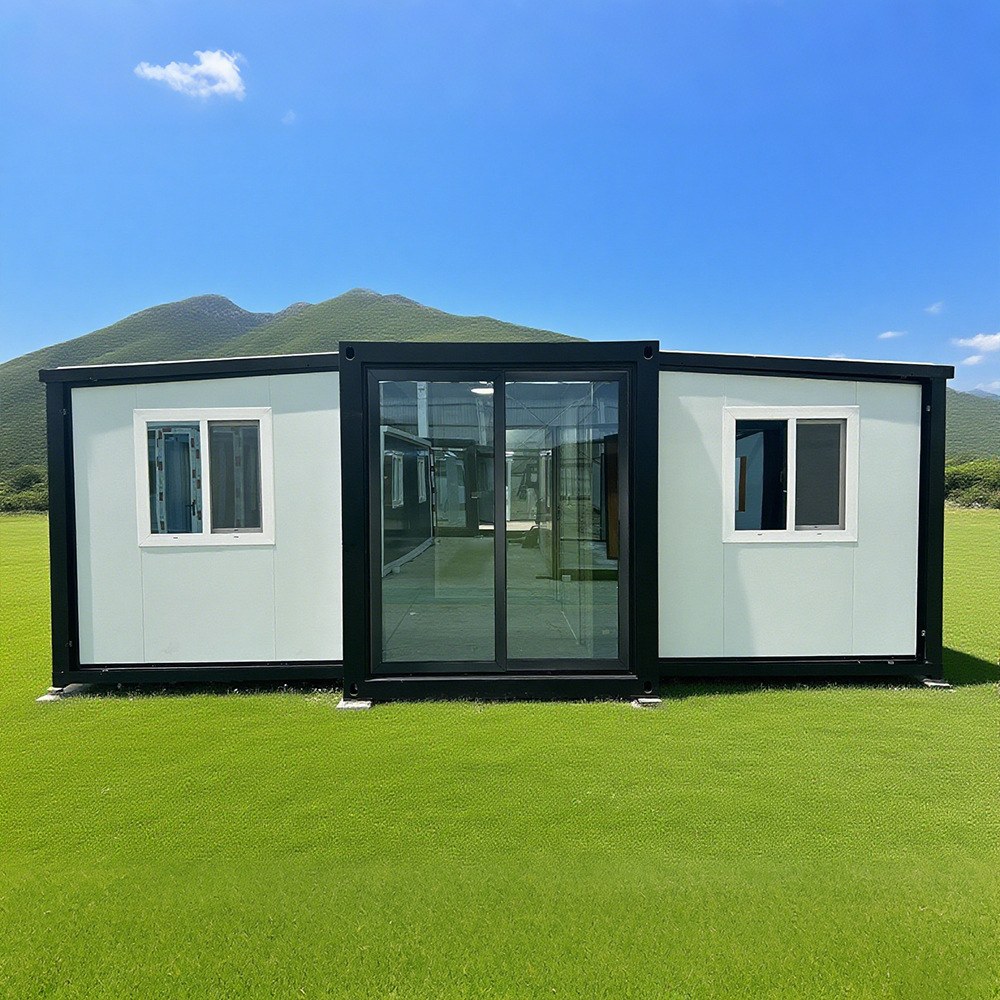
HG Prefab foldable expandable container homes — built to last, delivered worldwide.
Flooring is one of the most heavily used surfaces in any folding container home. It must survive daily foot traffic, moving furniture, moisture from entryways, and occasional job-site grit. At the same time, it sets the visual tone of the interior. Choosing the right floor for a 20FT, 30FT or 40FT expandable container house means balancing durability, water resistance, thermal comfort, cost and style. This guide compares the five most popular flooring options for HG Prefab container homes.
Why Container Home Flooring Is Different
Folding container homes start with a steel sub-floor built on a rigid steel chassis. The factory-installed base is strong, but it is cold, hard and acoustically reflective. A finished floor must solve four problems:
- Thermal comfort — bare steel transfers heat and cold quickly; flooring plus insulation separates occupants from the metal sub-floor.
- Moisture management — entryways see rain, mud and snow; the floor must tolerate wet boots without warping or staining.
- Load and abrasion — furniture legs, tool boxes and rolling chairs test scratch resistance.
- Transport flex — the floor is installed in a unit that folds flat for shipping, so materials must handle slight frame movement without cracking.
Most HG Prefab units ship with a plywood or OSB sub-floor over the steel frame. The finished floor is installed after expansion, either at the factory or on site. Factory installation guarantees fit and finish; site installation allows buyers to choose local materials after delivery.
Vinyl Plank Flooring (LVP / LVT)
Luxury vinyl plank is the most popular container home flooring worldwide. It mimics wood or stone, is 100% waterproof, and installs as a floating click-together system.
- Thickness: 4–8 mm (wear layer 0.3–0.7 mm)
- Cost: $3–$8 per sq ft installed
- Pros: waterproof, scratch-resistant, warm underfoot, easy DIY repair, huge design range
- Cons: can fade under intense direct sun, lower resale prestige than real wood
- Best for: rentals, family homes, site offices, humid climates
A 40FT container home has roughly 28–32 m² of floor area. Vinyl plank for the entire unit costs $900–$2,800 depending on grade. For buyers who want wood aesthetics without wood maintenance, LVP is the pragmatic choice.
Laminate Flooring
Laminate offers a harder, more rigid wood-look surface at a lower price than vinyl. Modern water-resistant laminates handle minor spills, but they are not fully waterproof.
- Thickness: 8–12 mm
- Cost: $2–$6 per sq ft installed
- Pros: hard wearing, realistic wood visuals, easy to clean, good for dry climates
- Cons: swells at seams if standing water sits, louder than vinyl, harder underfoot
- Best for: bedrooms, dry climates, budget-conscious buyers
Use laminate in sleeping areas and offices where moisture exposure is low. Avoid it in bathrooms, kitchens and entryways unless you select a fully waterproof line.
Ceramic or Porcelain Tile
Tile is the most durable and water-resistant flooring option. It is ideal for wet rooms, entryways and high-traffic commercial applications.
- Thickness: 8–12 mm
- Cost: $5–$15 per sq ft installed (including grout and underlayment)
- Pros: completely waterproof, fireproof, extremely durable, easy to sanitize
- Cons: cold and hard underfoot, heavy (adds transport weight), grout needs sealing, installation is slower
- Best for: bathrooms, kitchens, clinics, commercial kitchens, tropical climates
In a 20FT unit, a tiled bathroom plus vinyl plank living area is a common hybrid. Tile adds 300–600 kg per unit, so confirm with HG Prefab that the folded transport weight and crane rating still align.
Engineered Hardwood
For buyers who want authentic wood, engineered hardwood provides a real timber veneer over a stable plywood core. It handles humidity changes better than solid wood.
- Thickness: 10–18 mm
- Cost: $6–$14 per sq ft installed
- Pros: genuine wood surface, premium look, can be refinished once or twice
- Cons: not waterproof, dents under heavy loads, higher cost, requires acclimation before install
- Best for: residential show homes, boutique hotels, Airbnb units in dry climates
Engineered wood is best reserved for living and sleeping areas. Pair it with waterproof tile in bathrooms and kitchens to protect the investment.
Polished Concrete Overlay
A thin polished concrete or micro-cement overlay can be applied directly over the sub-floor for an industrial, seamless look.
- Thickness: 5–10 mm
- Cost: $8–$20 per sq ft installed
- Pros: seamless, extremely durable, fireproof, modern aesthetic, easy to clean
- Cons: very hard and cold, requires skilled application, adds weight, cracks if substrate moves
- Best for: commercial showrooms, art studios, gyms, industrial-style homes
Polished concrete works well in units that will remain in one location long-term. The added weight and rigidity make it less ideal for units that relocate frequently.
Flooring Comparison Table
| Material | Water Resistance | Scratch Resistance | Cost per sq ft | Best Room |
|---|---|---|---|---|
| Vinyl Plank (LVP) | Excellent | Very Good | $3–$8 | Whole house |
| Laminate | Moderate | Good | $2–$6 | Bedrooms, offices |
| Ceramic/Porcelain Tile | Excellent | Excellent | $5–$15 | Bathrooms, kitchens |
| Engineered Hardwood | Poor | Moderate | $6–$14 | Living, bedrooms |
| Polished Concrete | Good | Excellent | $8–$20 | Commercial, studios |
Installation Tips for Folding Container Homes
Whichever material you choose, follow these rules for a long-lasting floor:
- Let materials acclimate — bring flooring into the expanded unit for 48 hours before installation so it adjusts to interior temperature and humidity.
- Use an underlayment — a 2–3 mm underlayment smooths minor sub-floor imperfections, adds thermal insulation, and reduces sound transmission.
- Leave expansion gaps — floating floors need a 6–10 mm perimeter gap to expand without buckling.
- Seal wet-area transitions — use silicone sealant where tile meets walls and at shower curbs to prevent water migration.
- Protect high-wear zones — place mats at entrances, felt pads under furniture, and runner rugs in corridors.
Floor Area and Budget by Unit Size
- 20FT unit: ~15 m² finished floor — vinyl plank total $500–$1,300; tile total $800–$2,400
- 30FT unit: ~22 m² finished floor — vinyl plank total $700–$1,900; tile total $1,200–$3,600
- 40FT unit: ~30 m² finished floor — vinyl plank total $1,000–$2,600; tile total $1,600–$4,800
These estimates cover material and basic installation. Sub-floor leveling, removal of old flooring, and complex patterns add cost. For a full budget, see our container home cost guide.
Factory vs Site Installation
HG Prefab offers both options. Factory installation protects the floor during shipping and guarantees consistent quality. Site installation lets buyers source local flooring and match regional tastes. For export orders, factory installation is usually preferred because it reduces on-site labor and material sourcing complexity.
Need a folding container house?
HG Prefab manufactures 20FT, 30FT and 40FT folding expandable container houses with customizable interiors, flooring and finishes — shipped flat-packed worldwide.
Browse modelsFrequently Asked Questions
What is the best flooring for a folding container home?
Luxury vinyl plank (LVP) is the best all-around choice. It is waterproof, scratch-resistant, warm underfoot, easy to install, and costs $3–$8 per sq ft. It works well in every room of a 20FT/30FT/40FT container home.
Can I install tile in a container home?
Yes. Ceramic or porcelain tile is excellent for bathrooms, kitchens and entryways because it is waterproof and durable. Tile adds 300–600 kg per unit, so confirm transport weight and crane capacity with HG Prefab before selecting it for the whole unit.
Is engineered hardwood suitable for container homes?
Engineered hardwood works in dry living and sleeping areas where moisture is controlled. It is not recommended for bathrooms, kitchens or humid climates unless paired with careful ventilation and waterproof transitions.
How much does flooring cost for a 40FT container home?
For a 40FT unit with roughly 30 m² of floor area, expect $1,000–$2,600 for vinyl plank, $600–$1,800 for laminate, $1,600–$4,800 for tile, and $2,000–$5,600 for engineered hardwood installed.
Should flooring be installed at the factory or on site?
Factory installation is recommended for export orders because it reduces on-site labor and guarantees quality. Site installation is an option when buyers want to source local materials or match regional finishes.