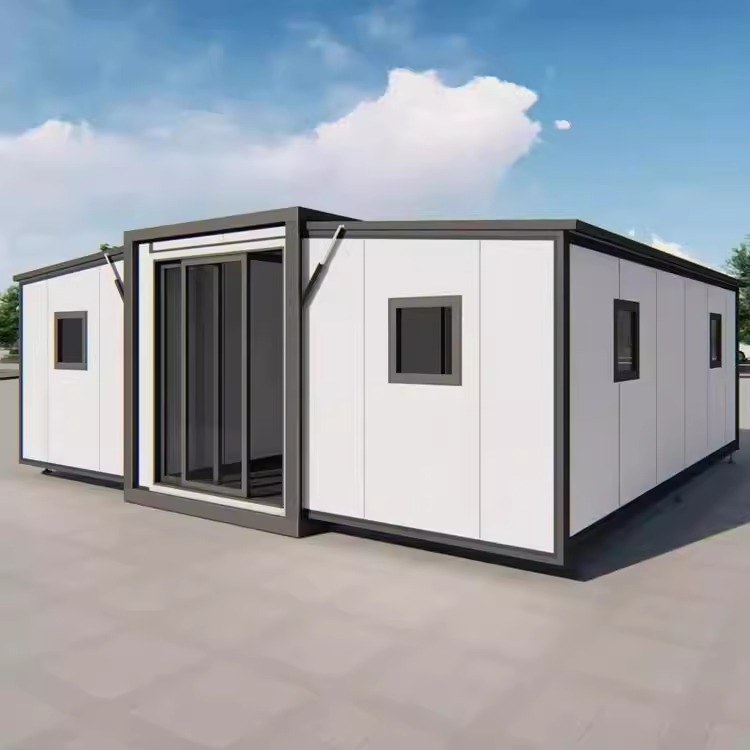
HG Prefab foldable expandable container homes — built to last, delivered worldwide.
The United States is the largest market in the world for factory-built and alternative dwellings, and it is also the most procedurally fragmented. There is no single national approval for a house. Federal agencies control what crosses the border and how it travels on public roads; the state, county and city control whether you may live in it. A folding container home sits at the intersection of those two worlds: it arrives as cargo, and it becomes a building. This guide sets out the four gates a US import has to pass — CBP entry and classification, EPA product rules, DOT and state transport permits, and local building permits — with the cost lines and the on-site sequence we see on real shipments from our factory in Henan to Los Angeles, Houston, Savannah and the Ports of New York and New Jersey.
Why US Buyers Are Choosing Folding Container Homes
Three pressures drive American demand. The first is housing supply: accessory dwelling unit legislation in California, Oregon, Washington, Colorado and several other states has opened large parts of the single-family housing stock to a second dwelling, and a factory-built unit is often the fastest way to fill that permission. The second is cost and schedule certainty in rural and resort markets, where a conventional build can lose an entire season to trade availability and weather. The third is relocatability: ranch worker housing, glamping pods, film and construction site offices and disaster-relief units all need a dwelling that can be folded and moved rather than demolished.
Folding units also suit American freight economics. Because a folded module ships at a small fraction of its expanded volume, several units can share one 40FT high-cube container or one flat-rack slot, and the inland leg usually runs as a standard-width, standard-height load instead of a wide-load move with escorts. That matters enormously in the US, where the last two hundred miles of trucking often cost more than the ocean leg. Compare configurations on our folding container house models page — the 20FT, 30FT and 40FT units each fold to a different shipping envelope.
Gate One: CBP Entry, Classification and Duty
Every import begins with U.S. Customs and Border Protection. You need an importer of record number, a customs bond, an entry filed by a licensed broker, and a correct tariff classification. Prefabricated buildings are generally classified in Chapter 94 of the Harmonized Tariff Schedule, heading 9406; the exact subheading depends on the construction and on whether the unit is presented as complete or as components. Classification is a legal determination made on the facts of the shipment, and it is the single input that drives the duty rate, so get your broker to rule on it before the vessel sails rather than after it lands.
Filing Requirements You Cannot Skip
- Importer Security Filing (ISF, “10+2”): filed for ocean cargo no later than 24 hours before the vessel loads at the foreign port. Late or inaccurate ISF filings carry liquidated damages, so give your broker the commercial invoice, packing list and container stuffing location early.
- Customs bond: a single transaction bond or a continuous bond. Frequent importers usually find a continuous bond cheaper over a year than repeated single bonds.
- Commercial invoice and packing list: value, HTS code, country of origin, gross and net weights, and the number of packages must all reconcile with the bill of lading.
- Wood packaging: any pallets, crates, dunnage or bracing must carry the ISPM-15 mark. Unmarked wood packaging is a hard stop and can send the container for re-export.
- Country of origin marking: the goods must be marked to show origin in a way that satisfies CBP marking rules.
Duty, Fees and Additional Tariffs
The duty rate for your subheading is only part of the number. Additional tariff programmes applied to goods of Chinese origin have been revised repeatedly through successive reviews and exclusions, and coverage depends on the subheading and on the rate in force on the date of entry. On top of duty, budget for the merchandise processing fee at 0.3464 percent of entered value with a per-entry minimum and maximum that CBP adjusts annually, and the harbor maintenance fee at 0.125 percent on ocean shipments. There is no substitute for a broker's answer on the current rate — confirm it in writing before you commit to a budget. See our folding container home shipping guide for what we send with every booking.
Gate Two: EPA Rules That Actually Apply
It is worth stating plainly what EPA does not do: the EPA does not approve, certify or register houses. There is no EPA certificate for a container home, and no federal environmental permit for importing one. What does apply is product-level regulation of the materials inside it, and three areas come up repeatedly.
TSCA Title VI: Composite Wood and Formaldehyde
Under Title VI of the Toxic Substances Control Act, composite wood products — plywood, medium-density fibreboard and particleboard — must meet formaldehyde emission limits, be certified by an EPA-recognised third-party certifier, and be labelled with the certifier and production date. Hardwood plywood, MDF and particleboard are all in scope, and so are the finished goods made with them. For a container home, that means the cabinetry substrate, the interior wall and ceiling panels and the flooring underlayment. Fabrics, non-woven lining and insulation are treated differently under the rule, so ask for the compliant material schedule rather than a generic “low formaldehyde” claim. California has run its own airborne toxic control measure for years and the federal rule largely harmonised with it, but confirm the current state requirement with your building department as well.
Refrigerants and Factory-Fitted HVAC
If the unit ships with an air conditioner, heat pump or refrigerator containing refrigerant, EPA rules on refrigerant management apply to the servicing and handling of that equipment, and any work on the sealed system must be done by a technician certified under Section 608. Units shipped with a charged system must be declared accurately on the documentation. Many importers avoid the question entirely by ordering the unit with the split-system outdoor unit shipped separately or installed locally by a licensed HVAC contractor.
Paints, Sealants and Appliances
Lead-based paint rules apply to pre-1978 housing and are not an issue for a new factory-built unit, but architectural and industrial maintenance coatings are subject to volatile organic compound limits that vary by state, with California's district rules the strictest. Appliances shipped inside the unit must be rated for 120/240 V 60 Hz and should carry a listing mark from a nationally recognised testing laboratory, because that is what the local inspector will look for even though EPA and DOT will not.
Gate Three: DOT, FMCSA and the Inland Move
The Department of Transportation touches the delivery, not the dwelling. At the federal level, the Federal Motor Carrier Safety Administration governs the interstate carrier: operating authority, driver hours of service, vehicle condition and cargo securement. Your carrier handles that, and you should verify their authority and insurance before booking.
State DOT Oversize and Overweight Permits
The permits that affect cost and schedule are issued by each state DOT, not by the federal government. A state permit sets the maximum dimensions and axle weights allowed on its roads, whether escorts or a pilot car are required, which hours the load may travel, and which routes are excluded. Fees and rules differ by state and by distance, and a multi-state move means a permit in each state along the route. This is exactly where folding pays for itself: a folded unit generally travels within standard width and height, on an ordinary trailer, with no escort; an expanded unit of comparable floor area becomes an oversize load with restricted travel windows and a markedly higher per-mile cost. Ask your carrier to price both scenarios before you assume the cheaper option.
| Agency | What it actually regulates | What the buyer must do |
|---|---|---|
| CBP | Entry, classification, duty, fees, marking, wood packaging | Appoint a broker, file ISF 24 h before loading, carry a bond |
| EPA | TSCA Title VI formaldehyde in composite wood; refrigerant handling | Order a compliant material schedule; keep mill certificates |
| DOT / FMCSA | Interstate carrier authority, driver hours, securement | Verify the carrier's authority and insurance |
| State DOT | Oversize and overweight permits, escorts, travel windows | Confirm route, fees and escort needs with the carrier |
| USDA APHIS | ISPM-15 wood packaging, plant pest risk | Use only stamped, heat-treated timber packaging |
| City / county building department | Zoning, building permit, inspections, certificate of occupancy | Apply before ordering; supply engineering drawings |
Gate Four: State and Local Permits Are the Real Decision
Every other gate is procedural. This one determines whether you can legally occupy the unit, and it is entirely local. Your city or county building department issues the permit, adopts the code, and decides how to classify your unit. Confirm the classification first, because it dictates the documentation.
HUD Code, IRC/IBC and How the Unit Gets Classified
Manufactured housing built on a permanent chassis is regulated federally under the HUD Code and must be built to an approved design with inspection by a HUD-designated agent. A unit imported from overseas is typically not certified to that programme, so most folding container homes are permitted through one of three other routes: as a site-built dwelling under the residential or building code adopted by the state, as an accessory dwelling unit where local ordinance allows one, or, in a limited number of jurisdictions and for a limited use, as a park model or recreational unit. Each route has a different drawing and inspection requirement. Bring photographs, the plan set and the material schedule to a pre-application meeting and get the classification in writing before you place the order. Our container home permits guide covers the documentation pack that these meetings usually produce.
Wind, Seismic and Snow: ASCE 7 Loads
Environmental design loads are calculated for your site under ASCE 7, which is referenced by the model codes, and they drive the frame and the anchorage. Along the Gulf and Atlantic coasts the wind speed and the exposure category dominate, and coastal Florida adds a high-velocity hurricane zone with its own product approval and impact-testing regime. In California and the Pacific Northwest the seismic design category and, in mountain areas, the ground snow load dominate. Tell us your ZIP code and the design loads your engineer or building department has specified, and HG Prefab issues the engineering drawings and structural calculations your reviewer needs to verify the frame and the hold-down design. The final load determination belongs to your designer or the authority having jurisdiction — confirm it with them rather than reading it off a map.
Electrical, Plumbing and Energy Conformance
Expect the inspector to work from the National Electrical Code and the plumbing and mechanical codes adopted in your state, with an energy chapter from the IECC or the state's own residential energy code. The practical items: 120/240 V 60 Hz split-phase wiring, GFCI and AFCI protection where the code requires it, a listed sub-panel, plumbing fixtures and pipes meeting the lead-free requirement, and insulation R-values and glazing U-factors that meet your climate zone. Factory-installed systems are inspected on site like any other installation, so specify to the US voltage, frequency and protection standard at the factory, then have a licensed local electrician and plumber complete the final connections and any required testing.
Ports, Routes and Transit Times
Most shipments from our Henan factory move overland to Qingdao, Shanghai, Ningbo or Shenzhen, then on direct or transhipment services to a US gateway. Choosing the gateway by distance to your site rather than to your state capital is usually the biggest single freight saving available.
- Los Angeles / Long Beach: the busiest entry point and the default for California, Nevada, Arizona and the whole intermountain west by road or rail.
- Oakland: often faster to unload than the San Pedro Bay complex, and a good choice for northern California and Nevada.
- Houston: the natural gateway for Texas, Oklahoma, Louisiana and the Gulf coast, with a strong inland rail and truck network.
- Savannah and Charleston: the south-east gateways, competitive on inland freight to Georgia, the Carolinas, Tennessee and the mid-Atlantic.
- Ports of New York and New Jersey, Norfolk, Seattle–Tacoma: the north-east, mid-Atlantic and Pacific north-west respectively.
Transit times vary by service and by season, and are sensitive to congestion and to transhipment; allow roughly three to six weeks port to port for a west coast service and longer for an east coast routing through Panama or Suez. Always confirm the schedule and the free-time allowance with your broker, because demurrage and detention charges are the most common unpleasant surprise in a first import. Check the packing list and container number against our delivery timeline checklist before the vessel sails.
Landed Cost: Line by Line
Unit prices are the same regardless of destination: 20FT $7,200–$9,800; 30FT $10,500–$14,500; 40FT $12,500–$16,500 depending on size and finish. Everything below is added on top, and the ranges below are indicative planning figures, not quotes.
| Cost item | Typical range (USD) | Notes |
|---|---|---|
| Ocean freight, China to US gateway | $1,500 – $6,000 per container | Service, season and gateway dependent |
| Customs duty | Subheading dependent | Confirm current rate and any additional tariffs with your broker |
| Merchandise processing fee | 0.3464% of value | Per-entry minimum and maximum adjusted annually |
| Harbor maintenance fee | 0.125% of value | Applies to ocean shipments |
| Customs broker and entry | $150 – $500 | Higher with ISF corrections or exams |
| Customs bond | $150 – $600 | Single transaction bond vs annual continuous bond |
| Drayage and chassis, port to site | $500 – $3,500 | Distance dominates; congestion adds wait-time charges |
| State oversize permits and escorts | $0 – $1,500 | Usually avoided when the unit ships folded |
| Crane or forklift offload | $600 – $2,500 | Mobile crane half-day rate, metro vs rural |
| Foundation, pad or piers | $2,000 – $12,000 | Slab, pier and beam, or helical piers by soil and frost depth |
| Building permit and inspections | $500 – $6,000 | Valuation-based in many jurisdictions |
| Utility connections | $1,500 – $10,000 | Power, water, sewer or septic; very site specific |
From Port to Move-In: The On-Site Sequence
| Step | What happens | Who | Typical time |
|---|---|---|---|
| 1. Entry and release | Broker files entry, duty and fees paid, possible exam or hold | Broker, CBP | 3–10 days |
| 2. Drayage to site | Container or flat-rack moved inland on a truck | Carrier | 1–5 days |
| 3. Crane offload | Folded unit lifted from the truck and set on prepared footings | Crane or forklift crew | Half day |
| 4. Unfold and assemble | Four workers unfold and assemble the main structure | Site crew | About 2 hours |
| 5. Services connection | Electrical, water and sewer final connection and testing | Licensed trades | 1–5 days |
| 6. Inspections and occupancy | Building, electrical, plumbing and final sign-off | Local inspectors | 1–4 weeks |
Yes — a crane or forklift is required to offload the folded unit from the truck. Once it is set in position, four workers can unfold and assemble the main structure in about 2 hours. The foundation and the inspection schedule, not the unfolding, are what set the project timeline: pour the footings, run the conduits and drains, and book the crane before the truck arrives, and the unit can be weather-tight and connected within the same week.
Working With Your Broker, Inspector and Contractor
Bring all three in at specification stage rather than at arrival. Your broker should rule on the HTS subheading, the duty rate and the ISF timetable before production finishes. Your building department should confirm the classification, the adopted code edition and the design loads before the drawing set is finalised. Your contractor should confirm the foundation type, the crane access and the utility routes before you book the truck. The documentation pack that makes those three conversations short is the same one every time: engineering drawings and structural calculations for the declared loads, the electrical schematic and appliance schedule, the plumbing and drainage layout, the insulation and glazing specification, the composite wood compliance statement, the material schedule, and the factory test and inspection records. HG Prefab issues that pack with the order so your reviewers are assessing documents instead of photographs.
Importing a folding container home to the USA?
Henan Huangang Machinery Equipment Co., Ltd. (HG Prefab) manufactures 20FT, 30FT and 40FT folding expandable container houses with TSCA Title VI compliant material schedules, US 120/240 V 60 Hz electrical layouts, ASCE 7 engineering and calculation packs for your site, and ISPM-15 compliant export packing — shipped flat-packed to Los Angeles, Long Beach, Oakland, Houston, Savannah, Norfolk, Seattle–Tacoma and New York/New Jersey. Reach us on WhatsApp +86 191 0388 7380 or email hgmechequip@gmail.com.
Get a US import quote Browse models WhatsApp +86 191 0388 7380 Email hgmechequip@gmail.comFrequently Asked Questions
Do I need a building permit for a folding container home in the USA?
Yes in almost every jurisdiction. Permits are issued by the city or county building department, not by a federal agency, and they are assessed against the code adopted by your state, usually a version of the IRC or IBC. How the unit is classified matters: a dwelling on a permanent chassis may be treated as manufactured housing under the HUD Code, while a unit permitted as a site-built dwelling, an ADU or a modular building follows a different path. Ask your building department how they will classify the unit before you order, because the classification decides which drawings and certifications they will demand.
Does the EPA certify imported container homes?
No. The EPA does not approve or certify buildings, so there is no EPA certificate for a container home. What does apply is product-level regulation, chiefly TSCA Title VI, which requires composite wood products such as plywood, MDF and particleboard to be certified compliant with formaldehyde emission limits and labelled accordingly, plus rules on refrigerants in any factory-fitted air conditioner or heat pump. Buy the unit with a documented compliant material schedule and keep the mill certificates with the shipping documents.
What does DOT regulate when I move a folding container home?
At the federal level, FMCSA within the Department of Transportation governs the interstate carrier, driver hours and vehicle safety. The permits that affect your delivery are the oversize and overweight permits issued by each state DOT along the route, which set the allowed dimensions, axle weights, escort requirements and travel windows. Your carrier handles them, but you should confirm the route and the fees in advance, because a folded unit normally travels as a standard-width load while an expanded unit can require escorts and a restricted travel window.
How much duty and fees will I pay importing a container home into the USA?
Prefabricated buildings are generally entered under HTS Chapter 94 heading 9406, and the duty rate depends on the exact subheading and on whether any additional tariff programme applies to goods of Chinese origin at the date of entry. Budget for the merchandise processing fee at 0.3464 percent of entered value with a per-entry minimum and maximum that CBP adjusts annually, the harbor maintenance fee at 0.125 percent on ocean shipments, a customs bond, and a customs broker fee of roughly 150 to 500 USD. Tariff classification and duty rates change, so confirm the current figures with your licensed customs broker before you finalise the budget.
How is the folding container home offloaded and assembled on site?
Yes — a crane or forklift is required to offload the folded unit from the truck. Once it is set in position, four workers can unfold and assemble the main structure in about 2 hours. The foundation, the utility trench and the inspection schedule, not the unfolding, are what set the project timeline, so pour the footings and run the conduits before the truck arrives.