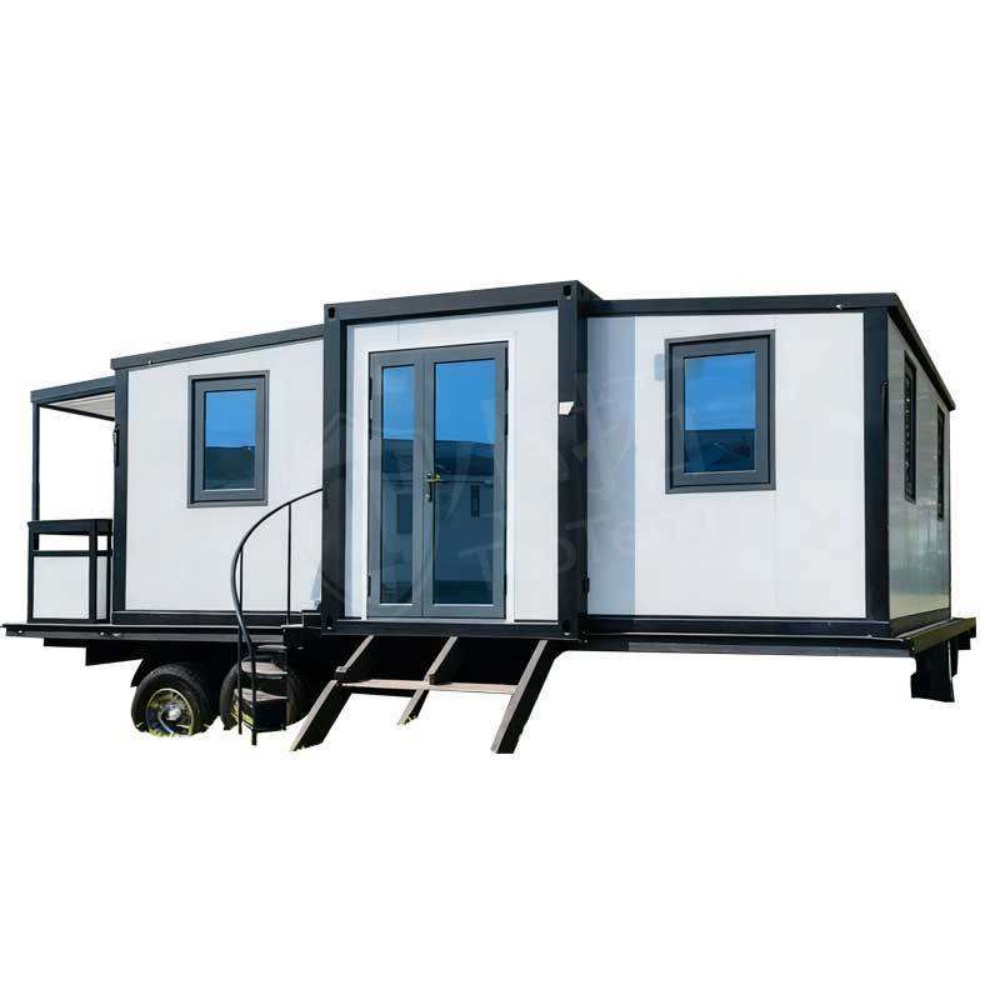
HG Prefab foldable expandable container homes — built to last, delivered worldwide.
Laundry is a volume business. Profit is decided by kilos moved per hour, the cost of heating water and how little of the revenue goes to rent. A folding container home answers all three unusually well: it is a steel box that accepts heavy spinning machines bolted straight through the floor into the frame, it can stand on industrial land, a supermarket car park or a campsite pad instead of an expensive high-street unit, and its water, drain and power connections can be prepared in the factory so the machines are commissioned within days of delivery. This guide covers layout, utilities, service model and cost for a container laundry built on a 20FT, 30FT or 40FT HG Prefab folding container house — self-service laundromat, wash-dry-fold route or a commercial laundry serving hotels, gyms, restaurants and work camps.
Why a Container Shell Suits a Laundry
Three engineering properties make folded steel a better laundry shell than a rented retail unit:
- Vibration and point loads. A 10 kg commercial washer at 1,400 rpm transfers a dynamic load into the floor that would loosen a timber or raised floor within months. A steel frame with bolted plinths, a 20 mm resin floor and machines fixed directly to structural cross members stays rigid and quiet.
- A wet room by nature. Steel walls are non-absorbent. With a sealed epoxy floor, coved skirting and a channel drain, the whole room can be hosed down instead of being carefully cleaned around.
- Factory services. A 25–32 mm water main, 50 mm machine standpipes, a 75–110 mm collector drain, extract duct sleeves and a three-phase distribution board can all be factory-fitted, so site work becomes a connection rather than a construction project.
Siting is the fourth advantage. Laundry demand follows people rather than passing trade: apartment blocks, RV parks, campsites, student villages, gyms and mining camps all need machines within walking or driving distance. A container can be placed where the demand already exists and moved when a lease or a contract ends.
Delivery is predictable. Yes — a crane or forklift is required to offload the folded unit from the truck. Once it is set in position, four workers can unfold and assemble the main structure in about 2 hours, after which plinths, drain connection and machine commissioning follow over the next few days.
Layout: Wash, Dry, Fold and Customer Zones
Lay the room out as a production line. Soiled goods enter at one end, clean goods leave at the other, and customers never cross the working aisle. That single rule prevents most of the congestion in a busy laundry.
| Unit size | Floor area | Typical machines | Best model |
|---|---|---|---|
| 20FT | ~14 m² | 6 washers + 6 dryers (7–10 kg) | Unattended self-service for a campsite, RV park or apartment block |
| 30FT | ~21 m² | 8 + 8 plus a 3 m folding counter | Mixed self-service and wash-dry-fold with a staffed counter |
| 40FT | ~28 m² | 10–12 + 10–12 with sorting and packing benches | Contract laundry for hotels, gyms and work camps, plus retail |
Practical dimensions that make the room workable:
- Aisle: 900–1,000 mm clear in front of the machine row, so a loaded trolley can pass a customer without contact.
- Plinths: 150 mm concrete or steel plinths under each machine, bedded level and bolted through the floor into the frame. A machine that rocks destroys its own bearings.
- Folding counter: 700 mm deep at 900 mm height, with a 3 m run in a 30FT unit and two runs in a 40FT. Fit a raised lip so items do not slide off.
- Sorting and packing: a rear bench with hoppers and a scale for weighed-in contract work, plus hanging rails for finished garments.
- Customer edge: a card or app payment kiosk, a change machine, seating for four, and CCTV coverage that is visible rather than concealed.
- Lighting: 500 lux general and 750 lux over the folding counters, at 4000 K so fabric colours read correctly.
Water, Drainage and Power: The Real Constraints
Utilities decide the size of the business far more often than floor area does. Size them for a full house on a Saturday morning, not for an average day.
- Water: a commercial washer uses 40–60 L per cycle. Twelve machines running 20 cycles each is 10–14 m³ per day, which needs a 25–32 mm supply at 2.5–3 bar with a 300–500 L thermal store to stop pressure drop when several machines fill at once.
- Hot water: heating 10 m³ from 10 °C to 60 °C takes roughly 580 kWh per day. A heat-pump water heater or a condensing gas boiler with a 500 L cylinder is the difference between a viable and a marginal business, and recovering heat from dryer exhaust usually repays its cost within about two years.
- Drainage: one 50 mm standpipe per machine into a 75–110 mm collector with a lint trap and a rodding eye. Laundry waste is warm and lint-heavy, so keep falls at 1:60 or steeper and clean the trap weekly. If the unit sits below the sewer invert, plan a lifting pump chamber.
- Power: a three-phase 63–100 A supply. Each commercial washer draws 2.2–3 kW and each dryer 5–8 kW, so a 24-machine room has 40–60 kW connected. Apply 60% diversity at the main breaker and give washers and dryers separate circuits.
- Ventilation: dryers discharge 200–400 m³/h each. Provide matching make-up air, hold the room at 40–50 °C maximum with 12–15 air changes per hour, and add a dehumidifier in humid climates. A laundry without make-up air pulls its own door shut and runs wet.
Where no gas main exists, LPG dryers or a bulk tank work well; where the site is off-grid, a 40FT unit with a heat-pump heater and a 15 kW solar array is realistic for six to eight machines.
Choosing the Service Model
The machine layout follows the model, so decide this before ordering:
- Self-service. Lowest labour and highest yield per machine hour, but it needs unattended payment, lighting, CCTV and security shutters, plus someone on call for jams and refunds. Best in a 20FT or 30FT unit beside accommodation.
- Wash-dry-fold. Higher margin per kilo and much better on repeat custom. Budget one staff member per 250 kg per shift, a barcode or tag system, and 24–48 hour turnaround. The 30FT layout with a folding counter and a rear sorting bench is the sweet spot.
- Contract and commercial. Hotels, gyms, restaurants, care homes and work camps buy laundry on a monthly rate rather than per visit. Volumes are predictable, which lets you size a 40FT room closely and run one shift. Add a weigh-in station, dedicated linen bins and a documented traceability process; industrial ironers and folders only pay off above roughly 300 kg per day.
Most successful container laundries run a hybrid: self-service in the front half of the room and contract work behind a separating door. The retail traffic covers fixed costs and the contract volume supplies the profit.
Cost Breakdown, Permits and Installation
Realistic 2026 figures for a container laundry:
- Container unit: 20FT $7,200–$9,800; 30FT $10,500–$14,500; 40FT $12,500–$16,500 depending on size and finish.
- Washers and dryers: $1,200–$4,500 per machine depending on capacity and manufacturer.
- Water main, thermal store and water heating: $2,000–$6,000.
- Drainage, plinths and floor build-up: $2,000–$6,000.
- Three-phase supply, distribution board and circuits: $3,000–$9,000.
- Ventilation, dehumidification and ducting: $2,000–$5,000.
- Counters, shelving, rails and flooring: $2,000–$6,000.
- Payment system, CCTV and shutters: $1,500–$5,000.
- Permits, water discharge consent and consultants: $1,000–$5,000.
Total fit-out typically lands at $14,000–$30,000 for a 20FT self-service room, $20,000–$40,000 for a 30FT mixed unit and $30,000–$60,000 for a 40FT contract laundry, on top of the unit price.
Two permitting items catch operators out. First, trade effluent: many water authorities require a discharge consent for laundering, and lint and detergent limits apply. Second, zoning: a laundry is usually light industrial or commercial use, so confirm it before ordering machines. Both processes run for weeks, so start them before the unit is built.
Schedule the offload before the utility trench is open. Confirm the truck can reach a firm, level standing area, then have water, drain and power ready to connect. HG Prefab can factory-prep the water main, standpipes, collector drain, duct sleeves and distribution board position so machines can be plumbed the day after assembly instead of after a week of cutting and chasing. Email hgmechequip@gmail.com or message WhatsApp +86 191 0388 7380 to plan a configuration.
Need a folding container house?
HG Prefab manufactures 20FT, 30FT and 40FT folding expandable container houses with factory-prepared water mains, drain collectors, duct sleeves and three-phase distribution boards for laundry, retail and light-industrial use — shipped flat-packed worldwide. Contact hgmechequip@gmail.com or WhatsApp +86 191 0388 7380.
Browse modelsFrequently Asked Questions
How many washing machines fit in a container laundry?
A 20FT unit takes about 6 washers and 6 dryers, a 30FT about 8 plus 8 with a 3 m folding counter, and a 40FT 10–12 plus 10–12 with sorting and packing benches. The final count is set by the water supply, collector drain capacity and three-phase supply, so size the utilities before ordering machines.
How is a container laundry delivered and installed?
Yes — a crane or forklift is required to offload the folded unit from the truck. Once it is set in position, four workers can unfold and assemble the main structure in about 2 hours. The plinths are then bedded, the drain and water connected, and the machines commissioned over the following days.
What utilities does a container laundry need?
Plan a 25–32 mm water supply at 2.5–3 bar with a 300–500 L thermal store, a 50 mm standpipe per machine feeding a 75–110 mm collector drain with a lint trap, a three-phase 63–100 A supply, and mechanical ventilation giving 12–15 air changes per hour with matching make-up air for the dryers.
Do I need a permit to open a container laundry?
Usually two. Zoning must allow light-industrial or commercial use, which may need a conditional-use permit for a temporary structure, and most water authorities require a trade effluent discharge consent covering lint and detergent limits. Apply for both before the unit is built, because neither is a same-week approval.