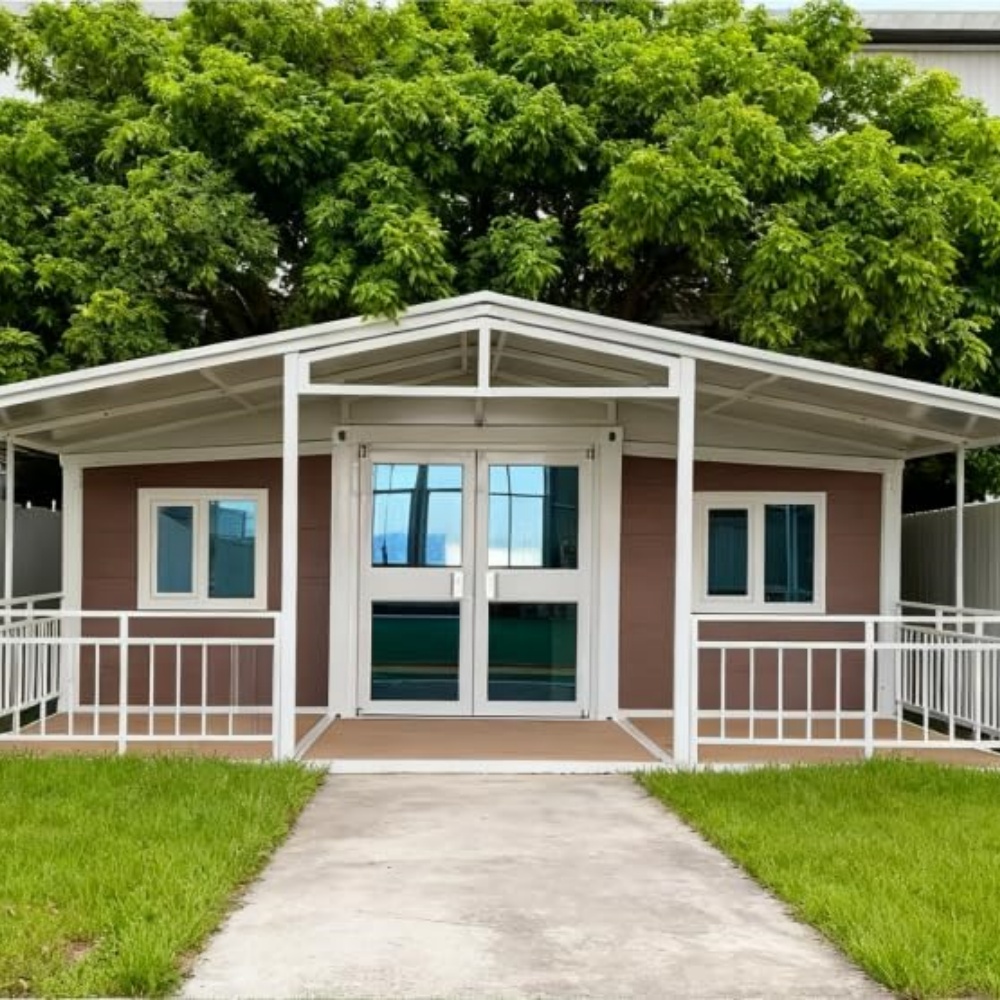
HG Prefab foldable expandable container homes — built to last, delivered worldwide.
"How long will it last?" is the question every buyer asks, and deserves a real answer rather than marketing. The honest response: a well-built folding container home lasts 25 years and often well beyond — but the number depends on three engineering decisions and one maintenance habit.
What actually determines lifespan
| Component | Expected service life | Depends on |
|---|---|---|
| Hot-dip galvanized steel frame | 40+ years | Galvanizing thickness, environment |
| Exterior coating | 10–15 years per cycle | Coating quality, repaint schedule |
| Rock wool insulation | Life of building | Does not degrade, settle or burn |
| Doors & windows | 15–25 years | Hardware quality, usage |
| Roof waterproofing | 15–20 years | Sealant renewal at joints |
| Electrical & plumbing | 20–30 years | Standards used at factory |
The frame outlives everything else — which is why frame quality is where a good factory refuses to save money.
Why galvanized steel changes the equation
Bare steel rusts; hot-dip galvanized steel is protected by a zinc layer that corrodes sacrificially at a fraction of the rate. Even where coating is chipped, the zinc shields exposed steel. In normal climates this means generations of structural service; in coastal environments, periodic washdowns extend it further (see our extreme climates guide).
Container homes vs traditional buildings
- Timber framing: risks rot, termites and mold; steel has none of these failure modes.
- Masonry: comparable structural life, but cracks with ground movement and cannot relocate — a folding unit can move sites several times and lose nothing.
- Cheap converted shipping containers: used boxes carry corrosion and fatigue from their cargo years; purpose-built folding units start from new galvanized steel, which is why their lifespan projection is higher.
The maintenance list that buys decades
- Yearly: wash exterior, inspect seals around doors/windows and roof joints, touch up any coating chips.
- Every 3–5 years: renew sealant at panel joints; check drainage paths are clear.
- Every 10–15 years: recoat exterior (a one-day job) and replace water heater anodes / HVAC filters as due.
That is the entire list — see our 10-year care checklist for the printable version. Compare this with repainting, re-tiling, gutter and roof repairs stacking up on conventional homes.
Lifespan economics
Put a 25-year life against the numbers: a 20FT unit at $7,200 that serves 25 years costs under $300 per year in capital — before any rental or business income it generates. Durability is not just an engineering number; it is what turns a container home into an asset rather than an expense.
Investing for the long term?
Ask for the full material specification — galvanizing, insulation and coating documentation comes standard with every HG Prefab quotation.
Browse models