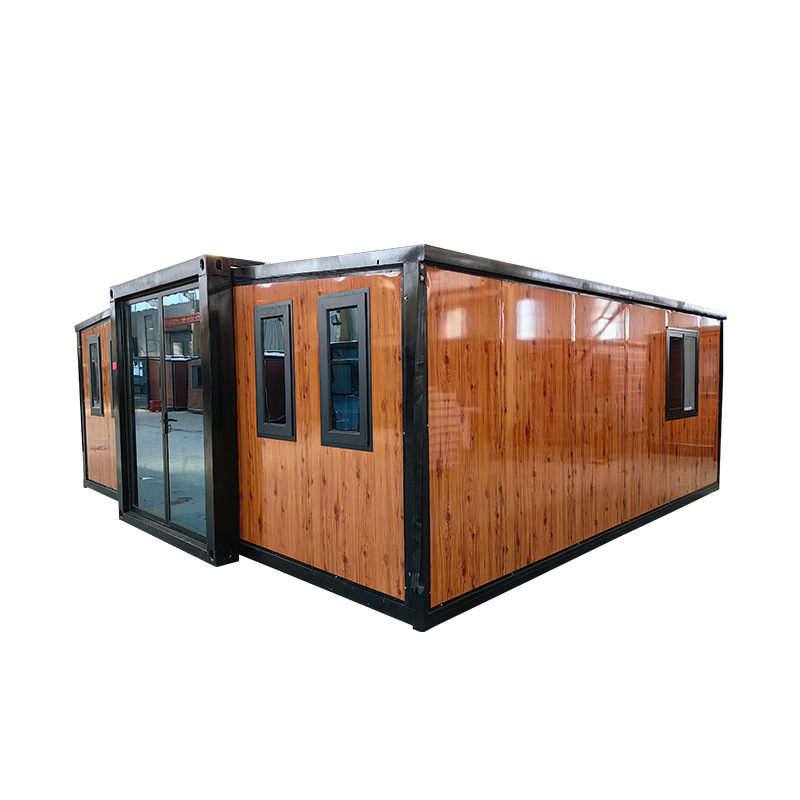
HG Prefab foldable expandable container homes — built to last, delivered worldwide.
Build-to-rent used to be an institutional product: one developer, one site, hundreds of units, one balance sheet. A folding container home breaks that model down to a scale a private landlord can actually operate. Instead of borrowing against a whole apartment block, you place one unit on land you already own, let it, and decide a year later whether to add a second. This guide is written for that landlord — the person with a spare parcel, a rural lot next to a workplace, or a back section behind an existing rental — and it covers the four things that decide whether the idea works: what a unit costs, who will rent it, what the cash flow looks like, and what the planning department will say.
Throughout this article the figures are illustrative. Rents, site costs and consent rules vary enormously between regions, and your local numbers will dominate the outcome. Use the tables as a structure for your own model, not as a promise. You can cross-check the building-cost side against our dedicated container home cost breakdown, which covers the same product range in more detail.
Why Container Units Suit Small Landlords
The institutional build-to-rent pitch is scale. The small-landlord pitch is different: it is about keeping each decision small, reversible and fast.
Low capital exposure per unit
A single 20FT unit starts at $7,200–$9,800 depending on size and finish. That is the order of a used car, not a mortgage. A landlord can fund the first unit from savings or a small facility, prove the rent is collectable, and only then commit to units two and three. If the local rental market softens, the exposure is one unit, not a development.
Speed from decision to rent
Traditional construction ties capital up for months before a single rent payment arrives. With a folding unit the building is manufactured while the site is prepared. Yes — a crane or forklift is required to offload the folded unit from the truck. Once it is set in position, four workers can unfold and assemble the main structure in about 2 hours. The critical path is normally the pad, the utility trench and the paperwork, not the building itself.
Short voids, because the product is new
Voids are the silent killer of small-portfolio returns. A dated unit at the same rent loses to a brand-new one every time. New kitchen, new bathroom, new floor, clean insulation and modern glazing let a container unit win the listing comparison without a rent discount, which is what keeps occupancy high and re-letting periods short.
Add or remove capacity as demand changes
Seasonal and project-driven demand is where fixed apartments fail and demountable units win. If a nearby employer sheds a shift, you can relocate or mothball a unit instead of carrying a vacancy. If demand doubles, you add units in the order you already proved. This flexibility is worth more than it looks on a spreadsheet, because it converts a fixed asset into an adjustable one.
Who Actually Rents a Container Home Long-Term
Long-term tenants are not a single market. The strongest demand sits in four places, and each one sets different specification requirements.
Workers in regional and remote towns
Where a hospital, a processing plant, a logistics hub or a government depot sits in a town with no rental stock, employers will often sign a 6–12 month lease directly with the landlord. Company-let arrangements are the most stable income a small landlord can get: one counterparty, no letting agent, predictable renewal cycles. Single workers suit a 20FT; couples and shift partners suit a 30FT.
Mining, energy and construction corridors
Resource projects create short, intense housing demand five to thirty kilometres from the nearest town. A 30FT or 40FT unit on a serviced pad fills that gap at a rent a fly-in worker will pay without negotiation. The same logic applies to farm and packhouse labour — see our separate guide on container farm worker housing for the crew-scale version of this model.
Graduate students, interns and early-career renters
Within 3–5 km of a campus or a teaching hospital, a compact, well-insulated unit at 60–70% of the local one-bedroom rent leases quickly to a graduate student or a rotating intern. Expect 9–12 month leases aligned to the academic year, which means planning your re-let window for late summer rather than spreading it across the calendar.
Transitional and workforce housing
Insurers, councils and employers increasingly need short-notice housing for people between tenancies, after an insured event, or arriving for a fixed contract. Placement agencies pay reliably and take units in blocks, but they will inspect for insulation, heating, egress and smoke detection. A unit that meets those standards is let continuously; one that does not is never offered to them at all.
Cash Flow: What the Numbers Look Like
Two tables matter. The first sets the unit against the rent band it can realistically achieve. The second converts that rent into yield and payback.
Unit size, price and rent band
| Unit | Purchase price | Floor area | Typical long-let tenant | Illustrative monthly rent |
|---|---|---|---|---|
| 20FT | $7,200–$9,800 | ~14 m² | Single worker, student, intern | $450–$750 |
| 30FT | $10,500–$14,500 | ~21 m² | Couple or two sharers | $700–$1,050 |
| 40FT | $12,500–$16,500 | ~28 m² | Small family, three sharers | $950–$1,400 |
Purchase price is only part of the all-in number. Budget $1,500–$3,500 for a pad or piers, $2,500–$6,000 for plumbing and electrical hookup, $3,500–$9,000 for kitchen and bathroom fit-out, and $500–$3,000 for permits and inspections. A single turnkey unit therefore commonly lands between $15,000 and $30,000 all-in, and the table below uses an illustrative mid-case of $22,000 per unit.
Illustrative yield and payback on a single 20FT unit
| Rent scenario | Monthly rent | Gross annual rent | Less 30% opex | Net annual cash | Gross yield | Simple payback |
|---|---|---|---|---|---|---|
| Rural / low-demand | $450 | $5,400 | $1,620 | $3,780 | 24.5% | 5.8 years |
| Regional town worker | $650 | $7,800 | $2,340 | $5,460 | 35.5% | 4.0 years |
| Peri-urban / graduate | $850 | $10,200 | $3,060 | $7,140 | 46.4% | 3.1 years |
| Remote resource town | $1,100 | $13,200 | $3,960 | $9,240 | 60.0% | 2.4 years |
All figures above are illustrative and assume an all-in project cost of about $22,000 per unit. The 30% operating allowance covers local rates, insurance, routine maintenance, letting or management fees and a vacancy provision. Two things move the answer more than anything else: the achievable rent, and whether you already own the land. If the land is free and the services are already on site, the payback shortens dramatically; if you must buy the parcel and run 80 m of new trench, it lengthens just as fast. Model rent first, then site cost, and treat the building as the fixed part of the equation.
Siting and Planning Permission: What to Check First
The building is the easy part. The permission is where projects stop. Work through this list before you place an order:
- Classification: is a container dwelling a permitted dwelling, an ancillary unit, a caravan or a temporary structure in your jurisdiction? The classification drives everything else, and it differs between countries and often between neighbouring councils.
- Use class: long-term letting often sits in a different class from short-stay letting. Confirm the use class you actually intend.
- Density and setbacks: how many dwellings per parcel, minimum distance to boundaries, and whether an existing dwelling on the lot counts toward the limit.
- Services: legal connection to water, sewer or septic, and power. A unit without lawful sewer capacity will not get consent regardless of how well it is built.
- Fire separation: spacing between units where you plan more than one — commonly 3–6 m, or a rated party wall where spacing is tight.
- Access: a route wide enough for the delivery truck and for the crane or forklift to work beside it. Measure the gate, the turning circle and any overhead cable before delivery day.
- Ground: firm, level, free-draining. Piers or a slab both work; standing water under a unit shortens its life and creates a maintenance problem you will revisit every winter.
- Insurance and finance: tell the insurer what is being placed and how it is founded. Our article on insuring a container home covers the questions underwriters ask and the answers that get a policy issued.
What Makes Tenants Stay
Renewal is cheaper than re-letting. The specification choices that drive renewals in a small unit are unglamorous but decisive:
- New fixtures throughout: a new kitchen, bathroom and hot water system beat a refurbished older unit at the same rent.
- Insulation and acoustic separation: insulated panels plus double glazing keep heating bills low and cut noise transfer between neighbouring units. Tenants leave over noise and bills more often than over layout.
- Hard flooring: vinyl plank or laminate throughout. Carpet in a rental is a recurring cost; hard floors survive tenant turnover and clean in an afternoon.
- Proper heating and cooling: a correctly sized mini-split or heater, not a portable unit. Cold units generate complaints and arrears.
- Storage: a wardrobe, a kitchen run and an external lockable store. Small units fail on storage long before they fail on floor area.
- Laundry: either in-unit provision or a shared, well-lit, secure laundry. This single item decides renewals more often than landlords expect.
- Connectivity: confirm mobile coverage or provide fixed internet. Remote workers and students will not renew without it.
Laying Out Multiple Units
Once the first unit is let, the second decision is layout. Three patterns cover almost every parcel:
- Row: units along one services trench, 3–6 m apart, doors facing the same direction. Cheapest to service, easiest to extend, and the simplest for a landlord to maintain.
- L-shape: two rows at right angles around a shared courtyard. Costs a little more in trenching but creates a defensible communal space, which lifts renewal rates noticeably.
- Courtyard cluster: four to six units around a central open area with shared laundry, bin store, bike racks and lighting. Best where tenants are placed by one employer or agency and know each other.
Whichever pattern you choose, keep the shared elements modest and durable: a 1.5 m lit path, a bin store with a wash-down floor, one visitor parking space per two units, and external lighting on a timer. Communal areas are what make a cluster feel like a place rather than a parking lot, and they are the cheapest renewal tool available to a small landlord.
Landlord Maintenance Checklist
Container units are low-maintenance, not no-maintenance. A short, scheduled routine prevents the two failures that actually cost money — water ingress and condensation:
- Monthly: check under sinks and around the shower for leaks; test smoke alarms and any CO detector; confirm the extract fan runs.
- Quarterly: clear gutters and roof channels; inspect door and window seals; re-torque any exposed fixings on the access steps and handrail.
- Every six months: service the heating and cooling units and clean filters; check the electrical sub-panel and RCDs; inspect the underside for standing water or blocked drainage.
- Annually: touch up any coating damage on the frame and base; re-check the pad or piers for settlement; review the insurance schedule and the rent against the local market.
- At every change of tenancy: full inventory, deep clean, floor and seal inspection, fresh smoke alarm batteries, and photographs. This is the cheapest moment to catch damage.
Container Rentals vs Buying an Existing Rental House
The honest comparison is not container versus house, it is container versus your alternative purchase in your market. The structural differences are consistent:
- Entry cost: a container unit is a five-figure decision; a house is almost always a six- or seven-figure one with a mortgage, valuation and a long settlement.
- Speed: weeks to rent-ready against months of refurbishment on a purchased property.
- Scalability: units are added one at a time as demand is proven; a second house is another full transaction.
- Maintenance profile: a new steel-framed unit has no roof replacement, no damp history and no aged services. An older house carries all three, and they arrive on a schedule you do not control.
- Asset character: a house typically appreciates with the land beneath it and is easier to finance. A container unit is a depreciating structure producing a high income yield, and lenders treat it differently. If capital growth is the goal, buy land; if cash yield and flexibility are the goal, place units.
Most small landlords end up doing both: house or houses for long-term capital, container units on under-used land for income. Browse the configuration options on our folding container house product page to see which sizes map to which tenant type.
Need a folding container house?
HG Prefab (Henan Huangang Machinery Equipment Co., Ltd.) manufactures 20FT, 30FT and 40FT folding expandable container houses for long-term rental use, with insulated panels, double glazing, hard-wearing flooring and factory-prepared plumbing and electrical penetrations — shipped flat-packed worldwide. Tell our sales engineer your tenant profile and site conditions, and we will size the unit and quote the fit-out to match.
Browse modelsPrefer to talk directly? WhatsApp +86 191 0388 7380 or email hgmechequip@gmail.com for a rental-unit quote and layout drawing.
Frequently Asked Questions
How much does it cost to set up one container rental unit?
The unit itself is 20FT $7,200–$9,800, 30FT $10,500–$14,500 or 40FT $12,500–$16,500 depending on size and finish. Budget separately for the pad or piers ($1,500–$3,500), plumbing and electrical hookup ($2,500–$6,000), kitchen and bathroom fit-out ($3,500–$9,000) and permits ($500–$3,000). A single turnkey unit commonly lands between $15,000 and $30,000 all-in.
How quickly can a container rental unit start earning rent?
Yes — a crane or forklift is required to offload the folded unit from the truck. Once it is set in position, four workers can unfold and assemble the main structure in about 2 hours. The critical path is normally the pad, utility trench and permit approval rather than the building, so plan on a few weeks from order to a rent-ready unit on a serviced site.
Do container homes need planning permission as long-term rentals?
In most jurisdictions a permanent dwelling unit used as a long-term rental needs planning or building consent, plus electrical, plumbing and sometimes energy-compliance sign-off. Rules vary by whether the unit is classed as a dwelling, an ancillary unit or a temporary structure, so confirm the classification with the local authority before ordering — the land use question, not the product, is what decides the outcome.
Are container homes warm and quiet enough for year-round tenants?
Yes, when specified correctly. Insulated sandwich panels, a sealed envelope, double-glazed windows and a correctly sized mini-split or heater keep a 20FT unit comfortable across a wide climate range, and hard-wearing vinyl or laminate floors handle tenant turnover far better than carpet. Year-round tenancies depend on insulation and heating specification, not on the steel frame.
What yield can a small landlord expect from a container build-to-rent unit?
On an illustrative all-in cost of about $22,000 per unit, gross yields run roughly 24% at $450 per month, 35% at $650, 46% at $850 and 60% at $1,100 before operating costs. After a 30% allowance for rates, insurance, maintenance, management and voids, simple payback typically falls between about 2.4 and 5.8 years. These figures are illustrative; local rent levels and site costs dominate the result.