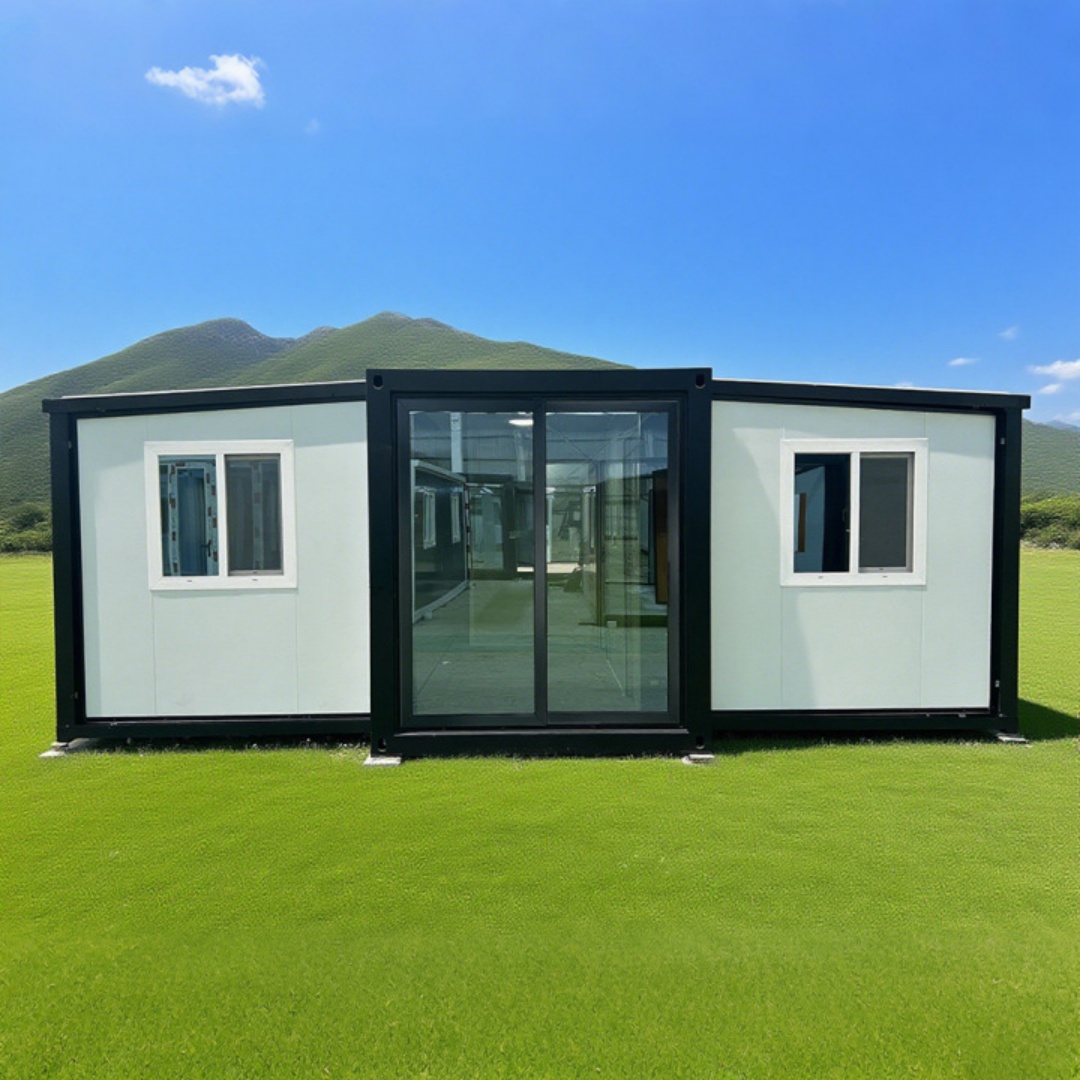
HG Prefab foldable expandable container homes — built to last, delivered worldwide.
A wood stove is the most requested upgrade from buyers using a folding container home in a cold climate, off-grid, or where the grid is unreliable. A small, well-insulated steel-framed dwelling heats fast, wood is often free on the owner's own land, and a stove keeps working when everything else does not — but it is also the upgrade most likely to void an insurance policy, fail an inspection or start a fire if planned after the building arrives. This guide covers sizing, clearances, getting a chimney through a folded steel roof, combustion air, water coils and cooktops, insurance and maintenance.
Is a Wood Stove Right for a Folding Container Home?
Start with the honest answer: a stove suits a weekend cabin, a remote work camp, a hunting base and any site where the owner wants heat that does not depend on the grid. It is a weaker fit for a family home where nobody wants to carry wood, for a rental where the tenant controls the appliance, and for urban or forest-interface sites with burn bans. The structure is on your side: the steel shell and frame will not ignite, but the interior lining, insulation facing, cabinetry, flooring and wiring are combustible, and every clearance rule below protects those finishes and the occupants.
Timing matters just as much: the roof penetration and the combustion air inlet are the two hardest things to do later. Tell the factory where the stove will sit and the roof can be pre-cut, reinforced and flashed before shipping, and an outside-air duct can be built into the floor or wall assembly instead of cut through finished lining afterwards. HG Prefab factory prices are 20FT $7,200–$9,800; 30FT $10,500–$14,500; 40FT $12,500–$16,500 ex-works, and a declared stove position with a factory-cut penetration is a low-cost line item compared with a field retrofit.
Installation day runs in a fixed sequence. Yes — a crane or forklift is required to offload the folded unit from the truck. Once it is set in position, four workers can unfold and assemble the main structure in about 2 hours. Chimney work starts only after the linings are closed, so the stove, chimney kit, hearth and air duct must all be on site and measured before delivery.
Decide too whether the stove is primary heat or a supplement: a correctly sized stove will carry the whole load in most climates, but pairing it with a heat pump or panel heaters gives resilience without oversizing. Heating strategy is covered in our container home HVAC and heating guide, and envelope design in our cold-climate folding container home guide.
Sizing the Stove
Room volume math for 20FT, 30FT and 40FT layouts
The most common mistake in a container home is buying a stove that is too big. A folding expandable unit is a small, tightly sealed, well-insulated volume, and an oversized stove has to be run at a low smoulder, which makes more creosote and less heat than a smaller stove run properly. Size to the volume after expansion, using the internal finished ceiling height, not the external container height.
The arithmetic is simple: multiply usable floor area by internal ceiling height to get cubic metres, then compare with the nominal output on the stove's listing plate in kilowatts. A useful planning ratio in a well-insulated small dwelling is roughly one kilowatt per 14 to 20 cubic metres; in a leakier space work from the lower end. Confirm the choice with a certified installer. In an open-plan space size for the whole connected volume; in a closed room with the door shut, expect to heat one room.
| Layout | Usable area (expanded) | Internal volume (2.3 m ceiling) | Nominal stove output | Clearance to unshielded wall | With listed heat shield | Hearth extension in front |
|---|---|---|---|---|---|---|
| 20FT | ~36 m² (388 sq ft) | ~83 m³ | 4–6 kW | ~450 mm | ~150 mm | ~300 mm |
| 30FT | ~54 m² (581 sq ft) | ~124 m³ | 6–8 kW | ~450 mm | ~150 mm | ~300 mm |
| 40FT | ~72 m² (775 sq ft) | ~166 m³ | 8–10 kW | ~450 mm | ~150 mm | ~300 mm |
Treat the clearance columns as planning envelopes, not a compliance certificate: every listed appliance carries its own tested distances, and those override any general table. The table's job is layout — how much wall the stove occupies.
Clearances and Hearths
Non-combustible wall shields
Clearance is the air gap to the nearest combustible surface, measured from the stove body or the flue pipe, whichever is closer. A folding container home's interior wall lining — a composite panel over insulation — is combustible, so the listed clearance applies to it even though the steel behind it is not.
A listed heat shield reduces that distance by creating a ventilated air space: the shield stands off the wall on non-combustible spacers, open at top and bottom, so cool air enters low and leaves high instead of soaking into the wall. Details installers see missed repeatedly:
- Use a shield specified by the stove manufacturer — flat metal screwed to the wall earns no reduction — and keep the air gap open, since trim, sealant or a shelf defeats it.
- Extend the shield past the appliance in both directions; distance is measured to the nearest surface, corner included.
- Separate the connector clearance — the flue pipe has its own, usually larger, and it applies along the whole run.
Floor protection and hearth
The floor under and in front of the stove must be non-combustible — stone, tile, concrete board under tile or a listed hearth pad — reaching far enough in front of the loading door to catch embers and to the sides to cover the ash drawer. In a container home the hearth adds point loads to the floor panel, so spread it or check the floor specification; if the stove doubles as a cook surface, the ember zone grows. Never set a stove on floating vinyl or laminate, and build any thermal break the listing calls for.
Chimney Route Through the Roof or Wall
Double-wall pipe and listed assemblies
Use a listed factory-built chimney system and install it exactly to its instructions: it is certified as a complete assembly, and mixing components from different manufacturers invalidates the listing. In a small, fast-heating metal building, double-wall or insulated chimney is strongly preferred for the vertical run, because it keeps flue gases hot on a short stack, cuts creosote and reduces the clearance needed at the penetration. Terminate at the height the manufacturer and your local code require — a stub stack below the ridge is the classic cause of downdraught and smoke spillage.
Flashing on the folded roof seams
The folded roof is the detail unique to a folding container home: it is a folded panel assembly with seams and hinge lines, not a continuous plane, and the chimney must not land on a seam, a hinge or any point that moves when the unit folds. Choose a flat, supported area of panel, then:
- Factory-cut and reinforce the opening in production, with a collar welded or bolted to the panel; a grinder-cut hole in the field is the least reliable option.
- Seal the flashing to the panel, not to the seam — use a metal-roof-rated boot bedded in compatible sealant and fixed mechanically.
- Maintain clearance at the penetration with a listed firestop or roof support box, fit a storm collar above the flashing, and route bracing and guys clear of the folding mechanism and hinge travel.
Bracing, storm collars and termination
A tall chimney on a light building needs support: use the manufacturer's roof support box at the penetration and add a brace or guy kit above the unsupported height the listing allows, because wind works a container chimney harder than a masonry one. Fit a cap that sheds rain and excludes birds, and check each season that the screen has not clogged with creosote.
Air Supply and Draft
Tight envelopes and outside air kits
A factory-built folding unit is an airtight building — excellent for bills, terrible for a stove with no air of its own: every cubic metre the stove consumes has to be replaced, and in a tight envelope the easiest path is back down the chimney, producing the backdraught and spillage owners blame on the appliance.
An outside air kit solves it: a sealed duct brings outside air straight to the stove inlet, so combustion no longer depends on room air or an open window. Fit it at the factory if you can, terminate outside with a screened downward inlet and keep the run short. In very cold weather an uninsulated duct can condense, so specify an insulated one; with no kit, the alternative is a fixed vent sized by a certified installer.
Draught also depends on what else is running — a kitchen extractor, a dryer or mechanical ventilation can depressurise a small dwelling enough to reverse a chimney. Fit smoke and carbon monoxide alarms in the stove room. Fire detection and escape planning for compact layouts is covered in our container home fire safety guide.
Hot Water Coils and Cooktops
Hot water coils. A water jacket or coil can supply hot water or a small radiator loop, but an uncontrolled heat sink is a real hazard: if circulation stops with the fire burning hard, the jacket can boil and build steam pressure. Use a component supplied or approved by the stove manufacturer on a properly designed circuit with a heat-leak radiator or overheat protection, and have a qualified installer confirm pressure relief. Do not improvise a copper coil in the firebox.
Cooktops. A flat-top stove will boil a kettle and cook a pot, a genuine off-grid benefit. Plan for it: working height changes the hearth design, the ember zone must cover the cooking area, and the path to it should not pass the loading door. If cooking is primary, buy an appliance listed for that duty, and burn seasoned wood at the moisture content the manufacturer recommends.
Insurance and Compliance
Notify the insurer, confirm the code, and decide who installs
Insurers treat solid-fuel appliances as a material change in risk. Follow this order:
- Confirm local requirements first. Codes, appliance standards, permits and smoke rules differ by country, state and municipality, so confirm locally what applies to your address.
- Tell the insurer before installation. Declare the model, the chimney system and the installer; expect a premium adjustment or a condition such as an inspection.
- Keep the paperwork and never hide it — listing plate and manual, chimney documentation, installer's certificate. An undeclared stove found after a claim is where cover is questioned; a documented one is a routine endorsement.
DIY versus a certified installer
A folding container home attracts capable owners, and much of the project legitimately is DIY — but the stove is the exception. The penetration is a structural, weatherproofing and fire-stopping problem at once, and the final sign-off is what your insurer and inspector will ask for. A sensible middle path: build the hearth, shield and air duct yourself, then have a certified installer set the appliance and issue the certificate. Confirm locally whether any part may be owner-completed.
Maintenance and Wood Storage
A wood stove is a maintenance commitment, not a fitting:
- Empty the ash into a lidded metal container kept outside — ash can hold live embers for days.
- Sweep the chimney at the interval your installer recommends, and before the season.
- Inspect annually: flue joints, penetration seals, storm collar, flashing sealant, cap screen, door gasket, glass seal and the roof penetration itself, because a folding roof moves with temperature and sealant ages first.
- Test alarms monthly, smoke and carbon monoxide, and replace batteries on a schedule.
- Store wood split, off the ground, top-covered and seasoned; keep only a day or two indoors.
Where the unit is closed up for part of the year, shut it down clean: sweep the chimney, empty the ash pan, crack the door and cap the termination. Seasonal shutdown and freeze protection are covered in our winterization guide.
Planning a wood stove in your folding container home?
HG Prefab, manufactured by Henan Huangang Machinery Equipment Co., Ltd., builds 20FT, 30FT and 40FT folding expandable container houses, and can prepare a reinforced factory-cut chimney penetration, a non-combustible hearth zone and an outside-air inlet before shipping. Tell us your model, climate and stove position. Email hgmechequip@gmail.com or WhatsApp +86 191 0388 7380. Full model range on the products page.
Browse modelsFrequently Asked Questions
Can you put a wood stove in a folding container house?
Yes, provided the stove is listed for residential use, the installation follows the manufacturer's clearance instructions, and the chimney is a listed assembly installed to its own instructions. The steel shell is non-combustible, but the interior lining, insulation, cabinetry and flooring are combustible, so clearances are set by those finishes. Confirm the applicable standard and any permit or inspection requirement with your local building authority before you buy.
How do you run a chimney through a container roof?
Use a listed factory-built chimney with a roof or ceiling support, a firestop at every floor or ceiling level, and a flashing assembly sealed to the roof panel with a storm collar above it. Keep the required clearance from the pipe to any combustible material at the penetration, and position the outlet clear of the folded roof seams and hinge lines. Ask for the penetration to be factory-cut and reinforced before shipping, and have a certified installer confirm the assembly.
What clearances does a wood stove need?
The stove manufacturer's listing governs and figures vary by model, so treat published distances as a starting point. As a general planning range, allow about 450 mm from an unshielded stove to a combustible wall, reduced to about 150 mm with a listed heat shield, plus a non-combustible hearth extending about 300 mm in front of the loading door. Measure from the stove, not the flue, and confirm locally.
Will a wood stove affect my home insurance?
Usually yes, because a solid-fuel appliance is a material change in risk. Tell the insurer before the stove is installed rather than after a claim, expect a premium adjustment or an inspection, and be ready to show the stove listing, chimney documentation and installer's certificate. Some insurers require a certified installer or a photographed installation, so confirm the conditions in writing first.