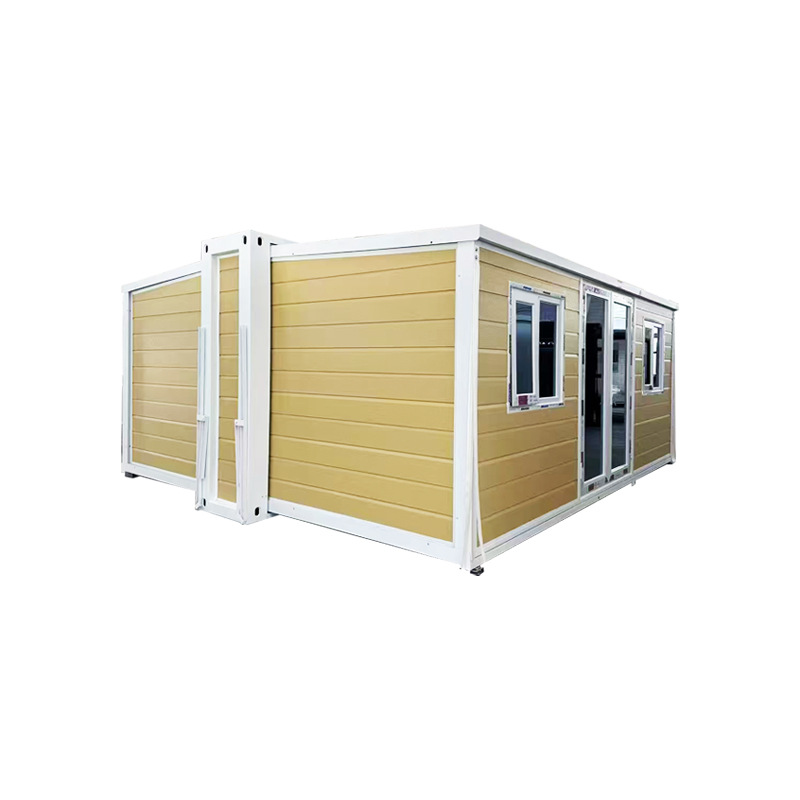
HG Prefab foldable expandable container homes — built to last, delivered worldwide.
The construction industry accounts for nearly 40% of global CO2 emissions. Traditional building wastes material, energy and time. Folding container homes offer a fundamentally different approach: a steel structure that is 90% recyclable, a factory-controlled process that cuts waste to near zero, and a design that folds flat for efficient shipping. Here is what makes an expandable container house genuinely green.
The Steel Advantage: Recyclable and Durable
The primary structural material in an HG Prefab unit is galvanized steel. Steel is the most recycled material on earth — over 90% of structural steel is recovered and remelted at end of life, with no loss of strength. A container home frame can be recycled into new steel products decades after it is built.
Durability is sustainability. A building that lasts 25+ years spreads its embodied carbon over a longer period. Our lifespan guide covers the maintenance practices that keep steel structures performing for decades.
Factory Production = Near-Zero Waste
Traditional construction sends 30–40% of materials to landfill. Factory production of container homes cuts waste to under 5%:
| Factor | Traditional build | Factory container home |
|---|---|---|
| Material waste | 30–40% to landfill | <5%, offcuts recycled |
| On-site disruption | Weeks of noise, dust, traffic | Hours (crane offload + 2h setup) |
| Transport emissions | Multiple daily deliveries | One truck delivery, fold-flat |
| Weather delays | Material spoilage, rework | Indoor factory production |
| End-of-life recycling | Mixed waste, hard to separate | Steel frame 90%+ recyclable |
A1 Rock Wool: Natural, Fire-Safe, Recyclable
Our standard insulation is A1 fire-rated rock wool — made from natural basalt rock, non-combustible, and recyclable at end of life. Unlike foam insulation (EPS/XPS), rock wool contains no flame retardants or blowing agents with high global warming potential. It also provides excellent acoustic damping. See our insulation guide for R-value details by climate.
Solar Integration and Off-Grid Capability
A folding container home is an ideal platform for solar power. The steel roof can support solar panels directly, and the factory can pre-wire conduit for a clean installation. For off-grid configurations, a 3–5 kW solar array with battery storage can power the entire unit. Our off-grid guide covers panel sizing, battery capacity and water systems in detail.
Grid-Tied vs Off-Grid: Carbon Impact
| Configuration | Annual CO2 avoided (vs grid power) | Setup cost |
|---|---|---|
| Grid-tied, no solar | 0 tons/year | Standard unit price |
| 3 kW solar, grid-tied | ~2.5–3.5 tons/year | +$3,000–$5,000 |
| 5 kW solar + battery, off-grid | ~4–6 tons/year | +$6,000–$10,000 |
Water Conservation
Container homes can be fitted with low-flow fixtures (4–6 L/min shower heads, dual-flush toilets) as standard. For off-grid water, a rainwater harvesting system on the steel roof can collect significant volume: a 38 m² 40FT roof in a 1000mm/year rainfall zone yields about 38,000 litres annually — enough for a household's non-potable needs.
The Fold-Flat Shipping Advantage
A folded 40FT container unit occupies roughly 1/4 of the volume of an assembled unit. This means more units per container ship, fewer truck trips, and lower transport emissions per unit. When a home folds to 60cm wide for transport and expands to 38 m² on site, the shipping efficiency is unmatched by any other prefab system.
What Makes a Container Home "Green"?
- 90%+ recyclable steel structure
- A1 non-combustible rock wool (natural basalt, no foam)
- Near-zero factory waste (<5% vs 30–40% for site-built)
- Solar-ready roof with pre-wired conduit
- Fold-flat shipping for lower transport emissions
- 25+ year service life with proper maintenance
- Low-flow water fixtures and rainwater harvesting option
Want a sustainable home?
Our folding container homes come standard with recyclable steel, A1 rock wool and solar-ready wiring.
Browse models