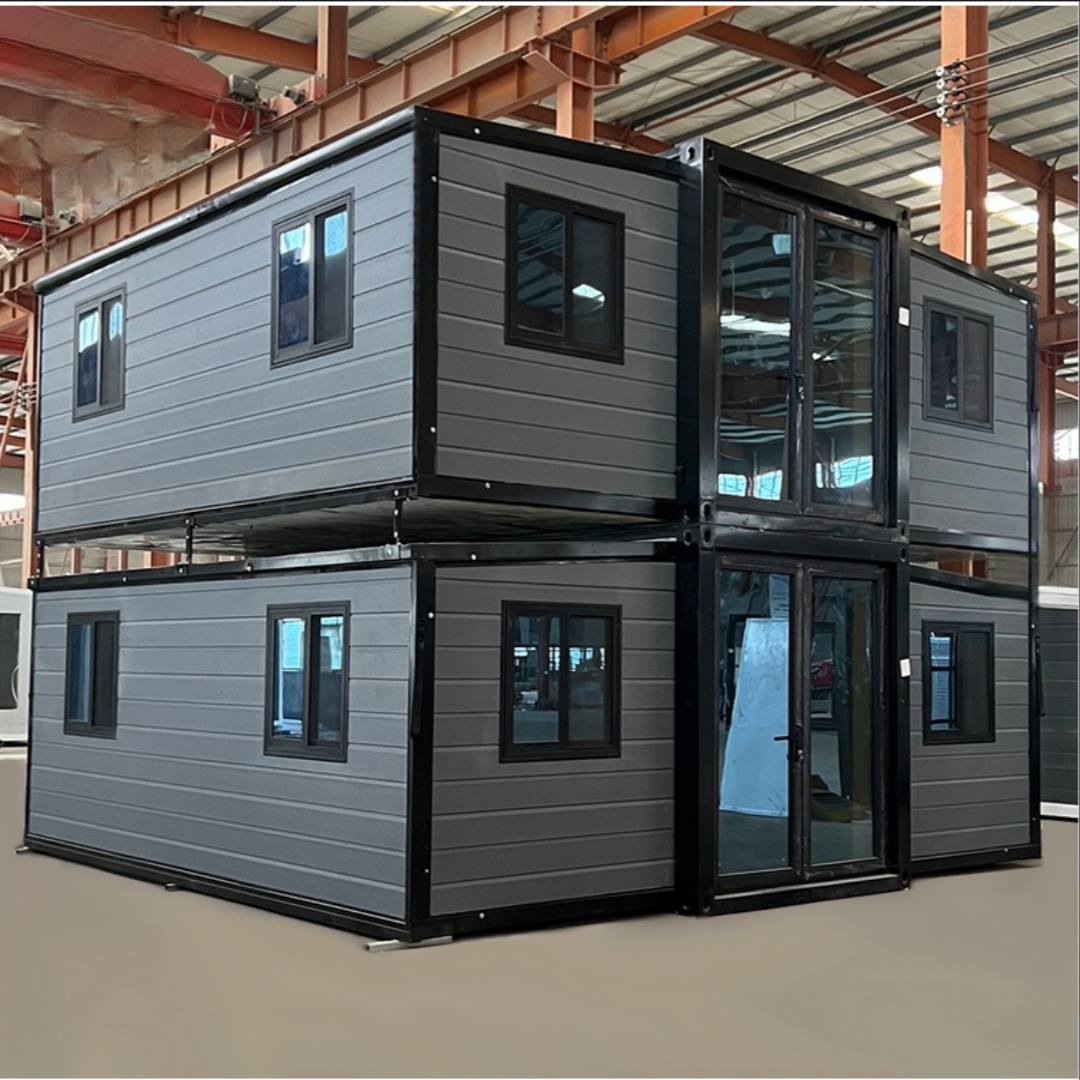
HG Prefab foldable expandable container homes — built with clean, safe electrical planning in mind.
Every folding container home runs on electricity, but few buyers size the system before they order. Get the electrical load wrong and you end up tripping breakers at night, paying a small fortune to upgrade a panel after the walls are finished, or discovering on delivery day that your 20FT, 30FT or 40FT folding container house needs a heavier supply than the site can provide. This guide walks through a practical electrical load calculation for HG Prefab units — covering panel size, circuit count, breaker sizing, and how to choose generator or solar backup that actually matches your use.
Start with a Realistic Load List
Load calculation is not a guess. It is an arithmetic exercise based on the appliances you will actually run and when you will run them together. Begin by listing every electrical item in the home with two numbers for each: the running wattage and, for anything with a motor or a compressor, the starting (surge) wattage, which can be three to seven times higher for a few seconds.
Use the nameplate ratings printed on each appliance rather than marketing numbers. A microwave labelled "1,000 W input" may draw 1,200 W from the wall because of inefficiency, and a refrigerator nameplate lists a running compressor load that is well below its locked-rotor start surge.
Group loads by category
- Lighting and small receptacles — LED lighting, phone chargers, laptops, TVs and general outlets. This base load is small and steady.
- Kitchen appliances — microwave, kettle, toaster, coffee maker, and any electric oven or induction hob. Many of these are large and intermittent, and several can easily be switched on together.
- Water heating and laundry — an electric water heater is frequently the single biggest load in a container home, followed by the washing machine's heating element and motor.
- Space conditioning — air conditioning compressors and any electric baseboard or mini-split heating dominate the total when in use.
- Outdoor and utility — workshop tools, a well pump, garden lights and a security system.
Write the loads down on a table like the one below. It is the same method a licensed electrician uses, and it gives you numbers you can hand to your panel supplier or solar installer with confidence.
Typical Appliance Loads and How They Add Up
The wattages below are realistic for modern, reasonably efficient appliances in a folding container house. They are starting points — confirm every figure against the appliance nameplate for your final calculation.
| Appliance | Running watts | Surge watts | Notes |
|---|---|---|---|
| LED lighting (whole home) | 80–200 | — | Runs whenever the home is occupied |
| Refrigerator | 150–350 | 800–1,500 | Constant load; count the running figure |
| TV + streaming box | 100–250 | — | Often grouped on one circuit |
| Laptop / phone / router | 50–120 | — | Small but continuous |
| Microwave | 800–1,200 | — | High but intermittent |
| Electric kettle | 1,500–2,000 | — | Do not run with the microwave |
| Washing machine | 500–1,200 | 1,800–2,800 | Heater element is the big draw |
| Electric water heater (50–80 L) | 2,000–3,500 | — | Usually the largest continuous load |
| Dishwasher | 1,200–1,800 | 1,900–2,600 | Heating element plus a motor |
| Mini-split air conditioner (9–12 k BTU) | 900–1,600 | 2,500–4,500 | Biggest starting surge in most homes |
| Electric oven (small) | 2,000–3,000 | — | Rarely used with everything else on |
| Well pump (1/2–1 HP) | 700–1,800 | 2,500–5,500 | Short but very large surge |
Add the running watts of everything that can realistically be on at the same time. Do not add every appliance at once — your microwave, kettle and oven are unlikely to run together for more than a minute. Instead, add your continuous base load (lights, fridge, water heater) to your largest likely simultaneous group of kitchen or conditioning loads. This "simultaneous demand" is what actually sizes your panel and backup system.
Recommended Panel and Circuit Sizing by Unit
Once you know the connected and demand loads, pick a main panel and branch-circuit layout. The table below is a practical starting recommendation for HG Prefab 20FT, 30FT and 40FT units. Local codes, voltage (110 V or 230 V) and whether you use electric water heating will move the numbers, so treat it as a design guide rather than a fixed rule.
| Unit size | Typical connected load | Recommended main panel | Branch circuits | Generator backup |
|---|---|---|---|---|
| 20FT | 4,000–6,000 W | 100 A / 8–10 spaces | 8–10 | 4–6 kW |
| 30FT | 5,500–8,500 W | 100 A / 12 spaces | 10–12 | 6–8 kW |
| 40FT | 8,000–12,000 W | 125 A / 16–20 spaces | 12–16 | 8–12 kW |
Sizing the Main Panel
The main panel is the heart of the system. Its rating tells you how much current the whole home can draw, and the number of available spaces tells you how many circuits you can land. A few rules keep you out of trouble:
- Buy more spaces than you need today. Panel spaces are cheap now and expensive to add later. A 100 A, 12-space panel leaves room for a future water heater circuit or a second air conditioner without a panel swap.
- Match the feeder to the service. The panel must be rated to accept the current your local utility supplies. If your supply is 60 A you can still fit a 100 A panel, but the main breaker must be down-rated to protect the feeder.
- Respect the 80% rule. A continuous load such as a water heater or air conditioner should not exceed 80% of its breaker rating. That means a 2,400 W heater on a 230 V supply draws about 10.4 A and wants a 15 A breaker, not a 10 A one.
For the standard HG Prefab home at grid power, plan the panel near the meter entry inside the unit so the feeder run stays short. Keep it out of wet zones and give it at least 30 cm of clearance for the electrician to work.
Planning the Branch Circuits
Branch circuits divide the home's electricity into safe, dedicated feeds. A well-planned folding container home normally uses these dedicated circuits:
- Electric water heater — always its own circuit.
- Refrigerator — its own circuit so it never trips with the kettle and keeps cooling if another breaker trips.
- Washing machine — own circuit, on the surge it needs at startup.
- Microwave — dedicated or on a kitchen counter circuit with a clearly lower load.
- Air conditioner / mini-split — own circuit sized for the outdoor unit.
- Electric oven / induction hob — own circuit on larger units.
- General lighting and receptacles — split across two or more circuits, with no more than about 8 outlets per circuit.
A good rule for general receptacles: spread them so the lights are never on the same circuit as the outlets you will plug a heater or kettle into. This way a tripped outlet does not plunge the room into darkness, and it keeps each circuit's load predictable.
Breaker sizing made simple
Size each breaker to the wire feeding it and the load it protects. Divide the load in watts by the supply voltage to get amps, then pick the next standard breaker size up. A 2,000 W heater at 230 V draws about 8.7 A, so a 10 A breaker with 1.5 mm² wire is correct; at 110 V the same heater draws about 18 A and needs a 20 A breaker with heavier wire. Never oversize a breaker to stop nuisance trips — that defeats the wire's fire protection. If a breaker keeps tripping, find the real fault or the load mismatch.
Choosing Backup Power: Generator vs. Solar
Wherever grid power is unreliable or expensive, a folding container home usually adds backup. The two options solve different problems, and many owners run both. Your decision should start from the demand load you calculated above, never from the size of the unit.
Generator sizing
Generators are the simplest, most predictable backup. Choose one whose continuous (running) rating comfortably exceeds your simultaneous running load, and whose surge rating covers the single largest starting load — almost always the air conditioner compressor or a well pump.
- For a 20FT home with modest loads, a 4–6 kW generator carries the essentials comfortably.
- A 30FT with electric water heating needs 6–8 kW.
- A 40FT running air conditioning or electric heating typically wants 8–12 kW to start the compressor without stalling.
Fuel type matters as much as output: petrol generators are cheap and mobile but need refuelling daily; diesel and LPG units are heavier but more efficient for continuous backup. A manual transfer switch or interlock is safer and more code-compliant than back-feeding through a socket.
Solar plus battery
Solar gives you daytime power independent of both the grid and the fuel station, and pairs naturally with the thin, well-insulated roofs on folding container homes. If solar is your main supply rather than just backup, plan carefully:
- 20FT home — a 4–6 kW inverter, 5–8 kWh of usable battery and roughly 3–4 kW of panels.
- 30FT home — a 6–8 kW inverter, 10–15 kWh of battery and 4–6 kW of panels.
- 40FT home with air conditioning — an 8–12 kW inverter, 15–25 kWh of battery and 6–10 kW of panels.
For the full design method — panel angle, inverter size, battery chemistry and off-grid sizing — read our dedicated solar power setup guide. Whichever route you choose, install a proper changeover so a generator and solar never feed each other, and let a licensed electrician sign off the connection to the grid.
Putting the Whole System Together
A tidy folding container home electrical system follows a predictable order: the utility feed or inverter lands in the main panel, dedicated branch circuits run to each major appliance, and everything grounds to a single earth electrode. On HG Prefab units the wall and floor cavities are open during assembly, which is the moment to pull wire — the folded unit unfolds, four workers assemble the main structure in about 2 hours, and your electrician can run cables through the steel framing before the interior lining closes in.
Three practical habits keep the system clean:
- Label every breaker on the panel door as you land it — future-you (or a renter) will thank you.
- Keep a load sheet in the panel with the demand calculation you used, so a future change is easy to evaluate.
- Verify surge capacity of the generator or inverter against the air conditioner before you sign for it.
If you are also planning the water system, most plumbing and electrical runs share the same chase — coordinate them together. Our plumbing & electrical hookup guide shows how the two trades lay out in a folding container home. For automating lighting, HVAC and loads so your backup only powers what matters, see the smart technology setup article.
A quick order-of-work checklist
- List every appliance with running and surge watts.
- Add the base load to the largest simultaneous group to get demand load.
- Confirm the local utility supply voltage and available service size.
- Pick the main panel by the table above, then land dedicated circuits.
- Size the generator or solar by the demand load, not the unit length.
- Have a licensed electrician verify and sign off before energising.
If you are choosing between unit sizes, the electrical plan often tips the decision. A 20FT is the economical choice for off-grid and guest use at $7,200–$9,800, a 30FT typically runs $10,500–$14,500, and a 40FT opens up electric cooking, air conditioning and workshop loads at $12,500–$16,500. Yes — a crane or forklift is required to offload the folded unit from the truck. Once it is set in position, four workers can unfold and assemble the main structure in about 2 hours, and your electrician can run cables through the steel framing before the interior lining closes in. Compare the full range and features on our products page, where each model shows the standard electrical configuration HG Prefab builds in at the factory.
Need a folding container house?
HG Prefab manufactures 20FT, 30FT and 40FT folding expandable container houses with factory-prepped electrical provisions, dedicated circuit plans and optional solar or generator-ready packages — shipped flat-packed worldwide.
Browse modelsFrequently Asked Questions
What size breaker panel does a 20FT or 40FT container home need?
A single 100 A main panel with 8–10 branch circuits covers most 20FT and 30FT homes. A 40FT with electric water heating or air conditioning may need a 125 A panel with 12–16 circuits. Size the panel by total connected load and local code, not by guesswork.
How do I calculate the total electrical load of a folding container house?
List every appliance and its running wattage, add the largest motor-based loads, apply a demand factor to intermittent loads, and convert to amps using volts. A typical 20FT unit runs 4,000–6,000 W of connected load; a 40FT with air conditioning and water heating can reach 9,000–12,000 W.
How many circuits does a container home really need?
Most folding container homes work best with 8–14 branch circuits. Plan dedicated circuits for the water heater, washing machine, refrigerator and any electric oven or HVAC. General-purpose receptacles can share circuits when spread across rooms and limited to roughly 8 outlets per circuit.
How big a generator do I need to back up a container home?
Work from your real running load, not the panel rating. A 20FT home usually runs on a 4–6 kW generator, while a 40FT with electric heating or air conditioning typically needs 8–12 kW. Size the inverter or generator so it carries the biggest single starting surge, which is usually the air conditioner or well pump.
Can I run an off-grid solar system as the main power for a container home?
Yes. Solar plus battery works as a primary or backup supply. A 20FT home with moderate loads typically needs a 4–6 kW inverter, 5–8 kWh of usable battery and 3–4 kW of panels. A 40FT with air conditioning may need 8–12 kW of inverter capacity and 15–25 kWh of battery. A licensed electrician should verify the design before you order.