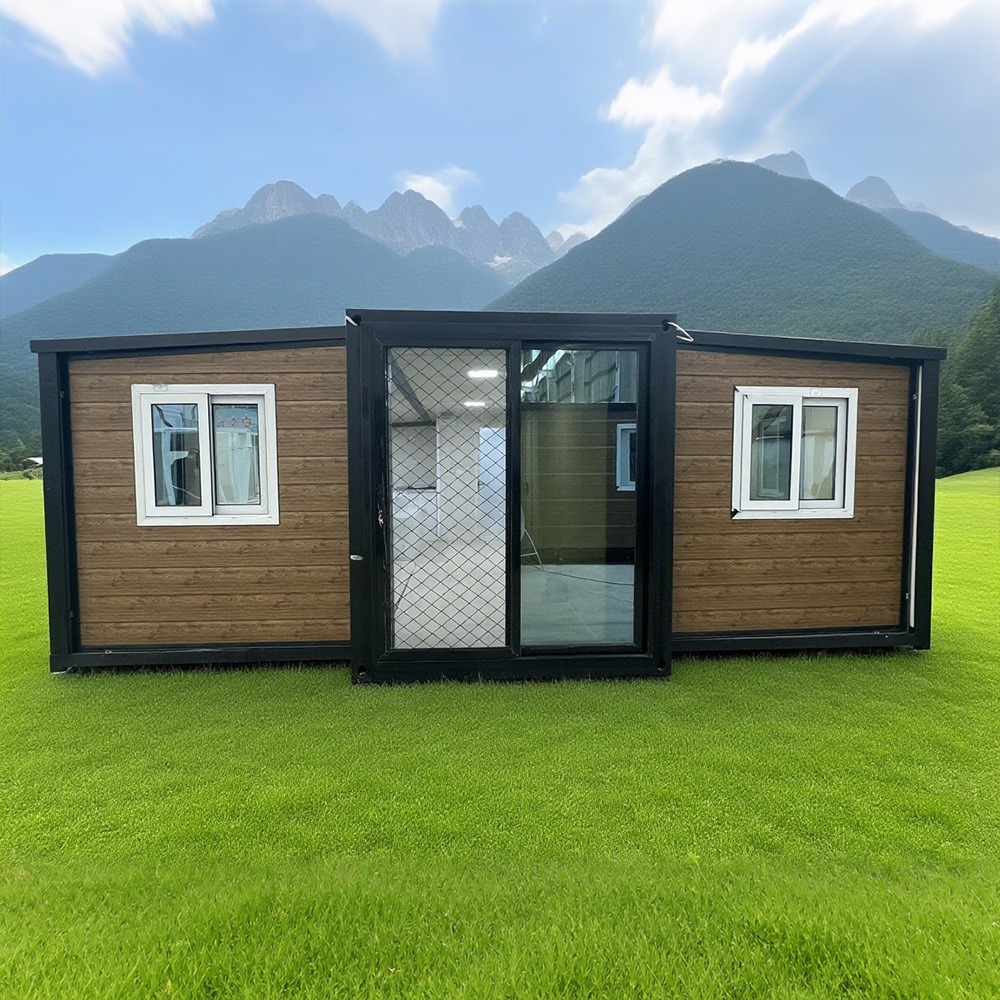
HG Prefab foldable expandable container homes — built to last, delivered worldwide.
Smart home technology turns a folding container home from a compact steel structure into a responsive, efficient living space. Remote lights, climate control, security cameras and tank-level alerts make a 20FT, 30FT or 40FT unit far easier to manage — whether it stands in a backyard, on a resort site or in a fully off-grid location. This guide explains how automation and connectivity work inside folding container houses, which devices genuinely add value, and how HG Prefab buyers can plan a smart system before delivery or retrofit it afterwards.
Why Smart Home Technology Fits Container Homes
A folding container home is smaller than a conventional house, which actually makes automation simpler and cheaper: fewer zones, shorter cable runs and a single central point for every sensor. Three container-specific needs push buyers toward smart systems:
- Remote management — units are often used as weekend homes, rental cabins or site offices that sit empty for weeks; owners want status updates and control from a phone.
- Compact living — smart lighting scenes, motorized shading and multi-zone climate control make small interiors feel more comfortable without adding furniture.
- Energy discipline — sensors that switch off unused circuits directly cut bills, and in off-grid setups they protect the battery bank.
Most HG Prefab units have factory-installed insulation and wiring that accept standard smart devices with little modification. When the unit arrives folded on a truck, a crane or forklift sets it in position, and four workers assemble the main structure in about 2 hours — after which the smart system is ready to install.
Start With a Solid Connectivity Backbone
Every smart device depends on a network. A container's steel frame blocks radio signals far more than timber or concrete walls, so connectivity is the first problem to solve. Treat the router and its placement as the foundation of the whole system.
- Cellular router with external antenna — a 4G/5G router with an outside, roof-mounted antenna gives reliable internet where phone signal is weak; expect $150–$400 for a quality unit.
- Mesh Wi-Fi instead of one long-range router — two mesh nodes (one at each end of a 40FT unit) usually outperform a single high-power router.
- Wired backhaul where possible — Ethernet or powerline adapters between the router and the hub keep latency low and radio channels free.
- Power stability — a small UPS or a battery-backed router keeps cameras and alarms online through short outages and during generator changeovers.
HG Prefab can pre-wire data points and an external antenna mount at the factory, which avoids drilling through insulated steel panels after delivery.
Core Smart Devices Worth Installing
Start with devices that save money or solve real problems, then expand later. The practical core stack for a folding container home includes:
- Automation hub or app-based ecosystem — a hub ($60–$150) centralizes Zigbee/Z-Wave devices and keeps automations working even when the internet drops.
- Environmental sensors — temperature, humidity and water-leak sensors ($15–$40 each) warn before condensation, freezing pipes or a leaking roof causes damage.
- Smart locks and cameras — a keypad lock removes key management for rentals, while two battery cameras ($50–$120 each) cover entry points.
- Smart climate control — an IR controller or smart thermostat paired with the mini-split cuts heating and cooling costs by an estimated 10–15%.
- Smart lighting — dimmable LED scenes and motion-triggered lights suit narrow corridors and lofts; see our container home lighting guide.
Off-Grid Monitoring and Power Management
For solar-powered units, monitoring is not a luxury — it is how you know the system is healthy. A small investment in instrumentation prevents the most common off-grid failures:
- Battery monitor — a shunt-based monitor displays state of charge, voltage and remaining capacity; expect $80–$200.
- Solar charge controller app — most MPPT controllers log production and fault codes to your phone over Wi-Fi or Bluetooth.
- Tank and pump sensors — freshwater and wastewater level sensors ($40–$90 per tank) end the guessing game for off-grid water use.
- Smart load shedding — automations switch off non-essential circuits such as the water heater or air conditioning when battery state of charge drops below a set level.
Pair monitoring with correct system sizing: our off-grid container home guide explains how to calculate the solar array and battery bank for your climate and appliances.
Factory Pre-Wire or Retrofit?
The single most important planning decision is whether to pre-wire at the factory or install smart hardware after the unit arrives.
| Factor | Factory pre-wire | On-site retrofit |
|---|---|---|
| Wiring quality | Concealed in walls, code-compliant | Surface raceways or limited runs |
| Best timing | Specified before production | After the unit is assembled |
| Cost | Often lower per point | Adds local labor cost |
| Flexibility | Fixed by design | Choose devices freely |
| Best for | New orders, resorts, rentals | Existing or used units |
Even when hardware is fitted later, deciding now where data points, camera cables and the router will sit avoids drilling into factory-sealed panels.
Smart Home Budget by Unit Size
- 20FT unit: starter kit — router, hub, two sensors, smart thermostat, two cameras: $500–$900
- 30FT unit: mid kit — adds a mesh node, leak sensors, smart lock and extra lighting scenes: $800–$1,400
- 40FT unit: full kit — mesh network, all zones monitored, four to six cameras, off-grid instrumentation: $1,200–$2,200
These ranges cover consumer hardware but exclude electrician labor for retrofit work. Factory pre-wire typically adds $300–$800 to a build depending on the number of data points.
Security, Privacy and Maintenance Best Practices
- Use separate networks — keep cameras and locks on a guest or IoT network so a compromised gadget cannot reach your phone or laptop.
- Change defaults — replace default passwords and enable two-factor authentication on every account that controls the unit.
- Update firmware — schedule monthly checks; manufacturers patch the vulnerabilities attackers exploit.
- Plan for no internet — choose devices that keep local automation working, using hub-based scenes, even when the WAN link fails.
- Document the system — keep a device map and login register with the unit's manual so future owners or site managers can take over.
Need a folding container house?
HG Prefab manufactures 20FT, 30FT and 40FT folding expandable container houses with optional smart-ready wiring, custom interiors and finishes — shipped flat-packed worldwide.
Browse modelsFrequently Asked Questions
Can a folding container home be fully automated?
Yes. A 20FT/30FT/40FT folding container home can control lighting, mini-split climate, locks, cameras, tank levels and solar power through one hub or app. Compact layouts make full automation cheaper than in a conventional house because there are fewer zones and shorter cable runs.
Do container homes have good Wi-Fi?
Steel walls block radio signals, so plan the network carefully. A cellular router with an external roof antenna plus two mesh nodes covers most units reliably. HG Prefab can pre-wire data points and an antenna mount before shipping.
Is smart home tech useful for off-grid container homes?
Very. Battery monitors, solar controller apps, tank-level sensors and smart load shedding are the highest-value devices for off-grid units because they prevent silent power or water failures and can alert you by phone.
Can I retrofit smart technology into an existing container home?
Yes. Most smart devices are wireless and battery powered, so a retrofit needs no new cabling. Where wired points are needed, surface raceways work well. If you are ordering new, factory pre-wire keeps cables concealed and lowers the cost per point.
How much does a smart setup cost for a 40FT container home?
Expect $1,200–$2,200 for a full consumer smart setup in a 40FT unit — mesh Wi-Fi, hub, environmental sensors, smart locks, four to six cameras and off-grid monitoring. A basic 20FT starter kit costs $500–$900.