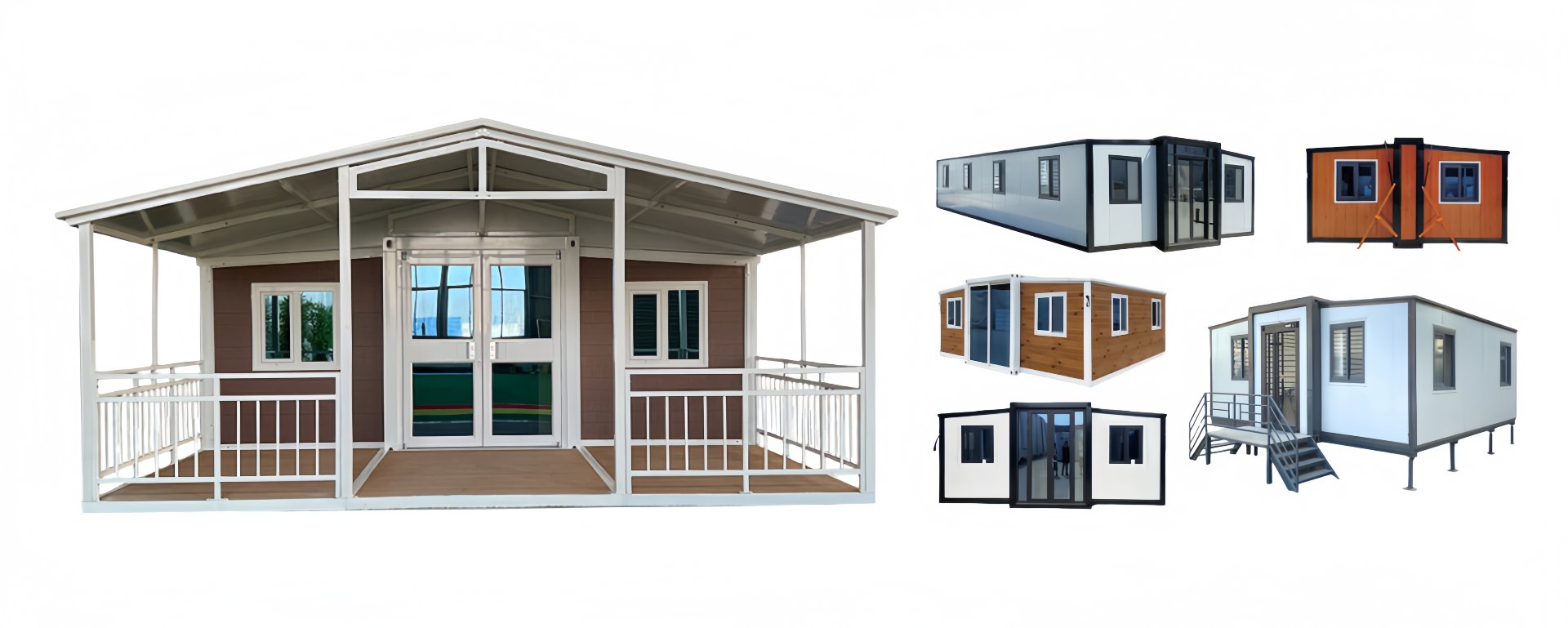
HG Prefab foldable expandable container homes — built to last, delivered worldwide.
A price list tells you what a folding container home costs. Twelve months of living in one tells you what it is worth. This is a composite story drawn from the typical experience of HG Prefab customers who made a folding unit their only address rather than a holiday cabin or a site office. There is no named family and no invented street address — instead, one couple downsizing, a family of three moving onto land they owned, and two remote workers. Their bills, mistakes and fixes are combined into one twelve-month account.
The real question is simpler than any spec sheet: can you live in one every day without it becoming a project? Almost always, it depends on the first ninety days.
Meet the Unit: Where the Story Starts
HG Prefab factory prices for the folding unit itself are 20FT $7,200–$9,800; 30FT $10,500–$14,500; 40FT $12,500–$16,500, ex-works, before freight, taxes, site work and local compliance. The worked example is a 30FT unit — the size that most often crosses the line from occasional use to an actual home — bought at $12,800 with an upgraded insulation package, double glazing, a finished bathroom and a factory kitchen. Mid-range, deliberately: a $10,500 specification is liveable but usually means more do-it-yourself work in the first winter; a $14,500 specification usually means the things you would otherwise buy twice arrive already installed.
Delivery Day: Two Hours From Flatbed to Front Door
Delivery day is the moment the whole proposition either makes sense or falls apart, and buyers imagine it worst. In reality the truck is an ordinary flatbed: the unit arrives folded to roughly standard container width, which is why it uses ordinary roads and freight without oversize permits.
Before the truck arrives
Three things must already be true that morning. The pad is built and cured — piers, slab or compacted gravel base, depending on the frost depth. The route is measured for gate width, turning radius, overhead clearance and ground bearing. And lifting equipment is booked: a crane or heavy forklift sized for the folded weight, whose operator knows where the unit goes and which way it opens.
What happened in those two hours
- Offload, 30 to 45 minutes. A crane or forklift lifts the folded unit clear and sets it down on the pad, where it is levelled with shims.
- Unfold, about 60 minutes. Four workers released the transport locks, unfolded the side walls and end sections and pinned them — a defined mechanical sequence, not improvisation.
- Secure and seal, 30 to 45 minutes. Bolt-down brackets to the pad, fold-line seals checked, every door and window operated.
- Handover walkthrough. Roof seams, seals, glazing, the electrical panel and plumbing stubs checked together, with a snag list written before the crew leaves.
By early afternoon the house had walls, a roof, windows, doors, a bathroom and a kitchen — but it was not yet connected to anything. That is the honest distinction: the building is finished in about two hours, while the hookups take days, because they depend on utilities and inspectors rather than on the factory.
What delivery day cost
Offload and assembly came to $1,450 including equipment hire and a four-person crew for half a day, on top of $2,600 for the pad and levelling. A crane in a dense city costs more than in a rural county, and soft ground can double the pad budget. The rule from owners: delivery day itself is rarely the expensive part — the ground preparation and utility runs either side of it are.
Week One: Moving In Before It Is Finished
The first week is the best and the most disorienting. People underestimate how strange it feels to occupy a building that did not exist yesterday. Notes that repeated across these households:
- Power first. A temporary supply runs lights, tools and a fan while the permanent connection wait for inspection.
- Live in two rooms before furnishing six. Owners who moved everything in during week one spent month two moving it back out.
- Find the moisture habits immediately. Showering, cooking and drying laundry each add litres of vapour a day to a small, tight envelope.
- Photograph every seal and panel on day one, ahead of any warranty conversation.
Month Two: When the Bills Settle Down
Every household reported the same thing: the numbers stopped being interesting around week six. Month one carries the noise — a temporary supply at a punitive tariff, a heater running while permanent heating is commissioned.
For the 30FT example the settled pattern was electricity of about $85 per month averaged across the year, covering cooking, lighting, refrigeration, laundry, water heating and cooling, with peaks in summer and in the coldest weeks. Heating fuel — propane for a compact stove plus a small electric backup — added about $55 per month averaged over twelve months, almost all of it in three cold ones.
Two things shaped those figures more than anything on the spec sheet: how many hours a day the house is occupied, and the insulation and glazing package chosen at order stage. Our guide to insulation in folding container homes explains why that gap compounds across a decade of ownership.
The First Winter Lesson: Condensation
This is the part every household got wrong, and it arrived in weeks rather than seasons. Delivery happened in late winter and the unit was warm and dry; ten days in, they found beads of water along the bottom edge of the exterior wall panels and damp patches behind a headboard pushed flush against an outside wall.
The diagnosis is simple once seen. A well-insulated, tightly sealed envelope is what you want for efficiency and exactly what traps vapour, and two adults generate three to five litres of water a day breathing, cooking and washing. In a factory-sealed unit that moisture migrates to the coldest surface available — the steel at the corner posts, the glass, or anything blocking airflow against an exterior wall.
The three-part fix
- Ventilate on a schedule, not by intuition. Ten minutes of cross-ventilation after every shower and every cooking session, plus a trickle vent or heat recovery ventilator running low and steady.
- Get furniture off the walls. A four-centimetre gap behind beds, sofas and wardrobes lets air wash the cold surface, so it never reaches dew point.
- Add a dehumidifier for the cold season. A unit collecting one to two litres a day held indoor humidity at 45 to 55 percent for a few dollars a month.
By the following winter they were ventilating by habit and never dealt with it again. Every one of them said the same afterwards: it was a solved problem, solved cheaply. The longer structural view is in our article on how long folding container homes actually last.
Month Five: Summer, Shade and Airflow
The second seasonal test comes from the opposite direction. Glazing gains heat fast, and by month five the peak afternoon temperature inside was running several degrees above outside air wherever windows faced west into direct sun. The answers, in order of value for money:
- External shade beats internal anything. An awning, pergola, sail shade or planted tree intercepts solar gain before it becomes heat inside.
- Reflective blinds behind curtains keep inner glass temperatures down and protect finishes from UV.
- Cross-ventilate with a stack effect: a low inlet on the shaded side, a high outlet on the warm side, no fan required.
- Size the air conditioner to the unit. A compact inverter mini-split matched to 25 to 30 square metres runs quietly; oversized units cycle badly.
Summer bills did rise — daily cooling added between $25 and $60 a month — but the peak was lower and shorter than in the conventional house they had left.
Month Eight: The Storm Test
Month eight brought the event buyers worry about and few plan for: sustained wind and driving rain near the top of the unit's rating. The bolt-down anchors held, and the fold-line seals — the detail every sceptic asks about — did not leak, because they are compression gaskets clamped mechanically by the unfold action rather than site-applied adhesive.
Two things needed attention afterwards: a door latch loosened by repeated wind loading, which took one turn of a screwdriver, and a deferred section of base skirting that suddenly needed fitting, because driven rain found its way under the floor edge. Both were overdue items of the kind listed in our folding container home maintenance guide.
The lesson written down afterwards was simple: fit the skirting before you need it. Base skirting stops driven rain and snowmelt getting under the floor, stops cold air washing the underside of the floor insulation, and removes the sheltered gap that rodents find attractive around any building.
Month Twelve: Running the Numbers
Twelve months in, the household added up everything the first year had cost beyond the $12,800 purchase price. This is their table, alongside the range we see across HG Prefab customers for the same size of unit.
| Year-1 item | What it covered | Typical range | 30FT example |
|---|---|---|---|
| Site pad and levelling | Piers or slab, drainage | $1,200–$4,500 | $2,600 |
| Delivery, offload and assembly | Lifting equipment and crew | $800–$3,000 | $1,450 |
| Utility hookups | Power, water, sewer | $1,500–$6,000 | $3,100 |
| Electricity (12 months) | Appliances, cooling | $700–$1,800 | $1,020 |
| Heating fuel | Cold-season propane | $300–$1,200 | $640 |
| Routine maintenance | Seals, filters, paint | $150–$600 | $280 |
| Insurance | Annual premium | $400–$1,500 | $720 |
| Fixes and upgrades | Blinds, skirting, security | $300–$1,500 | $890 |
| Year-1 total | Beyond the purchase price | $5,350–$20,100 | $10,700 |
Read against the purchase price, $10,700 is the interesting number: the first year cost roughly 84 percent of what the house itself cost. The all-in year-one figure is $23,500, about $1,960 per month.
Then the picture changes. Strip out the one-offs — pad, offload and hookups, $7,150 that will not be paid again — and the recurring cost is $3,550 a year, about $222 per month for electricity, heating fuel, maintenance and insurance on a real three-room home.
Anyone budgeting this properly should also read our full breakdown of what a folding container home costs, which separates factory price from freight, duties and site work for buyers importing rather than collecting locally.
What They Would Do Differently
Every household gave the same five answers, and none cost money at the time — only later, once they had been done twice.
Ventilation would be a habit from day one
Not after the first damp patch appeared. Owners who set a simple routine — ventilate after every shower and every cooking session, run the trickle vent continuously, keep the dehumidifier going through the cold season — never dealt with condensation again.
Skirting would go on in week one, not month eight
It is inexpensive, it is a weekend job, and it prevents three problems at once. Deferring it was the single most common regret in this story.
Furniture would be chosen for expandable walls
The expandable section changes how furniture behaves: anything tall, top-heavy or wall-hugging fights the design. What worked was low, modular, freestanding pieces — a sofa that needs no wall behind it, beds on legs rather than solid bases, wardrobes that can be moved outward, folding tables. Measure the unfolded room precisely, then subtract a couple of centimetres before ordering: two centimetres is the difference between a perfect fit and a blocked door swing.
Curtains and blinds would be made-to-measure
Factory window sizes are not retail curtain sizes, and assuming otherwise wastes money twice: everybody who ordered universal blinds replaced them. Those who sent exact dimensions to a local supplier — including reveal depth, so the fitting clears the handle — got properly sealed blackout coverings first time, which paid for itself in summer cooling and winter warmth.
Security would be part of the build, not an accessory
Nothing about a container home is inherently secure or insecure. What worked: a quality lockset with a reinforced strike plate rather than a cheap replacement later, motion lighting at the entry, a camera on the approach, and window locks used every night including the high ones. Two households fitted a simple alarm largely because it cut their insurance premium as much as it improved their peace of mind.
So: Can You Really Live in One?
After twelve months every household answered yes, and qualified it the same way. You can live comfortably, cheaply and safely in one full time, provided you treat the first ninety days as commissioning rather than camping: solve moisture early, shade the hot façade before summer, fit the skirting, buy furniture that respects how expandable walls work, and secure the doors properly.
Do that, and what remains is a warm, quiet, low-running-cost house that arrived on one truck and was standing in about two hours — and then simply became home. Those who skipped it spent year one working on the building instead of living in it.
Thinking about living in one full time?
HG Prefab, manufactured by Henan Huangang Machinery Equipment Co., Ltd., builds 20FT, 30FT and 40FT folding expandable container houses with upgraded insulation packages, double glazing, finished kitchens and bathrooms, and factory-fitted electrics. Tell us your climate, your plot and how many people will live in it, and we will specify the unit properly. Email hgmechequip@gmail.com or WhatsApp +86 191 0388 7380. Compare layouts on the products page, or look at the 30FT woodgrain residence for a full-time layout.
Browse modelsFrequently Asked Questions
Is a folding container home comfortable enough to live in full-time?
Yes, once ventilation, shading and furniture layout are solved. Owners who live in one year-round report that the two adjustments that matter most are managing moisture in cold months and managing solar gain in hot months. With a continuous ventilation habit, skirting that stops cold air under the floor, correctly sized blinds and a dehumidifier for the coldest weeks, a 30FT unit holds steady temperatures with modest energy use.
What does it cost to run a 30FT folding container home for a year?
A realistic year-one budget sits between roughly $5,350 and $20,100 including pad, delivery and offload, utility hookups, electricity, heating fuel, maintenance and insurance. In the worked example in this article the total came to $10,700 on top of a $12,800 purchase price, giving a first-year all-in cost of about $23,500, or roughly $1,960 per month. From year two the one-off setup items drop away and the running cost falls to about $220 per month.
How do you stop condensation inside a folding container home in winter?
Ventilate on a schedule rather than by feel, and keep warm air moving across cold surfaces. Run a trickle vent or a heat recovery ventilator continuously, crack a window for ten minutes after showering and cooking, pull beds and sofas a few centimetres off exterior walls, and use a small dehumidifier sized to collect one to two litres a day during the coldest weeks. Skirting the base and insulating exposed pipe runs stops the same moisture problem from reappearing under the floor.
How is the folded unit offloaded and set up on delivery day?
Yes — a crane or forklift is required to offload the folded unit from the truck. Once it is set in position, four workers can unfold and assemble the main structure in about 2 hours. Confirm the access route, gate width, ground bearing and overhead clearance with the operator before the truck is dispatched, pour or lay the pad in advance so it has cured, and keep the delivery, utility connection and first night in the unit on the same day rather than splitting them across visits.