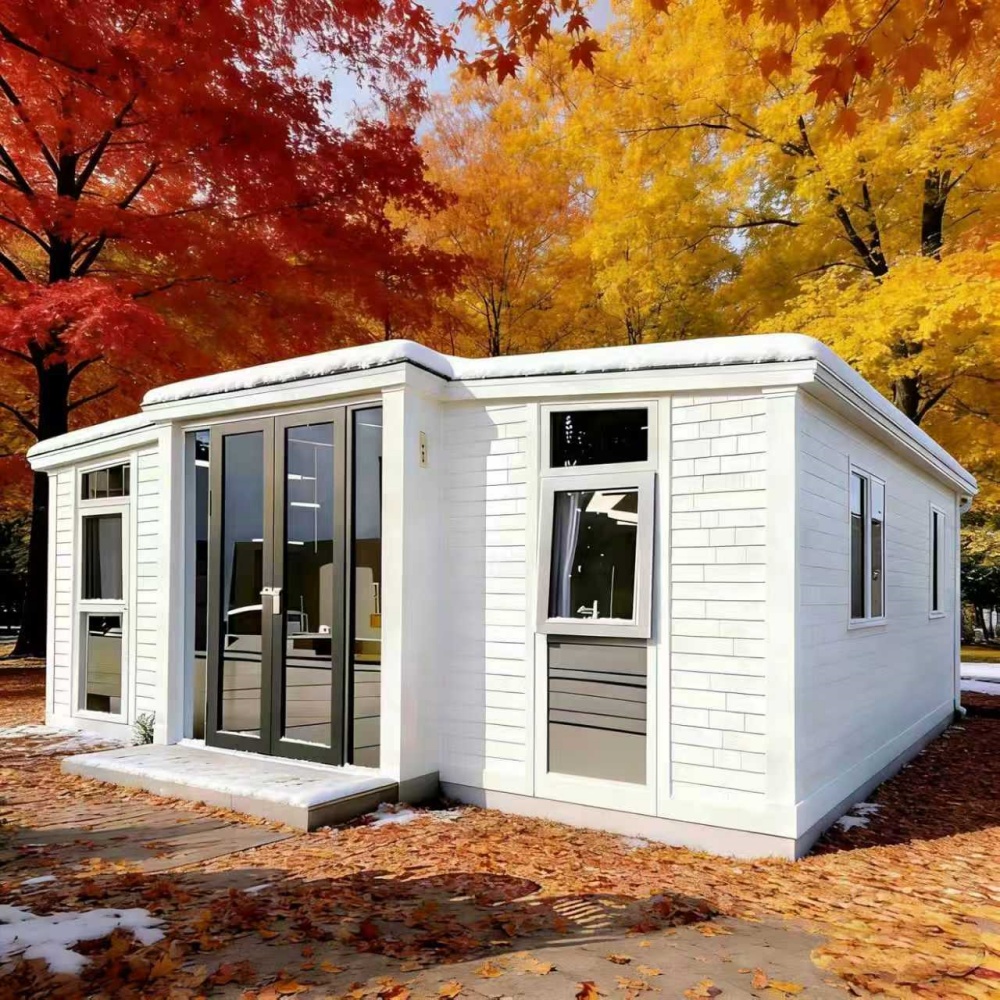
HG Prefab foldable expandable container homes — built to last, delivered worldwide.
A greenhouse is the most forgiving and most rewarding conversion you can make from a folding container house. The growing season stops being a calendar and becomes a thermostat setting: salads in February, seedlings six weeks ahead of the outdoor bed, herbs and microgreens every week of the year. A container greenhouse also solves the two problems that kill hobby growing — space and tending time. Everything sits at waist height within arm's reach, in a structure that arrives folded, sets in a morning and can be moved if the land use changes.
That said, a greenhouse is a demanding environment for a building. It is permanently humid, it swings from cold to hot within a single day, and every litre you put on the plants ends up somewhere. Get the envelope, drainage and airflow right at the specification stage and a container greenhouse will run for a decade. Get them wrong and you will be fighting condensation, rot and mildew from the first winter. This guide covers sizing, glazing, orientation, climate control, growing systems, utilities and cost.
Why a Folding Container House Makes a Good Greenhouse
Compared with a film polytunnel or a framed glasshouse, a folding container unit brings three advantages that matter specifically to growers:
- A rigid, insulated envelope. Insulated sandwich panels hold night temperature far better than single-skin film, which is exactly what determines whether winter growing is realistic.
- A lockable, pest-resistant shell. Steel walls and a proper door keep out rodents, deer and casual theft — the three losses most allotment and homestead growers complain about.
- Flat-packed delivery to awkward sites. A folded unit travels on a standard truck and can be offloaded onto a prepared pad in places where a kit greenhouse could never be assembled.
The trade-off is light. A steel box has no daylight, so the glazing plan is the single most important design decision you will make. Everything below follows from it.
Choosing the Right Size
Think in growing area, not floor area. Aisles, potting bench and equipment take 35–45% of the footprint in a well-planned greenhouse:
| Unit size | Floor area | Usable growing area | Best fit |
|---|---|---|---|
| 20FT | ~14 m² | 7–9 m² | Seedling nursery, herbs, microgreens, one household |
| 30FT | ~21 m² | 12–14 m² | Raised beds plus one vertical rack wall, family supply |
| 40FT | ~28 m² | 16–19 m² | Two zones: soil beds and hydroponic racks, market surplus |
A 20FT folding container house is the right starting point if your priority is seedlings and herbs. A 30FT unit is the sweet spot for a household that wants real vegetable production. A 40FT unit is worth the extra spend when you want separate warm and cool zones, or a hydroponic section that runs independently of the soil beds. Browse the full folding container house range to compare layouts.
Glazing, Orientation and Light
Daylight is free and no LED fixture matches its spectrum, so design around it first.
- Orientation: in the northern hemisphere, set the long glazed wall facing true south, within 15° if possible. East-facing glazing gives gentle morning light and is the better choice in hot climates where afternoon sun overheats.
- Glazing area: target 25–35% of floor area as glazing in cold or temperate climates, and 20–25% in hot ones. Below 20% you will be running lights most of the day; above 40% you lose more heat at night than you gain during the day.
- Glazing type: twin-wall polycarbonate (6–10 mm) is the default choice — it diffuses light, insulates, and survives hail. Tempered double glazing gives better clarity and looks finer but costs more and adds weight to the folding panels.
- Roof glazing: a strip of overhead glazing gives the most even light distribution, but it is also the largest source of summer overheating and winter heat loss. Use opening roof vents over any glazed roof section.
- Shading: fit an external 30–50% shade cloth on a roller for summer. Internal shading is far less effective because the heat is already inside.
- Light-reflecting interior: white or pale walls raise usable light at the back of the beds by a noticeable margin. Dark interiors waste a third of the glazing you paid for.
Climate Control: Heat, Humidity and Air
Holding Temperature Through Winter
Plants do not need tropical heat; they need the absence of frost. Aim to hold 5–10 °C minimum for cool-season greens and 15–18 °C for fruiting crops:
- Insulation: keep wall and roof panels at 50–75 mm as supplied, and add insulated roof glazing or a thermal curtain for night.
- Thermal mass: water butts, stone or concrete paving inside the unit absorb day heat and release it overnight. Twenty litres of water per square metre of glazing is a practical rule.
- Back-up heat: size a frost-protection heater at roughly 100–150 W per m² of floor in a temperate climate, more in cold continental regions. Use an electric heater with a thermostat and a low-temperature cutoff, never an unflued gas heater — combustion products damage plants and are dangerous in a sealed box.
- Zone separation: in a 40FT unit, partition a 6–8 m² warm end for seedlings and tropicals rather than heating the whole volume.
Ventilation and Humidity
Stale, wet air is what causes botrytis, powdery mildew and blossom drop. Keep air moving and humidity in a band:
- Target humidity: 60–75% for most vegetables. Below 50% plants close stomata and stop growing; above 85% disease pressure climbs quickly.
- Air changes: 0.5–1 air change per hour minimum in winter, 4–8 in summer. A low-energy circulation fan running continuously plus powered extract on a thermostat covers both.
- Vent placement: low intake on the cool side, high extract on the warm side, so air sweeps across the canopy rather than short-circuiting.
- Condensation control: the enemy is a cold surface, not humid air. Insulate glazing, keep a small continuous heat source overnight and avoid watering late in the afternoon.
- Summer cooling: shade cloth plus powered extract, then evaporative cooling only in dry climates. In humid regions, evaporative cooling raises humidity and makes things worse.
Growing Systems: Beds, Racks and Hydroponics
Match the system to what you actually eat, not to what looks impressive:
- Raised soil beds: 600–800 mm wide, 400–500 mm deep, with a 700–900 mm aisle. Fruiting crops — tomatoes, peppers, cucumbers — do best here because the root volume buffers temperature and moisture swings.
- Vertical rack wall: 4–5 shelves at 400–500 mm spacing against the solid (non-glazed) wall, 400–600 mm deep. Ideal for seedlings, microgreens and herbs.
- Hydroponic racks or towers: nutrient film technique channels or vertical towers give 3–5 times the yield per square metre for leafy greens. They need power 24/7 — a pump failure kills a crop in hours, so fit a failure alarm.
- Potting bench: 900 mm high, 600 mm deep, with a waterproof top and storage beneath. Every grower regrets skipping it.
- Load: a saturated bed weighs roughly 150–200 kg per linear metre. Confirm floor load capacity before filling deep beds in a 40FT unit.
Water, Drainage and Power
- Water supply: a 25 mm line with a hose connection and a backflow preventer. Rainwater harvesting from the roof is the cheapest irrigation you will ever install — see our guide to rainwater harvesting for container homes.
- Drainage: the floor needs a waterproof finish and a fall to a drain or a gravel sump. Never let irrigation water sit against the steel base; standing water plus soil is how a container floor dies.
- Irrigation: drip lines with a timer for beds, and hand watering for seedlings. A simple 4-zone timer costs little and prevents both over- and under-watering.
- Floor finish: trowelled epoxy or resin with a 1:80 fall, coved 100 mm up the walls, or a sealed screed with drainage matting in the aisles for grip.
- Power: a dedicated 32–40 A circuit for the greenhouse, split across lighting, pumps and heating, with RCD protection. All fittings in the growing zone should be IP65 rated.
- Grow lights: full-spectrum LED fixtures at 200–300 W, mounted 300–600 mm above the canopy, giving 150–300 µmol/m²/s for leafy greens. Run 12–16 hours for winter production; seedlings need 14–16 hours.
A Practical Year-Round Crop Plan
Rotation is what makes a small greenhouse productive rather than decorative:
- Late winter: onions, leeks, celery and brassicas from seed under lights; early potatoes in bags.
- Spring: tomatoes, peppers, cucumbers, aubergines started under lights and moved to beds once nights hold 12 °C.
- Summer: fruiting crops in beds; use the rack wall for basil and cut-and-come-again salad; shade and ventilate hard.
- Autumn: second sowing of Asian greens, radish, rocket and spinach; clear and sanitise beds as fruiting crops finish.
- All year: herbs in pots on the rack, microgreens on a 7–10 day cycle, and a perpetual seedling station.
Sanitation between cycles matters more in a sealed structure than outdoors. Empty pots, scrub with a dilute disinfectant, replace the top 100 mm of bed soil annually and keep a separate knife for the greenhouse. Pest populations build fast in a warm box with no predators.
Cost and Installation
Typical 2026 budget for a container greenhouse, excluding land and site works:
- Container unit: 20FT $7,200–$9,800; 30FT $10,500–$14,500; 40FT $12,500–$16,500 depending on size and finish.
- Glazing package and roof vents: $1,800–$6,500, the largest variable after the unit itself.
- Insulation upgrade and thermal curtain: $700–$2,500.
- Grow lights and electrical: $1,200–$5,000.
- Beds, racks, potting bench and irrigation: $1,000–$4,000.
- Ventilation, heating and controls: $900–$3,500.
- Floor finish, drainage and plumbing: $900–$3,000.
Sequence the work around the delivery. Cast the pad or lay the pier blocks first, run the water and power to the edge of the pad, then bring in the unit. Yes — a crane or forklift is required to offload the folded unit from the truck. Once it is set in position, four workers can unfold and assemble the main structure in about 2 hours, so the glazing trim and services, not the structure, set the schedule.
Tell your sales engineer where the glazed wall, roof vents, floor drain and power inlet will sit, and HG Prefab can factory-prep the glazing openings, vent apertures, drain penetrations and the electrical sub-panel. That way the glazier and electrician start the day after assembly instead of cutting into finished panels.
Need a folding container house?
HG Prefab manufactures 20FT, 30FT and 40FT folding expandable container houses with factory-prepared glazing openings, floor drain penetrations, vent apertures and electrical sub-panels for greenhouse conversions — shipped flat-packed worldwide. Contact us on WhatsApp +86 191 0388 7380 or email hgmechequip@gmail.com.
Browse modelsFrequently Asked Questions
What size container works best as a greenhouse?
A 20FT unit at about 14 m² suits a seedling and herb greenhouse for one household. A 30FT fits raised beds plus a vertical rack wall, and a 40FT gives two growing zones with a potting bench, hydroponic racks and enough aisle space to work comfortably year round.
How is a folding container greenhouse delivered and installed?
Yes — a crane or forklift is required to offload the folded unit from the truck. Once it is set in position, four workers can unfold and assemble the main structure in about 2 hours.
Can a container greenhouse really grow food in winter?
Yes, if heat loss is controlled. Insulated wall and roof panels, double or twin-wall glazing, a thermal break at the floor and a frost-protection heater sized to the glazed area will hold 10–15 °C above outside temperature. Leafy greens, herbs and Asian greens grow through winter in most climates; fruiting crops need supplemental light as well.
How much do grow lights cost to run?
A 40FT greenhouse fitted with about 20 LED grow fixtures at 200–300 W each drawing 4–6 kW for 14 hours a day uses roughly 1,700–2,500 kWh per month. At typical residential tariffs that is a meaningful operating cost, which is why most growers run lights only for winter production and seedlings.
Do I need a permit for a container greenhouse?
Most jurisdictions treat a greenhouse under a certain floor area as an accessory agricultural structure, but a container unit with permanent power, plumbing or a fixed foundation can trigger a building permit. Check setback rules, whether glazed structures count toward lot coverage, and whether an agricultural exemption applies before ordering. Our team at HG Prefab can supply drawings for your permit application.