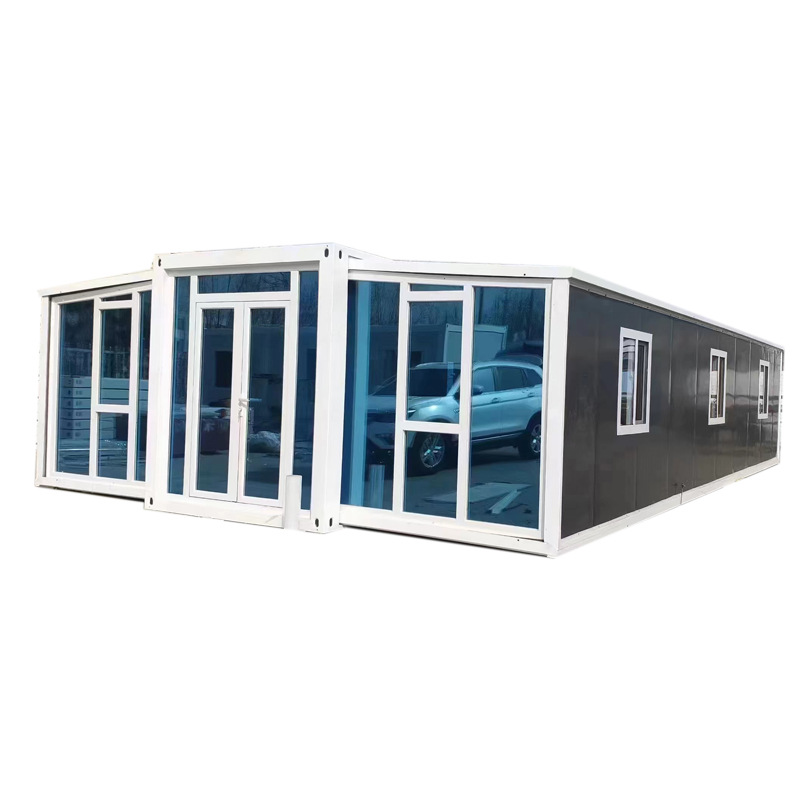
HG Prefab foldable expandable container homes — built to last, delivered worldwide.
Australia is one of the strongest markets in the world for factory-built housing, and the reason is arithmetic rather than fashion. Conventional construction in regional Australia routinely runs well above AUD 2,000 per square metre once site access, trade scarcity and weather delays are counted, while rental vacancy in many regional towns sits low enough that a granny flat pays for itself. A folding container home answers both problems at once: it arrives as a compact folded module that fits on a standard truck and a standard ship slot, and it becomes a finished, insulated, wired and plumbed dwelling in a single day on site. This guide walks through the four things that decide whether an Australian import goes smoothly — the National Construction Code and state planning, DAFF biosecurity, duty and GST, and the port-to-handover sequence — with the numbers we see on real shipments from our factory in Henan.
Why Australian Buyers Are Turning to Folding Container Homes
Three pressures converge in the Australian market. First, regional and peri-urban housing supply: mining towns, agricultural districts and coastal growth corridors all need additional dwellings faster than local builders can deliver them, and a second dwelling on an existing rural lot is often the quickest legal route. Second, cost certainty: a factory-built unit has a fixed price agreed before production, whereas a conventional build in a remote postcode carries large contingency for travel, accommodation and rework. Third, relocatability: a unit that can be folded and moved suits farm worker accommodation, tourism pods and temporary site offices that will not be in the same place in ten years.
Folding units also fit the Australian freight reality. A folded 20FT module occupies roughly a third of the volume of a built-up unit of the same finished floor area, so several can share a 40FT high-cube container or a single flat-rack slot. For buyers in Western Australia or far north Queensland, where the last leg of inland transport can cost more than the sea freight itself, that volume saving is often the difference between a viable project and an unviable one. See our folding container home shipping guide for the packing and loading detail.
Compliance Starts Before You Order: NCC and State Planning
The single most expensive mistake an Australian buyer can make is to order first and seek approval second. Assessment is done against the National Construction Code (NCC), but planning permission is a state and local matter: development approval pathways, exempt development rules, setbacks, bushfire overlays and flood overlays all vary by state and by council. Whether a second dwelling, a granny flat or an ancillary structure is permitted on your lot, and whether it needs a full development application, is decided locally — check with your council or a building approval consultant before committing to a build slot.
Practical sequence that works:
- Confirm land use first. Ask the council whether a relocatable dwelling is acceptable on your zoning, and whether it is treated as a class 1a dwelling or an ancillary structure.
- Engage a certifier early. A private certifier or the council building surveyor will tell you which NCC provisions and which Australian Standards apply to your site, and what documentation they expect from the manufacturer.
- Lock the specification against that list. Wind classification, energy efficiency provisions, wet-area waterproofing, glazing and electrical protection are all cheaper to build in at the factory than to retrofit on site.
- Order with the drawing set. HG Prefab issues engineering drawings, structural calculations, material schedules and electrical and plumbing schematics with the order, so your certifier is assessing documents rather than guesses.
- Book inspections before the unit lands. Footing inspection, then final inspection. Certifiers in regional areas can have lead times of two weeks or more.
Our container home permits guide covers the documentation pack in more detail.
Wind Classification and Cyclonic Regions (AS 4055 / AS 1170.2)
Australia classifies sites by wind region and by terrain, shielding and topography. Non-cyclonic regions are designated N1 to N6 and cyclonic regions C1 to C4 under AS 4055, with regional wind speeds and the detailed pressure calculations set out in AS/NZS 1170.2. In practice, most of coastal Queensland, the Northern Territory and the Pilbara and Kimberley coasts of Western Australia fall inside cyclonic classifications, and the further north you go the higher the classification.
What that means for your order:
- Tell us the wind classification at the design stage. It drives frame section sizes, wall and roof connection detailing, and the tie-down design.
- Cyclonic areas need engineered hold-down. In C1 to C4 regions, the fixing of the unit to its footings is an engineered item with specified anchor spacing and embedment, not a handful of bolts chosen on site.
- Terrain category matters. An open paddock or a ridge is assessed differently from a sheltered suburban block, even at the same distance from the coast.
- Ask for the calculation set. Your certifier will want to see that the supplied structure has been assessed for the specific classification, not generically described as wind resistant.
HG Prefab supplies a structural calculation package for the declared wind classification, and our sales engineers will quote the upgraded frame and hold-down specification once you give us the site postcode. Note that the final classification is a matter for your certifier or engineer — confirm it with them rather than assuming from a map.
Electrical: AS/NZS 3000 and Local Sign-Off
Electrical work in Australia is governed by AS/NZS 3000 (the Wiring Rules) together with state electrical safety legislation, and it is not self-certified by the importer. The workable arrangement for a factory-wired unit is to have the internal wiring installed to the Australian voltage and protection standard at the factory, then have a licensed Australian electrician inspect, test, complete the final connection to the supply and issue the certificate of electrical safety required in your state. Plan for that inspection as a scheduled item, not an afterthought, and tell your electrician in advance which circuits, RCDs and appliance loads the unit ships with.
Points that regularly cause rework:
- Voltage and frequency: Australia is 230/400 V at 50 Hz. Appliances sourced elsewhere must be rated for it.
- RCD protection: all final sub-circuits require residual current protection; the factory sub-board must match what your electrician expects to see.
- Earthing and bonding: the unit must be bonded to the installation earth at the point of connection.
- Consumer mains: the cable from the meter or switchboard to the unit is local work, sized to the connected load — typically 32 A to 63 A for a single dwelling unit.
Plumbing and Drainage: AS/NZS 3500
Water supply and sanitary plumbing are assessed against the AS/NZS 3500 series. Factory-installed pipework, fixtures and hot water units should be specified with Australian-compliant fittings where possible, with the final connection to the site supply, the sewer or the on-site wastewater system made by a licensed plumber. If your site is unsewered, the wastewater treatment or septic system is a separate approval lodged with the council or state health authority, and in some states that approval takes longer than the building approval — start it early.
Biosecurity: DAFF Container Inspection and ISPM-15 Timber
Australia has some of the strictest border biosecurity in the world, administered by the Department of Agriculture, Fisheries and Forestry (DAFF). Every sea container arriving from overseas is subject to inspection, and the department has the power to direct cleaning, treatment or re-export at the importer's cost. For a container home shipment this is very manageable if the unit is prepared properly at origin.
- Cleanliness: the container and the unit must be free of soil, seeds, plant material, animal matter and live insects. External mud on wheels, chassis or the underside of the folded unit is the most common cause of a cleaning direction.
- Timber packaging: any wooden pallets, crates, dunnage or bracing must carry the ISPM-15 mark showing approved heat treatment or fumigation. Unmarked timber is a hard stop.
- Declarations: your broker lodges the cargo declaration; packing declarations stating what is and is not present are commonly required for sea cargo. Confirm the exact form for your shipment with your broker.
- Quarantine risk material: avoid shipping anything with soil contact and never pack used agricultural or camping equipment in the same container.
- Costs of failure: a directed cleaning or fumigation typically adds several hundred to a few thousand Australian dollars plus days of demurrage. Prevention at the factory is far cheaper.
Seasonal Pest Measures and Transhipment
DAFF applies additional seasonal measures for certain pests — most notably brown marmorated stink bug — for goods manufactured in or shipped from specified countries during defined risk windows, and for vessels or containers that tranship through affected ports. Requirements change between seasons, and the target list and treatment options are revised periodically, so treat any statement about them as indicative only and check with DAFF or your customs broker for your specific shipping date and routing. Where treatment is required, it must be carried out offshore before departure; a container that arrives un-treated during a risk season cannot simply be treated at the Australian wharf.
Duty and GST: What Most Buyers Actually Pay
For an imported prefabricated dwelling, most buyers pay 10% GST on the customs value, which normally includes the goods value, international freight and insurance. Customs duty is typically 0% for qualifying goods under the China-Australia Free Trade Agreement, provided the shipment is correctly classified and the required origin documentation is available. Treat both as indicative: tariff classification and origin are legal determinations, and the only figure you can rely on is the one your licensed customs broker confirms for your shipment — confirm with your customs broker before you finalise the budget.
Indicative landed-cost items, in Australian dollars:
| Cost item | Typical range (AUD) | Notes |
|---|---|---|
| Customs duty | 0% in most cases | Classification dependent; confirm with broker |
| GST on customs value | 10% | Applied to value including freight and insurance |
| Customs broker and clearance | $250 – $600 | Higher with inspection or treatment |
| Terminal handling and port charges | $300 – $800 | Varies by port and stevedore |
| Container detention / demurrage | $0 – $1,500+ | Avoidable with prompt unpack and dehire |
| Inland transport ex-port | $400 – $3,500 | Distance and escort requirements dominate |
| Crane or forklift offload | $600 – $2,500 | Mobile crane half-day rate, metro vs regional |
The unit price itself is unchanged by the destination: 20FT $7,200–$9,800; 30FT $10,500–$14,500; 40FT $12,500–$16,500 depending on size and finish. You can compare configurations on our folding container house models page.
Sea Freight: Routes and Australian Ports
Most shipments from our Henan factory move overland to a Chinese load port — Qingdao, Shanghai, Ningbo or Shenzhen — and then on direct or transhipment services to the Australian east coast, or on west-bound services to Fremantle. The four ports that cover almost every Australian delivery are:
- Port Botany, Sydney (NSW): the busiest entry point, best for southern NSW, the ACT and most of Victoria by rail or road.
- Port of Melbourne (VIC): the natural choice for Victoria, southern NSW and Tasmania, with frequent direct services.
- Port of Brisbane (QLD): the gateway for south-east Queensland and the inland west; northern Queensland deliveries often continue by road.
- Fremantle (WA): the western entry point, with the long inland leg to the Pilbara or the Kimberley usually costed separately.
Transit times vary by service and by season; realistically allow two to four weeks port to port, longer for Fremantle if the service tranships. Always quote your nearest port, not the nearest capital, because the final road leg is usually the most expensive kilometre in the whole job. Check the packing list, container number and booking against our factory QC and pre-shipment inspection checklist before the vessel sails.
Why Folding Saves Freight
Freight is charged on volume as much as weight for this class of cargo, and a folded unit ships at a small fraction of its expanded volume. That produces three savings at once: fewer container slots for the same number of dwellings, a normal truck and normal road permits instead of an oversize escort for the inland leg, and a crane of ordinary capacity rather than a heavy-lift spread. For a buyer ordering four granny flats for one site, the difference between shipping four built-up units and shipping four folded units is frequently the difference between two containers and one.
From Port to Handover: The On-Site Sequence
The physical work after the container is released is short, but it has a fixed order:
| Step | What happens | Who | Typical time |
|---|---|---|---|
| 1. Customs clearance | Broker lodges entry, GST paid, DAFF inspection and release | Broker, DAFF | 3–7 days |
| 2. Inland transport | Container or flat-rack moved to site on a standard truck | Transport operator | 1–3 days |
| 3. Crane offload | Folded unit lifted from the truck and set on prepared footings | Crane or forklift crew | Half day |
| 4. Unfold and assemble | Four workers unfold and assemble the main structure | Site crew | About 2 hours |
| 5. Services connection | Water, sewer and electrical final connection and testing | Licensed plumber and electrician | 1–3 days |
| 6. Final certification | Certifier inspection, any rectification, occupancy sign-off | Building certifier | 1–3 weeks |
Yes — a crane or forklift is required to offload the folded unit from the truck. Once it is set in position, four workers can unfold and assemble the main structure in about 2 hours. The services trench and the pad, not the unfolding, are what set the schedule: cast the footings and run the conduits and drains before the truck arrives, and the unit can be weather-tight and connected the same week.
Timeline: Order to Move-In
| Phase | Typical duration | Can run in parallel |
|---|---|---|
| Design, quote and specification lock | 1–2 weeks | Council pre-lodgement enquiry |
| Production and factory QC | 3–5 weeks | Planning and building approval assessment |
| Inland haul to Chinese port and export clearance | 3–7 days | Site works and footings |
| Sea freight to Sydney, Melbourne, Brisbane or Fremantle | 2–4 weeks | Electrician and plumber booking |
| Customs, DAFF and port release | 3–7 days | Pad and service trench completion |
| Offload, unfold, connect, certify | 1–3 weeks | — |
Typically 8 to 14 weeks door to door. The approvals pathway is the item most likely to stretch that figure, which is why we recommend lodging it before production rather than after shipping.
Working with Your Certifier and Building Approval Consultant
A private certifier or a building approval consultant is not an obstacle to the project; they are the cheapest insurance in it. Bring them in at specification stage and use them for three things: confirming the planning pathway and whether your lot qualifies for exempt or complying development, confirming the wind classification and any bushfire attack level or flood overlay that affects the build, and listing the documents they will need to issue the permit and the occupancy certificate. Give them the HG Prefab drawing and calculation set early, and ask specifically which items they want to inspect on site, so those can be scheduled around the crane booking rather than discovered afterwards.
Common documentation requests include engineering drawings and structural calculations for the declared wind classification, electrical schematic and appliance schedule, plumbing and drainage layout, insulation and glazing specification for energy efficiency compliance, smoke alarm layout, wet-area waterproofing details and the termite management detail for the footings. Having all of those in one pack, issued with the order, is the difference between a permit in two weeks and a permit in two months.
Importing a folding container home to Australia?
Henan Huangang Machinery Equipment Co., Ltd. (HG Prefab) manufactures 20FT, 30FT and 40FT folding expandable container houses with Australian wind-classification engineering packs, AS/NZS-aligned electrical and plumbing layouts, ISPM-15 compliant export packing and pre-shipment cleaning for DAFF inspection — shipped to Sydney, Melbourne, Brisbane and Fremantle.
Chat on WhatsApp Email hgmechequip@gmail.comFrequently Asked Questions
Do I need council approval for a folding container home in Australia?
Yes in almost every case. Planning approval varies by state and council, and a building permit is issued by a private or council certifier against the National Construction Code. Apply before the unit ships, because the assessment can take several weeks and in some cases months.
What wind rating do I need for a cyclonic area in Queensland?
Cyclonic regions are classified C1 to C4 under AS 4055, with design wind speeds assessed against AS/NZS 1170.2 for your site. Tell us your postcode and wind classification before production, and HG Prefab supplies the engineering drawings and structural calculations your certifier needs to verify the frame and tie-down design.
Does DAFF require fumigation for every container from China?
No. Every sea container is subject to DAFF inspection on arrival and must arrive clean and free of soil, plant material and pests, but mandatory treatment is only directed when contamination is found or when seasonal pest measures apply. Confirm current requirements with DAFF or your customs broker for your port and shipping date, as rules change seasonally.
How much GST and duty do I pay when importing a container home?
Most buyers pay 10% GST on the customs value, and duty is typically 0% under the China-Australia Free Trade Agreement when the goods qualify, with a customs broker fee of roughly 250-600 AUD plus port and terminal charges. Tariff classification is a legal determination, so confirm the correct HS code and any concession with your broker before shipping.
How long does the whole import take from factory to move-in?
Typically 8 to 14 weeks: 3-5 weeks production, 2-4 weeks sea freight to Sydney, Melbourne, Brisbane or Fremantle, 3-7 days customs clearance, then 1-3 weeks for the site pad, crane offload, two-hour unfold, service connections and final certification. Permit assessment runs in parallel and can be the longest single item.