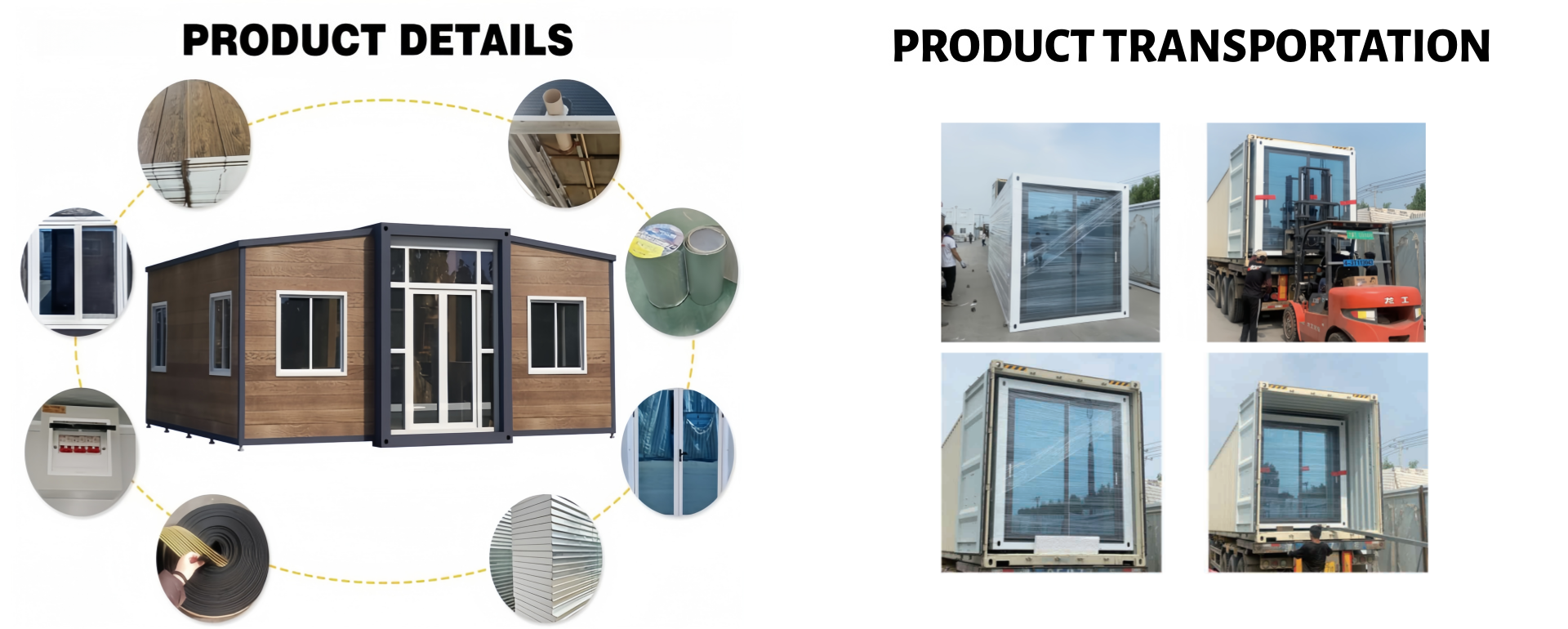
HG Prefab foldable expandable container homes — built to last, delivered worldwide.
New Zealand is a small market with a long list of rules, and that combination catches importers out. The country is geographically isolated, the construction sector is chronically short of trades, and much of the demand sits in places where getting crew and materials to the site costs more than the building itself. A folding container home answers that cleanly: it is manufactured indoors, it ships in a compact folded envelope, and once it is set down it opens into a finished dwelling in a single working day. What it does not do is skip New Zealand compliance. This guide covers the border, biosecurity, the Building Act, freight and the real numbers, so you can budget an import properly rather than discovering the cost at the wharf. If you are weighing New Zealand against a neighbouring market, read our companion guide on importing a folding container home to Australia, where the standards and quarantine structure works along similar lines with different documentation.
NZ Import Rules at a Glance
Every commercial import is cleared through the New Zealand Customs Service with an import entry, and every arriving sea container is also assessed for biosecurity risk by the Ministry for Primary Industries (MPI). Customs deals with value and tariff; MPI deals with contamination. Both have to be satisfied before the container leaves the port, and they are administered separately. In practice the importer uses a licensed customs broker, because the entry, the classification and the GST payment all have to be right on the first attempt.
The four things to have settled before the vessel sails:
- A correct tariff classification. Prefabricated buildings are typically classified under HS heading 9406, which covers prefabricated buildings whether or not complete or assembled. The sub-heading drives the duty outcome.
- A clean, complete document set. Commercial invoice with separate freight and insurance values, packing list, bill of lading, certificate of origin, and timber or wood packaging declarations.
- A biosecurity-clean unit. Free of soil, plant material, seeds, insects and animal residue, inside and out, including the roof and underside.
- A consenting plan agreed with the local council. Nothing at the border helps if the district plan does not permit the dwelling on the site.
Importers need an IRD number and typically a customs client code. If the unit arrives with furniture or loose appliances, invoice them on separate lines so the broker is not forced to allocate values after the fact.
GST and Duty
What you actually pay at the border
New Zealand applies GST at 15% on most imported goods. The important detail is the base: GST is calculated on the customs value, which typically includes the value of the goods plus international freight and insurance, not on the factory invoice alone. That is the line that surprises first-time importers, because it means the tax scales with the logistics, not just with the product price.
- GST at 15%: charged on the customs value including freight and insurance, collected at the border through the customs entry.
- Customs duty: depends on the classification. Rates under the prefabricated building heading are typically low or nil for many origins, but the outcome must be confirmed for the specific sub-heading and origin rather than assumed.
- Brokerage and port charges: entry preparation, terminal handling, container de-hire time, and any examination costs.
- Biosecurity costs: if MPI directs an inspection or cleaning, those charges sit with the importer.
Because rates and concessions change, confirm the exact duty rate and GST treatment with a licensed customs broker before you commit to ship. The freight mechanics — loading, stowage, container selection and port handling — are covered in our container home shipping and customs guide.
Building Code Pathways
Consenting under the Building Act
New Zealand's building regulation is performance-based rather than prescriptive. The Building Act 2004 sets the framework and the New Zealand Building Code sets the performance requirements. A building consent is issued by the territorial authority — the city or district council that covers the site — and that council decides whether the work complies. The decision is genuinely local, so the conversation with the council has to happen before production.
Two features of the framework matter for an imported unit:
- Building work versus exempt work. Some minor, standalone, single-storey work is exempt under Schedule 1 of the Act. A relocatable dwelling on a foundation and connected to services is not typically in that category, but the criteria are specific and change over time — verify the current position with your council.
- Producer statements. Councils commonly rely on producer statements from recognised professionals for design, structure and construction, supported by the manufacturer's drawings and calculations. For an imported product they will want engineering specific to the unit, not generic drawings.
Off-site manufacture considerations
A folding container home arrives largely complete rather than as a kit of parts, which is why it fits the off-site manufacture route. Councils generally accept off-site manufactured buildings where the factory work is documented and the on-site work is limited to foundations, service connections and finishing. Raise three points early: what evidence of factory quality control the council expects and in what format; what is inspected on site — foundations, fixings, weathertightness and services; and the inspection sequence that ends in a code compliance certificate. Requirements differ between regions, so confirm the consenting pathway with the council that covers your site before placing an order.
MPI Biosecurity
New Zealand has some of the strictest biosecurity controls in the world and containers are a known pest pathway. MPI assesses every imported sea container, and a folding unit is inspected as both a container and a manufactured article. The standard is simple to state and easy to fail: the unit must arrive clean, free of contamination that could carry pests or disease.
Clean unit requirements
- Exterior. No soil, plant material, seeds, bark, insects or animal residue anywhere on the outside, including the roof, underside, corner castings, door seals and recessed channels.
- Interior. Swept and clean, free of food residue, packaging waste and organic matter. Clean before loading rather than after arrival.
- Drainage. Drained and dry, with no standing water in traps or tanks.
- Underside and contact points. The most frequently failed areas on any container, because they pick up soil from the yard. Clean and photograph them before loading.
- Documentation. Keep the packing declaration and timber declarations with the shipping set so an MPI query can be answered without going back to the factory.
Timber components and wood packaging
Timber is the single most common source of a biosecurity hold. Any timber in the unit — structural members, flooring, decking, crates or dunnage — needs treatment documentation, typically showing the treatment type and standard applied, plus the ISPM 15 mark on wood packaging. Ask your supplier to certify treatment in writing and reference it on the packing list. If a container is directed for inspection and fails, the likely outcomes are cleaning or treatment at your cost, or in a serious case a reshipment direction — which is why pre-load cleaning is the highest-value half hour in the whole import.
Consenting and Site Requirements
Foundations, wind zones and structure
New Zealand's wind and seismic design requirements are among the most demanding a folding unit will meet anywhere. Councils work to the wind zone and earthquake zone for the specific site, and those zones drive the foundation design, the fixings and the bracing. Three points follow from that: the foundation — concrete piles or a slab — is designed for the site's bearing capacity and for the defined points the folded unit bears on; the connection between the steel base and the foundation is engineered for that local wind and seismic demand, not a generic load; and coastal or high-country sites add corrosion and exposure requirements. Design to the local zone, because a Wellington wind zone is not a Christchurch one and a sheltered urban section is not an exposed coastal site.
Insulation and H1 energy efficiency
Building Code clause H1 Energy Efficiency sets thermal performance requirements for the envelope, with climate zones and an option to use a calculation or modelling method. For a steel-framed folding unit the practical points are: use continuous insulation with thermal breaks, because steel conducts heat far faster than insulation and will bypass any interrupted layer; specify double glazing with a low-e coating as the baseline; control ventilation in a tight envelope, since unmanaged winter humidity is the fastest way to damage interior linings; and size heating to the calculated heat loss before the service application goes in. Confirm the current H1 requirements and accepted method with your council or designer.
Shipping Routes and Delivery
Ports and consolidation
Most container services from China call at Auckland, Tauranga and Lyttelton (Christchurch), with Auckland and Tauranga handling the majority of North Island volume and Lyttelton serving the South Island. Choose the port by the final site, not by the freight rate: an Auckland discharge for a Canterbury site adds an interisland leg that can cost more than the saving.
A folded unit is where the economics are won. Because it folds down to a compact envelope, several units typically consolidate into standard container slots, so freight is charged by container space rather than by the volume of a finished building. That is the main reason a folding design lands in New Zealand at a cost a conventional modular box cannot match. The freight mechanics are explained step by step in our shipping and customs guide.
Offload and assembly
- Access. Confirm gate width, ground bearing, overhead clearance and turning room for the delivery truck and the lifting equipment before dispatch.
- Pad first. Pour and cure the foundation before the truck arrives so offload and assembly happen on the same visit.
- Offload planning. Yes — a crane or forklift is required to offload the folded unit from the truck. Once it is set in position, four workers can unfold and assemble the main structure in about 2 hours.
- Sequence. Set the unit, open and fix it, make the structural connections, then bring in the electrician and plumber for the service connections.
Landed Cost Table for 20FT, 30FT and 40FT
HG Prefab factory prices for the folding unit itself are 20FT $7,200–$9,800; 30FT $10,500–$14,500; 40FT $12,500–$16,500, ex-works, before freight, GST and New Zealand compliance. The table below converts that starting point into a realistic landed estimate. All freight, tax and clearance figures are estimates and should be confirmed with your broker and forwarder for your port and your order.
| Landed cost line (estimates) | 20FT | 30FT | 40FT |
|---|---|---|---|
| Factory price, ex-works | $7,200–$9,800 | $10,500–$14,500 | $12,500–$16,500 |
| Ocean freight to NZ port (estimate) | $1,600–$3,000 | $2,000–$3,800 | $2,400–$4,500 |
| GST at 15% on customs value incl. freight (estimate) | $1,300–$2,000 | $1,900–$2,700 | $2,200–$3,200 |
| Customs duty, classification-dependent (estimate) | $0–$600 | $0–$900 | $0–$1,000 |
| Consent, engineering, MPI clearance and brokerage (estimate) | $1,500–$3,500 | $1,800–$4,000 | $2,000–$4,500 |
| Landed estimate (estimate only) | $11,500–$18,900 | $16,200–$26,000 | $19,100–$29,700 |
Read every row after the first as a range, not a quote. Freight is quoted per container slot rather than per unit — which is where a folding design earns its advantage — and the GST row scales with the customs value including freight, so it grows when freight rates rise. The compliance row covers consent fees, engineering and producer statements, brokerage, and any MPI inspection or cleaning. The landed estimate excludes site work, foundations, service connections and crane hire. Larger layouts such as the 40FT folding expandable model spread the fixed consent and clearance cost over more floor area.
Working With Your Supplier on Documentation
Most delays on a New Zealand import are documentation delays, not manufacturing or shipping delays. The fix is to specify the document package at order stage and make it a condition of release.
- Commercial invoice and packing list. Separate lines for the building and for any loose furniture or appliances, with weights, dimensions and the HS code.
- Bill of lading. Consignee details matching the customs client code, and a description that agrees with the invoice.
- Certificate of origin. Required where a preferential or concessionary duty outcome is claimed.
- Timber and wood packaging declarations. The biosecurity-critical documents — request them with the production order.
- Technical file for consent. Drawings, structural calculations, insulation and glazing specifications, electrical and plumbing schematics, factory inspection records.
- Pre-loading photographs. Exterior, interior, underside and roof, taken after cleaning.
Ask for one consolidated PDF pack before the vessel sails and check it line by line: a mismatch between the invoice and the bill of lading, or a missing timber declaration, costs days at the port. Payment terms and how to structure the deposit and balance against these milestones are set out in our ordering and payment guide.
Timeline From Order to Occupancy
- Weeks 0–2: specification freeze, council discussion on the consenting pathway, district plan check, broker confirms classification and GST.
- Weeks 2–6: factory production with engineering documentation and timber certificates in parallel, then pre-load cleaning.
- Weeks 6–9: ocean transit to Auckland, Tauranga or Lyttelton.
- Weeks 9–10: customs entry, GST and any duty, MPI assessment and clearance, terminal release.
- Weeks 10–11: inland delivery, with the foundation already poured and cured.
- Week 11: offload and set, then unfold and structural assembly in about 2 hours with four workers once the unit is in position.
- Weeks 12–15: service connections, fit-out, council inspections, code compliance certificate.
The two items that most often stretch this schedule are the building consent review and the utility service application. Neither is controlled by the factory or the shipping line, so start both before the vessel sails.
Planning a New Zealand import?
HG Prefab, manufactured by Henan Huangang Machinery Equipment Co., Ltd., builds 20FT, 30FT and 40FT folding expandable container houses with documentation packages for off-site manufacture, timber treatment certificates for MPI, insulation packages for H1 energy efficiency and export packing prepared for a clean arrival. Send your region, suburb and intended use for a landed-cost estimate. Email hgmechequip@gmail.com or WhatsApp +86 191 0388 7380. Full model range on the products page.
Browse modelsFrequently Asked Questions
How much GST will I pay importing a container home to New Zealand?
New Zealand applies GST at 15 percent on most imported goods, calculated on the customs value of the shipment, which typically includes the value of the goods plus freight and insurance. Duty depends on how the unit is classified under the tariff, and some prefabricated building classifications may attract little or no duty, so confirm the HS code and the duty outcome with a licensed customs broker before the vessel sails. Your broker files the entry and pays GST to the New Zealand Customs Service as part of the clearance.
Does my unit need council consent?
In most cases, yes. A folding container home installed as a place of residence is treated as building work under the Building Act 2004, and the council covering your site decides what consent is required and whether an off-site manufactured unit is accepted. Some minor standalone work is exempt, but a dwelling placed on a foundation is not usually among the exemptions. Apply for a building consent with the full manufacturer documentation, and check the district plan for zoning, setbacks and site coverage before you order.
What does MPI biosecurity require?
The Ministry for Primary Industries focuses on contamination risk. The unit must arrive clean inside and out, free of soil, plant material, seeds, insects and animal residue, and any timber components need treatment documentation, typically a treatment certificate for the timber and ISPM 15 marking on wood packaging. A dirty or undeclared container risks a directed inspection, cleaning at your cost, or a reshipment order. Ask your supplier to clean and photograph the unit before loading, and keep the timber and packing declarations with the shipping documents.
How long does shipping from China to New Zealand take?
Ocean transit typically runs around three to five weeks from the main Chinese load ports to Auckland, Tauranga or Lyttelton, depending on the service and whether it sails direct or transships. Allow additional time for customs clearance and MPI assessment on arrival, which can add several days and occasionally a couple of weeks if the container is directed for inspection. Factory production before sailing and inland delivery after clearance usually account for more of the total schedule than the ocean leg itself.