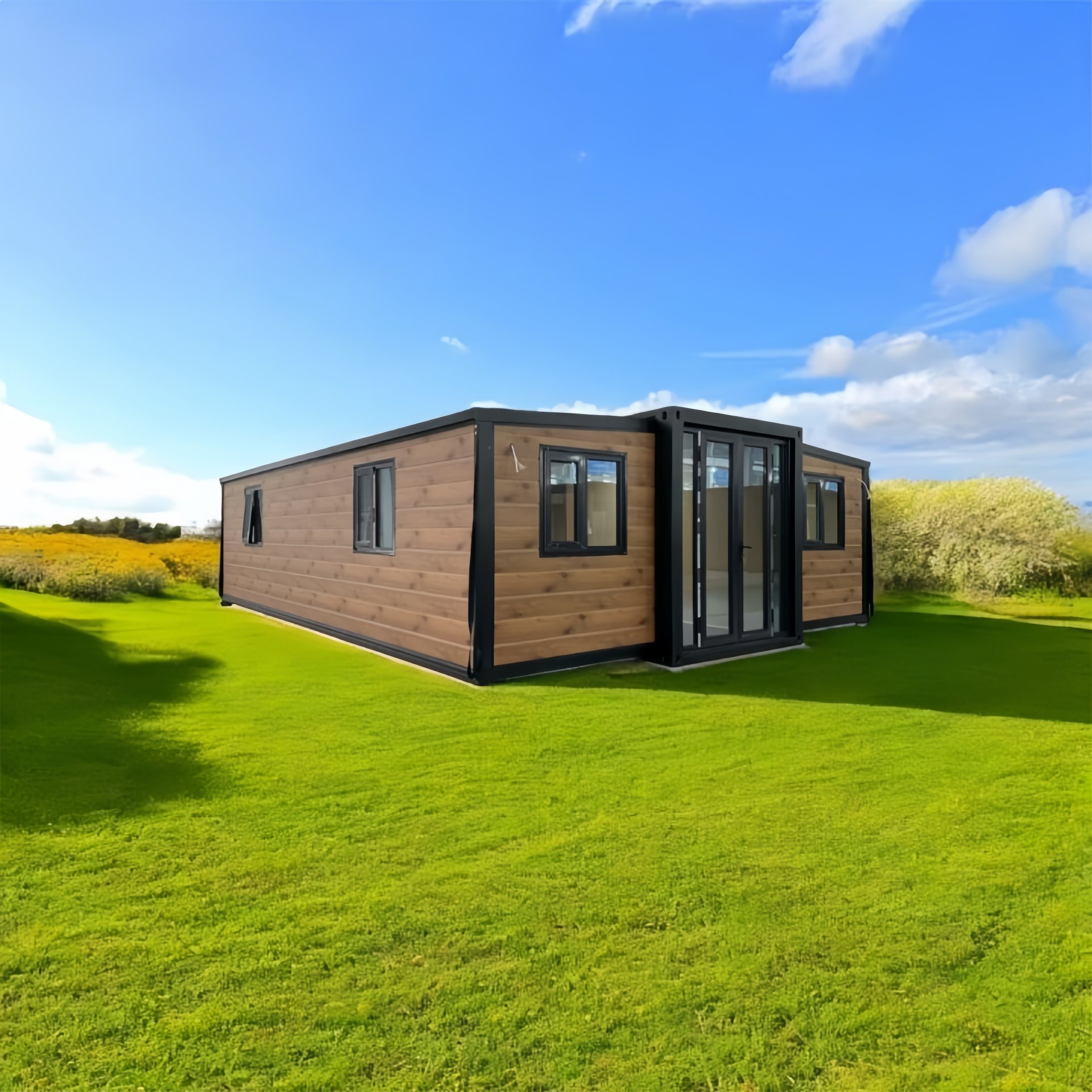
HG Prefab foldable expandable container homes — shipped folded worldwide, paid safely by letter of credit.
Buying a folding expandable container home from another continent is a trust exercise. You wire money to a factory you have never visited, wait six to ten weeks while it is built, and hope that what arrives matches the quotation. For most buyers that leap of faith is the hardest part of the whole project — harder than the foundation, harder than the permitting, harder than deciding between a 20FT and a 40FT.
A letter of credit exists precisely to remove that leap. It substitutes a bank's promise for your trust, and it converts "I hope the shipment ships" into a documented, checkable sequence with dates, documents and defined responsibilities. This guide covers what an LC is, who does what, which terms matter for container home shipments specifically, how the payment actually moves, where presentations get rejected, and how HG Prefab structures deposit-plus-LC orders for 20FT, 30FT and 40FT units.
What a Letter of Credit Is, and When Buyers Use One
The basic definition
A letter of credit (LC, sometimes called a documentary credit) is a written undertaking by a bank, given on your instruction, to pay a supplier a stated amount against presentation of specified documents that comply with the credit's terms and conditions. Almost all international LCs are governed by the UCP 600 rules published by the International Chamber of Commerce.
The key word is documents. Banks deal in documents, not in goods. A bank does not know or care whether your folding container home is the right colour, whether the welds are clean or whether it will survive a winter in Hokkaido. It cares whether the bill of lading, invoice and packing list match the wording of the credit character for character. That is both the strength of the instrument — disputes about judgement disappear — and its weakness, which is why your contract with the supplier still matters enormously.
When an LC makes sense for a container home order
An LC is rarely used for a single small unit and almost always used for a large or financed one. In practice:
- Your first order with a new factory. This is the strongest case. Before a relationship exists, neither side can reasonably expect the other to extend credit.
- High unit value. A fully specified 40FT teak retreat at the top of its range is a five-figure asset. Bank fees become proportionally trivial once the invoice clears roughly USD 40,000.
- Project or tender financing. Government buyers, NGOs, mining camps and developer-financed sites are frequently required by their own funding rules to pay by LC or against another bank instrument. This is common across Africa, the Gulf and Latin America, where our 30FT white folding house and 40FT models are frequently ordered for workforce accommodation.
- Multi-unit orders. Two or three 40FT units sharing a vessel quickly reaches the threshold where the buyer reasonably wants documentary control.
- Restricted or unfamiliar jurisdictions. Where the buyer's own banking system is conservative about outbound remittances, an LC issued by a local bank is often easier to get approved than a direct wire.
Conversely, for a single entry-level 20FT mountain cabin below about USD 20,000, an LC is usually disproportionate: the fixed opening, advising and amendment charges can add 2 to 5 percent to the landed cost for paperwork that takes three weeks to arrange. Know that threshold before you ask your bank to open one.
The Parties and the Flow of an LC
Five roles appear in every standard credit. Knowing who is on your side is half the battle when something goes wrong.
Who is who
- Applicant — you, the buyer. You instruct your bank to open the credit and you are ultimately the one who reimburses it. You also choose what the LC says, which means most discrepancies are drafted in by the applicant, not created by the seller.
- Issuing bank — your bank. It gives the payment undertaking to the beneficiary and it is the party that will (or will not) accept the documents. It acts on your instructions but it is not your advocate: it cannot waive a discrepancy without your agreement.
- Beneficiary — the seller, here HG Prefab (Henan Huangang Machinery Equipment Co., Ltd.). The beneficiary is paid once it presents a complying set of documents.
- Advising bank — a bank in the seller's country, usually nominated by the issuing bank, that authenticates the credit and hands it to the beneficiary. It verifies authenticity; it does not normally add its own payment obligation unless it confirms the credit.
- Confirming bank — optional but valuable. A confirming bank adds its own independent undertaking to pay, so the beneficiary is protected against the issuing bank's country and credit risk, not just the applicant's. Sellers sometimes ask for confirmation when the LC comes from a higher-risk jurisdiction; it adds cost, typically 0.2 to 1.0 percent per quarter, and the LC must state who pays for it.
The flow, step by step
- Contract. You and HG Prefab agree price, Incoterm, shipment date, port, inspection and payment structure in the pro forma invoice. This is where everything that later appears in the LC is decided.
- Application. You apply to your bank, ideally with a draft of the LC text prepared together with the factory. Many banks let you submit a draft.
- Issuance. Your bank issues the credit by SWIFT MT700 and advises it through a bank in China.
- Advising. The advising bank authenticates the SWIFT message and releases it to HG Prefab. From this point the factory has a bank-backed promise and can book materials.
- Production and inspection. HG Prefab builds the unit or units. Any pre-shipment inspection required by the LC happens here, not after loading.
- Shipment. The folded unit is loaded, the carrier issues the bill of lading, and the on-board date is stamped. This date is the single most important factual event in the credit.
- Presentation. HG Prefab presents the complete document set to the advising (or negotiating) bank, which checks it and forwards it to the issuing bank.
- Examination. The issuing bank has up to five banking days to examine the documents and either honour or refuse. If there is a discrepancy it issues a notice stating each one, and can seek your waiver.
- Payment. On acceptance, payment is made as the credit instructs — at sight, or at the maturity of a usance draft.
- Release and delivery. Documents reach you, you clear customs with the bill of lading, and the unit goes to site. Yes — a crane or forklift is required to offload the folded unit from the truck. Once it is set in position, four workers can unfold and assemble the main structure in about 2 hours.
Key LC Terms for Folding Container Home Shipments
Incoterms: FOB versus CIF
The Incoterm decides who pays freight and insurance, who bears risk and when, and — crucially — what the bill of lading has to say. Get this wrong and every downstream document mismatches.
- FOB (Free On Board), e.g. FOB Qingdao. HG Prefab delivers the folded unit onto the vessel; you contract and pay the ocean freight and insurance. The invoice value excludes freight, the B/L is marked freight collect, and the LC must not demand an insurance policy from the beneficiary. FOB is the right choice when you have a freight forwarder you trust or a consolidated container.
- CIF (Cost, Insurance and Freight), e.g. CIF Rotterdam. HG Prefab pays freight and minimum marine insurance to your port; you handle import clearance, duties and inland haulage. The invoice includes freight, the B/L is marked freight prepaid, and the LC will require an insurance policy or certificate for 110 percent of the CIF value. CIF suits buyers who want a single port-to-port number.
A frequent drafting error is to quote CIF in the pro forma invoice but write FOB in the LC, or vice versa. Banks then refuse a B/L marked freight prepaid under an FOB credit. Match the Incoterm in the pro forma invoice, the LC field 45A goods description, the commercial invoice and the B/L.
Latest shipment date, expiry date and presentation period
Three separate dates appear in every credit and conflating them is expensive.
- Latest shipment date — the last date the bill of lading can be on board. Build in slack: if HG Prefab quotes 25 to 35 days production, set the latest shipment date at least 12 to 15 days after the expected completion.
- Expiry date — the last day documents can be presented, and the place where they must be presented. Under UCP 600 the default presentation period is 21 days after the B/L date; whatever you set must not be shorter than the time the documents realistically take to reach the presenting bank.
- Place of expiry — normally the beneficiary's country, so that transit time counts in the seller's favour, not against it.
Partial shipment and transhipment clauses also matter. A 40FT folding unit typically ships one-per-container or occasionally two-per-container depending on the destination line's equipment limits; if you order a mixed 20FT plus 40FT combination, allow partial shipment unless you are certain both go on the same vessel.
The document set
For a folding container home shipment, expect the LC to call for:
- Commercial invoice — unit price per model, total value, Incoterm and signed.
- Packing list — folded dimensions, gross weight, net weight, unit count per container and the model reference. This is where a folding unit differs from ordinary cargo: the packed volume is roughly one fifth of the expanded volume, and customs will use these figures.
- Clean on-board ocean bill of lading — full set of originals, consigned to order and blank endorsed unless your customs demands otherwise, marked notify party with your details, and marked freight prepaid (CIF) or freight collect (FOB).
- Certificate of origin — CO, Form A (GSP) or a preferential form under an applicable free trade agreement. Ask your broker which one earns you duty relief before the LC text is drafted, because the wrong form is a discrepancy at best and a lost duty saving at worst.
- Inspection certificate — a pre-shipment inspection report, factory acceptance test, or third-party report where the LC requires one. Note that if the LC names a specific inspecting authority, that authority must actually sign; "any independent inspector" is far easier to satisfy.
- Insurance policy or certificate — CIF credits only, for 110 percent of the invoice value, in a negotiable form.
- Compliance documents — electrical test report, CE declaration, material certificates or any certificate your import authority requires. These must be named in the credit only if you genuinely need them: every document you add is another chance to be refused.
Sight LC versus Usance LC
This choice is about timing, and it is made in field 42 of the credit.
A sight LC ("available by payment at sight") pays within about five banking days of the issuing bank accepting a compliant presentation. HG Prefab is paid just after shipment, and you pay your bank at essentially the same time. It is the cleanest structure, the cheapest, and the one most factories prefer — which often translates into a slightly sharper price.
A usance LC ("available by acceptance of drafts at 30/60/90 days after sight" or "after bill of lading date") defers payment. Documents are released against acceptance of a time draft rather than against cash. The advantage is working capital: you can take delivery, unfold the unit and in some rental or workforce-accommodation cases begin earning revenue before the money leaves you. The costs are an acceptance commission, a discount charge if the beneficiary wants cash earlier, and the possibility that the factory prices the deferred risk into the unit. If you want usance, say so at quotation stage and state in the LC whether discount charges are for the applicant's or the beneficiary's account — ambiguity here causes real arguments.
Payment Method Comparison
| Method | Buyer protection | Typical cost | Speed to confirm | Best for |
|---|---|---|---|---|
| T/T wire transfer (30/70 deposit & balance) | Low — funds are irrevocable once sent; recourse depends on the contract alone | $15–$60 per transfer plus FX margin | 1–3 banking days to receive funds | Repeat orders, single units, trusted long-term suppliers |
| Letter of credit at sight | High — payment only against documents checked by your bank | $150–$600 opening/advising plus 0.1–0.5% of value per quarter | 5–10 days to issue; 5 banking days to examine documents | First orders, tenders, orders above roughly $40,000 |
| Usance LC (30–90 days) | High, plus working-capital relief after shipment | Sight LC fees plus acceptance commission and discounting | Same as sight, payment deferred 30–90 days after B/L date | Buyers who need breathing room between delivery and payment |
| Alibaba Trade Assurance | Medium — platform-mediated, depends on the order terms recorded on-platform | Usually 0%–3% platform fee | Instant to open; disputes handled in days to weeks | Small online orders, sample units, buyers without a relationship with a bank |
| D/P or D/A through banks (documentary collection) | Medium — documents released against payment or acceptance, but no bank payment undertaking | $80–$250 | 2–5 days to arrange documents | Mid-size repeat orders where an LC is too heavy |
Discrepancy Traps and How to Avoid Them
Roughly half of first presentations across the trade contain at least one discrepancy. Most are trivial to fix if caught early and fatal if not. The recurring ones for container home orders:
- Late shipment. The B/L on-board date falls after the latest shipment date. This cannot be corrected — the goods are already afloat. Prevent it by building genuine slack into the shipment date and by agreeing a production schedule in writing when the deposit is paid.
- Goods description mismatch. Field 45A says "folding expandable container house, model XYZ" and the invoice abbreviates it. Under UCP 600 the goods description on the invoice must correspond to the credit; descriptions elsewhere must not conflict. Copy the wording verbatim into the pro forma invoice.
- Late presentation. Documents arrive after expiry or after 21 days from the B/L date. Always set the place of expiry in the beneficiary's country.
- B/L marking errors. Freight prepaid versus freight collect is the classic. Another is consignee wording: "to order" versus a straight consignee changes whether the document is negotiable, and your import broker may insist on one form.
- Weight and dimension mismatch. The packing list shows a different gross weight from the B/L. For a folded unit the factory should issue both numbers from the same source.
- Certificate of origin form. A CO presented where the LC demanded Form A, or vice versa.
- Unrealistic or unobtainable documents. A credit demanding certification from an authority that cannot attend the factory, or a consul legalisation unavailable in China, guarantees rejection before the goods move.
- Spelling of the beneficiary and applicant. Company names must match the corporate registration to the letter. HG Prefab trades as Henan Huangang Machinery Equipment Co., Ltd.; ask for the exact registered name, address and bank details before drafting.
The defence is procedural, and it costs nothing. First, do not draft the LC alone: send HG Prefab your draft text and get it approved before issuance. Second, require a draft document set by courier or email — invoice, packing list and a scanned B/L — for your sign-off before originals go to the bank. Third, keep the number of required documents to the minimum your customs needs; every extra certificate is an extra rejection risk. Fourth, remember that after refusal you can still waive the discrepancy and authorise payment; the real cost of a discrepancy is delay, amendments costing USD 30 to 100 each, and storage or demurrage at the destination while it is resolved.
Deposit Plus LC Balance: How the Order Is Structured
Almost no container home order is 100 percent LC. Production requires materials weeks before any document exists, so the standard structure is a T/T deposit to start, LC balance against documents:
- 30 percent T/T deposit, 70 percent LC at sight. The default for a first container order. The deposit releases steel, sandwich panels and electrical harnesses; the LC balance covers factory risk until shipment.
- 50 percent deposit, 50 percent LC. Sometimes requested for highly customised builds — a 40FT white gable unit with bespoke joinery, or a 20FT winter-finish unit with a specific glazing package — where the resale value of a cancelled order is low.
- LC written for the full value, with no deposit. Occasionally used by government tender buyers. Expect the factory to ask for a longer production lead time and possibly higher unit pricing, because it carries the full materials exposure.
Against factory prices of 20FT $7,200–$9,800, 30FT $10,500–$14,500 and 40FT $12,500–$16,500, here is what that means in cash terms. A single 20FT at $8,500 means roughly $2,550 down and $5,950 drawn under the LC. Two 40FT units at $15,000 each is a $30,000 order: about $9,000 deposit and a $21,000 credit. Two 30FT units plus one 20FT lands near $32,000 — the point at which the roughly $250 to $500 of LC bank charges become genuinely trivial against the protection gained. Note also that because the unit ships folded at a standard container shipping footprint, freight on a 20FT is a fraction of what a volumetric calculation would suggest, which keeps the LC value close to the goods value rather than inflated by shipping.
Two further practicalities. The LC must be irrevocable — UCP 600 treats all credits as irrevocable, but if your bank offers a revocable option anywhere in the paperwork, do not sign it. And no party can amend the credit alone: any change to quantity, price, port, beneficiary or shipment date requires a formal amendment agreed by applicant, beneficiary and issuing bank, each costing USD 30 to 100 and taking two to five banking days. Change your mind about adding a unit late in the process and you will feel that cost.
Milestones from LC Opening to Delivery
Realistic timeline for a made-to-order folding unit:
- Day 0 — contract and pro forma invoice. Model, options, Incoterm, port, production window, inspection requirement and payment structure agreed in writing.
- Days 1–7 — LC drafting and issuance. HG Prefab reviews the draft. Your bank issues by SWIFT MT700.
- Days 3–9 — advising and deposit. The advising bank releases the credit; your T/T deposit lands and materials are booked.
- Days 10–45 — production. Frame, folding mechanism, wall and roof panels, electrics, plumbing where specified, interior finish. Expect 25 to 35 working days for standard configurations and 40 to 50 for heavily customised units.
- Days 40–50 — inspection and test folding. The unit is unfolded and refolded at the factory, electrical circuits are tested, and any third-party inspection required by the LC takes place. Photographs and video are sent for your approval.
- Days 45–55 — loading and B/L. The folded unit is loaded, booking confirmed, on-board bill of lading issued with its critical date.
- Days 50–60 — presentation and examination. HG Prefab presents the document set; the issuing bank has five banking days to honour it.
- Days 55–65 — payment. At sight, or at maturity if usance.
- Transit — typically 18–40 days depending on destination: Far East and Southeast Asia shortest, West Africa and the east coast of South America longest.
- Arrival — customs clearance and inland haulage, then placement. Yes — a crane or forklift is required to offload the folded unit from the truck. Once it is set in position, four workers can unfold and assemble the main structure in about 2 hours. Plan anchoring and services for the same window, and note that demurrage accrues daily if clearance drags, so have your broker ready before the vessel berths.
Negotiating Your Terms with the Factory
Three things are worth asking for, and three are not worth fighting over.
Worth asking: draft documents for approval before presentation; an inspection clause worded as "manufacturer's inspection certificate" rather than naming an authority unless your lender insists; and a latest shipment date that reflects genuine production plus a buffer rather than your own optimistic schedule. Not worth fighting over: which bank advises the credit, whether the SWIFT goes MT700 versus MT710 — these are technical and cost-neutral — and whether the packing list is signed in blue or black ink. Spend your negotiating capital on dates and document requirements, which are the things that actually stop payment.
Browse the full folding container home range and decide the model before you instruct your bank: quantity, unit specification and Incoterm all have to be fixed in the LC text, and every later change is a paid amendment. Once the configuration is locked, come back to us for the pro forma invoice and the exact registered beneficiary details your bank will ask for.
Placing your first container home order?
HG Prefab, made by Henan Huangang Machinery Equipment Co., Ltd., builds 20FT, 30FT and 40FT folding expandable container houses with factory prices of 20FT $7,200–$9,800, 30FT $10,500–$14,500 and 40FT $12,500–$16,500, shipped folded worldwide at a standard container shipping footprint. We will review your draft LC text before your bank issues it, issue compliant documents from a single source, and arrange any third-party inspection your credit requires. Email hgmechequip@gmail.com or WhatsApp +86 191 0388 7380. Full range on the products page.
Browse modelsFrequently Asked Questions
Should I pay for my folding container home by T/T or by letter of credit?
For a first order above roughly USD 30,000, a letter of credit is usually the safer choice because the bank checks documents instead of you checking a supplier you have never met. T/T is faster and cheaper but offers almost no buyer protection: once the money leaves your account it effectively belongs to the seller. HG Prefab works with both, and for 20FT single-unit orders below about USD 20,000 T/T or Alibaba Trade Assurance is normally more proportionate, because LC bank fees of USD 150 to 600 can be 3 to 8 percent of a small order. Above USD 50,000, or for any tender-funded, government or developer-financed project, the LC is standard.
What documents does HG Prefab present under a letter of credit?
The standard LC document set for a folding container home shipment is a commercial invoice showing unit price and total FOB or CIF value, a packing list showing the folded dimensions, gross weight and unit count per container, a clean on-board ocean bill of lading consigned as the LC requires and marked freight prepaid or freight collect to match the Incoterm, a certificate of origin (Form A, CO or FTA form depending on destination), a pre-shipment inspection certificate or factory acceptance test report, copies of the insurance policy if the LC is written on CIF terms, and the test or compliance certificates for electrical installations where the destination requires them. Every field on every document must match the LC wording character for character.
What is the difference between a sight LC and a usance LC?
A sight LC pays the beneficiary within about five banking days of the bank accepting a compliant document presentation, so HG Prefab is paid almost immediately after the vessel sails and you pay your bank at roughly the same time. A usance LC allows deferred payment, commonly 30, 60 or 90 days after bill of lading date, and the documents are released against acceptance of a draft rather than against payment. Usance gives you working capital room because you can take delivery, unfold the unit and in some cases begin earning revenue before the payment falls due, but it costs more in acceptance commissions and discounting, and many suppliers price the deferred risk into the unit price unless the LC explicitly states that discount charges are for the applicant's account.
What is the most common reason an LC presentation is rejected?
Late shipment is the single most common fatal discrepancy: the bill of lading on-board date falls after the latest shipment date in the LC, and unlike a spelling error this one cannot be corrected because the goods are already afloat. The second is a mismatch between the description of goods on the invoice and the wording field 45A of the LC. The third is presenting documents after expiry, which is 21 days after the bill of lading date unless the LC says otherwise. The practical defence is to have HG Prefab send you draft copies of the invoice, packing list and bill of lading for approval before the originals go to the bank, and to build at least 10 to 14 days of slack between the production completion date and the latest shipment date.
Can I split the payment into a deposit plus LC balance?
Yes, and this is the normal structure for folding container home orders. HG Prefab takes a 30 percent T/T deposit to release materials and start production, and the 70 percent balance is drawn under the letter of credit against shipping documents. Some buyers prefer 50/50 for a first container. Note that the LC is usually written for the balance amount only, and that neither party can unilaterally amend the LC once it is issued: any change to quantity, shipping date, port or beneficiary needs a formal amendment agreed by the applicant, the beneficiary and the issuing bank, each costing USD 30 to 100 and taking two to five banking days.
Talk to HG Prefab
Henan Huangang Machinery Equipment Co., Ltd. (HG Prefab) manufactures folding expandable container homes in 20FT, 30FT and 40FT sizes and ships them folded worldwide. Factory prices are 20FT $7,200–$9,800, 30FT $10,500–$14,500 and 40FT $12,500–$16,500. We work with irrevocable sight and usance letters of credit issued by banks worldwide, review draft LC text before issuance, and issue compliant single-source documents to minimise discrepancy risk.
To start, tell us the model and quantity, your destination port, your preferred Incoterm and whether you need Trade Assurance instead. Email hgmechequip@gmail.com or message us on WhatsApp at +86 191 0388 7380. You can also browse the full range at products.html or request a quotation at contact.html.