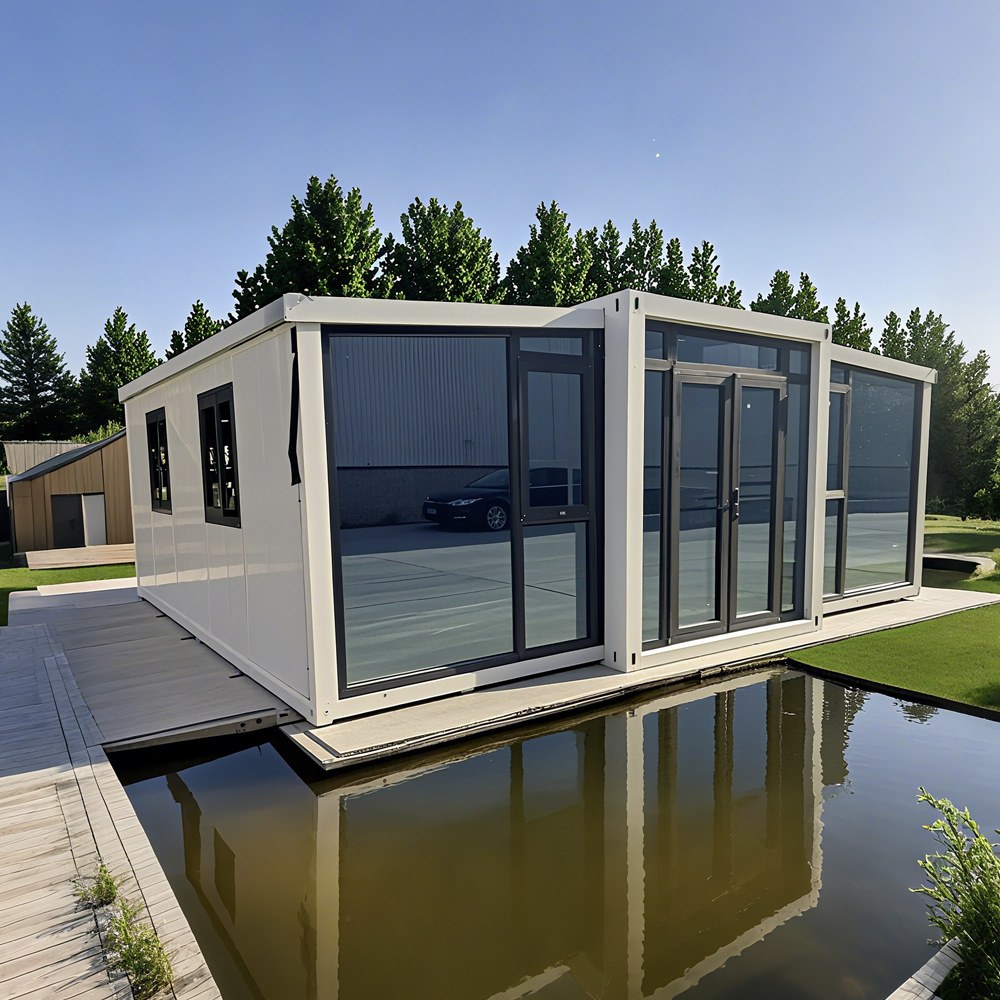
HG Prefab foldable expandable container homes — built to last, delivered worldwide.
Lighting transforms how a folding container home feels. Because container interiors are long, narrow and enclosed, poor lighting makes even a spacious 40FT unit feel like a tunnel. Good lighting design uses natural light, layered artificial light and the right color temperature to make the space feel open, comfortable and functional. This guide covers lighting strategy for 20FT, 30FT and 40FT HG Prefab container homes.
Start With Natural Light
Natural light is the most effective way to make a container home feel larger. The steel walls are strong, so window openings can be cut almost anywhere during factory production. The key decisions are size, placement and glazing.
- Window size: larger windows bring in more light and views, but they reduce wall space for cabinets and furniture. A balanced ratio is 12–18% of the floor area as window area.
- Placement: place windows on opposite walls when possible to create cross-light and reduce shadows. In a 20FT unit, one large window at each end plus a skylight can flood the space.
- Glazing: double-glazed low-E glass improves insulation and blocks UV that fades flooring and fabrics. In hot climates, use tinted or reflective glass on the west side.
- Skylights and light tubes: roof skylights or solar light tubes add daylight without sacrificing wall space. They are especially effective in bathrooms and central corridors.
HG Prefab offers factory window cutouts in standard sizes. Buyers should finalize window positions before production because post-delivery cutting is slower and more expensive.
Layered Artificial Lighting
A well-lit container home uses three layers: ambient, task and accent lighting. Each layer has a role.
Ambient Lighting
Ambient light provides general illumination. In container homes, recessed LED downlights are the most common choice because they sit flush with the ceiling and do not reduce headroom. Plan for 150–200 lumens per square meter in living areas and 100–150 lumens in bedrooms.
- 20FT unit: 4–6 downlights at 9–12W each
- 30FT unit: 6–8 downlights at 9–12W each
- 40FT unit: 8–12 downlights at 9–12W each
Use dimmable drivers so ambient light can be adjusted for evening relaxation.
Task Lighting
Task light targets work surfaces: kitchen counters, desks, bathroom mirrors and reading areas. Under-cabinet LED strips, pendant lights over islands, and adjustable desk lamps reduce eye strain and add visual interest.
- Kitchen: LED strip under wall cabinets (300–500 lumens per meter)
- Bathroom: vertical LED sconces on both sides of the mirror
- Desk: articulated arm lamp with 400–600 lumens
- Reading nook: wall-mounted reading light with focused beam
Accent Lighting
Accent light highlights features: artwork, architectural details, plants or textured walls. Small LED spotlights, strip coves and backlit shelves add depth and personality without much energy cost.
Color Temperature Matters
Color temperature is measured in Kelvin (K). It affects mood and how colors appear.
| Color Temperature | Use | Mood |
|---|---|---|
| 2700K–3000K (warm white) | Living rooms, bedrooms | Cozy, relaxing |
| 3500K–4000K (neutral white) | Kitchens, bathrooms, offices | Clean, alert |
| 5000K–6500K (cool daylight) | Workshops, clinics, site offices | Bright, focused |
Use warm white in living and sleeping areas, neutral white in kitchens and bathrooms, and cool daylight only in task-heavy or commercial spaces. Avoid mixing color temperatures in the same visual field because it looks disjointed.
LED Efficiency and Off-Grid Sizing
LED lighting is essential for container homes, especially off-grid units. LEDs use 75–90% less energy than incandescent bulbs and last 25,000–50,000 hours.
- A 9W LED downlight produces the same light as a 60W incandescent bulb.
- A 40FT container home with 10 downlights, 5 meters of LED strip and accent lights uses roughly 1.5–2.5 kWh per day if lights run 6 hours.
- Solar sizing: lighting load is small compared to AC and water heating, but it runs in the evening when solar is not producing. Size the battery bank to cover 1.5–2 days of lighting load.
See our solar power guide for full off-grid system sizing.
Smart Lighting Controls
Smart switches and bulbs add convenience and reduce waste:
- Dimmer switches — adjust brightness by time of day or activity
- Motion sensors — auto-off in bathrooms, entryways and storage areas
- Daylight sensors — dim artificial light when natural light is strong
- Scene presets — one-touch settings for morning, work, movie and sleep modes
Smart lighting adds $200–$600 to a typical unit but pays back through longer bulb life and lower energy use.
Lighting by Room
- Living area: dimmable recessed downlights + floor lamp + accent strip behind TV or shelf
- Kitchen: bright neutral downlights + under-cabinet LED strip + pendant over dining area
- Bedroom: warm wall-mounted reading lights + soft ambient ceiling light + blackout curtains
- Bathroom: moisture-rated recessed downlights + mirror sconces + night-light strip
- Office: cool daylight desk lamp + ambient panel light + bias lighting behind monitor
Budget Estimate
For a complete LED lighting package in a 40FT container home:
- Basic: $400–$700 (standard downlights, basic switches)
- Mid-range: $800–$1,500 (dimmable LEDs, under-cabinet strips, pendant accents)
- Premium: $1,800–$3,500 (smart controls, tunable white, architectural accent lighting)
Factory pre-wiring is recommended. It keeps the ceiling clean, guarantees code-compliant cable routing, and reduces on-site electrical labor.
Need a folding container house?
HG Prefab manufactures 20FT, 30FT and 40FT folding expandable container houses with customizable windows, electrical layouts and finishes — shipped flat-packed worldwide.
Browse modelsFrequently Asked Questions
How many LED downlights does a 40FT container home need?
A 40FT container home typically needs 8–12 recessed LED downlights for ambient lighting, plus task and accent lights in the kitchen, bathroom and desk areas. Plan for 150–200 lumens per square meter in living spaces.
What color temperature is best for container home interiors?
Use 2700K–3000K warm white in living rooms and bedrooms, 3500K–4000K neutral white in kitchens and bathrooms, and 5000K–6500K cool daylight only in workshops, clinics or offices.
Can container homes have skylights?
Yes. Factory-installed skylights and solar light tubes add daylight without using wall space. They are especially useful in bathrooms and central corridors of 20FT and 30FT units.
How much energy do container home lights use?
A 40FT container home with all-LED lighting uses roughly 1.5–2.5 kWh per day if lights run about 6 hours. LEDs use 75–90% less energy than incandescent bulbs.
Should lighting be pre-wired at the factory?
Yes. Factory pre-wiring keeps the ceiling clean, ensures code-compliant cable routing, and reduces on-site labor. Finalize window and light positions before production.