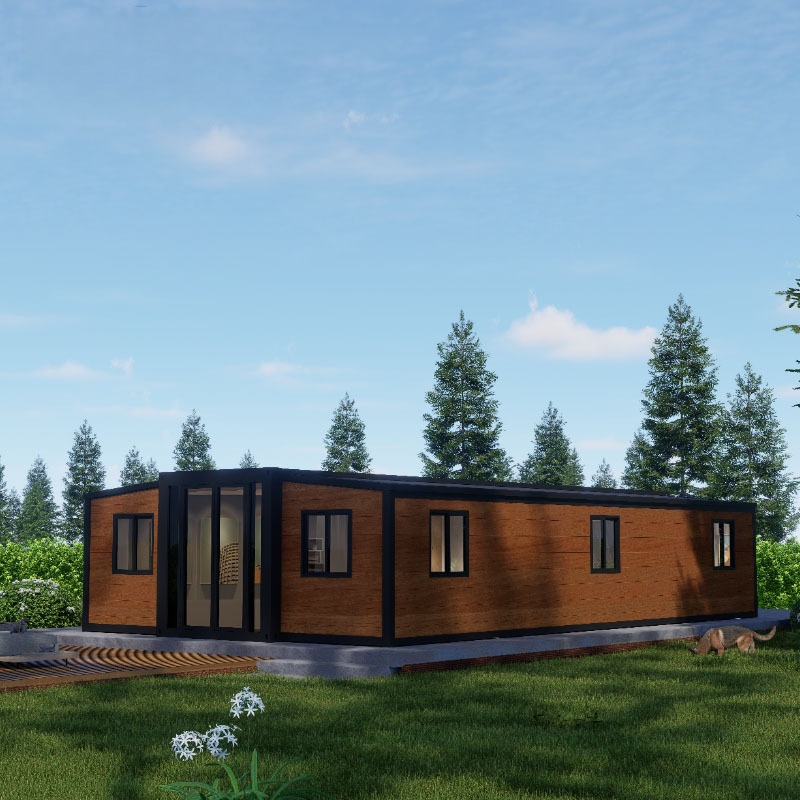
HG Prefab foldable expandable container homes — built to last, delivered worldwide.
Dogs and cats share more than your home — they share your floors, your airflow and your routines. A pet friendly container home is designed around those realities: scratch-resistant surfaces, good ventilation for odour control, temperature safety inside steel walls, and clear zones where pets can retreat. This guide covers the practical design decisions for making a 20FT, 30FT or 40FT folding container home comfortable for four-legged residents.
Start With the Floor
Flooring is the surface pets test most — claws on the run, muddy paws at the door, hair in every corner. Choose materials that clean fast and resist wear:
- Luxury vinyl plank (LVP) — waterproof, scratch-resistant and warm underfoot; the best all-round choice for a pet friendly container home.
- Tile — ideal for entryways and around food bowls; completely waterproof, though hard for older pets to stand on for long.
- Laminate — acceptable in low-traffic bedrooms only; seams can swell if a pet has an accident or spills water.
- Avoid broadloom carpet — it traps hair, odour and stains; use washable rugs in pet zones instead.
For a full comparison of materials and installed costs, see our flooring guide.
Ventilation and Air Quality
Folding container homes are well sealed, which is great for insulation and hard on air freshness when pets live inside. Steady ventilation removes odours and keeps humidity low:
- Mechanical ventilation — a small heat-recovery or exhaust ventilator keeps air moving even when doors stay shut.
- Window strategy — cross-ventilation by opening windows on opposite walls clears pet odours quickly after wet walks.
- AC filters — clean or replace the mini-split filter monthly in peak shedding seasons.
- Non-toxic finishes — specify low-VOC paints and adhesives; pets are closer to floors and walls than people are.
Safe Spaces Indoors
Every pet needs a corner it owns. Planned safe spaces prevent stress in a compact steel home:
- Dog crate nook — a built-in crate under a bench or in a quiet corner gives dogs a den-like retreat.
- Cat vertical territory — wall-mounted shelves, a ceiling-height walkway and window perches double the usable space for cats.
- Feeding and water stations — raised bowls near a washable floor section, away from doors and foot traffic.
- Quiet separation — a door or baby gate keeps pets away from loud appliances and visiting crowds.
Interior layout ideas that preserve pet zones while keeping the human space open appear in our interior design guide.
Getting In and Out: Pet Doors
A pet door saves your back and your door finish. In a steel container wall it needs planning:
- Factory option — specify a pet door during production so the opening is cut, framed and sealed properly before painting.
- Retrofit option — a contractor can cut the wall on site and fit a framed pet door; seal the cut edge with corrosion protection.
- Draft control — choose a double-flap pet door that seals against wind, or install it through an entry door panel rather than the main wall.
- Placement — lead the pet door to a covered patio so pets exit into shade rather than open weather.
Outside the Unit: Containment and Comfort
Container homes sit on a pad with outdoor space around them. A simple fenced or covered run keeps dogs safe and gives them fresh air:
- Covered patio — a roofed deck beside the door protects pets from sun and rain while they are outside.
- Secure fencing — 1.5–1.8 m fencing with a self-closing gate prevents escapes around the delivery pad.
- Non-slip surfaces — use grippy decking rather than smooth concrete for the outdoor path.
- Shade and water — position the run so part of it is shaded at midday, and keep a water bowl station outside.
Temperature Safety in a Steel Shell
Steel walls amplify both heat and cold, so climate control is a safety issue, not a comfort issue, when pets stay inside alone:
- Size the AC properly — a 40FT unit needs roughly a 12,000–18,000 BTU mini-split to hold a safe temperature in summer.
- Set a safety floor — keep the thermostat below about 28°C in summer and above 10°C in winter when pets are home alone.
- Insulation matters — quality rock wool insulation slows heat swing; see our insulation guide for panel options.
- Never leave pets in a closed unit without power — without climate control the interior can overheat quickly on a sunny day.
Materials and Cleaning Routine
The final layer of a pet friendly container home is a realistic cleaning routine matched to the materials you chose:
- Easy-clean surfaces — wipeable wall panels near feeding stations and a washable runner at the entry.
- Hair management — smooth floors sweep and mop quickly; washable rugs replace carpet.
- Pet laundry — include a washer connection if the layout allows; bedding needs weekly cleaning.
- Budget — a pet-friendly LVP upgrade across a 40FT unit costs roughly $900–$2,400 over standard flooring, and a factory pet door adds about $120–$350.
Plan the floor, ventilate continuously, protect the temperature, and give every pet its own safe space — and a folding container home becomes genuinely dog friendly and cat friendly.
Need a folding container house?
HG Prefab manufactures 20FT, 30FT and 40FT folding expandable container houses with pet-friendly flooring, ventilation and customization options — shipped flat-packed worldwide.
Browse modelsFrequently Asked Questions
What is the best flooring for a pet friendly container home?
Luxury vinyl plank (LVP) is the top choice — waterproof, scratch-resistant and easy to clean. Avoid carpet in pet zones and use tile in entryways and bathrooms. See the flooring guide for a full material comparison.
Can I install a pet door in a container home wall?
Yes. Pet doors can be factory-installed during production or cut into the steel wall on site with proper sealing and corrosion protection. Position the pet door near a covered patio area and add a flap that seals against drafts.
Is a container home too hot for pets?
Not if it is insulated and ventilated. A 40FT unit is comfortable with a properly sized mini-split of roughly 12,000–18,000 BTU. Never leave pets inside without climate control during extreme heat — the interior would overheat quickly.
How can I give cats more space in a small container home?
Use vertical territory: wall-mounted cat shelves, a walkway near the ceiling, window perches and a tall scratching post. Cats feel secure when they can climb and observe, which compensates for limited floor area.
What outdoor space does a dog need beside a container home?
A covered patio or fenced run beside the unit works well. Use non-slip decking, partial shade, a water bowl station and secure fencing so the dog can be outside safely while you supervise.