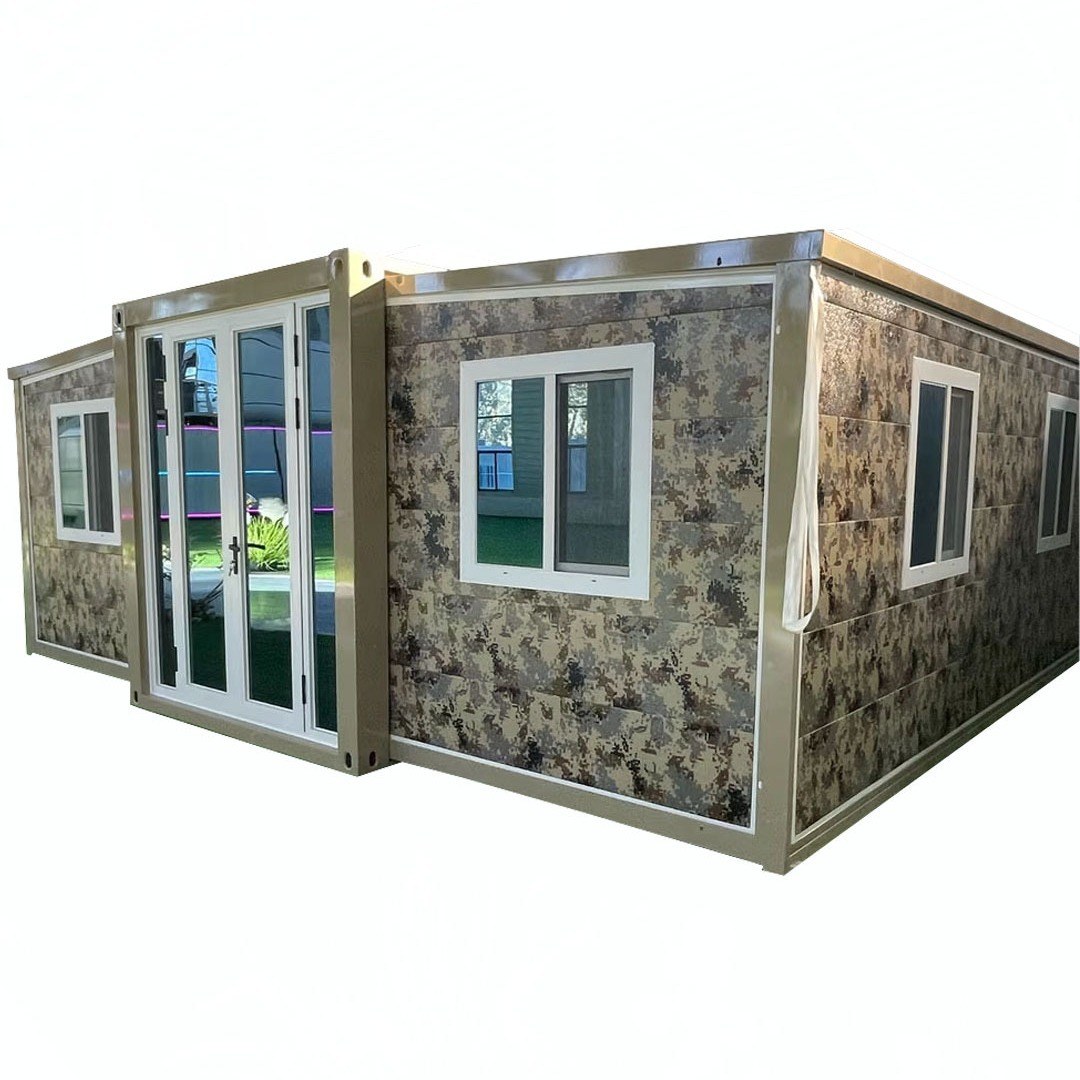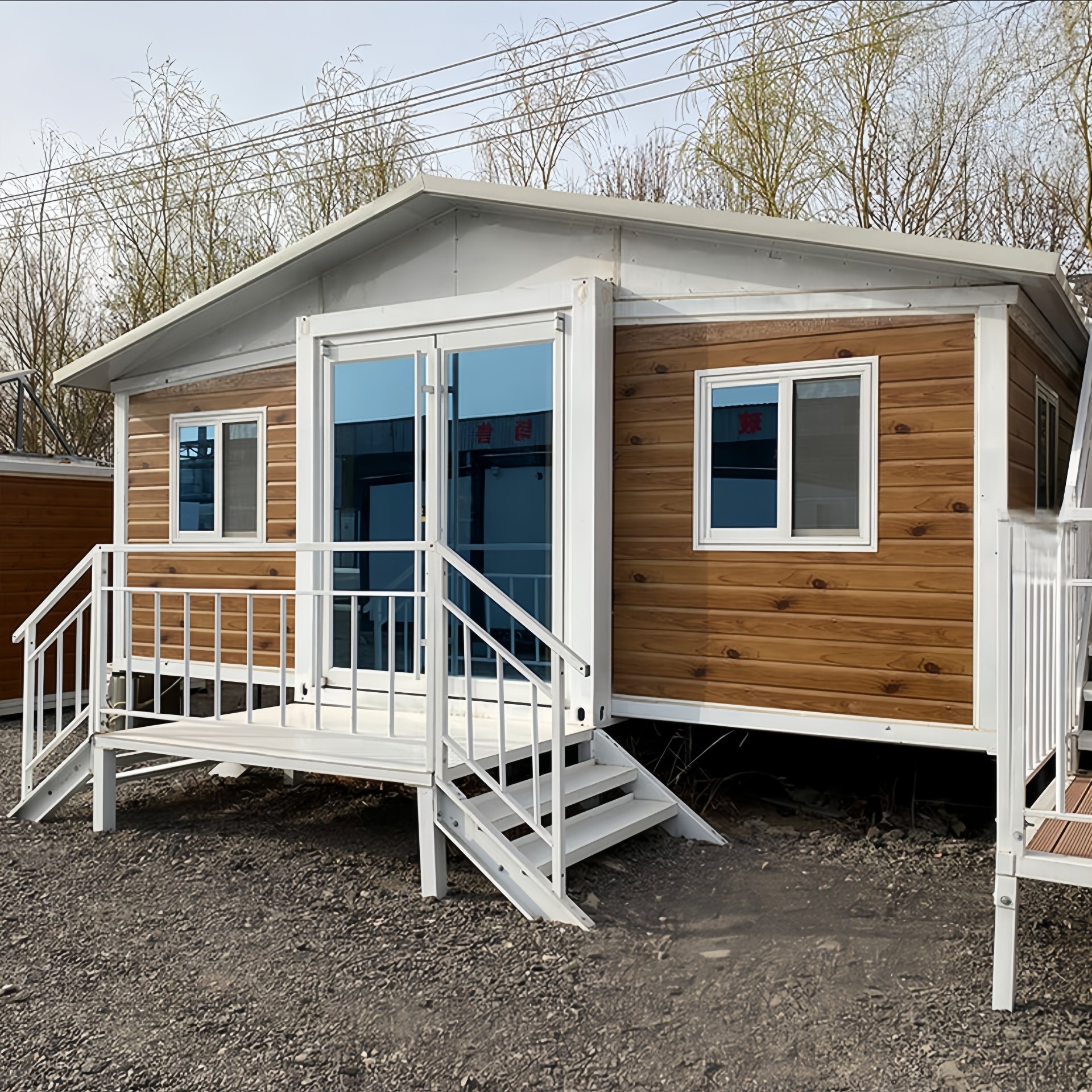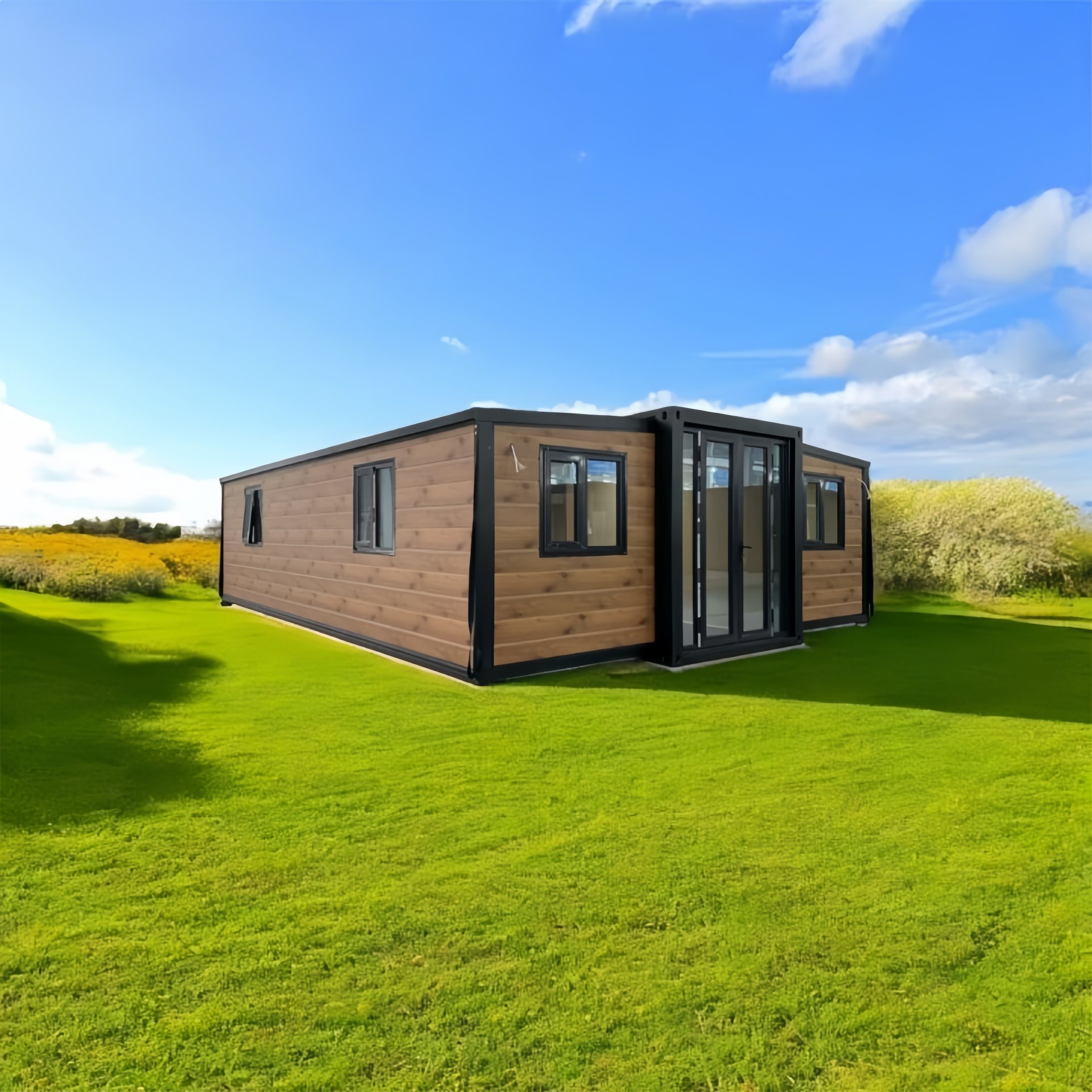
HG Prefab foldable expandable container homes — factory-prepared gas penetrations, delivered worldwide.
Electricity is the wrong tool for the three biggest loads in a small home. Cooking, space heating and water heating are all heat, and making heat from a battery bank means buying a very large battery and a very large array to serve a load that lasts ten minutes at breakfast and ninety minutes at bath time. Propane stores that energy in a steel bottle at roughly 91,500 BTU per gallon, needs no sun, no wind and no grid connection, and delivers full output at two in the morning in February. For a folding container home parked on rural land, a farm track or a coastal plot, that combination is hard to beat. This guide covers how to size the loads, choose between a portable cylinder and a buried tank, build the regulator and pipework correctly, ventilate and detect properly, stay on the right side of the code, and budget the whole thing. Pair it with our off-grid container home setup guide, which covers the water and power side of the same problem.
Why Propane Suits Off-Grid and Rural Container Homes
Three properties make propane the default fuel on sites without reliable mains power.
No Grid Dependence, and No Oversized Battery
A single gallon of propane carries about 91,500 BTU, or roughly 27 kWh of heat. Delivering the same energy from a battery at 90 per cent inverter and element efficiency would need about 30 kWh of usable storage, several times the capacity of a typical off-grid bank, and it would have to be recharged by an array sized for the worst week of the year. A 250 gallon tank stores the equivalent of roughly 6,800 kWh of heat and costs a fraction of that battery. This is why propane and solar work as a pair rather than as rivals: the sun covers the low-temperature, low-power loads, and the gas covers the heat. Our off-grid solar sizing guide shows how much smaller the array can be once cooking and heating leave the electrical list.
Cooking Efficiency and Control
Gas cooktops respond instantly, which matters in a galley kitchen where a 20FT layout gives you about 2 m of counter. Burners run 5,000 to 15,000 BTU per hour, an oven 20,000 to 35,000 BTU per hour, and the flame is visible, so a cook adjusts by eye rather than waiting for a heavy electric element to cool. Induction is more efficient at the burner, but it demands a large surge capacity that most off-grid inverters dislike during a simultaneous draw.
Winter Reliability
Propane boils at about minus 44 °F, so it vaporizes and holds pressure in weather that would strand a heat pump below its balance point and halve the usable capacity of a lithium battery. A direct-vent propane heater rated 10,000 to 30,000 BTU per hour will hold a well-insulated 20FT unit at 20 °C when the outside air is well below freezing, with no defrost cycle and no loss of output.
Sizing the Load: Appliances and Daily Consumption
Sizing starts from the appliance list, not from the tank catalogue. Convert every appliance to BTU per hour, estimate the daily run time, then convert the total back into pounds or gallons. One pound of propane is about 21,600 BTU and one gallon about 91,500 BTU, so a gallon is roughly 4.24 lb.
Cooking: Burners, Oven and Realistic Run Time
A two-burner cooktop with one 10,000 BTU burner and one 6,000 BTU burner firing for a combined 30 minutes a day uses about 8,000 BTU, or 0.37 lb. Add an oven run three times a week at 30,000 BTU per hour for an hour and you add roughly 0.33 lb a day averaged. Cooking for two people realistically lands between 0.5 and 1.0 lb a day, and a household that bakes daily sits at the top of that range.
Direct-Vent and Vent-Free Heaters
A direct-vent wall heater draws combustion air through a sealed concentric flue from outside and discharges flue gas outside, which is the configuration we recommend for a small, tightly sealed steel box. Units run 8,000 to 30,000 BTU per hour. In a well-insulated 20FT unit with 50 to 100 mm of insulation, the design heating load in a cold climate is typically 8,000 to 15,000 BTU per hour, so a 12,000 BTU heater firing six hours a day in midwinter uses about 72,000 BTU, or 3.3 lb a day. Mild-weather heating is a fraction of that. Vent-free, or unvented, heaters put all of their heat into the room and all of their water vapour with it: roughly one pint of water per 10,000 BTU burned, which is a condensation and indoor-air problem in a 14 m² volume. Several jurisdictions prohibit them entirely in sleeping rooms, so check the local rule before specifying one.
Tankless Propane Water Heaters
A tankless propane heater rated 140,000 to 199,000 BTU per hour delivers 3 to 5 gallons a minute at a 35 °C rise, which is a real shower rather than the barely adequate flow of a 6 kW electric point-of-use unit. A ten-minute shower draws about 0.4 to 0.6 lb, so two people showering daily use 0.8 to 1.2 lb. Because the appliance only fires on demand, it is the single strongest argument for propane in a compact home. We cover the comparison in detail in our container home hot water systems guide, and space-heating alternatives in the heating and cooling options guide.
Propane Refrigerators
Absorption refrigerators use a small propane flame instead of a compressor and draw 1,500 to 2,500 BTU per hour, which works out at 0.8 to 1.4 lb a day depending on ambient temperature and door openings. They are silent, and they remove the largest continuous electrical load in the building. The trade-offs are real: they cool weakly in hot weather, they need perfectly level standing, and they cost two to three times a compressor fridge of the same volume. If your array already carries a 12 V compressor fridge comfortably, keep it electrical and leave the gas for heat.
| Appliance | Typical input | Daily propane use | Best fit |
|---|---|---|---|
| Two-burner cooktop and oven | 6,000 to 35,000 BTU/h | 0.5 to 1.0 lb | Every off-grid unit; weekend cabins |
| Direct-vent wall heater | 8,000 to 30,000 BTU/h | 1.5 to 4.0 lb heating season | Cold and temperate sites, 20FT and 30FT |
| Tankless water heater | 140,000 to 199,000 BTU/h | 0.8 to 1.5 lb | Full-time living; replaces electric tankless |
| Propane absorption fridge | 1,500 to 2,500 BTU/h | 0.8 to 1.4 lb | Silent sites with a small solar array |
| Propane clothes dryer | 20,000 to 35,000 BTU/h | 0.3 to 0.5 lb per load | Family use in 40FT layouts |
| Backup generator on propane | 0.4 to 0.9 gal per hour | 1.7 to 3.8 lb per hour | Storm backup for the battery bank |
| Pilot lights and standby | 600 to 1,200 BTU/h each | 0.3 to 0.7 lb combined | Eliminate with electronic ignition |
Choosing Tanks: 20 lb Portable, 100 lb, and 250 to 500 Gallon Stationary
Tank choice is a trade-off between refill frequency, delivery access and upfront cost.
20 lb Portable Cylinders
The familiar barbecue bottle holds about 4.7 gallons, or roughly 430,000 BTU. Refills cost 20 to 30 US dollars and you carry the bottle to the supplier. Two bottles on an automatic changeover regulator give continuous supply for a cooking-only cabin for two to four weeks. They are the right answer for a weekend unit used ten days a month, and the wrong answer for full-time heating, because you will be lifting 40 lb bottles in the snow every week.
100 lb and 120 Gallon Cylinders
A 100 lb cylinder holds about 23.6 gallons and 2.1 million BTU, enough for cooking plus hot water for a couple for one to two months, or for heating in shoulder season. It needs a secure, upright, outdoor position on a non-combustible base and a supplier willing to fill it, since many refill stations only handle 20 lb bottles. A 120 gallon cylinder, sometimes called a 420 lb tank, is the usual step up before a true stationary tank and suits a site that a delivery truck can reach but a tanker cannot.
250 to 500 Gallon Stationary Tanks
An ASME stationary tank filled to the 80 per cent rule gives 200 usable gallons in a 250 gallon tank, about 18 million BTU, and 400 usable gallons in a 500 gallon tank, about 36 million BTU. A full-time household using 4 to 8 lb a day in winter will go six to ten weeks between fills on 250 gallons and a full season on 500 gallons. These tanks are set on a concrete or compacted gravel pad, strapped or bolted down where required, protected from vehicle impact, and filled by a tanker. Ask the supplier about a keep-full or scheduled-fill programme with a remote tank monitor; the monitor costs 100 to 300 US dollars and removes the whole problem of running out mid-storm.
Regulators, Two-Stage Reduction and Line Sizing
Propane leaves a tank at a pressure that swings widely with temperature, from near zero in deep cold to well over 100 psi on a hot day. No appliance can use that, so the pressure is reduced in two steps.
Two-Stage Regulation
The first-stage regulator at the tank drops tank pressure to a nominal 10 psi, and the second-stage regulator at the building drops that to 11 inches of water column, about 0.4 psi, which is what appliances are designed for. Splitting the reduction across two devices keeps the delivered pressure steady as the tank empties and as the weather changes. Twin-stage and integral two-stage regulators combine both steps in one body and are common on smaller systems, but for a home with a heater, a water heater and a cooktop, separate first and second stages with an adequately sized high-pressure line between them give better results on long runs.
Copper, CSST and Sizing
Both Type L copper and listed corrugated stainless steel tubing are acceptable for the low-pressure run; follow the sizing tables in NFPA 54 or the local gas code rather than guessing, because an undersized line starves the appliance furthest from the tank and shows up as a lazy yellow flame on the water heater when the heater is also running. Support copper every 1.8 m, protect it where it passes through a wall with a sleeve, and bond and protect CSST against lightning and physical damage per the manufacturer.
Manual Shutoff Valves and Commissioning
Fit a listed manual shutoff valve on every appliance connector, within 1.8 m of the appliance and reachable without moving anything, plus a main shutoff at the tank and one where the line enters the building. Add a sediment trap, or drip leg, at each appliance. Commission the system with a standing pressure test and a bubble test on every joint with a listed leak-detection solution; never test with a flame. Because a folding unit is unfolded on site, every pipe crossing a fold line needs a flexible listed connector or an accessible union, and every shell penetration must be sealed as part of the envelope.
Ventilation and Safety: CO Alarms, Leak Detectors and Hose Checks
Propane is not dangerous when the system is built correctly, and it is unforgiving when it is not. Four items do most of the work.
- Carbon monoxide alarm: fit a listed alarm in the sleeping area and on each level of a 40FT layout, away from the cooktop and the shower, and replace the unit at the end of its stated service life. Incomplete combustion in a small, sealed steel box is the failure mode that kills.
- Propane leak detector: propane vapour is about one and a half times heavier than air and collects at floor level, so mount the detector low, typically 100 to 300 mm above the floor and within 3 m of the lowest gas appliance. Natural gas detectors mount high; do not mix them up.
- Combustion and ventilation air: direct-vent and room-sealed appliances take their air from outside, which is what makes them safe in a compact envelope. Never use a cooktop or oven as a heater, and never block a flue terminal or a combustion air inlet with snow, vegetation or a storage box.
- Hose and connector inspection: flexible connectors and rubber hoses age, crack and leak. Inspect every hose at each cylinder change, look for cracking, stiffness and a rubbed braid, and replace them every five years or immediately at the first sign of damage. A 15 US dollar hose is cheaper than a callout.
Code Essentials: NFPA 58 and Common Clearances
In the United States, NFPA 58, the Liquefied Petroleum Gas Code, governs storage, siting and installation, and NFPA 54 covers the piping inside the building. Outside the US, the local LPG or gas installation standard applies and the numbers differ, so treat the following as an orientation and confirm with the authority having jurisdiction before you set a pad.
- Cylinders stay outdoors. Portable cylinders belong outside, upright, on a firm non-combustible base, and never in a pit, a basement, a stairwell or inside the living volume except where a code specifically permits a small cylinder for a single appliance.
- Distance from openings. Keep cylinders and tanks away from doors, windows and any building opening, and away from mechanical ventilation intakes, so that a vented release cannot migrate indoors.
- Stationary tank clearances. Stationary tanks in the 125 to 500 gallon range are commonly required to sit at least 3 m from a building or a property line and at least 3 m from a source of ignition such as an air conditioner condenser or a generator; larger tanks need more separation. Confirm the exact figure for your tank size with the supplier and the inspector.
- Ignition sources and impact protection. No open flame, electrical equipment or vehicle traffic within the separation distance. Where a driveway passes the tank, fit bollards.
- Relief valves and fill valves. Keep relief valve vents clear and pointing away from the building, and keep the fill valve accessible to the tanker driver.
- Licensed work. In most jurisdictions the gas work must be done and certified by a licensed gas fitter, and the installation inspected before the supplier will fill the tank.
Winter Performance: Pure Propane vs Propane and Butane Blends
What is in the bottle decides whether the system works in January. Pure propane, sold as HD-5 in North America, boils at about minus 44 °F and will vaporize in any weather a home is likely to see. Butane boils at about 31 °F, so the propane and butane blends sold as LPG in much of Europe, Africa and Asia lose vapour pressure as the temperature falls towards freezing and can stop delivering altogether in a cold snap. In a cold climate, specify pure propane and say so on the order; where only a blend is available, plan a larger tank, a vapour return or a vaporizer.
Vaporization also depends on the wetted surface area of the liquid in the tank. A nearly empty tank in cold weather with a 199,000 BTU water heater firing cannot boil off gas fast enough, and the symptom is a heater that lights and then drops out. Keep the tank above 30 per cent through winter, upsize rather than downsize on a cold site, and sit the tank where it gets winter sun and is not buried in a snow drift.
Costs: Equipment, Installation and Monthly Use
Equipment and installation for a cooking, heating and hot water system:
- Two-stage regulator set and tank fittings: 80 to 250 US dollars.
- Low-pressure line, valves, sleeves and sediment traps: 300 to 900 US dollars in materials.
- Licensed gas fitter, pressure test and certification: 400 to 1,500 US dollars.
- Appliance hookup per appliance: 150 to 400 US dollars.
- Cooktop and oven: 500 to 1,800 US dollars.
- Direct-vent wall heater: 700 to 2,000 US dollars.
- Tankless propane water heater: 500 to 1,500 US dollars.
- Propane absorption fridge: 1,200 to 3,000 US dollars.
- 20 lb cylinder with first fill: 50 to 90 US dollars; 100 lb cylinder 150 to 250 US dollars.
- 250 gallon tank installed: 1,200 to 2,500 US dollars; 500 gallon 2,000 to 3,500 US dollars, or lease for 100 to 300 US dollars a year.
Running cost follows consumption. At delivered prices of 3.50 to 6.00 US dollars per gallon, cooking-only use costs about 15 to 30 US dollars a month; cooking plus tankless hot water runs 35 to 70 US dollars; and full-time winter living with space heating lands between 90 and 220 US dollars a month in the coldest weeks, falling sharply in shoulder season. An annual service visit, detector battery replacement and hose renewal add well under 150 US dollars a year.
Hybrid Energy: Propane and Solar Working Together
The efficient split is by load type, not by convenience. Put every low-power, long-duration load on electricity from solar and battery: lighting, water pumping, electronics, ventilation fans, a compressor refrigerator and the controls of the gas appliances. Put every high-BTU thermal load on propane: cooking, water heating, space heating and clothes drying. A couple living full time might use 3 to 5 kWh a day of electricity and 3 to 6 lb of propane a day in winter. Trying to move the thermal loads onto the battery would multiply the array and bank by three or four; trying to run the lights and the pump on a generator wastes fuel on loads of a few hundred watts. Keep a small inverter generator on propane for a week of storms, and size the tank to cover it.
Delivery, Installation and Siting on Site
Sequence the site work so the gas fitter is not waiting on the structure. Cast the tank pad and the unit pad first, set the tank or the cylinder cage, then bring the unit in. Yes — a crane or forklift is required to offload the folded unit from the truck. Once it is set in position, four workers can unfold and assemble the main structure in about 2 hours, after which a licensed gas fitter mounts the regulator manifold, runs the low-pressure line, connects the appliances and commissions the whole system.
Unit prices are the same whichever fuel you choose: 20FT $7,200–$9,800; 30FT $10,500–$14,500; 40FT $12,500–$16,500 depending on size and finish. Tell your sales engineer at order stage which appliances you are running and where the tank will sit, and HG Prefab can factory-prep the exterior cylinder cage, the flue and gas penetrations with their sleeves and seals, the appliance mounting provisions and the regulator manifold position. That is work you do not want to do by cutting into a finished wall after assembly. Compare layouts on our folding container house models page: the 20FT unit suits a cooking and hot water system with one heater, while a 40FT with two zones usually justifies a 500 gallon tank from the start.
Planning a propane system for your folding container home?
Henan Huangang Machinery Equipment Co., Ltd. (HG Prefab) manufactures 20FT, 30FT and 40FT folding expandable container houses with factory-prepared gas penetrations, exterior cylinder cage provisions, appliance mounting points and room-sealed flue positions for propane cooktops, direct-vent heaters, tankless water heaters and absorption refrigerators. Tell us your appliance list and climate and we will detail the penetrations and the tank connection to match. Reach us on WhatsApp +86 191 0388 7380 or email hgmechequip@gmail.com.
Get a quote Browse models WhatsApp +86 191 0388 7380 Email hgmechequip@gmail.comFrequently Asked Questions
What size propane tank does an off-grid container home need?
Match the tank to the loads, not to the floor plan. Cooking alone for two people uses about 0.5 to 1 lb of propane a day, so one 20 lb portable cylinder lasts two to four weeks. Add a tankless water heater and you reach roughly 1.5 to 2.5 lb a day, which suits a 100 lb cylinder or a 120 gallon stationary tank. Full-time winter heating with cooking and hot water can reach 4 to 8 lb a day, and that is the point where a 250 to 500 gallon stationary tank with scheduled refills stops being a luxury.
Is it safe to use propane indoors in a small home?
Yes, with the right appliances and detectors. Use only direct-vent or room-sealed appliances that draw combustion air from outside and discharge flue gases outside, and never run an unvented heater or a camping stove as a room heater in a small space. Fit a carbon monoxide alarm near the sleeping area and a propane leak detector low on the wall, because propane is heavier than air and collects at floor level. Keep cylinders outdoors, replace flexible hoses every five years, and have the whole system pressure tested by a licensed gas fitter.
How much propane does a container home use per month?
A couple using propane only for cooking uses roughly 3 to 5 gallons a month. Add tankless hot water and the figure rises to about 8 to 12 gallons. Full-time living in a cold climate, with space heating, water heating and cooking on propane, can reach 25 to 40 gallons a month in the coldest weeks. At delivered prices of 3.50 to 6.00 US dollars per gallon, the monthly fuel bill runs from about 15 to 220 US dollars depending on season, insulation and appliance choice.
How is the unit delivered and installed?
Yes - a crane or forklift is required to offload the folded unit from the truck. Once it is set in position, four workers can unfold and assemble the main structure in about 2 hours. Plan the tank pad, the exterior cylinder cage and the gas penetrations before delivery so that a licensed gas fitter can mount the regulator manifold, run the lines and commission the appliances the same week.