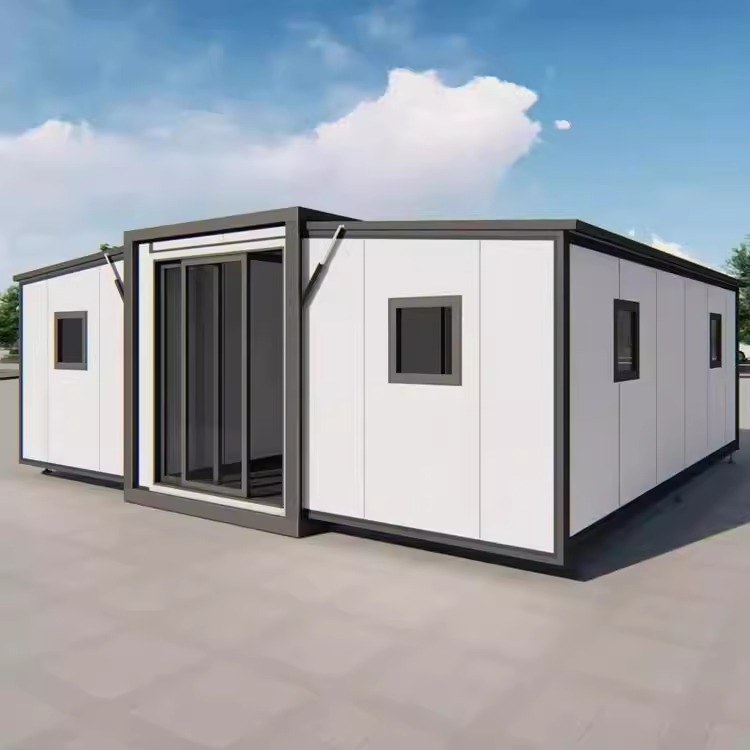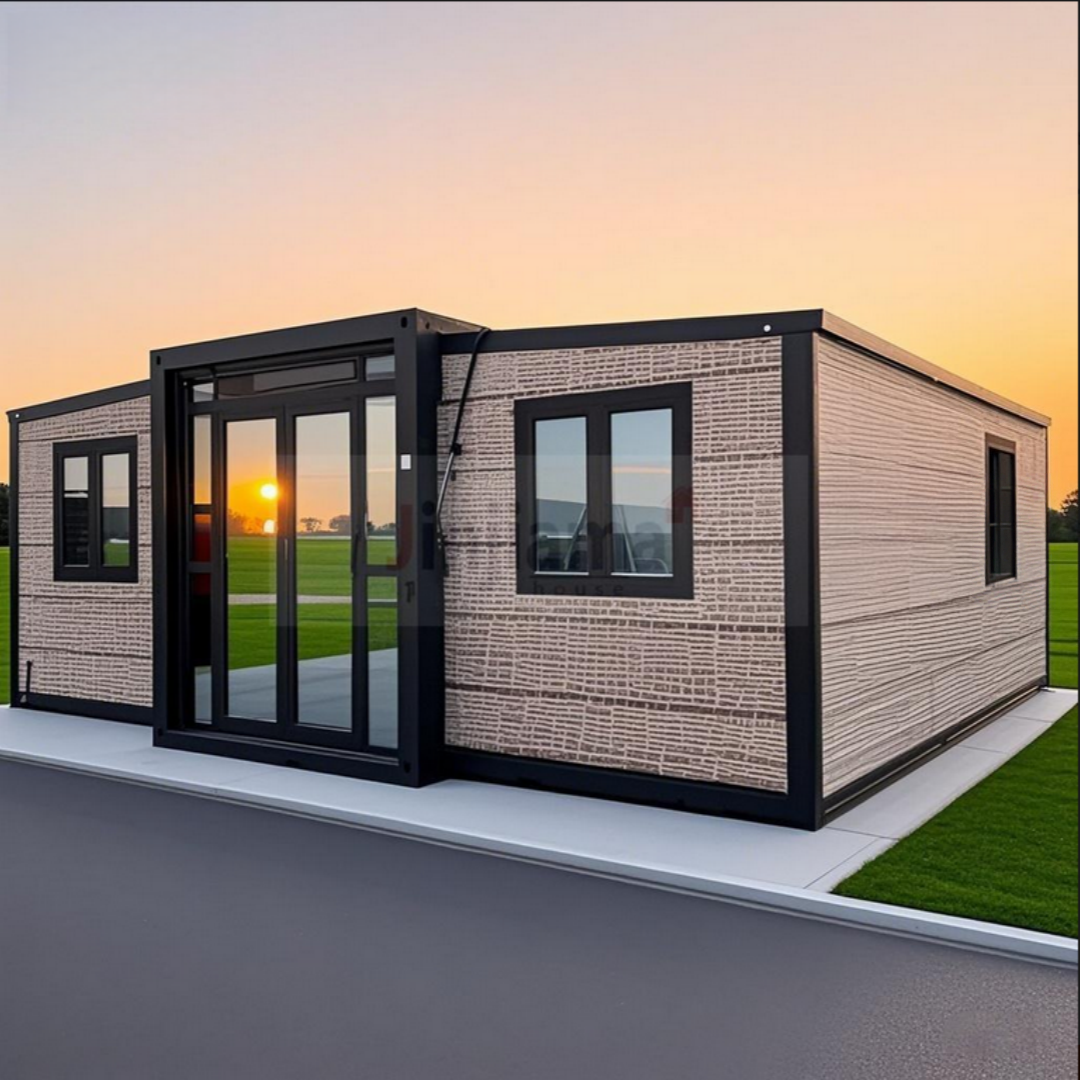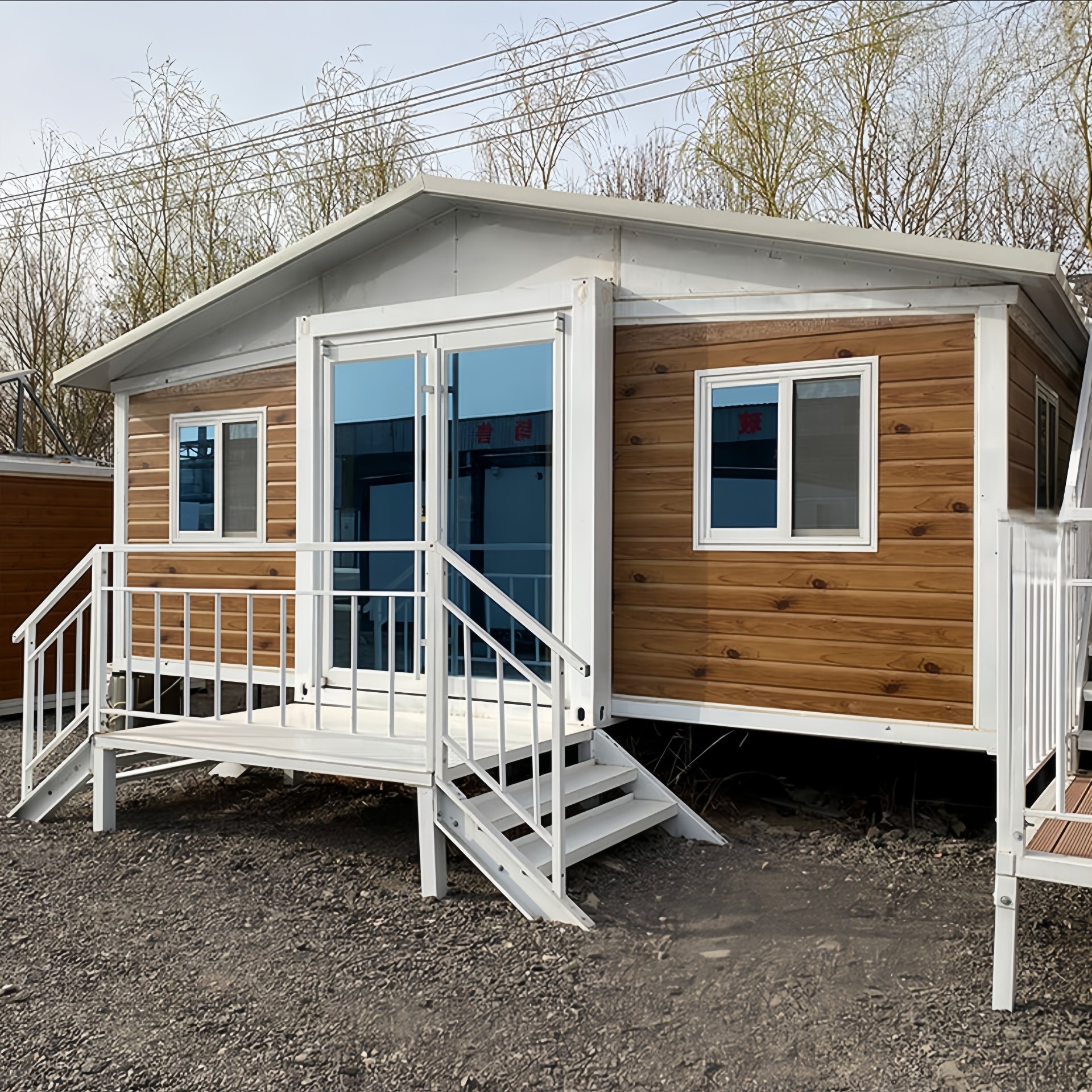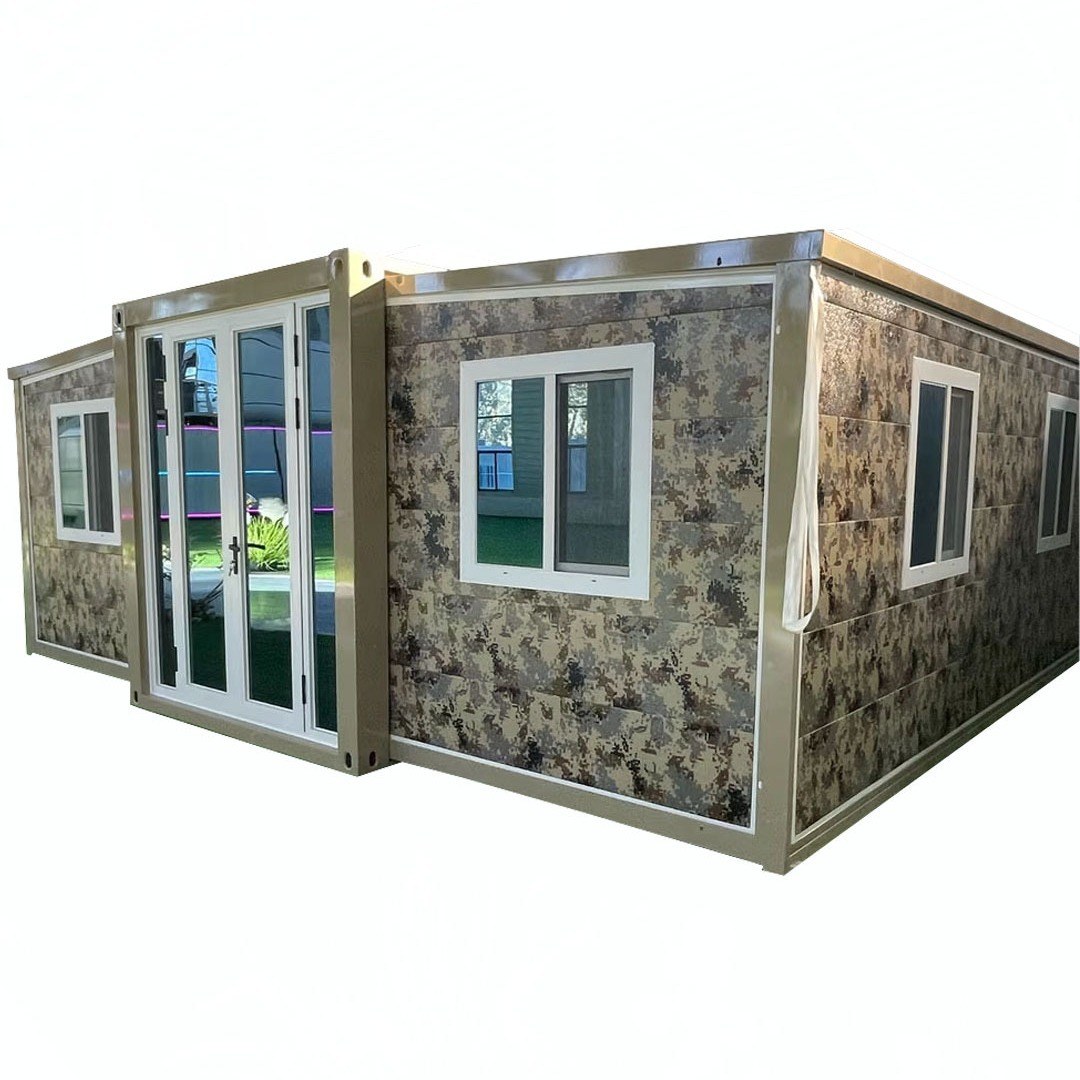
HG Prefab foldable expandable container homes — factory plumbing rough-ins, delivered worldwide.
Hot water is the system most often underestimated in a folding container home. Buyers spend weeks on insulation and solar arrays, then discover on the first cold morning that the shower runs out after four minutes or the instant heater trips the breaker when the kettle goes on. A folding unit is compact, its electrical service is finite, and hot water is the least forgiving load in the building. This guide works in the order that matters: how much you need, how tankless, storage, heat pump, solar and gas options meet it, then the installation details. Start with our plumbing and electrical hookup guide, because the pipework and the panel are what every water heater depends on.
Start With Demand: Litres Per Person and Simultaneous Draw
Every sizing decision follows from two numbers: total daily volume and peak simultaneous draw. Daily volume sets stored energy; peak draw sets instantaneous power. Confusing them produces both classic complaints: a tank empty by the third shower, and an instant heater that cannot hold one fixture.
Daily Volume Benchmarks
For shower-heavy occupancy plan on 20 to 40 litres of hot water per person per day once the kitchen sink and hand basin are included. A short shower with an efficient head uses about 30 litres of mixed water, of which roughly 18 litres comes from the store. A couple in a compact unit draws 60 to 90 litres a day.
Why a 20FT and a 40FT Size Differently
The difference is simultaneous draw, not occupant count. A 20FT unit with one bathroom has a single hot outlet in practice, so peak draw is one fixture. A 40FT unit with two bathrooms doubles it. The 30FT layout usually works with an 80 to 120 litre store.
Converting Volume Into Energy
Raising water temperature costs about 0.001163 kWh per litre per kelvin, so 100 litres from a 10 °C winter inlet to a 60 °C store takes roughly 5.8 kWh, against 4.6 kWh from a 20 °C summer inlet.
Electric Tankless and Instant Heaters: Endless Hot Water, Heavy Power Draw
Tankless electric heaters are genuinely attractive in a container home: small, wall mounted, endless, and free of standby loss. What they do instead is convert the hot water problem into an electrical one.
The Power Arithmetic
Power in kilowatts is roughly 0.07 times flow in litres per minute times the temperature rise in kelvin. With a 10 °C inlet and a 40 °C delivery the rise is 30 K, so a 6 kW unit delivers about 2.9 L/min and a 9 kW unit about 4.3 L/min: a hand basin or a frugal shower, not a comfortable one. A whole-home unit capable of 10 L/min needs around 21 kW. Sizing a 6 to 9 kW point-of-use appliance as a whole-home solution is the classic mistake.
Implications for the Panel, Shore Power and Generator
At 230 V a 6 to 9 kW heater draws roughly 26 to 39 A on a dedicated circuit; at 110 to 120 V the same power doubles in amperage and usually rules out a whole-home unit. Add it to cooking, heating, refrigeration and pumping: diversity does not save you, because a shower is a long continuous load. Our electrical load calculation guide sets out the method: check the shore supply rating, and the generator's continuous rating.
Small Storage Tanks: 50 to 80 Litres and Recovery Time
A small storage tank is the unglamorous answer that works for most single-bathroom folding units: a fraction of the power of a tankless heater, proper shower flow from a modest element, and it fits the space available.
What Recovery Time Really Means
A 60 litre tank with a 2 kW element and a 50 K rise needs about 3.5 kWh, roughly 1 hour 45 minutes from cold. In practice the thermostat holds it near setpoint, so the real question is usable draw: at a 60 °C store and 40 °C delivery the hot fraction is about 60 per cent, so 60 litres of store gives roughly 100 litres of mixed water.
Space, Siting and Standby Losses
A 50 to 80 litre tank fits under a counter, inside a bathroom cabinet or in a service chase beside the wet room, and siting it close to the point of use shortens the dead leg and cuts the wait at the tap. The trade-off is standby loss.
Heat Pump Water Heaters: COP, Air Volume and Condensate
A heat pump water heater moves heat rather than making it, and in the right conditions it is the most efficient electric option available. It is also the option most often specified without checking three things a compact unit may not have: air volume, a drain, and tolerance for noise.
Efficiency and What It Buys You
Coefficient of performance typically runs 2.5 to 3.5 in temperate air, two to three units of heat per unit of electricity, against COP 1 for a resistance element. For an off-grid site that can mean a materially smaller array and battery; see our off-grid solar guide.
Air Volume, Condensate and Noise
The appliance takes heat from the air around it and cools and dehumidifies as it does so. In a sealed cupboard it chills its own enclosure and loses efficiency, so it needs real air volume plus a trapped condensate drain protected from freezing. Expect 40 to 55 dB at one metre, fine in a service space and intrusive through a bedroom wall. See our heating and cooling options guide if you are also choosing space heating.
Solar Thermal on the Roof: Flat Plate, Evacuated Tube and Backup
Solar thermal has the strongest summer performance and the weakest winter one, and it is the option most reliably oversold as a complete solution. It is not complete: it is an excellent first source with a necessary backup behind it.
Collector Choice: Flat Plate vs Evacuated Tube
Flat-plate collectors are robust, cheaper per square metre, easy to integrate flush to a roof, and perform well in warm and moderate conditions. Evacuated tube collectors hold efficiency better at low ambient temperature and in diffuse light, so they suit cold, cloudy or high-latitude sites, at the cost of more parts and fragile glazing. The usual allocation is two to four square metres feeding a 150 to 300 litre store.
Freeze Protection and Backup
Where frost occurs the collector loop must be protected, either by a glycol closed loop with a heat exchanger into the store, or by a drain-back design in which the collector and pipework empty whenever the pump stops. Glycol needs periodic concentration checks; drain-back is freeze-safe but needs a pump that can lift the column. Either way the store needs a backup sized for the full load.
LPG and Gas Instant Heaters: Where Codes Allow Them
Where the local code permits it and the site already uses LPG for cooking, a gas instant heater removes the electrical problem outright: high flow from a compact appliance with almost no electrical draw.
Venting, Combustion Air and Indoor-Air Cautions
Gas brings requirements that electricity does not. Specify a room-sealed, balanced-flue appliance that draws combustion air from outside and discharges flue gases outside; that is the only configuration we recommend inside a small, well-sealed unit. An open-flued appliance consumes room air and can produce carbon monoxide in a very small volume. Fit a carbon monoxide alarm, store cylinders externally, and use a licensed gas fitter.
Cold-Climate Hot Water: Pipe Runs, Heat Tracing and Drain-Back
Cold weather turns hot water from a comfort question into a risk-management one: a burst pipe in an unattended unit does more damage than an underperforming heater.
Keep Everything Inside the Thermal Envelope
No water-bearing pipework should run outside the insulation layer: not the supplies, not the tank drain, not the condensate line. Where a run must pass near an external wall or through the floor, keep it in an insulated chase with insulation on the outside of the pipe.
Heat Tracing, Glycol and Winterisation
Where a short external run is unavoidable, use thermostatically controlled self-regulating heat tracing cable under insulation, on a protected circuit. Solar loops in freezing climates need glycol at the right concentration or a drain-back system. For seasonal units, winterisation means a full drain-down: isolate the supply, open the lowest drain and all taps, then blow the lines clear. Our cold-climate guide covers the detail.
Installation Details in Folding Units: Rough-Ins, Valves and Maintenance
A folding container home is delivered folded and unfolded on site, so the plumbing has to be designed for that movement. This is where a factory-built unit either saves you weeks or creates problems a site-built house would not have.
Factory Rough-Ins and Where to Put the Heater
HG Prefab installs the plumbing rough-ins at the factory: hot and cold supply runs, drain and vent connections, wall penetrations, isolation valves and appliance mounting provisions. Because the unit folds, every pipe crossing a fold line needs a flexible connection or a union that stays accessible after unfolding, and every shell penetration has to be sealed like the envelope. Decide the water heater location at order stage.
Valves, Expansion, Pressure and Anti-Scald
- Tempering and anti-scald valves: store at 60 °C, deliver 45 to 50 °C at the tap. Required by most residential codes.
- Pressure limiting and expansion: a closed system needs a pressure limiting valve plus an expansion vessel or relief path.
- Temperature and pressure relief: correctly rated, with a discharge line that cannot be capped or blocked.
- Non-return and isolation: a check valve plus service isolation valves, so the appliance can be removed without draining the building.
- Commissioning: pressure test before closing up, flush the lines, purge air, record the settings.
Hard Water, Descaling and the Maintenance Calendar
Scale is the enemy of every water heater and especially of tankless and heat pump units, whose heat exchangers are narrow. In hard water areas fit a serviceable scale filter on the cold inlet. Check relief and tempering valves twice a year, flush the tank drain quarterly, inspect the anode annually, descale a tankless unit every six to twelve months, and test heat tracing before each heating season. Where the unit is seasonal, plan drain-down at the same visit.
Hot Water Options Compared
| System | Power or fuel | Best fit | Watch-outs |
|---|---|---|---|
| Electric tankless, point of use | 6 to 9 kW, 26 to 39 A at 230 V | One fixture in a 20FT or 30FT unit | 3 to 4 L/min at a 30 K rise; cannot hold two draws |
| Electric tankless, whole home | 18 to 27 kW | Grid or generator-backed units | Dominates the load calculation; larger panel |
| Small storage tank | 50 to 80 L, 1.5 to 2.5 kW element | One bathroom, under a counter | Recovery 1.5 to 2.5 h; standby loss |
| Heat pump water heater | 150 to 300 L store, COP 2.5 to 3.5 | Temperate, low demand sites | Air volume, condensate drain, 40 to 55 dB |
| Solar thermal with backup | 2 to 4 m2 collector, glycol loop | Sunny sites, daytime use | Needs backup; freeze protection; stagnation |
| LPG instant heater | 20 to 30 kW gas input | Off-grid sites using LPG | Room-sealed flue; combustion air |
| Wood-stove wetback | 2 to 8 kW via exchanger | Cold sites with a wood stove | Thermal store; boiling risk |
Unit prices are the same whatever system you choose: 20FT $7,200–$9,800; 30FT $10,500–$14,500; 40FT $12,500–$16,500 depending on size and finish. Appliance, circuit and commissioning are added on top, so fix the demand first. Compare layouts on our folding container house models page: the 20FT, 30FT and 40FT units each have a different bathroom count, and a different peak draw.
Sizing hot water for your folding container home?
Henan Huangang Machinery Equipment Co., Ltd. (HG Prefab) manufactures 20FT, 30FT and 40FT folding expandable container houses with factory plumbing rough-ins, appliance mounting provisions, tempering and pressure limiting valve sets, and 230 V or 110 V electrical options to suit your market and your water heater choice. Tell us your bathroom count, occupancy and climate and we will detail the rough-ins to match. Reach us on WhatsApp +86 191 0388 7380 or email hgmechequip@gmail.com.
Get a quote Browse models WhatsApp +86 191 0388 7380 Email hgmechequip@gmail.comFrequently Asked Questions
What size water heater does a 20FT folding container home need?
Start from demand, not from a catalogue. One person showering heavily uses roughly 20 to 40 litres of hot water a day; a couple in a 20FT unit lands between 60 and 90 litres of daily draw once the kitchen sink is counted. A 50 to 80 litre storage tank covers that comfortably for one bathroom, and a 6 to 9 kW point-of-use instant heater covers it if the panel and shore supply can carry the peak.
Can a tankless water heater run on a container home's electrical supply?
It depends entirely on the supply, because a tankless heater converts electricity into heat instantly with no storage buffer. A 6 to 9 kW point-of-use unit draws roughly 26 to 39 amps at 230 volts and needs its own dedicated circuit and breaker. A whole-home unit rated 18 to 27 kW needs a service and a generator that can carry that load on top of cooking and heating.
Do heat pump water heaters work in cold climates?
They work, but their advantage shrinks as the air gets colder. Coefficient of performance typically runs between 2.5 and 3.5 in temperate air, two to three units of heat per unit of electricity, and falls towards 1.5 to 2 near freezing. They also take air from the room they sit in and need a condensate drain, so pair one with an element or a second source.
Is solar thermal worth it for an off-grid container home?
Solar thermal is worth considering where the sun is reliable and the hot water use happens in daylight, such as a weekend cabin or a site office. Two to four square metres of collector on the unit roof can carry most of the summer load. It never removes the need for backup: cloudy stretches need an element, an LPG heater or a wetback, plus a glycol loop or drain-back.
How is the folding container home offloaded and assembled on site?
Yes — a crane or forklift is required to offload the folded unit from the truck. Once it is set in position, four workers can unfold and assemble the main structure in about 2 hours. Plan the plumbing rough-ins and the water heater location before delivery so that hookups can start immediately, and confirm that the crane can reach the pad with the folded module still on the trailer.