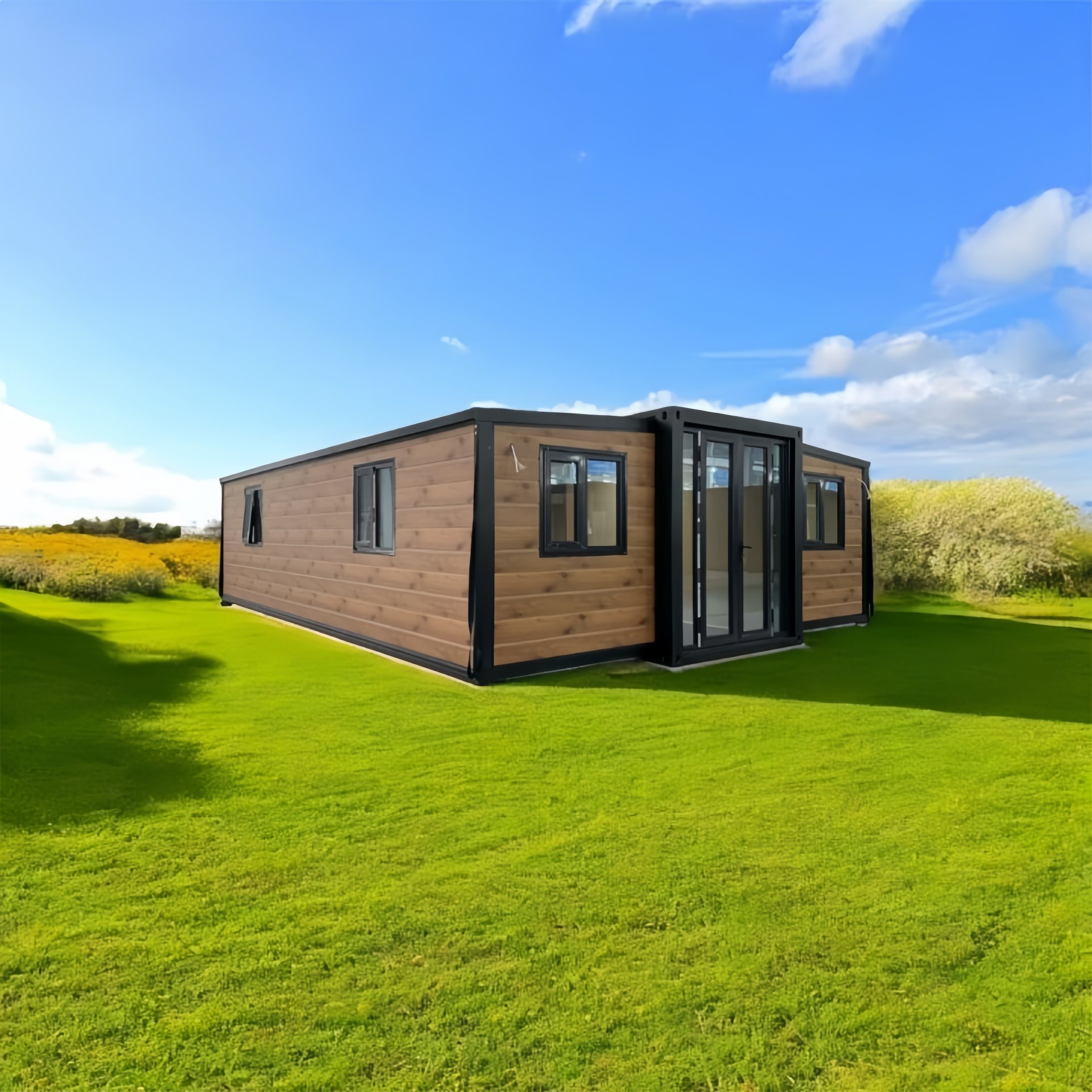
HG Prefab foldable expandable container homes — built to last, delivered worldwide.
A pump house is the least glamorous building on any property and the one that hurts most when it fails. It holds the only equipment standing between you and running water: the pump, the pressure tank, the filtration train and the controls. When that room freezes, a split tank or a cracked filter housing means no water in the house and an emergency callout in the coldest week of the year. Most pump houses fail because they are built as an afterthought — a timber shed with a space heater and a length of uninsulated pipe is a bet against the weather. A folding container solves it from the outside in: a steel-shelled, factory-insulated enclosure that locks, drains, ventilates and heats cheaply.
Why a Pump House Freezes (and What It Costs You)
Freezing damage is almost never about the average winter temperature. It is about the hours when three things happen at once: the temperature drops well below zero, the pump cycles infrequently so water sits still, and the heat source is undersized or switched off. Standing water in a small-diameter pipe freezes fast, and ice then expands against the pipe wall, the fitting or the filter housing. Copper splits, PVC shatters and pump volutes crack.
Where the freeze actually starts
- Penetrations. Where the supply line enters the wall is the coldest point in the building; compressed or missing insulation around the sleeve is a thermal short to the outside.
- Dead legs. A tee feeding a hose bib or a filter bypass carries water that never moves, and these runs freeze first.
- The floor. Equipment mounted low sits in the coldest air, because cold air falls and a slab loses heat into frozen ground.
- Single-source heat. One heater with no backup is one winter power cut away from a frozen room.
What a freeze costs
The repair bill is the small part. A replacement tank, pump head and filter housings are bounded costs; the unbounded ones come after — water damage, days without water while parts arrive, winter emergency rates, and on a farm the daily cost of hauling water. One freeze event can cost more than the enclosure itself.
The principles are the same ones that govern any cold-weather container building, and they are covered in more depth in our cold-climate folding container home guide.
Why a 20FT Folding Container Works as a Pump House
A pump house has an unusual set of requirements: small enough to heat cheaply, big enough to service equipment with tools, tough enough to sit unattended, secure against animals and theft, and dry enough to protect electrical controls. A folding container hits all of them.
Structural and practical advantages
- A lockable steel shell. Steel panels and a steel door frame resist kick-ins, rodents and weather far better than a timber shed, and theft of pump controls and copper is a real rural problem.
- Factory-insulated envelope. Wall, roof and floor insulation is installed indoors at consistent thickness, not on a cold site where gaps are common.
- Cleanable floor and integrated electrics. A sealed vinyl or epoxy floor handles spills and backwash; a factory consumer unit feeds the heater, pump and heat tape from a protected panel.
- Relocatable and fast to install. The unit ships folded and is made weather-tight quickly, and it can move with the well head or the build site.
What to specify at order time
Order it as a purpose-made pump house specification, not a standard dwelling unit. These are cheap at the factory and expensive later:
- No interior partitions — one open bay with clear wall runs.
- A personnel door plus an equipment opening, so a tank or softener can be replaced without dismantling the room.
- Pre-cut, sleeved penetrations for supply, outlet, drain and conduit, positioned from your layout drawing.
- A floor drain or sump for filter changes, backwash and relief discharge.
- A dedicated heat circuit and extra sockets, so pump, filtration, heater and heat tape do not share one breaker.
The 20FT folding expandable model is the usual starting point for this application. Larger layouts are listed on the products page if you are combining the pump house with storage or a workshop bay.
Interior Layout (pressure tank, pump, filters, softener)
Layout is what most people improvise, and it is what decides whether the room can be serviced in January. Three rules govern it: keep wet equipment on the drain side, keep electrical controls above the flood line, and leave a clear service aisle. The natural arrangement is one run along the long wall — inlet, sediment filtration, softener, carbon, pump and pressure tank, then the outlet. Keep the aisle at least 900 mm.
| Zone | Equipment | Position in the room | Space required | Service note |
|---|---|---|---|---|
| Inlet wall | Supply line, shut-off, gauge | Entry end of the long wall | 600 mm wall run | Sleeve and seal; keep the shut-off reachable from the door |
| Pre-filtration | Sediment filter | After the inlet | 600 mm run, 500 mm depth | Leave 400 mm below the housing to drop the sump |
| Treatment | Water softener, carbon filter | Mid-wall | 1,200 mm run, 600 mm depth | Resin tank must sit on the drained floor zone |
| Pressure | Pump, pressure tank, control box | End wall | 1,200 mm run, 800 mm depth | Mount controls 1,200 mm above floor, above flood level |
| Outlet wall | Manifold, backflow device, house line | Far end of the long wall | 600 mm wall run | Insulate and heat-trace the last metre |
| Drain zone | Floor drain, backwash, relief discharge | Low point of the floor | 300 mm clear strip | Discharge to daylight or a dry well, never to septic |
| Service aisle | Clear working space | Between equipment wall and door | 900 mm minimum | Keep clear; no storage |
Two details pay for themselves: mount the pump control box above the tallest filter housing, so a leak cannot drip into the electrics, and put a shut-off and drain valve at the lowest point so the room can be drained in minutes. If the property relies on stored or harvested water, the tank sizing in our off-grid water guide applies here too.
Insulation and Heat Options
Insulation and R-values
A pump house does not need a dwelling-grade envelope, but it does need continuous insulation with no thermal bridge at the steel frame. Steel conducts heat far faster than any insulation board, so an unbroken member from inside to outside acts as a cooling fin and a condensation point. Specify a thermal break at the frame and treat the floor as part of the envelope.
- Walls: continuous board or spray insulation around R-13 to R-21, by climate zone.
- Roof: R-19 to R-30 — heat rises, and an uninsulated roof is the largest loss in a small building.
- Floor: R-10 to R-15 under a sealed structural floor, or an insulated slab with a perimeter break.
- Door: insulated, with compression seals and a sweep; a hollow door is a hole in the envelope.
- Penetrations: sealant at every sleeve plus an exterior flashing collar.
Heating the space
Size the heater for the room, not for the weather record. A sealed, insulated 20FT room needs surprisingly little heat to stay above freezing, which is why a container pump house is cheaper to run than a shed.
- Mini-split heat pump. The default for steady background heat. A small 9,000 BTU-class unit holds the room in a safe band, dehumidifies in shoulder seasons and cools in summer, where pump controls often overheat.
- Self-regulating heat tape. Run along pipework, fittings and filter housings on a thermostat and a dedicated circuit. It protects the pipe rather than the air, which is what you want during a power dip. Use cable listed for pipe heating.
- Incandescent heat lamps. One or two lamp holders on a thermostat are the cheapest backup: modest draw, useful light, and enough heat around the pump and tank to survive a heater failure.
- Controls and alarms. Set the thermostat low and steady rather than high and intermittent, and add a low-temperature alarm that calls or texts — the cheapest insurance in the building.
Plumbing In and Out
Buried line depth
The most reliable freeze protection for the supply line is depth. Bury the incoming line below the local frost penetration depth, a figure published by your building department or utility that varies enormously by region. Where full depth is impossible, use a continuous insulated sleeve, a heat-traced line in conduit, or a heated crawl space. Any above-ground section must be insulated and heat-traced. In the trench, keep the water line and the electrical conduit in separate sleeves — a shared trench is normal, a shared sleeve is not.
Drains and bleed-back
Every pump house needs three drainage paths, and they should not end in the same place:
- Floor drain or sump for filter changes, backwash and leaks, discharged to daylight or a dry well — never into a septic system, which is not sized for softener backwash.
- Pressure relief discharge, terminating where it is visible and cannot create an ice patch at the door.
- System drain-down: a valved low-point drain that empties the whole system, so you can walk away for a week in winter.
Add bleed-back protection where the outlet runs downhill and could siphon the system dry, and fit a backflow prevention device on any line that could draw contaminated water back toward the well. Backflow devices are inspected items, so install them inside the heated envelope rather than buried in a pit. The wiring and conduit discipline is the same as for any container mechanical room, set out in our container home plumbing and electrical guide.
Power and Backup
A pump house is an electrical room: dedicated circuits for the pump, the heat source and the heat tape, plus lighting and sockets. Heat tape deserves its own ground-fault breaker, because it is the load most likely to be damaged by water.
- Service size. Confirm the pump's starting current before the utility application; motors draw far more on start than on run.
- Surge protection. A whole-panel surge device protects the controller and any variable-speed drive.
- Backup power. A transfer switch and generator inlet, or a battery sized for the heat load — heat tape and the room heater come first.
- Monitoring. A low-temperature sensor with a remote alarm.
Cost Breakdown
HG Prefab factory prices for the folding unit itself are 20FT $7,200–$9,800; 30FT $10,500–$14,500; 40FT $12,500–$16,500, ex-works, before freight, taxes and local work. For a pump house the 20FT covers most installations; 30FT and 40FT pay off only when the room also holds bulk storage, a generator or a workshop bench.
| Item | 20FT pump house | 30FT pump house | Notes |
|---|---|---|---|
| Container unit, insulated | $7,200–$9,800 | $10,500–$14,500 | Ex-works folding unit with insulated envelope |
| Insulation upgrade | $600–$1,500 | $900–$2,000 | Higher R-value walls, roof and floor with thermal break |
| Openings and floor drain | $400–$1,000 | $500–$1,200 | Sleeved penetrations, equipment door, drain sump |
| Electrical package | $500–$1,200 | $700–$1,500 | Consumer unit, circuits, lighting, sockets |
| Heating package | $700–$1,800 | $800–$2,000 | Mini-split, heat tape, thermostat, heat lamp backup |
| Freight and delivery | Quote by route | Quote by route | Depends on port, inland distance and site access |
| Pad, trenching, permits | Local quote | Local quote | Site-specific; obtain before ordering |
Read these as budget ranges, not quotations: freight varies with route, heating with climate, and everything below the container line is local. The figure worth protecting is the heating package with its backup layer, which separates a building that works for twenty winters from one that fails in the first. Full specification options are on the products page.
Installation Day
Sequence the site work so the unit arrives to a finished pad and trench, and the offload, unfold and plumbing tie-in happen on one visit.
- Before dispatch: pad poured and level, drainage away from the door; trench and sleeves set; conduit stubbed up; truck access confirmed.
- Offload and unfold: Yes — a crane or forklift is required to offload the folded unit from the truck. Once it is set in position, four workers can unfold and assemble the main structure in about 2 hours.
- Same day: anchor the unit, seal penetrations, connect supply and outlet lines, land the service, energise the heater and heat tape.
- Day two: install tank, pump, filters and softener, connect drain and relief discharge, pressure-test and disinfect.
- Handover: set thermostats, test the alarm, verify drain-down, label every valve and breaker.
Planning an insulated pump house?
HG Prefab, manufactured by Henan Huangang Machinery Equipment Co., Ltd., builds 20FT, 30FT and 40FT folding expandable container houses specified as insulated pump houses with sleeved penetrations, floor drain, dedicated circuits and a heating package. Send your climate, equipment list and site for a layout drawing and budget. Email hgmechequip@gmail.com or WhatsApp +86 191 0388 7380. Full range on the products page.
Browse modelsFrequently Asked Questions
Will my pipes freeze in an insulated container pump house?
Not if the envelope is continuous and the heat source has a backup. Insulate the walls, roof and floor to the R-values your climate zone requires, seal every penetration where a pipe enters, and keep the interior above freezing with a thermostatically controlled heater plus heat tape on the exposed pipe runs. Failures happen where insulation is interrupted or where a single heat source has no backup, not in the middle of an insulated panel.
What size container do I need for a pump house?
A 20FT folding container is enough for most single-well systems. It holds the pressure tank, the pump and its control, sediment and carbon filtration, and a water softener, with room left to service every item. Move up to a 30FT or 40FT unit when you are adding bulk storage tanks, a second pump, chemical dosing equipment or a standby generator, or when the pump house also has to store tools and spare parts.
How is the space heated in winter?
Most owners use a small mini-split heat pump for steady background heat, self-regulating heat tape on the pipework and fittings, and one or two incandescent heat lamps as a low-cost backup that still works if the main heater fails. Heat tape should be thermostatically controlled and listed for pipe heating, and any heater should be mounted clear of pump controls, filter housings and softener resin tanks.
Do I need a permit for a pump house?
Usually yes, and the rule varies by jurisdiction. A structure on a permanent foundation with a permanent electrical service normally needs a building or electrical permit, and the plumbing connection and any backflow prevention device are inspected separately. Agricultural and seasonal-use exemptions exist in some areas, so ask the local building department before you order, and send the container specifications with the application.