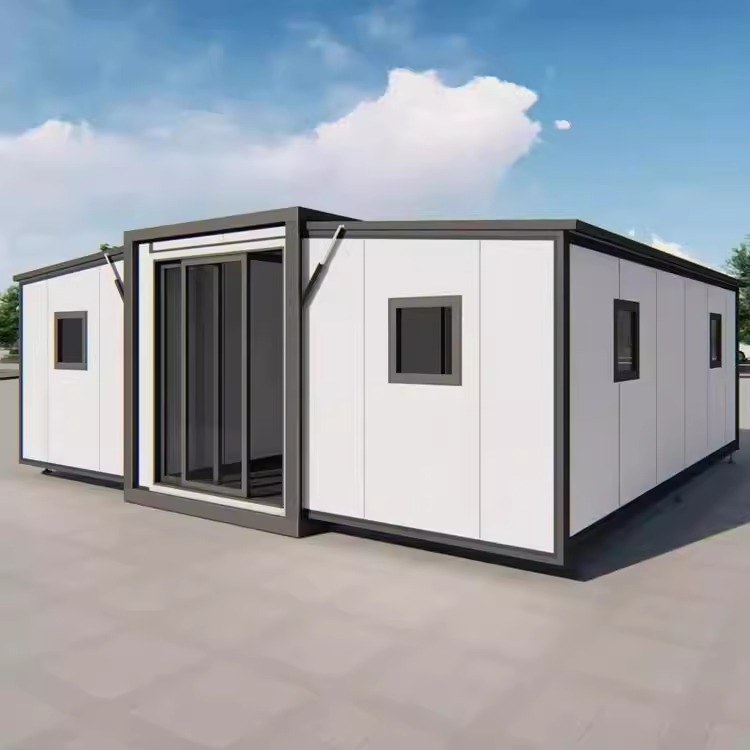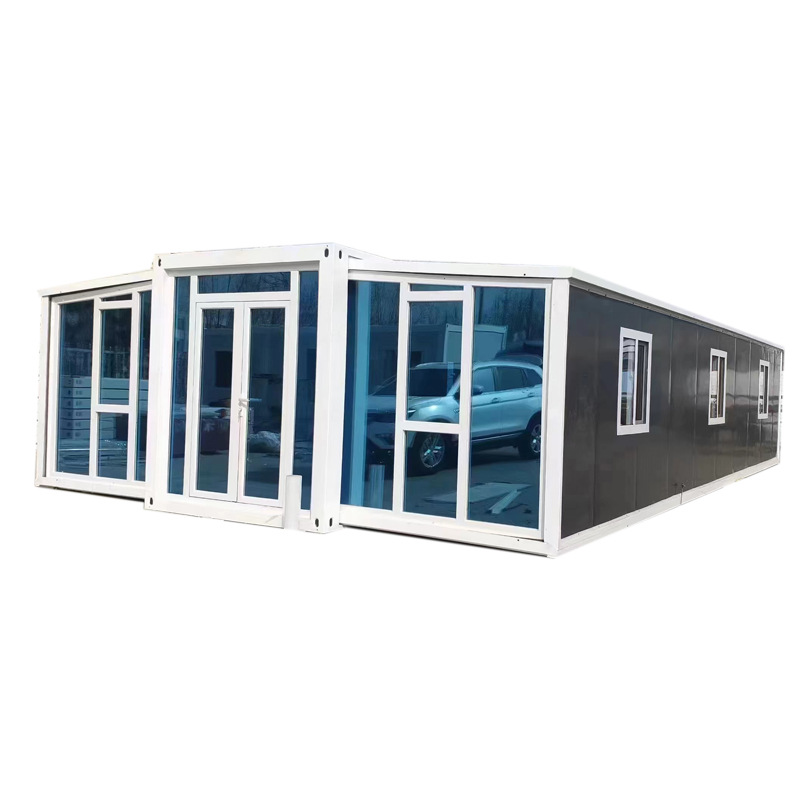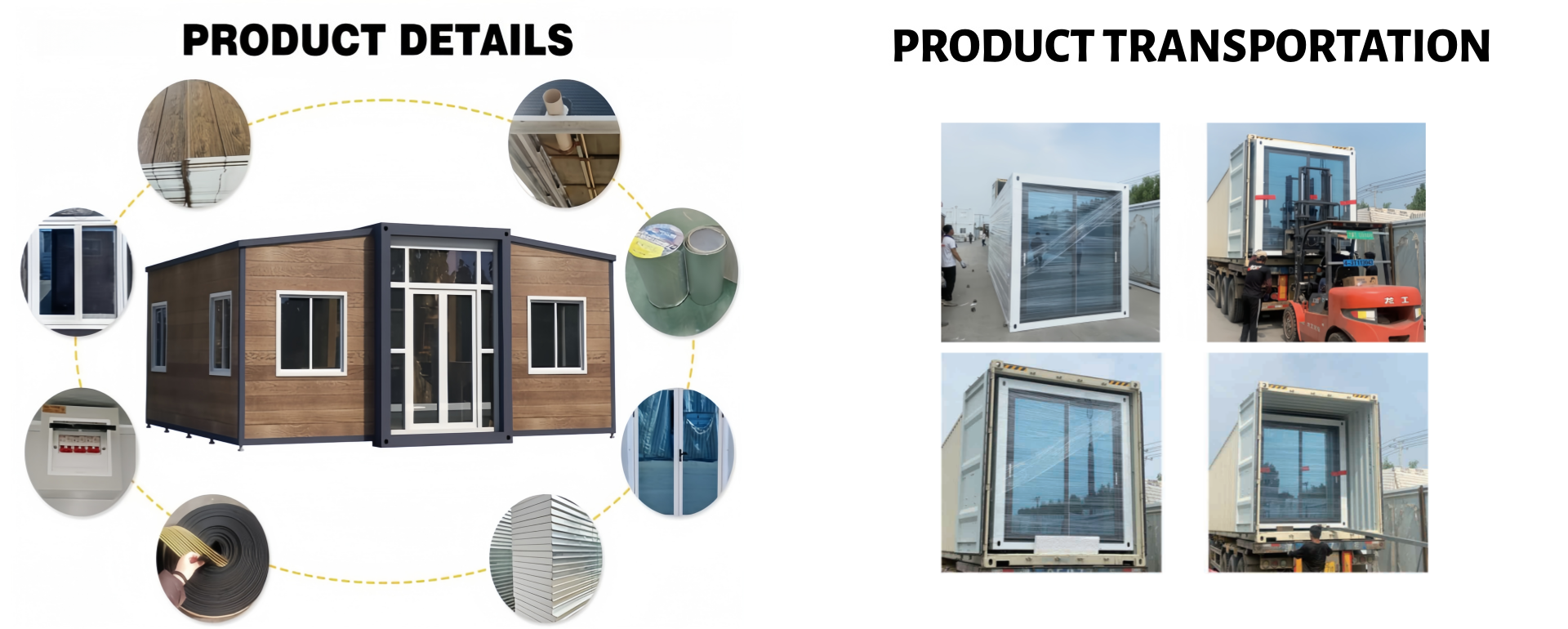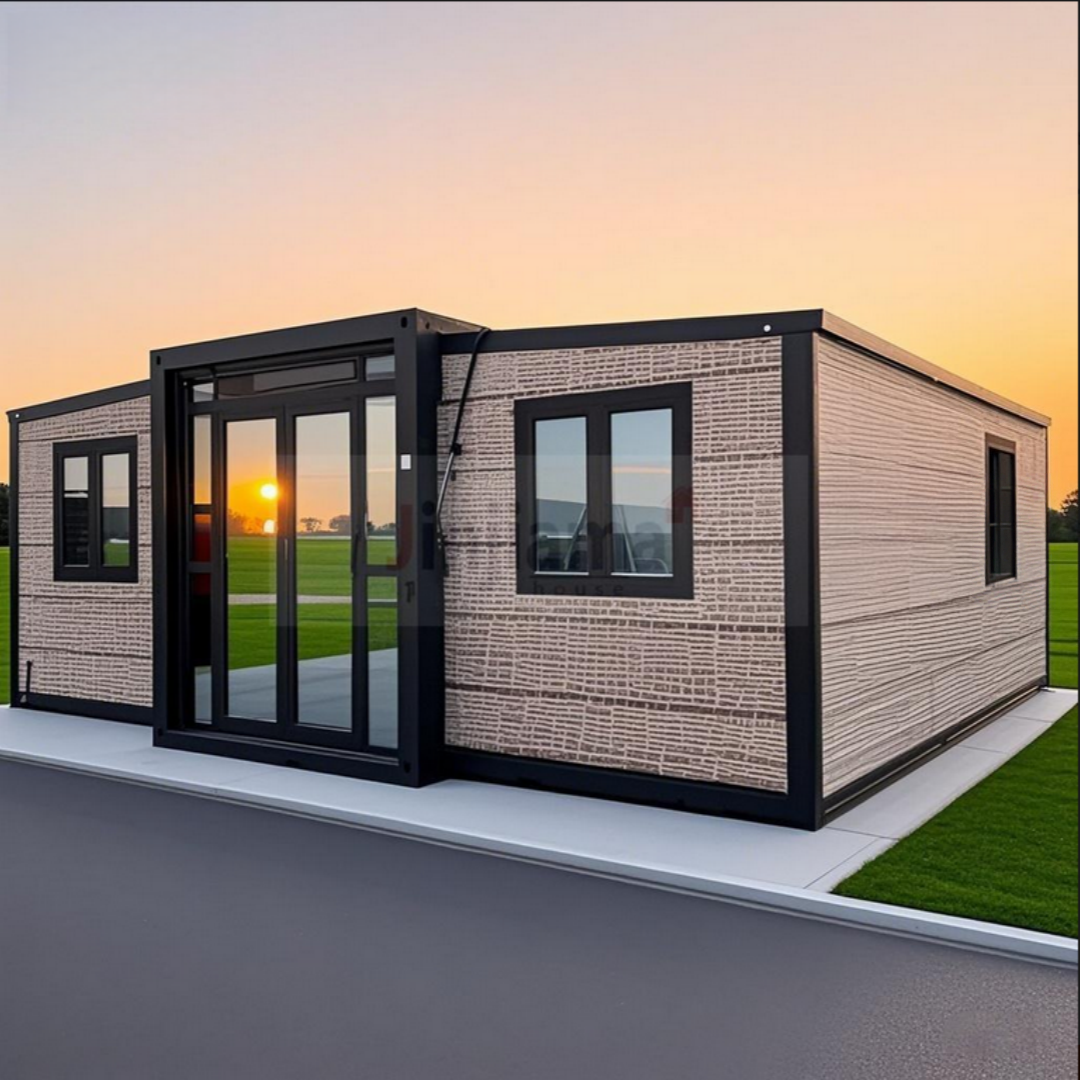
HG Prefab foldable expandable container homes — built to last, delivered worldwide.
Europe rewards preparation more than any other market we ship to. There is no single European building permit: instead there is a product compliance layer built on CE marking and harmonised European standards, a national and often regional planning layer, and a customs layer run at the port of entry. A folding container home crosses all three. It arrives as cargo classified under the Combined Nomenclature, becomes a building assessed against the code of a Land, a commune or a municipality, and in between travels on roads that were not designed for wide loads. This guide follows that order: CE marking and EN standards, national permits, duty and import VAT, ports, the 230 V 50 Hz specification, landed cost and timeline.
HG Prefab is the export brand of Henan Huangang Machinery Equipment Co., Ltd., and we ship 20FT, 30FT and 40FT folding units to Rotterdam, Antwerp, Hamburg, Gdańsk and Gothenburg. Where a number can change — a duty rate, a VAT rate, a permit fee — we say so and tell you to confirm it with your broker or authority.
Why Europe Is a Growth Market for Folding Container Homes
Three structural pressures are pushing European buyers towards factory-built dwellings.
Housing Shortage and Faster Delivery
Most western European markets entered the second half of the 2020s with a housing deficit concentrated in the commuting rings of large cities, where labour and land cost most. A conventional build there routinely loses a season to trade availability and weather; a factory-built unit, produced indoors while the foundation is prepared, shortens the critical path to a delivery date.
Secondary and ADU-Style Dwelling Rules
Several countries have relaxed their rules on a second dwelling on an existing plot and on garden, annexe and seasonal worker housing. The legal form differs everywhere — an annexe in Sweden, a garden dwelling in the Netherlands — but the effect is the same: land plus permission plus a quickly delivered unit.
Tourism, Glamping and Seasonal Lets
Glamping and eco-tourism operators are the fastest-moving segment we serve: a campsite, vineyard or ski resort needs units that install in a shoulder season and move if the layout changes. Because a folded unit ships at a small fraction of its expanded volume, three or four travel in the slot one cabin would occupy.
CE Marking and the Construction Products Regulation: What Actually Applies
CE marking is the question European buyers ask first and the one most often answered incorrectly. Separate three things usually conflated: CE marking of construction products, the Declaration of Performance and Conformity, and the national building permit.
Product Level Versus Building Level
The Construction Products Regulation sets the rules for placing construction products on the European market. Where a harmonised standard, or a European Technical Assessment where none exists, covers the product, the manufacturer issues a Declaration of Performance, applies CE marking, and the product moves freely; where it is not covered, CE marking does not apply. A complete building delivered to one named site is often assessed under national rules instead.
EN 1090 and Structural Steelwork
For the steel structure the standard that matters is EN 1090, the harmonised series for execution of steel and aluminium structures. It covers execution classes, welding quality, tolerances and factory production control, and CE marking under it requires an audited factory production control system and certified welding coordination at higher execution classes.
Electrical Safety and Thermal Performance
Electrical equipment falls under the Low Voltage Directive and the EMC Directive, with an EU declaration of conformity covering the consumer unit, protective devices, wiring, sockets and factory-fitted appliances, so specify European models at the factory. Energy performance is assessed nationally but calculated to European methods: U-values under the EN ISO 6946 series and glazing under EN 673. Watch thermal bridges at the fold lines and corner posts.
The Documentation Pack
Whichever route your authority takes, it will ask for documents. Our European pack contains drawings and sections, the structural calculation, welding and factory production control records, mill certificates, the electrical schematic with declarations, the insulation and glazing specification with the U-value calculation, and factory test records — see our factory QC and inspection guide.
National Building Permissions: Germany, France, the Netherlands and the Nordics
There is no European building permit. Each member state, and in Germany and Austria each region, runs its own procedure, and the classification they choose determines which documents they demand.
Germany: Baugenehmigung and the Länder Codes
In Germany the permission is the Baugenehmigung, issued by the local building authority under the Landesbauordnung of the individual Land, so procedure, fees and exemptions differ between Bavaria, North Rhine-Westphalia and Lower Saxony, and whether your unit is a permanent building or a temporary structure is decided locally. Submit drawings, a site plan and structural and thermal calculations. Get the classification in writing at a pre-application meeting.
France: Permis de Construire, PLU and DTU
France assesses applications against the Code de l'urbanisme and the local PLU. Above a footprint threshold a permis de construire is required; below it a déclaration préalable may suffice, and the threshold should be confirmed with your mairie because it has been adjusted over time. Technical execution follows the DTU documents, and new dwellings must meet RE2020.
The Netherlands and the Omgevingsvergunning
The Netherlands consolidated many permissions into the Omgevingsvergunning, applied for through the Omgevingsloket of your municipality and assessed against the Omgevingswet, with technical requirements set numerically in the Bouwbesluit. Dutch practice is comparatively open to small-footprint dwellings.
Nordic Countries: Winter, Snow and Frost
Sweden, Norway, Denmark and Finland combine a demanding thermal requirement with high snow loads inland and in the north, and frost-protected foundations almost everywhere. That means thicker insulation and triple glazing as the default, a frame checked against the municipal ground snow load and footings below frost depth.
A Note on the United Kingdom
The United Kingdom is outside the European Union and outside the CE system as it applies in the Union: British conformity assessment uses UKCA marking, and building control is separate. Treat a UK destination as a distinct market.
Customs: EORI, Heading 9406, Duty, VAT and Valuation
The customs layer can be handled almost entirely by a competent broker, provided you give that broker the right information early.
EORI Number
An Economic Operators Registration and Identification number is required for any party lodging a customs declaration or appearing on one in the European Union. A business established in a member state registers with its national customs authority; an importer established outside the Union generally needs an EORI from the member state where the first declaration is lodged. Apply before the vessel sails, because an EORI pending at arrival becomes a storage bill.
Classification Under Heading 9406
Prefabricated buildings are classified in Chapter 94 of the Combined Nomenclature and the Harmonized System, heading 9406. The subheading depends on the construction and on how the unit is presented, and classification is a legal determination made on the facts of the consignment. It drives the duty rate, so ask your broker to rule before the vessel loads — see our US import guide for the equivalent HTS question and our Australian import guide for the biosecurity overlay.
Duty and Import VAT
Import duty is charged at the rate applicable to your subheading and origin on the date of acceptance of the declaration, and it changes with trade policy, so confirm the current rate with your broker before budgeting. Import VAT is charged by the member state of import at that country's standard rate, which differs between member states and changes over time, and is calculated on the customs value plus freight, insurance and duty. A VAT-registered business normally recovers it; a private buyer cannot.
Customs Valuation
Valuation is normally the transaction value, to which the Union Customs Code adds freight, insurance, loading and handling up to the place of introduction into the Union. This is why the cheapest freight quote does not always reduce the tax base, and why the invoice should state the Incoterm and a clear breakdown.
Other Formalities
- Wood packaging: pallets, crates and dunnage must comply with ISPM-15 and carry the mark. Unmarked wood is a hard stop at European ports.
- Origin: origin determines the duty rate and any preference or trade-defence measure. State it accurately.
- Compliance documents: declarations of conformity, the Declaration of Performance where it applies and technical files should be available at entry.
Ports and Inland Logistics Across the EU
Choosing the port by the distance to your site, not by the size of the port, is usually the largest single freight saving available. Our units leave Henan overland to Qingdao, Shanghai, Ningbo or Shenzhen and then sail into the north European range or the Baltic.
- Rotterdam: the largest gateway, with feeder, barge, rail and truck links into the Netherlands, Belgium and western Germany.
- Antwerp and Hamburg: the Antwerp–Hamburg range covers Germany and the hinterland into Austria, Switzerland, Poland and the Czech Republic, with barge and rail often cheaper than road.
- Gdańsk: the natural gateway for Poland and the Baltic states.
- Gothenburg: the main Swedish gateway, serving western Sweden and southern Norway.
- Le Havre, Valencia and Genoa: the French Atlantic, Spanish Mediterranean and northern Italian options.
Folded Shipping and Oversize Road Moves
The advantage of a folding unit is that a folded module travels as a standard-width load on an ordinary trailer, without an abnormal load permit, a route survey or escorts. The exception is the expanded move: relocating an already unfolded unit brings abnormal transport rules into play, with a permit from each country along the route and its own lead time, so plan the routing before the unit is unfolded. Full packing detail is in our shipping and freight guide.
Technical Adaptations for Europe: 230 V, Heating and Snow
A unit specced for Europe at the factory costs almost the same as one that is not, and saves a great deal of rework on site.
230 V 50 Hz Electrical
Europe runs on a nominal 230 V at 50 Hz, single-phase for most small dwellings, with three-phase 400 V where a heat pump or workshop load justifies it. We build European orders with Schuko Type F outlets, a consumer unit with RCD and RCBO protection and European conductor colours, supplying the circuit schedule and schematic in the documentation pack. The final connection and test certificate belong to a licensed electrician.
Heating Sized for a European Winter
A mild maritime winter and a Nordic winter are different design cases, so size the heating from the design outdoor temperature and the calculated heat loss rather than from floor area. Thicker sandwich panels and better glazing are the default for northern and alpine sites, with attention to thermal bridges at the fold lines and corner posts. Air-source heat pumps lose capacity in cold climates, so Nordic sites are usually better served by direct electric heating.
Snow and Wind Loads
Loads are determined for your site under the national application of the Eurocodes, with EN 1991 setting the actions. Alpine and Nordic sites carry ground snow loads several times the lowland western European value, and the roof, the fold mechanism and the fixings must all be checked against it; exposed coastal sites reverse the priority, with wind dominating.
Foundations and Ground Conditions
Frost depth, soil bearing capacity and drainage vary enormously, from sandy Dutch subsoil needing piles to Nordic frost depths needing deep footings. The usual solutions are a reinforced slab, a pier and beam system or screw piles. Prepare the foundation and utility stubs before the truck arrives.
EU Landed Cost Line by Line
Unit prices are the same regardless of destination: 20FT $7,200–$9,800; 30FT $10,500–$14,500; 40FT $12,500–$16,500 depending on size and finish. Every line below is added on top and the ranges are indicative planning figures, not quotes. Duty and import VAT rates vary by member state and change over time, so confirm both with your licensed customs broker before you commit to a budget.
| Cost item | Indicative range (EUR) | Notes |
|---|---|---|
| Ocean freight, China to EU gateway | €1,200 – €5,500 per container | Service, season, gateway and fuel surcharges |
| Import duty | Subheading dependent | Confirm the current CN 9406 rate and origin treatment with your broker |
| Import VAT | Member state standard rate | Charged on customs value plus freight, insurance and duty; recoverable for VAT-registered businesses |
| Customs broker, EORI and entry | €150 – €600 | Higher with valuation queries, exams or corrections |
| Inland haulage, port to site | €400 – €3,000 | Distance dominates; folded units avoid abnormal load permits |
| Crane or forklift offload day | €500 – €2,200 | Mobile crane half-day rate, metro versus rural |
| Foundation and utility hookups | €2,500 – €14,000 | Slab, piers or screw piles by soil and frost depth, plus power, water and drainage |
| CE and documentation pack | €0 – €1,500 | Engineering drawings, calculations, declarations and any local engineer review |
Two patterns are worth noting. The site-side lines — foundation, utilities and the crane day — frequently exceed the customs-side lines, so budget the site before you optimise the freight. And recoverable and non-recoverable lines differ: a VAT-registered business recovers import VAT but not duty or haulage, while a private buyer pays everything. The most common budgeting failure is a missed charge, usually the crane day, the inland leg or the local engineer review — see our common buyer mistakes.
From Order to Move-In: The Timeline
A European project runs in five overlapping phases, and the critical path is set by the slowest of your authority, your broker and your site.
- Specification and pre-application, two to eight weeks: confirm classification, design loads and the electrical standard with your authority, and the subheading and duty rate with your broker.
- Production, roughly four to eight weeks: the unit is wired for 230 V 50 Hz and insulated to the agreed U-values, while permit and site works run in parallel.
- Packing and ocean transit, roughly four to seven weeks: inland haulage to the Chinese port, export clearance and the sailing.
- Clearance and inland delivery, one to two weeks: import declaration, duty and VAT paid, release, then the inland leg.
- Offload, unfold and connect, one to five days: the crane day, the unfolding, then licensed trades testing the services.
End to end, plan on roughly three to five months from signed specification to occupation, with the permit and the foundation most likely to move the date. The most useful thing you can do is sequence the offload: foundation cured, drains run, crane booked before the truck is dispatched. The folded unit is then lifted into position and four workers unfold and assemble the main structure in about 2 hours. Compare sizes on our folding container house models page — the 20FT, 30FT and 40FT units each fold to a different shipping envelope.
Planning a folding container home delivery to Europe?
Henan Huangang Machinery Equipment Co., Ltd. (HG Prefab) manufactures 20FT, 30FT and 40FT folding expandable container houses with 230 V / 50 Hz European electrical layouts, Schuko Type F outlets, EN-aligned documentation packs with Declarations of Performance and Conformity, EN 1090 related welding and factory production control records, and U-value calculations for your climate — shipped flat-packed to Rotterdam, Antwerp, Hamburg, Gdańsk and Gothenburg. Reach us on WhatsApp +86 191 0388 7380 or email hgmechequip@gmail.com.
Get an EU import quote Browse models WhatsApp +86 191 0388 7380 Email hgmechequip@gmail.comFrequently Asked Questions
Do I need CE marking to import a folding container home into the EU?
CE marking is a product-level requirement, not a building permit. Where a harmonised standard or a European Technical Assessment covers what you place on the market, the manufacturer must issue a Declaration of Performance and Conformity and apply the marking; for structural steelwork that normally means EN 1090 execution classes and factory production control. A complete building delivered to one site is often assessed under national rules instead. In practice your authority will ask for a documentation pack: mill certificates, weld and coating records, electrical declarations under the Low Voltage Directive and EMC, and insulation data. Confirm the expected route before you order.
Which building permission do I need in Germany or France?
Germany issues a Baugenehmigung under the Landesbauordnung of the individual Land, so the procedure, documents and fees differ between Bavaria, North Rhine-Westphalia and Lower Saxony, and the local Bauamt decides whether your unit is a permanent building or a temporary structure. France uses the permis de construire, with a déclaration préalable for smaller footprints below the surface threshold, assessed against the Code de l'urbanisme and the local PLU, while technical execution follows the DTU traditions and new dwellings must meet RE2020. Both expect engineering drawings, thermal calculations and a site plan. Confirm classification in writing.
How much duty and VAT will I pay importing to the EU?
Prefabricated buildings are normally classified under CN and HS heading 9406, and the duty rate depends on the exact subheading, the country of origin and any measure in force on the date of acceptance, so it must be confirmed with your broker. Import VAT is charged by the member state of import at that country's standard rate, which varies across the EU and changes over time, and is calculated on the customs value plus freight, insurance and duty. A VAT-registered business generally recovers import VAT, while a private buyer pays it outright. Confirm both figures with your licensed broker.
Can the electrical system be adapted to 230 V 50 Hz for Europe?
Yes. HG Prefab builds European orders to 230 V 50 Hz single-phase as standard, with Schuko Type F socket outlets, RCD and RCBO protection on the distribution board, and brown, blue and yellow-green conductor colours. Factory-fitted equipment carries a declaration of conformity under the Low Voltage Directive and the EMC Directive, and appliances are specified with European plugs and 50 Hz motors so nothing is converted on arrival. Heat pumps and water heaters are sized for European winter conditions. A licensed local electrician should make the final connection and issue the test certificate.
How is the folding container home offloaded and assembled on site?
Yes — a crane or forklift is required to offload the folded unit from the truck. Once it is set in position, four workers can unfold and assemble the main structure in about 2 hours. Book the crane or forklift for the same day the truck arrives and confirm access width, ground bearing and overhead cables in advance, because a folded 40FT unit still weighs several tonnes and needs a clear lift path. Have the foundation cured and the utility stubs in place beforehand so the offload, the unfolding and the service connections happen in one visit.