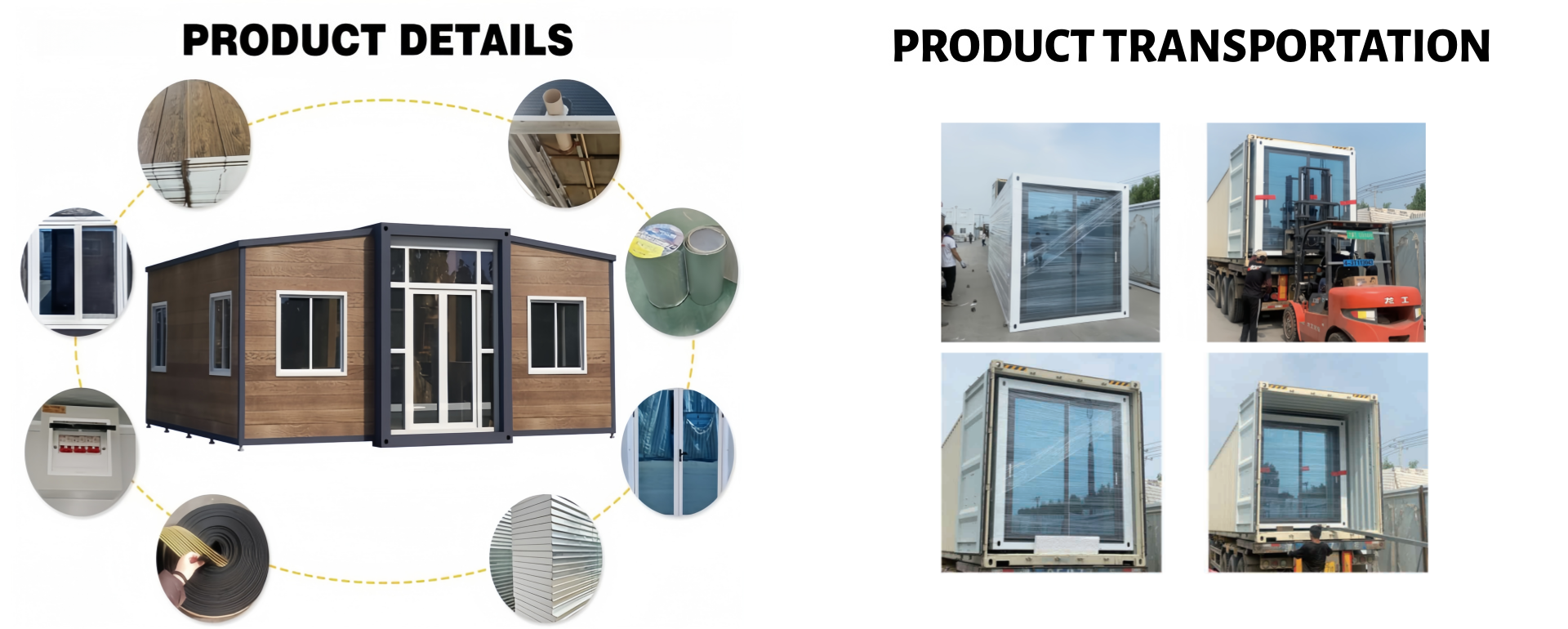
HG Prefab foldable expandable container homes — engineered for Gulf heat and delivered in a standard ocean container envelope.
The UAE and Saudi Arabia are strong markets for factory-built accommodation because projects move quickly, skilled site labor is costly, and housing is often needed before a conventional build can be completed. Folding container homes can serve workforce camps, site offices, farm accommodation, hospitality cabins, rental units and permanent homes where zoning allows. Their logistics are efficient: a finished module folds into a transport profile that fits within a standard ocean container envelope, then travels by vessel and truck as ordinary containerized cargo. Import efficiency, however, does not replace conformity or local planning. A successful GCC order begins with an importer of record, a product-by-product compliance list, heat-rated specifications and an approved site delivery plan before production starts.
Why the GCC Suits Folding Container Homes
Fast deployment is the main commercial advantage. Factory production allows the steel frame, insulated panels, doors, windows, wiring and plumbing routes to be inspected before loading, while the customer prepares foundations and utilities at the destination. This parallel schedule can remove weeks of exposed site work. It also makes quality easier to repeat across a multi-unit camp or rental development.
- Remote projects: energy, construction, tourism and agricultural sites can receive complete units even where local building labor and material supply are limited.
- Predictable scope: buyers can freeze panel thickness, glazing, electrical voltage, sanitary fixtures and finish schedules in one factory specification.
- Compact freight: folded 20FT, 30FT and 40FT units ship within a standard ocean container envelope, simplifying vessel booking and port handling.
- Phased growth: a customer can add bedrooms, offices or service units as demand grows, provided the original master plan and utility capacity allow expansion.
The environmental design is different from a mild-climate export. Coastal humidity, salt exposure, ultraviolet radiation, airborne sand and summer temperatures of 45–50°C all affect the envelope and cooling load. Buyers should review our dedicated desert-climate container home guide and Gulf-climate specification guide before freezing materials. For a comparison with different regulatory systems, see the guides to importing a folding container home to the USA and importing one to Europe.
GCC Duties, VAT and Importer Requirements
Prefab buildings are commonly assessed within HS heading 9406, but the exact national tariff line depends on materials, use and whether loose appliances or furniture are shipped with the building. Ask the broker for a written classification before the commercial invoice is finalized. List the building, spare parts, air conditioners, appliances and furniture separately; combining everything under one line can delay valuation and conformity review.
UAE customs and VAT
For an ordinary mainland UAE import budget, use approximately 5% customs duty on CIF value — the factory value plus ocean freight and insurance — and 5% VAT. VAT is generally calculated after customs duty has been added. Free-zone entry, re-export and movements into the mainland can change the timing and treatment, so a free-zone destination should not automatically be modeled as tax-free.
The importer normally needs a valid UAE trade license for the relevant activity, a customs importer code at the port of entry and a tax registration number where required. The clearance file should include the commercial invoice, packing list, certificate of origin, bill of lading, insurance value and any conformity documents. A local customs broker should review the draft set before loading because correcting a consignee name or product description after arrival can create storage charges at Jebel Ali.
Saudi customs, VAT and importer of record
For preliminary Saudi budgeting, use approximately 5% customs duty on CIF plus 15% VAT, with VAT generally applied to the customs value plus duty and eligible charges. The final tariff is controlled by the current Saudi integrated tariff and the exact 12-digit classification, so 5% is a planning assumption rather than a guaranteed rate.
The Saudi consignee should be an eligible importer of record with a commercial registration covering the imported activity and access to the required customs and conformity systems. Its registered legal name must match the invoice, bill of lading, SABER records and customs declaration. Agree in writing who pays duty, VAT, port storage, demurrage, inspection and inland haulage. DDP language on a sales quotation is not a substitute for a locally eligible importer.
Saudi Conformity: SASO, SABER and the SBC
SABER certificates before shipment
The Saudi Standards, Metrology and Quality Organization (SASO) publishes technical regulations for regulated products, while the SABER platform is used to manage conformity. A folding home contains several product families: the prefabricated building, electrical distribution equipment, cables, luminaires, plumbing fixtures, glazing, insulation and sometimes air-conditioning equipment. Their conformity routes may differ.
The importer and an approved conformity assessment body should map each item before the purchase order is released. Where a technical regulation applies, secure the relevant Product Certificate of Conformity and then the Shipment Certificate of Conformity for the consignment before dispatch. The factory should supply test reports, product data sheets, photos, labels, bills of materials and traceable model numbers. Shipping first and trying to build a SABER file later is a common cause of port storage and re-export risk.
Saudi Building Code alignment
Customs release does not grant permission to occupy the unit. The project must also align with the Saudi Building Code (SBC), the intended use and municipality requirements. Before manufacture, a Saudi-licensed consultant should review structural calculations, wind actions, foundations, fire and egress provisions, accessibility, energy performance, electrical design and drainage. The review should cover the unfolded building and the site connections, not only the folded transport frame.
Permanent housing, temporary site accommodation and a commercial hospitality unit may follow different permit paths. Confirm land use and Civil Defense requirements early, especially for multi-unit layouts, kitchens, LPG systems and sleeping accommodation. Arabic schedules and locally signed drawings may be required even when the factory engineering package is in English.
UAE Conformity and Local Permit Paths
ECAS and the current conformity framework
UAE buyers often still use the familiar terms ECAS and ESMA when discussing national product conformity. The importer should check the current Ministry of Industry and Advanced Technology process and identify which regulated components require a conformity certificate or recognized test evidence. Electrical equipment, low-voltage devices, lighting and energy-related products deserve particular attention. Specify 230 V, 50 Hz equipment suitable for local conditions, approved plugs and breakers, and labels that match the shipping documents.
A building can clear customs while still failing a local permit review, so keep product conformity and building approval as two separate workstreams. A complete factory dossier should include structural drawings, panel fire and thermal data, electrical single-line diagrams, plumbing layouts, material certificates, installation instructions and serial-numbered packing records.
Dubai Municipality and Abu Dhabi approval
In Dubai, begin with plot use, community or developer approval, and the relevant Dubai Municipality building-permit route. Projects may also need utility and Civil Defense no-objection certificates depending on use and location. In Abu Dhabi, work through the municipal permitting system and an appropriately licensed local consultant. Requirements differ among mainland plots, free zones, industrial areas and master-planned communities.
Submit the container home as an engineered prefabricated building rather than assuming that a movable appearance makes it exempt. The authority will want a site plan, foundation and anchorage details, structural calculations, fire-safety information, MEP drawings, drainage and utility connections. Obtain written planning acceptance before paying the final factory balance.
Heat Engineering for 45–50°C Ambient Conditions
A Gulf-ready unit needs an envelope specification, not simply a larger air conditioner. The design objective is to reduce solar gain, stop uncontrolled hot-air leakage and protect the cooling system from dust. Address the following items together:
- Wall and roof insulation: use sandwich panels with declared core type, thickness, density, thermal conductivity and fire classification. A common starting point is 75–100 mm insulated wall panels and 100–150 mm roof insulation, but the final assembly must satisfy local energy and fire requirements. Require continuity at frame rails and folding joints because exposed steel creates powerful thermal bridges.
- Reflective roof and shading: specify a durable, light-colored high-reflectance roof coating. Add a ventilated shade canopy, pergola or secondary roof where the site permits it. Shade west-facing windows and walls; afternoon solar exposure can dominate the load of a compact unit.
- Glazing: limit unnecessary glass area and choose double glazing with a low solar heat-gain coefficient. The architectural 40FT glass container model can be adapted for Gulf projects, but extensive glazing needs external shading and a project-specific cooling calculation.
- Air sealing: use compression gaskets at doors and windows, closed-cell seals at folding joints and sealed service penetrations. Ask the factory for a joint map and replacement-gasket set. Fine sand finds gaps that ordinary rain testing may not reveal.
- Corrosion protection: coastal projects should specify appropriate galvanized steel, coating thickness, cut-edge repair and stainless or protected fasteners. Keep dissimilar metals isolated where condensation or salt spray is possible.
AC sizing in BTU per m²
For concept budgeting, 750–1,000 BTU/h per m² is a useful screening range for many small, well-insulated Gulf units. A 30 m² unit would therefore begin around 22,500–30,000 BTU/h. This is not the final selection: orientation, roof color, glazing, occupancy, equipment loads, ventilation, air leakage and design temperature all change the result. Have the MEP consultant perform a room-by-room sensible and latent heat-load calculation, then select equipment rated at the actual high-ambient condition rather than its mild-temperature catalogue capacity.
Split systems should have accessible washable filters, protected condensers, corrosion-resistant coils where appropriate and drainage designed for humid coastal weather. Avoid locating an outdoor unit where hot discharge air recirculates under a canopy. Seal refrigerant and electrical penetrations after commissioning, and include filter cleaning and coil washing in the handover plan.
Shipping Through Jebel Ali, Dammam and Jeddah
Ocean and inland routes
- Jebel Ali: the primary UAE gateway, with frequent services and strong trucking connections to Dubai, Abu Dhabi and the Northern Emirates. Confirm whether final use is mainland or free zone before documents are issued.
- Dammam: the practical Saudi gateway for Eastern Province projects and many Riyadh deliveries. Inland distance, appointment rules and road permits must be included in the trucking quote.
- Jeddah: suited to western Saudi projects, including the Jeddah, Makkah and Red Sea corridors. Seasonal congestion and project-site access can affect free-time planning.
20FT, 30FT and 40FT folded units are prepared to ship inside a standard ocean container envelope. Confirm packed dimensions, gross weight, center of gravity and lifting points on the packing list. The quote should identify origin handling, ocean freight, destination terminal handling, customs clearance, detention and demurrage free time, inland trucking and empty-container return where relevant.
Final-mile offloading
Book the crane or forklift as part of the delivery schedule, not after the truck reaches the site. The lifting plan should match the packed weight and radius, use the marked lifting points, and account for wind, overhead lines and compacted ground. Prepare foundations, access roads and utility stub-outs first. In summer, schedule crews for early morning, provide shaded rest and drinking water, and keep door, window and folding-joint seals wrapped until dusty work is complete.
Landed Cost Comparison
HG Prefab ex-factory ranges are 20FT $7,200–$9,800, 30FT $10,500–$14,500 and 40FT $12,500–$16,500. The comparison below uses illustrative ocean freight and applies duty to CIF, then VAT to CIF plus duty. It excludes conformity-body fees, destination terminal charges, broker fees, inland trucking, crane hire, foundations and utility connections.
| Unit size | Ex-factory price | Ocean freight estimate | Duty | UAE VAT | UAE landed total | Saudi VAT | Saudi landed total |
|---|---|---|---|---|---|---|---|
| 20FT | $7,200–$9,800 | $1,800–$3,000 | ~5% of CIF | 5% | ~$9,900–$14,100 | 15% | ~$10,900–$15,500 |
| 30FT | $10,500–$14,500 | $2,300–$3,800 | ~5% of CIF | 5% | ~$14,100–$20,200 | 15% | ~$15,500–$22,100 |
| 40FT | $12,500–$16,500 | $2,800–$4,500 | ~5% of CIF | 5% | ~$16,900–$23,200 | 15% | ~$18,500–$25,400 |
Treat these as planning ranges, not quotations. Freight changes by sailing date, destination and fuel market, and customs may classify separately shipped equipment at different rates. Ask for a landed-cost sheet showing the taxable base and every local fee. Larger units usually provide better usable-area economics because conformity review, brokerage, truck mobilization and lifting are partly fixed costs.
Timeline From Order to Handover
- Weeks 0–2: confirm plot use, importer of record, tariff classification, permit route, SABER or UAE conformity matrix, and heat-rated specification.
- Weeks 2–6: manufacture the unit while the local consultant completes structural, MEP, fire and foundation submissions.
- Before loading: close the SABER Product and Shipment CoC process where applicable, verify UAE component conformity, inspect seals, record serial numbers and approve shipping documents.
- Weeks 6–10: ocean transit to Jebel Ali, Dammam or Jeddah, followed by customs clearance and terminal release.
- Weeks 10–11: inland trucking, planned lifting, unfolding and structural assembly, then weather sealing and MEP connections.
- Weeks 11–13: AC commissioning, authority inspections, defect correction and handover, subject to the local permit program.
The most reliable sequence is to finish the conformity review before loading and the foundation before port release. This keeps the unit out of paid storage and allows the delivery truck, lifting equipment and assembly crew to operate as one coordinated visit.
Planning a UAE or Saudi import?
HG Prefab, the brand of Henan Huangang Machinery Equipment Co., Ltd., supplies 20FT, 30FT and 40FT folding expandable container homes with configurable insulation, reflective roofing, Gulf electrical options and export documentation. Send the destination city, intended use, quantity and required delivery date for a practical specification and landed-cost estimate. Email hgmechequip@gmail.com or WhatsApp +86 191 0388 7380. Compare the full range on the products page.
Browse modelsFrequently Asked Questions
What customs duty and VAT apply when importing a folding container home into the UAE or Saudi Arabia?
For budgeting, use approximately 5 percent customs duty on CIF value in both markets. The UAE then applies 5 percent VAT, while Saudi Arabia applies 15 percent VAT, generally on the customs value plus duty. Final assessment depends on classification, origin and shipment contents, so the importer of record should confirm the HS code and taxable base with a licensed broker before loading.
Does a folding container home need SABER certification for Saudi Arabia?
The Saudi importer should determine every regulated product category on the SABER platform before production. Where SASO technical regulations apply, the relevant components need a Product Certificate of Conformity and the shipment needs a Shipment Certificate of Conformity before dispatch. Structural drawings should also be checked against the Saudi Building Code for the intended municipality and use.
How should a folding container home be specified for 45–50°C Gulf heat?
Specify insulated wall and roof panels with verified thermal data, continuous seals at folding joints, a reflective light-colored roof coating, exterior shading and low-solar-gain glazing. Size the AC from a project-specific heat-load calculation; 750–1,000 BTU per hour per m² is a useful early allowance for many compact Gulf units, but orientation, occupancy, glazing and ventilation can change the final capacity.
How is the folded unit offloaded and assembled on a GCC site?
Yes — a crane or forklift is required to offload the folded unit from the truck. Once it is set in position, four workers can unfold and assemble the main structure in about 2 hours. In the GCC, schedule delivery outside peak afternoon heat, clear customs before dispatching the final truck, confirm lifting capacity and access, and keep the air-conditioning equipment and joint seals protected from sand until installation is complete.