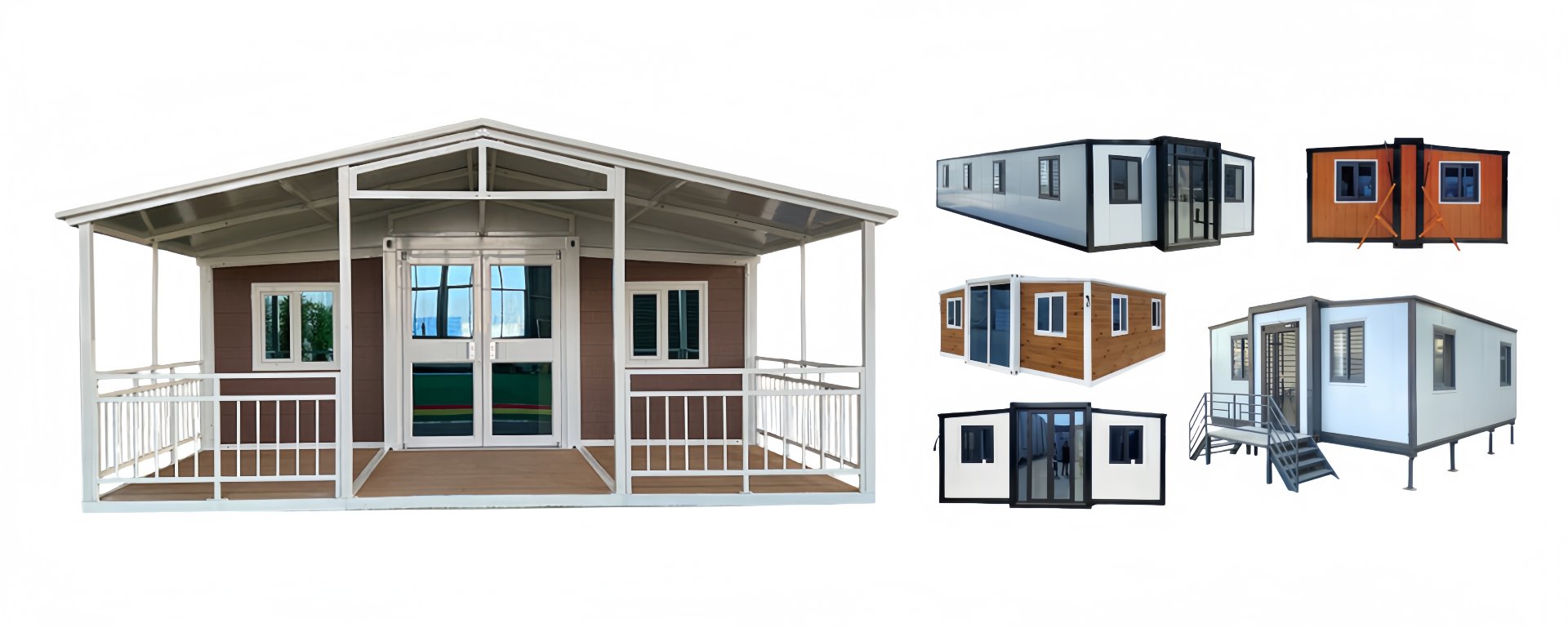
HG Prefab foldable expandable container homes — built to last, delivered worldwide.
Property tax is the one cost that arrives every year after the build is finished, and for a container home it is also the least predictable, because the rules were written for houses that never move. Whether your unit is taxed like a site-built home, like a caravan, or like a piece of equipment depends on a handful of physical facts: what it sits on, what it is plugged into, who owns the ground beneath it, and how it is registered. Get those facts right at the design stage and the annual bill is usually modest and stable. Get them wrong and you can face a back assessment, a penalty, or an appeal you will struggle to win. This guide explains how assessors classify container homes, how assessed value is calculated, what the regional differences look like, and which savings are legitimate.
Disclaimer: This article is general information only and is not tax, legal or financial advice. Classification rules, exemptions, rates and filing deadlines vary by country, state, province, county, municipality and even by school district. Always confirm your position in writing with the local assessor, tax authority or a licensed adviser before you build, import or file.
How a Container Home Gets Classified
Almost every tax system recognises three broad categories, and the category matters far more than the building material. A steel box on a slab is taxed like a house; the same box on blocks with a temporary power cord is often not.
Real property (immovable / real estate)
Real property means the dwelling is treated as part of the land. It is added to the parcel as an improvement, assessed together with the land, and billed to the landowner on the ordinary annual cycle. This is the normal outcome when the unit sits on a permanent foundation, is connected to municipal water, sewer and power, and is intended to stay. The practical consequence is that the value of the home follows the local housing market, and that financing, resale and insurance all become easier because lenders and insurers recognise the asset class.
Personal property (movable / chattel)
Personal property is taxable property that is not land. Classic examples are vehicles, boats and business equipment, and in many jurisdictions a dwelling that has not been affixed to the ground falls into the same bucket. Personal property is typically assessed on a depreciating schedule or on a declared value, reported on an annual return, and billed separately from any land tax. The annual amount is often lower than the real-property equivalent, but the trade-offs are real: personal-property classification can complicate a mortgage, and some insurance products are priced or underwritten differently for a movable dwelling.
RV, manufactured housing or caravan class
A third path exists where the unit is registered as a recreational vehicle or manufactured home. In that case the recurring charge is usually a registration or excise fee rather than an ad valorem property tax, sometimes with a separate annual personal-property listing. This route is only available where the unit genuinely meets the relevant vehicle or manufactured-home standard, and those standards commonly require brakes, lights, a chassis or a recognised certification plate. A cargo container converted into a fixed dwelling rarely qualifies, so treat this category as exceptional rather than as a planning assumption.
What Actually Decides the Classification
Assessors do not read your intentions; they look at evidence. Five factors carry most of the weight, and they are worth designing around deliberately.
- Foundation type. A permanent concrete slab, frost-protected footings or a full perimeter foundation signals permanence. Piers, blocks, screw piles or a skid base that can be unbolted and removed signals the opposite. This single factor decides more cases than any other.
- Permanent utility connections. A metered water service, a sewer or septic connection permitted in the owner's name, and a permanent electrical service on a pole or underground feed all point to real property. A generator, a rainwater tank, a composting toilet and an extension cord point to temporary use. Off-grid does not mean untaxed, but it does keep the movable argument alive.
- Land ownership. If you own the parcel, the assessor can simply add the improvement to it. If you lease, the analysis changes completely, because the authority has to decide whether the structure belongs to the landowner or to the occupant.
- Registration and title. A vehicle title, a manufactured-home certificate or a transport registration pushes the unit toward the movable categories. Removing a unit from a vehicle register, or never titling it, is often the cleanest way to avoid a duplicate levy.
- Permits and declared use. A building permit describing a permanent dwelling, a certificate of occupancy, and a stated intent to occupy year-round are all evidence of real property. A temporary or seasonal permit supports a lighter classification. Keep your permit file and your tax file consistent, because contradictory paperwork is what triggers audits.
How Assessed Value Is Calculated
Where a container home is taxed as real property, the arithmetic is the same as for any house. The assessor establishes a market or cost value for land plus improvement, applies an assessment ratio where one exists, and multiplies the resulting assessed value by the local rate, often expressed as a millage rate or as a rate per hundred units of value. The rate itself is set by the overlapping taxing authorities that cover the parcel, so two identical units a few kilometres apart can carry noticeably different bills.
Three things usually keep the number modest relative to a conventional house of the same footprint:
- Size. A 20FT unit covers roughly 14 m² of floor area and a 40FT about 28 m², against a typical family home of 150–250 m². Assessment tracks floor area and finish quality, so a compact dwelling lands in a lower band.
- Cost basis. Where the cost approach is used, the declared build cost is the starting point. A folding unit is factory-produced, and its invoice is a clear, defensible figure.
- Comparables. In an area with few container homes, assessors frequently compare to small site-built houses or to modular units, which produces a value at or slightly below the small-house band rather than a premium.
Do not assume a discount, however. Assessors in some districts value unusual structures conservatively high because there are no comparables, and a high-specification interior, a deck, a carport and outbuildings all add value. The honest expectation is a bill at or below that of a comparable small site-built home in the same district, with the spread depending entirely on the jurisdiction.
Three Placement Scenarios Compared
The table below summarises the patterns most owners encounter. Treat it as a starting point for a conversation with your assessor, not as a rule.
| Placement scenario | Typical classification | Assessment basis | Tax burden level |
|---|---|---|---|
| Movable on piers or blocks, no permanent water, sewer or power connection | Personal property, or RV / manufactured class if the unit is registered as a vehicle | Depreciated or declared value of the unit, sometimes a flat schedule or annual registration fee | Lowest of the three; often an annual fee rather than an ad valorem levy, but requires a declared-use filing |
| Permanent slab or footings on land you own, connected to municipal water, sewer and power | Real property, added to the parcel as an improvement | Market or cost value of land plus dwelling, multiplied by the local rate or millage | Highest of the three, but typically at or below a comparable small site-built home of similar area and finish |
| Installed on leased land with the landlord's written consent | Varies: real-property improvement taxed to the landowner, personal property taxed to the occupant, or a leasehold assessment | Set by the lease terms and local statute; the assessor determines who is named as taxpayer | Wide range; sometimes passed through in rent instead of billed directly, so confirm in the lease |
Regional Snapshot
United States
Property tax in the US is set at state and county level, and the spread is wide. Effective rates run from well under one percent of value in some states to several times that in others, and within a state the county, city, school district and special districts each levy their own portion. Homestead exemptions, owner-occupancy credits and senior or veteran reliefs are common, and several states cap annual assessment growth. Two practical notes: an increasing number of states have specific statutes for tiny houses on foundations, which generally push them into real property; and where a unit is titled as a vehicle, the annual registration fee replaces part of the property levy but does not exempt the land. Because a container home can also be treated as an accessory dwelling unit, check whether the district taxes ADUs separately or folds them into the main dwelling value.
Canada
Canada has no national property tax. Municipalities and provincial authorities levy an annual tax based on an assessment roll, with values produced by a provincial assessment body in several provinces and by municipal assessors elsewhere. Rates are expressed per hundred dollars of assessed value and vary substantially between municipalities. Separately, the goods and services tax and provincial sales tax apply to the purchase or import of the unit, and some provinces offer rebates for qualifying new residential construction. A container home intended as a permanent residence is normally added to the roll once it is affixed to land, so budget for both the transactional tax on purchase and the recurring municipal levy.
Australia
Australian owners deal with council rates, levied by the local council on the valuation of the land, plus state-based land tax in some circumstances. Councils generally rate land value rather than building value, which is a meaningful advantage for a small dwelling: improving a parcel with a compact home does not necessarily raise the rate bill by much, although a revaluation can follow a significant improvement. Where a dwelling is genuinely movable and used as a caravan, registration and caravan-park rules may apply instead. Stamp duty or transfer duty on the land purchase is a separate transactional cost, and goods and services tax applies to the sale of new residential premises in certain cases.
Europe
European practice is country-specific and often municipality-specific within a country. Some systems tax the cadastral value of land and buildings, others tax rental value, and several apply a notional value that has not been updated for years, which produces surprisingly low bills for modest dwellings. Where a structure is classified as mobile or temporary, it may fall outside the cadastral register altogether, but that usually comes with planning restrictions on permanent occupation. Import VAT, registration duties and energy-performance requirements add further layers. The reliable approach is to ask the local tax office, in writing, whether the unit will be entered in the property register and on what basis.
Legitimate Ways to Lower the Bill
Savings come from claiming what you are entitled to and from being assessed on the correct basis. Deliberate under-reporting is not a strategy: it risks penalties, back taxes and a difficult resale.
- Homestead or principal-residence exemption. Where the unit is your primary residence, most jurisdictions offer an exemption or credit that reduces taxable value. These almost always require an application and a deadline, so file early in the first year.
- Agricultural or open-space classification. If the parcel is genuinely used for farming, grazing or forestry, a preferential valuation can reduce the taxable value of the land substantially. The use test is real: a hobby garden will not qualify, and converting land out of the classification can trigger a rollback charge.
- File accurately and on time. A personal-property return that declares the unit honestly, at its depreciated value, is usually cheaper than an unreturned item discovered later and assessed at full value with penalties.
- Keep the assessment consistent with reality. If your unit is movable and unconnected, make sure the assessment record says so, with photographs, the foundation detail and the utility status documented.
- Appeal with evidence. If the assessed value exceeds comparable small dwellings or the documented cost of the build, most jurisdictions allow an appeal within a fixed window. A commercial invoice, a build-cost breakdown and local comparables are the evidence that wins these cases.
- Claim reliefs you qualify for. Senior, veteran, disability, low-income and energy-efficiency reliefs exist in many districts and are frequently unclaimed simply because nobody applied.
Import and Self-Build Pitfalls
Importing a unit creates two separate tax events that owners routinely confuse. The first happens at the border: customs duty, import VAT or goods and services tax, and any excise or anti-dumping charge, calculated on the declared customs value including freight and insurance. The second happens every year afterwards: the local property or municipal tax, which is set by the assessor and has nothing to do with the import paperwork. Paying one does not settle the other.
The paperwork discipline is simple and worth the effort. Keep the commercial invoice, the bill of lading or waybill, the packing list, proof of payment, the certificate of origin and the customs entry, stored together and permanently. Those documents establish the declared customs value, support the cost basis if the assessor asks how much the dwelling cost, and are the first thing requested in an audit or an appeal. For a self-build, keep a dated cost ledger with supplier receipts for the shell, the fit-out, the foundation and the utility connections, and photograph the foundation before it is covered.
Container Homes on Leased Land
Leasing the ground is a common way to place a container home quickly, and it changes the tax question in three ways. First, the authority has to decide who is the taxpayer: in many jurisdictions a structure that is affixed to land becomes part of that land and is assessed to the landowner, who may then pass the cost through in the rent. Second, where the occupant is assessed directly, it is usually as personal property, with the occupant filing the return. Third, the lease itself allocates the burden between the parties, and that allocation is enforceable between landlord and tenant even though it does not bind the tax authority.
Before signing, read the lease for a tax clause, ask who has been filing for the site historically, and get the arrangement in writing. If the rent already includes a rates or tax component, make sure it is stated as a fixed amount rather than an open-ended pass-through. Where a longer-term arrangement is available, a registered leasehold or a land-lease community structure can give a more predictable outcome than an informal month-to-month agreement. Our land lease guide covers the commercial terms in detail.
What the Unit Costs and How It Arrives
Tax planning is easier when the acquisition cost is clear and documented. HG Prefab folding expandable container houses are supplied factory-finished and flat-packed, with list pricing in the following bands depending on size and specification: 20FT $7,200–$9,800; 30FT $10,500–$14,500; 40FT $12,500–$16,500. Because the unit ships folded, a single truck carries a complete dwelling, and the invoice you receive is the document that supports both the customs value and any later cost-based assessment. See the 20FT model or the full product range for dimensions and layouts.
Installation is quick, which matters for tax timing because it fixes the date the structure exists on the parcel. Yes — a crane or forklift is required to offload the folded unit from the truck. Once it is set in position, four workers can unfold and assemble the main structure in about 2 hours, after which the foundation connection, plumbing and electrical hookup are completed by the relevant trades. If your aim is a personal-property or movable classification, tell your sales engineer before production: pier plates and a non-permanent base can be prepared at the factory far more cheaply than they can be retrofitted after a slab has been poured.
Need a folding container house?
Henan Huangang Machinery Equipment Co., Ltd. manufactures 20FT, 30FT and 40FT folding expandable container houses for permanent foundations and for relocatable pier-mounted installations, with full commercial invoices and export documentation for customs and assessment records. Email hgmechequip@gmail.com or WhatsApp +86 191 0388 7380 for a specification and a quote.
Browse modelsFrequently Asked Questions
Do container homes pay property taxes like site-built houses?
Once a container home sits on a permanent foundation on land you own and is connected to permanent utilities, most assessors treat it as real property and tax it like a small site-built house, using an assessed value multiplied by the local rate. A unit that stays movable and unconnected may instead be listed as personal property or as a recreational vehicle, which is usually assessed on a depreciating schedule rather than on market value.
Do I pay property tax if my container home is off-grid or on piers?
Often the annual bill is lower, but rarely zero. Off-grid status does not remove the land from the tax roll, and many jurisdictions still list an unconnected dwelling as personal property, as a structure improvement, or as a registered vehicle with an annual fee. Ask the assessor in writing which category applies before you rely on a zero-tax assumption, and keep the answer with your permit file.
What taxes do I pay when importing a container home?
Import charges and holding taxes are two separate bills. At the border you normally pay customs duty, import VAT or GST and any anti-dumping or excise amount, calculated on the declared customs value plus freight and insurance. After installation you pay the annual local property or municipal tax, which is set by the assessor and not by the import paperwork. Keep the commercial invoice, bill of lading, packing list and payment records, because they are the evidence for both the customs value and any later appeal.
How is the unit delivered and installed?
Yes — a crane or forklift is required to offload the folded unit from the truck. Once it is set in position, four workers can unfold and assemble the main structure in about 2 hours, after which the foundation connection, plumbing and electrical hookup are completed by the relevant trades.