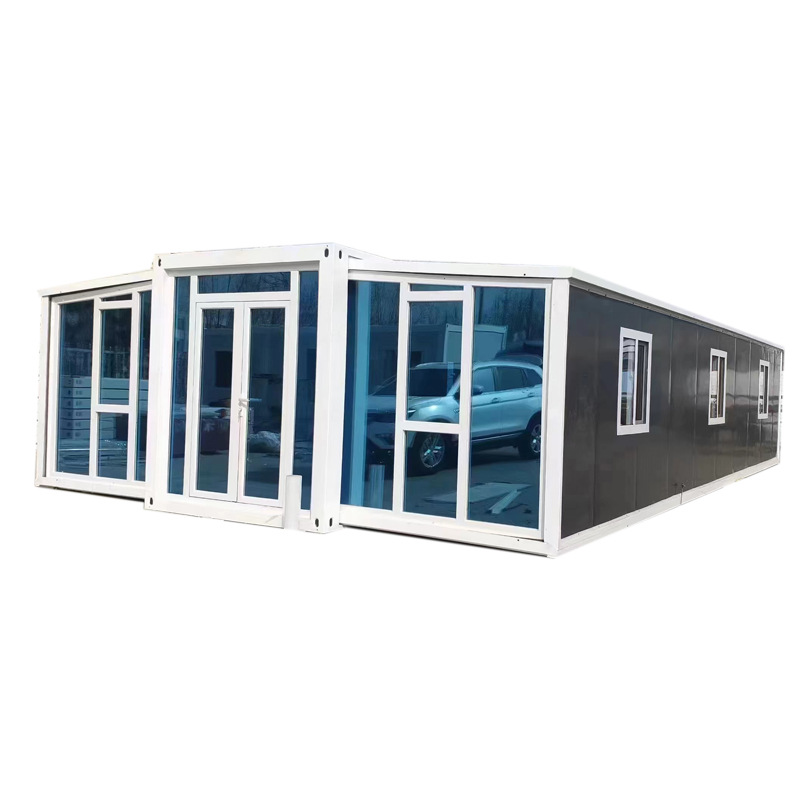
HG Prefab foldable expandable container homes — built to last, delivered worldwide.
A folding container home solves the hardest part of the housing puzzle — the building itself — but it does not come with ground underneath it. For a growing number of buyers the answer is to lease the land rather than buy it, and in most markets that is the cheapest route to a legal, serviced address. It is also the route with the most paperwork, because you are signing a contract about a structure that can be folded up and driven away while sitting on someone else's real estate. This guide covers the four things that decide whether a land lease works: zoning, the lease clauses, the costs nobody advertises, and the site works and offloading that happen on day one. Every HG Prefab unit, whether a 20FT, 30FT or 40FT model, is designed to be relocatable, which is exactly what makes a lease viable — and exactly why the paperwork matters.
Why Leasing Land Often Beats Buying It
Land is usually the largest single cost in a small-house project and the least flexible. Leasing changes both:
- Capital goes into the house, not the dirt. A serviced rural parcel can cost more than the home. Leasing keeps your money in the asset you can take with you.
- Speed. Closing on land takes months. A signed lease plus a building permit can be done in weeks, and a folding unit ships folded so the structure arrives in one truck.
- Mobility. Folding container homes are relocatable by design. A lease lets you move when a job, a family situation or a zoning change makes staying unattractive.
- Test before you commit. A two-year lease tells you far more about a location — wind, drainage, neighbours, winter access — than any site visit.
- Credit and financing. Because the land stays with the owner, many buyers fund the unit through personal or chattel finance rather than a mortgage; see our container home financing guide for how lenders treat a relocatable unit.
The trade-off is tenure risk. A lease can be terminated, sold or re-zoned under you, and everything you bolt to the pad is exposed. That is what the clauses below are for.
Step 1: Zoning and Permit Checks Before You Sign
Never let a landlord's assurance substitute for a written answer from the planning office. Ask the authority these questions with the parcel number in hand, and keep the replies in the lease file.
What the zoning district actually allows
Confirm in writing that the parcel permits a dwelling or an accessory dwelling unit, and whether a container-based or relocatable structure is acceptable. In agricultural and rural-residential districts the answer often depends on whether the unit is classed as a permanent dwelling, a temporary dwelling, a manufactured home, or a storage structure. That classification drives everything downstream — permit path, tax treatment, and whether you may connect to the sewer.
Temporary versus permanent classification
Some districts issue a temporary dwelling permit for 6–24 months, renewable while a permanent home is being built; others will not. If your plan is long-term, look for a district that allows the unit as a permanent dwelling, or as an ADU behind an existing primary residence — the backyard ADU route is the most widely accepted path in suburban areas.
Setbacks, easements and flood lines
Check front, side and rear setbacks (commonly 3–10 m), utility easements where you may not build at all, and the flood or drainage designation. A parcel that ponds after rain will cost you more in site works than the lease saves. Our container home permit guide lists the documents most planning offices ask for.
Services and access
Confirm the legal right to connect power, water and sewage, whether a septic permit is available, and that the access road can carry a delivery truck and a crane. Steep or soft driveways are the single most common cause of a failed delivery day.
Step 2: Lease Clauses That Decide Whether the Deal Works
A standard residential or agricultural lease is written for tenants, not for people who bring a building. Add these clauses or the deal will fail at the worst moment.
Term length, renewal and notice
A folding container home has a service life measured in decades, so a 12-month rolling lease is a poor match. Ask for an initial term of 3–5 years with at least two renewal options, and a minimum notice period of 12 months for non-renewal by the landlord. That window is what you need to arrange a new parcel, permits and a move.
Rent, escalation and deposit
Fix the rent for the initial term or cap escalation at a published index. A clause permitting an open-market rent review every year turns your housing cost into an unhedged variable. Deposits for land leases are typically one to three months.
Who owns the improvements
This is the clause that protects your asset. The lease must state that the container home, its deck, its solar array and its interior fit-out are tenant-owned personal property (a trade fixture), not fixtures of the land; that you may remove them at any time during or at the end of the term; and that you are responsible only for repairing damage caused by removal. Without it, a structure bolted to a concrete pad can be claimed by the landowner as part of the real estate, and you will be arguing about it with no leverage.
Assignment, subletting and lender access
Insist on the right to assign the lease to a buyer of the unit, and on the landlord's written acknowledgement to any lender that holds a security interest in the home. If you ever want to sell — and resale value is a real consideration, as our resale value guide shows — an unassignable lease makes the home unsellable on that site.
Access, insurance and restoration
Define the landlord's right of entry (reasonable notice, except emergencies), confirm who insures what, and cap your restoration obligation. Also add a clause allowing you to place the unit on screw piles or a gravel pad rather than a permanent slab if the planning classification depends on relocatability.
| Factor | Leasing land | Buying land |
|---|---|---|
| Upfront cash | 1–3 months rent + deposit | Full parcel price, often exceeds the home cost |
| Time to occupancy | Weeks, subject to permits | Months, plus closing and survey |
| Tenure security | Contract term only; landlord may decline renewal | Permanent, subject to law and taxes |
| Mobility | High — move at end of term | Low — you sell the land too |
| Appreciation | None on the land; the home still holds value | Land and home both appreciate |
| Best for | First home, pilot project, seasonal or work-linked use | Permanent residence, multi-unit or family compound |
Step 3: The Hidden Costs Nobody Puts in the Advert
Ground rent is the visible number. The costs that break budgets are the one-off items below, and they usually total more than the first two years of rent combined.
| Cost item | Typical range (USD) | Who usually pays | Notes |
|---|---|---|---|
| Ground rent | $150–$900 / month | Tenant | Higher inside city limits or in a serviced park |
| Lease deposit | 1–3 months rent | Tenant | Refundable; confirm the conditions in writing |
| Container unit | 20FT $7,200–$9,800; 30FT $10,500–$14,500; 40FT $12,500–$16,500 | Tenant | From Henan Huangang Machinery Equipment Co., Ltd. (HG Prefab), folded for export |
| Freight and import | $1,200–$6,000 | Tenant | Varies by port, container sharing and duties |
| Site works and pad | $1,500–$8,000 | Tenant | Gravel pad, screw piles or slab; see the foundation comparison |
| Crane or forklift offload | $400–$1,800 | Tenant | Half-day hire is typical; access road condition drives the price |
| Utility hookups | $2,000–$10,000 | Split | Power trench, water line, septic or sewer connection |
| Permits and inspections | $500–$4,000 | Tenant | Building, electrical, plumbing, septic |
| Insurance | $300–$1,200 / year | Tenant | Non-standard structure; declare it as a relocatable unit |
| Removal at end of term | $1,000–$4,000 | Tenant | Crane, truck and pad restoration — budget for it from day one |
Step 4: Site Works, Delivery and Installation
Sequence the site work so the offload is the only thing that has to happen on delivery day. Cut the pad, run the service trench and set the anchor points first, then bring in the unit.
- Pad: a compacted gravel pad or screw piles keep the home relocatable and satisfy most temporary-structure classifications; a poured slab is more comfortable but signals permanence to both planners and the landlord.
- Access: verify the gate width, the turning circle and the ground bearing along the route. A crane needs firm, level ground within reach of the pad.
- Offloading: Yes — a crane or forklift is required to offload the folded unit from the truck. Once it is set in position, four workers can unfold and assemble the main structure in about 2 hours. Plan the crane and the crew for the same half-day, and tell your sales engineer in advance where the unit will sit so the electrical inlet, water inlet and drain outlets are factory-positioned on the correct side.
- Services: complete the electrical, plumbing and any gas connections after the structure is up; see the plumbing and electrical hookup guide for typical connection details.
- Anchoring: tie the unit down to the pad or piles on the same day, especially on exposed sites — our wind load rating guide explains how anchoring affects the rating.
Negotiation Checklist and Red Flags
Before signing, work through this list. Every item is cheap now and expensive later.
- Written zoning confirmation from the planning office naming the parcel and the structure type.
- Improvements clause declaring the unit tenant-owned personal property with a right of removal.
- Assignment clause allowing you to transfer the lease with the sale of the home.
- Term and notice long enough to recover your site works: three years minimum, twelve months' notice.
- Red flag: the landlord will not put the right of removal in writing.
- Red flag: the parcel is inside a flood plain or a utility easement.
- Red flag: rent review at "open market" every 12 months.
- Red flag: no written consent for utility connections or for a septic permit.
- Red flag: an access road that cannot carry a delivery truck — get it in writing that you may upgrade it, or walk away.
Community-scale projects face the same questions multiplied by unit count; if you are planning more than one home on leased ground, read the container tiny home park guide and browse the full model range to size the site properly.
Frequently Asked Questions
Can I legally place a folding container home on leased land?
Usually yes, but only where the zoning district allows a dwelling or an accessory dwelling unit and the local code recognises a relocatable or manufactured structure. Get the answer in writing from the planning office and attach it as a condition of the lease before you sign, because a container home that arrives on a parcel where dwellings are prohibited will be treated as an illegal structure regardless of what the landlord told you.
How is a folding container home delivered and installed on leased land?
Yes — a crane or forklift is required to offload the folded unit from the truck. Once it is set in position, four workers can unfold and assemble the main structure in about 2 hours.
Who owns the container home when the lease ends?
You do, provided the lease defines the unit as tenant-owned personal property or a trade fixture rather than a fixture of the land. The clause should state that the home remains your chattel, that you may remove it at any time, and that you are responsible for repairing any damage caused by removal. Without that wording, a home bolted to a pad can be claimed by the landowner as a fixture of the real estate.
How much does it cost to lease land for a container home?
Ground rent in most markets runs from about $150 to $900 per month for a rural or peri-urban parcel with services, and more inside city limits. Budget separately for the one-off costs: the unit itself at 20FT $7,200–$9,800, 30FT $10,500–$14,500 or 40FT $12,500–$16,500, plus site works, utility hookups, permits and crane time, which together usually match or exceed the rent of the first two years.
Need a folding container house?
Contact HG Prefab on WhatsApp +86 191 0388 7380 or email hgmechequip@gmail.com for a fast quote.