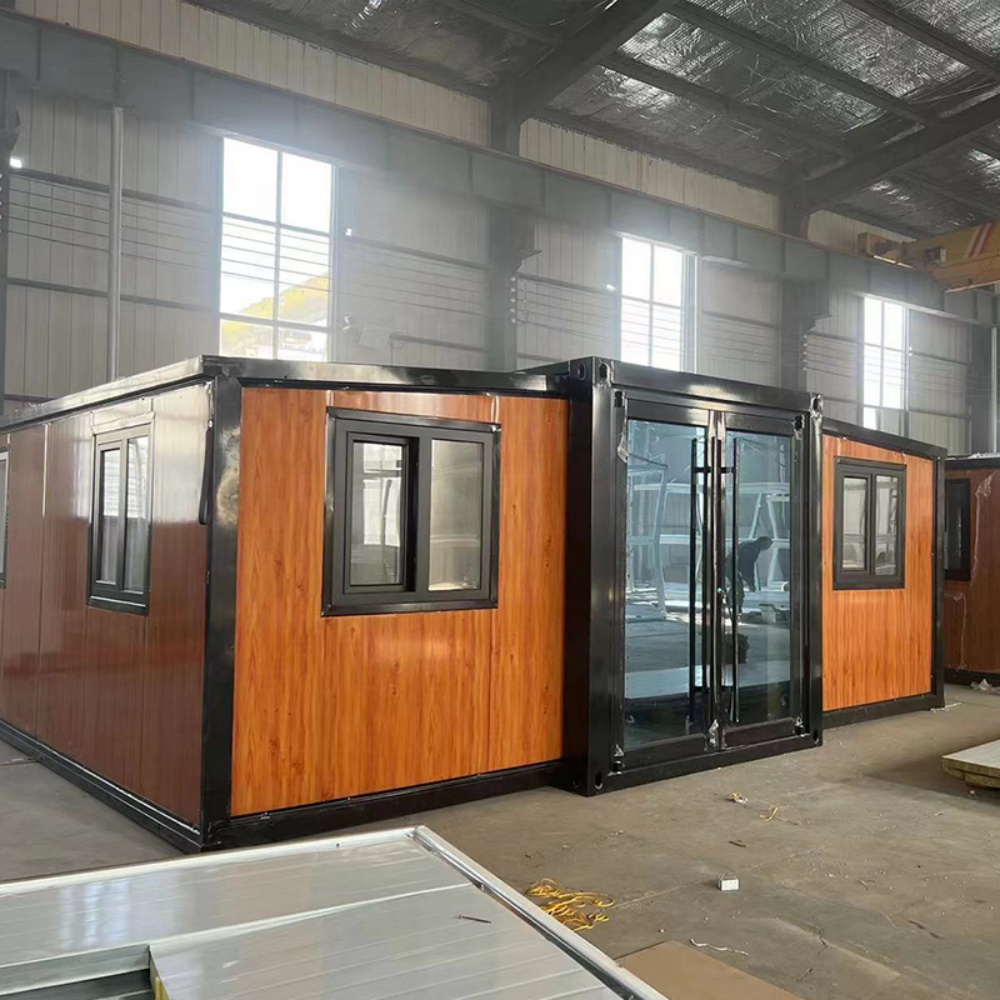
HG Prefab foldable expandable container homes — built to last, delivered worldwide.
Every HG Prefab folding container house leaves the factory with a weather-tight steel roof that already sheds rain. So why do buyers add another roofing material? Because the roof is the single largest surface exposed to sun, wind and hail, and it shapes energy cost, noise, appearance and comfort for the life of the building. This guide compares the four roofing families most often specified on 20FT, 30FT and 40FT folding container homes — standing seam metal, TPO/EPDM membrane, asphalt shingles and living green roofs — across lifespan, cost per m², weight, climate suitability and maintenance.
Start With the Roof Your Folding Container Home Already Has
Before comparing upgrades it is worth stating what ships standard. The factory-galvanized, color-coated steel roof panel on an HG Prefab folding expandable unit is the same corrosion-protected steel as the walls, pressed with the mono-pitch or gently curved profile needed to drain water while the unit stays foldable. Because the roof is load-bearing and integral to the folding mechanism, it is not a substrate you can freely nail into. Any additional roofing material is an overlay, added either over the standing unit or as part of a secondary gable frame.
That constraint shapes every option in this guide. The choice is never "steel versus something else" — it is "what sits on top of the steel, if anything, and what added weight and structure does it bring?".
Your budget starting point is the model price itself: a 20FT folding container home runs $7,200–$9,800, a 30FT $10,500–$14,500, and a 40FT $12,500–$16,500. Roof upgrades are quoted on top of that, per square metre of added roof.
The Four Roofing Families Compared
1. Standing Seam Metal
Standing seam metal is the closest match to what the folding container already provides, and the most common upgrade on HG Prefab homes. Panels are locked together with raised seams held by concealed clips, so there are no exposed fasteners to leak. It is supplied in steel, zinc or aluminum.
- Lifespan: 40–60 years with a good coating.
- Weight: 6–10 kg/m², light enough to add over the base roof without frame changes on most units.
- Best climates: anywhere with hail, snow, high wind or bushfire exposure. Cool-roof (light-coloured) coatings cut heat gain in hot regions.
- Cost: $25–$55 per m² installed.
- Maintenance: almost none beyond an annual check of seams and gutters.
If the base steel already looks metallic, the upgrade is mostly about profile, colour and the thermal break of an insulated batten layer underneath.
2. TPO and EPDM Membrane
Single-ply membranes are the default on lightweight flat roofs and make sense where a container home roof is left flat or near-flat. TPO is heat-welded and highly reflective, excellent in hot sun; EPDM is a flexible black rubber sheet, cold-tolerant and simple to glue down.
- Lifespan: TPO 20–30 years; EPDM 25–35 years.
- Weight: very low, about 1.5–3 kg/m², plus any cover board.
- Best climates: TPO for hot and sunny regions, EPDM for cool and damp regions. Both perform on low slopes, which suits the container's drainage geometry.
- Cost: $20–$45 per m² installed.
- Maintenance: inspect seams and flashings yearly; TPO needs care with some solvents.
Membrane is the lightest way to add a sealed, waterproof skin and can be combined with a rigid insulation board to lift R-value without much weight.
3. Asphalt Shingles
Asphalt shingles are the classic residential roof — affordable, familiar and easily repaired. They suit folding container homes only when laid on a secondary gable roof or a timber deck built above the steel, because the steel panel cannot take shingle nails.
- Lifespan: 20–30 years for architectural shingles.
- Weight: about 9–13 kg/m² plus the timber deck below it.
- Best climates: temperate residential zones where neighbours match; poor choice in extreme heat and hail.
- Cost: $15–$35 per m² installed, cheapest of the four.
- Maintenance: replace damaged tabs after storms; clear algae on shaded slopes.
See our roof options guide for how a shingled gable add-on roof is framed and tied into the folding unit.
4. Green (Living) Roofs
A green roof plants sedum or grasses in a layered build-up over a waterproof membrane. It is the standout choice for aesthetics, stormwater retention and thermal moderation, and pairs naturally with a container-home rainwater system that can irrigate it from the tank.
- Lifespan: membrane 25–40 years when protected; plant layer matures in 1–2 seasons.
- Weight: extensive (shallow) systems 80–150 kg/m² saturated — heavy, so structure must be verified.
- Best climates: temperate and coastal zones with reliable rain; needs irrigation or drought-tolerant planting in arid regions.
- Cost: $90–$180 per m² installed, the highest of the four.
- Maintenance: weeding and membrane checks twice a year; irrigation in dry spells.
For the full planting and build-up detail, read our green roof on container homes guide.
Head-to-Head Comparison Table
| Roofing material | Lifespan | Cost per m² (installed) | Added weight | Climate suitability | Maintenance |
|---|---|---|---|---|---|
| Standing seam metal | 40–60 years | $25–$55 | 6–10 kg/m² | Hail, snow, high wind, bushfire; cool-coat for heat | Very low — annual seam and gutter check |
| TPO / EPDM membrane | 20–35 years | $20–$45 | 1.5–3 kg/m² | TPO for hot sun; EPDM for cool, damp, low slope | Low — inspect seams and flashings yearly |
| Asphalt shingles | 20–30 years | $15–$35 | 9–13 kg/m² + deck | Temperate residential; poor in extreme heat and hail | Moderate — replace storm-damaged tabs |
| Green (living) roof | Membrane 25–40 yrs | $90–$180 | 80–150 kg/m² | Temperate, coastal, reliable rain; irrigation needed in arid zones | Moderate — weed, check membrane, irrigate |
How Weight Changes Your Folding Container Decision
Weight is the variable buyers underestimate most. A folding container home is engineered around a roof that must fold, ship and stack, so adding a heavy roof changes more than looks — it changes the load on the corner posts, the base rails and the folding hinges.
As a rule of thumb:
- Up to about 10 kg/m² (standing seam metal, membrane with board) adds over the existing steel with no structural review for most units.
- 10–50 kg/m² (shingles with timber deck) is fine on an installed, braced unit, but should be tied into the roof frame rather than hung off the steel skin.
- Above 50 kg/m² (a saturated green roof) requires an engineering check of the roof live-load rating before committing.
HG Prefab engineers can confirm the specific load rating for your unit size at order time. If you plan a rooftop deck or planters as well as a roof material, review the combined load — see our rooftop deck guide.
Climate Fit: Matching the Roof to Where You Build
Hot and Sunny
Choose a light-coloured standing seam cool roof or white TPO. Both reflect solar radiation and cut cooling load on the container envelope. Avoid dark EPDM and dark asphalt, which absorb heat and push up air-conditioning demand.
Snow and Ice
Standing seam metal is ideal because snow slides off clean seams; add snow guards to protect people below. Membranes need a stable low slope and should not have ponding water freeze against them. Shingles can suffer ice-damage along the eaves.
High Wind and Cyclones
The factory steel roof is already the strongest wind performer. A secondary standing seam roof with concealed clips is the only upgrade that does not create new wind-lift points. Membrane requires ballast or adhered systems engineered for uplift.
Hail
Metal handles most hail; green roofs absorb impact entirely; asphalt shingles can bruise or crack in severe hailstorms.
Pairing a New Roof With Drainage and Rainwater Harvesting
A changed roof changes how water behaves on the container. Metal and membrane roofs shed rain cleanly and are excellent catchment surfaces; green roofs hold and filter water and slow its release. If you already collect rainwater, pick a roof that keeps gutter water clean:
- Metal and TPO shed clean water but warm it in summer — fine for garden use.
- Green roofs filter runoff and delay it, which pairs well with a smaller downpipe and first-flush diverter because peak flow drops.
- Shingles shed fine grit that must be filtered before the tank.
Plan gutter size around the new catchment. Our rainwater harvesting and roof drainage guide walks through gutter sizing, first-flush diverters and tank placement for each roof type.
What It Costs to Buy and Install
Roof pricing below is per square metre of added roof and assumes a standard two-person install over the existing base roof, excluding any gable frame you add on top:
- Standing seam metal: $25–$55 per m².
- TPO/EPDM membrane: $20–$45 per m².
- Asphalt shingles: $15–$35 per m² plus a timber deck at roughly $12–$20 per m².
- Green roof: $90–$180 per m² installed, before any structure.
Across a 20FT roof (about 14–17 m² of added roof, depending on overhang), the practical spread runs from roughly $250 for a budget shingle up to $1,500–$2,000 for a finished green roof. These are material-and-labour figures for the overlay only — confirm a firm quote with your HG Prefab sales engineer before ordering so the upgrade is factory-fitted where possible.
Assembly and Delivery Reality
A quick note on getting the unit installed so the roof work can start cleanly. Yes — a crane or forklift is required to offload the folded unit from the truck. Once it is set in position, four workers can unfold and assemble the main structure in about 2 hours. Roof overlay work then proceeds on site, or in many cases HG Prefab factory-fits the chosen roof before shipping so you receive a complete, roofed structure.
Frequently Asked Questions
What is the best roofing material for a folding container home?
For most HG Prefab 20FT/30FT/40FT units a standing seam metal roof is the best balance of lifespan (40+ years), low weight (about 6–10 kg/m²), fire resistance and near-zero maintenance. TPO membrane suits flat lightweight roofs and warm climates, asphalt shingles only fit gable add-on roofs with a firm base, and green roofs excel where aesthetics and stormwater management matter but need structural verification.
How much does a container home roof cost per square metre?
Standing seam metal runs roughly $25–$55 per m² installed over the base roof; TPO/EPDM membrane about $20–$45 per m²; asphalt shingles $15–$35 per m² over a timber deck. A living green roof is the most expensive at $90–$180 per m² installed, before structure.
Can I put an asphalt shingle roof on a folding container home?
Only on a secondary gable roof that is added over the base metal roof. The folded-unit steel roof is not a nail-able substrate for shingles, and the weight plus fasteners do not suit the sealed metal envelope. Fix a timber or OSB deck on top and shingle that instead, keeping the added weight under what the container frame allows.
How heavy is a green roof on a 40FT container home?
A saturated extensive green roof typically adds 80–150 kg/m², so about 2,300–4,200 kg across a 40FT roof. A 40FT folding unit is engineered for stacked loads, but always verify the roof live-load rating and lateral folding mechanism before adding a green roof.
Is the standard metal roof on an HG Prefab container home already finished?
Yes. Every HG Prefab 20FT/30FT/40FT folding expandable house ships with a factory-galvanized, color-coated steel roof panel that is weather-tight and ready to shed rain. Choosing an added roofing material is an upgrade for looks, insulation, or climate performance, not a requirement.
Need a folding container house with the right roof?
HG Prefab manufactures 20FT, 30FT and 40FT folding expandable container houses and can factory-fit a standing seam, membrane, shingled gable or green roof to match your climate and budget — shipped flat-packed worldwide. For quotes on models from $7,200, contact our sales team or browse the full product range.
Browse models