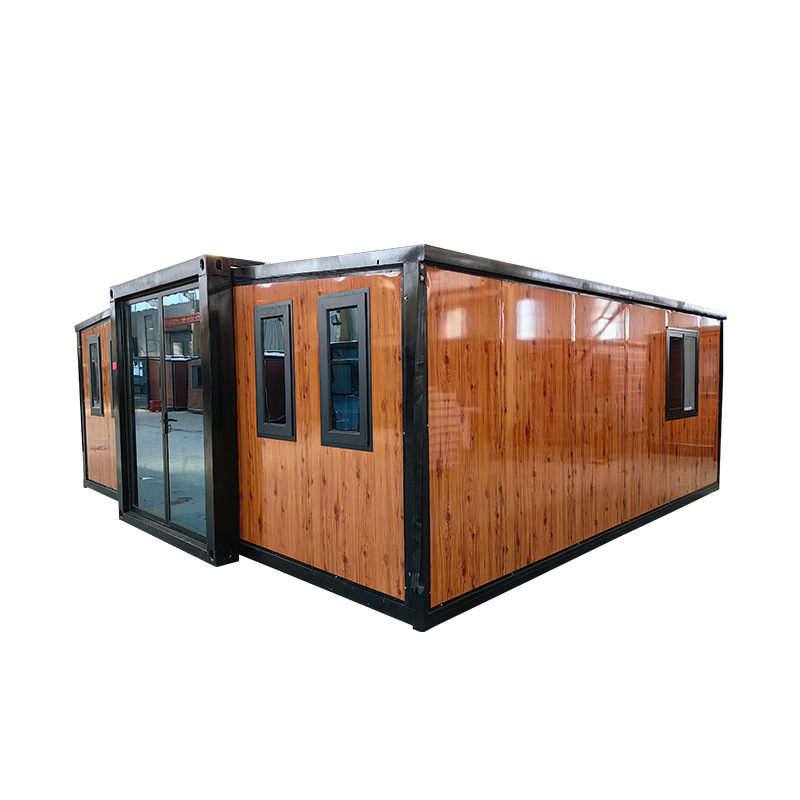
HG Prefab foldable expandable container homes — built to last, delivered worldwide.
Every farm runs out of dry, lockable, vermin-proof space long before it runs out of land. Seed, bagged feed, fertiliser, crop-protection products, hand tools, spare parts and small machinery all need somewhere that keeps rain, dust, rodents and sunlight off them — and a traditional timber or block shed is slow to build, expensive to extend and often sits empty for half the year. A folding container home solves a different version of the same problem. The same galvanized steel frame and flat-packed delivery that makes an HG Prefab unit a fast house also makes it a fast farm store: a 20FT unit is an honest tool and chemical locker, a 30FT covers feed and parts, and a 40FT shelters a compact tractor or acts as a produce handling room. This guide covers sizing, ventilation, rodent control, power, insulation, flooring, siting and budget for using a 20FT/30FT/40FT folding container home as agricultural storage or an equipment shelter.
Why Folding Container Homes Suit Farm Storage
Farm storage has requirements that a standard shed meets slowly and a folding container unit meets immediately. Four features matter most.
- Sealed steel envelope — the shell is galvanized steel with a weather-tight roof and walls, so seed, feed and chemicals stay dry without a separate moisture barrier. The locked steel door also gives a level of security that timber sheds cannot match.
- Flat-pack delivery to remote blocks — the unit ships folded to roughly 20% of its unfolded volume, so it reaches paddocks, orchard rows and hill blocks where a wide truck load or a concrete pour would be impractical.
- Relocatable and stackable — a storage unit can be moved between paddocks, rented out, sold with the property or stacked two high for a compact site. That flexibility is worth real money on a farm that is still being developed.
- Predictable internal dimensions — 20FT ≈ 5.9 × 2.45 m, 30FT ≈ 8.9 × 2.45 m and 40FT ≈ 11.8 × 2.45 m. Racking, pallets and shelving can all be planned on paper before the unit lands.
Delivery and assembly set the schedule. Yes — a crane or forklift is required to offload the folded unit from the truck. Once it is set in position, four workers can unfold and assemble the main structure in about 2 hours, so the pad, the access track and the electrical conduit should all be ready before the truck arrives.
For a general overview of the same shell used as a working space rather than a home, see our workshop and garage conversion guide.
Match the Unit Size to the Farm Job
Size is the first decision, and it is driven by the largest item the store must hold — not by the average load.
- 20FT — tools, chemicals and small parts. About 14 m² of floor space. Best for a locked chemical and seed store, a tool and spare-parts room, or a small pump and irrigation control housing. The cheapest unit and the easiest to site.
- 30FT — feed, fertiliser and general farm storage. About 21 m². Comfortable for pallet racking down both long walls with a walk lane, or bulk bags of fertiliser along one side and a workbench along the other.
- 40FT — machinery shelter and produce handling. About 28 m². Long enough for a compact tractor with an implement, a UTV plus a mower, or a produce grading and packing room with a separate clean and dirty end.
If the site will store both machinery and bagged inputs, the 30FT usually gives the best balance. If the main job is getting a tractor and implements under cover, the 40FT replaces both a machinery shed and an open carport.
Farm Storage Specs at a Glance: 20FT vs 30FT vs 40FT
The table below summarises the numbers that matter when you are planning racking, ventilation, power and access for an agricultural unit. All values assume a standard HG Prefab folding container home with a single-pitch roof and the standard 2.45 m external width.
| Parameter | 20FT | 30FT | 40FT |
|---|---|---|---|
| Internal floor area | ~14 m² | ~21 m² | ~28 m² |
| Internal width (clear) | ~2.35 m | ~2.35 m | ~2.35 m |
| Recommended door opening (W × H) | 2.0–2.4 m × 2.1 m | 2.4–3.0 m × 2.1–2.4 m | 2.8–3.5 m × 2.4 m |
| Pallet capacity (1.2 × 1.0 m, floor stacked) | 8–10 | 12–16 | 18–22 |
| Passive vents required | 2 × 200 mm louvered | 2 × 250 mm louvered | 3 × 250 mm louvered |
| Mechanical extractor (produce / chemical use) | 1 × 250 mm | 1–2 × 250 mm | 2 × 300 mm |
| Vermin mesh specification | 1.2 mm galvanised | 1.2 mm galvanised | 1.2 mm galvanised |
| Wall insulation (climate-dependent) | Optional / 50 mm | 50 mm (R-1.8–2.4) | 50–75 mm (R-2.0–3.0) |
| Roof insulation (condensation control) | 50 mm | 50–75 mm | 75 mm |
| LED lighting (5,000 K, IP65) | 2–3 fixtures | 3–4 fixtures | 4–6 fixtures |
| 230 V outlets | 2–4 | 4–8 | 6–12 |
| Recommended concrete pad | 6.0 × 2.6 m | 9.1 × 2.6 m | 12.2 × 2.6 m |
| Starting price (shell only) | $7,200–$9,800 | $10,500–$14,500 | $12,500–$16,500 |
These figures assume a temperate climate and general farm use. Add one vent size step for humid or tropical locations, and add a full vapour-control layer in the roof if the store holds grain, hay or freshly harvested produce.
Choosing the Right Store Type
Seed, Feed and Fertiliser Storage
Bagged and bulk inputs are the most common farm cargo. Keep them on pallets or a raised timber deck at least 150 mm off the floor so air can move underneath and any condensation drains away rather than soaking into the bottom bag. Keep bulk fertiliser away from seed, and keep both away from fuel and chemicals. Ventilate well: fertiliser bags release moisture and ammonium compounds that corrode steel fittings and steel racking over time. For a 30FT or 40FT, run pallet racking along both long walls with a 1.0–1.2 m walk lane between them and leave the last 1 m at the far end clear for a hand trolley turning space.
Grain, Hay and Bulk Produce
A container is a dry store, not a silo. It is suitable for bagged grain, small bulk bins, seed potatoes, onions, garlic and similar crops, but it is not a substitute for aeration-equipped bulk storage. The critical issue is moisture: freshly harvested produce respires, releases water vapour and will sweat against a cold steel roof panel. Fit a full roof vapour barrier plus 50–75 mm of roof insulation, run a 300 mm extractor with a humidity-controlled switch, and never seal a load of damp produce into the box. Add a simple thermometer-hygrometer so the operator can see conditions at a glance.
Chemical and Crop-Protection Storage
This is the use case where specification matters most. Store crop-protection products in a dedicated, lockable unit with a bunded floor tray that can contain at least 110% of the largest container, mechanical extract ventilation running whenever the door is open, an impervious washable floor, and a fire extinguisher rated for chemical fires. Keep the unit away from watercourses, bores and drainage lines, and follow local agricultural chemical storage rules — in most jurisdictions these are prescriptive about bunding, signage and separation distances. A 20FT unit is usually the right size for a single farm; a 30FT suits a contracting business that carries a wider inventory.
Machinery and Equipment Shelters
A 40FT unit gives about 28 m² of enclosed floor space, which covers a compact tractor with one implement, a UTV plus a ride-on mower, or a long bench of hand tools and spares. Confirm the widest machine against the door opening before ordering: a 2.8–3.5 m roll-up opening clears most compact tractors, but a full-size tractor or a machine with a wide loader bucket needs a custom opening or an open-sided shelter. Always specify the door position at order time — cutting a new opening on site adds steelwork cost and several working days. Browse the current HG Prefab 20FT/30FT/40FT folding container line-up for door-ready configurations.
Ventilation and Condensation Control
A sealed steel box on a farm will sweat. Moisture comes from the stored goods, from the ground, and from warm humid air condensing on a cool roof panel overnight. Plan airflow before the unit arrives.
- Passive cross-draft — two louvered vents on opposite walls, one high and one low, give continuous air movement with no power requirement. This is the minimum for any store holding organic material.
- Mechanical extraction — a 250–300 mm in-line extractor clears humidity, chemical vapour and dust. Fit a back-draft shutter so the unit stays closed when the fan is off, and always provide an equivalent-size intake louver on the opposite wall.
- Roof vapour barrier — an aluminium foil or membrane layer under the roof insulation stops warm moist air reaching the cold steel panel. This single detail prevents most condensation problems.
- Anti-condensation coating — a spray-applied anti-condensation coating on the underside of the roof panel is a low-cost alternative where insulation is not practical.
For a deeper treatment of air movement and how it pairs with insulation, see our container home ventilation guide.
Rodent, Insect and Dust Control
Rodents are the single biggest cause of losses in farm stores, and they enter through gaps you cannot see from the outside. Treat vermin exclusion as a design item, not an afterthought.
- Mesh every opening — fit 1.2 mm galvanised mesh behind vents, extractors and any opening larger than 6 mm. Rodents gnaw soft aluminium mesh within days; use steel.
- Seal penetrations — cable entries, conduit, pipework and drain runs all need a sealed collar. Expanding foam alone is not rodent-proof; back it with steel wool and a metal plate.
- Seal the door — brush or rubber perimeter seals close the gap under and around the door. Check and replace them at the start of each season.
- Clear the perimeter — maintain a 300 mm gravel or concrete apron around the unit and keep grass, hay bales and pallets away from the walls. Rodents will not cross open ground if there is no cover.
- Store off the floor — pallets or racking at least 150 mm above the floor let you inspect underneath and remove harbourage.
For insect control, keep the interior dry and clean, avoid storing spilled grain, and use sealed bins for anything edible. Dust from feed, fertiliser and grain is also a respiratory and explosion hazard at high concentration, which is a further reason to run extraction rather than rely on the door being left open.
Power, Lighting and Security
Farm stores increasingly need power for lighting, tools, battery chargers, fans, a small pressure washer or an electric fence energiser.
- Supply size — a single-phase 230 V supply at 16–32 A covers lighting, chargers and hand tools. Add a dedicated circuit for a welder, compressor or pressure washer. Confirm the supply with your electrician before ordering the unit.
- Outlets — plan 2–4 outlets for a 20FT, 4–8 for a 30FT and 6–12 for a 40FT, placed at 1.2 m height so they stay clear of stacked goods and wash-down water.
- Lighting — IP65 LED fixtures at 5,000 K give bright, cool, dust-tolerant light. Two to three fixtures cover a 20FT, three to four a 30FT and four to six a 40FT. Fit an external weatherproof light above the door for night work.
- Security — a steel container door with a quality padlock and hasp is already a strong barrier. Add a door alarm or a cellular-connected sensor for remote blocks, and consider a small solar panel with a battery to keep the alarm and a security light live where mains power is not available.
For load calculations, circuit protection and RCD selection, see our container home electrical load guide, and for fixture counts and lux targets see our lighting design guide.
Insulation and Climate Control for Farm Use
Insulation on a farm store is about protecting the contents as much as the people. Solar gain through an uninsulated roof panel can push internal temperatures 15–20 °C above ambient, which is enough to degrade seed viability, melt or separate some chemical formulations and shorten the life of rubber and plastic parts.
- Roof first — 50–75 mm of foil-faced PIR or rock wool under the roof panel is the highest-value insulation in any container. It cuts summer heat gain, stops winter condensation and is cheap compared with the losses it prevents.
- Walls second — 50 mm PIR or rock wool is enough for a store. Insulate the sunny wall fully in hot climates; the shaded wall can be left uninsulated in temperate zones.
- Floor — for a produce or packing room, lay 50 mm PIR under the slab and finish with a sealed, washable surface. For a dry bulk store, a sealed concrete pad is sufficient.
- Ventilation versus insulation — never seal a store airtight to keep heat out. Balance insulation with controlled ventilation, or condensation and mould will follow.
For a full comparison of finishes, durability and cost, see our container home flooring options guide.
Siting, Access and Permits
A farm store fails on access far more often than it fails on specification. Work through four checks before ordering.
- Truck route — the folded unit arrives on a flatbed and is offloaded by crane or forklift. Confirm the track width, surface condition and overhead clearance along the full route, plus a turning area large enough for the offloading equipment to set the unit down in one lift.
- Pad — pour a level concrete pad of about 6.0 × 2.6 m (20FT), 9.1 × 2.6 m (30FT) or 12.2 × 2.6 m (40FT), at least 100 mm thick with a single layer of mesh. A flat pad makes the unfold operation clean and the door frame plumb.
- Drainage and separation — site the unit above the local flood level, on ground that falls away from the pad. Keep chemical and fuel stores at least 20–30 m from watercourses, bores and stock water, and check local separation distances.
- Permits — a farm storage shed is usually treated as an outbuilding, but rules differ by jurisdiction and by use class. Chemical storage, fuel storage and any unit used for commercial processing usually attract stricter requirements than a simple machinery shed.
For the general permitting path — class definitions, drawings and inspection schedules — see our permits & regulations guide.
Budget: From Bare Shell to Working Farm Store
Three price bands cover most farm builds. Use them to sanity-check a quote.
- 20FT shell — $7,200–$9,800. Add $1,500–$2,600 for vents, vermin mesh, shelving, lighting and a power connection. A turnkey 20FT tool and chemical store typically lands at $8,700–$12,400.
- 30FT shell — $10,500–$14,500. Add $2,000–$3,200 for pallet racking, two extractors, insulation and an electrical fit-out. A turnkey 30FT feed and input store lands at $12,500–$17,700.
- 40FT shell — $12,500–$16,500. Add $2,000–$4,000 for a wide roll-up door, zoned lighting, racking and a machinery-ready floor. A turnkey 40FT equipment shelter lands at $14,500–$20,500.
Two decisions change the budget more than anything else: specify the door opening at order time rather than cutting it on site, and choose the pad size before the unit is manufactured. Both are free at the design stage and expensive later.
Need a folding container unit for farm storage or machinery?
HG Prefab manufactures 20FT, 30FT and 40FT folding expandable container homes with factory-prepped door openings, ventilation kits, vermin mesh and electrical packages — shipped flat-packed worldwide.
Browse modelsFrequently Asked Questions
Can a folding container home be used for agricultural storage on a working farm?
Yes. The galvanized steel frame and weather-tight shell of an HG Prefab folding container home make it suitable for seed, feed, fertiliser, chemical, tool and small-machinery storage. The units are available in 20FT (about 14 m²), 30FT (about 21 m²) and 40FT (about 28 m²), and can be fitted with ventilation, vermin mesh, shelving and power to suit farm conditions.
Does a container storage unit need ventilation on a farm?
Yes, in almost every case. Grain, feed, hay, fertiliser and damp tools all release moisture, and an unventilated steel box will sweat and grow mould within a season. Fit two louvered vents on opposite walls for a basic cross-draft, and add a 250–300 mm mechanical extractor for produce handling rooms, chemical stores or any space where people work for long periods.
How do you keep rodents and insects out of a container farm store?
Seal every opening with 1.2 mm galvanised mesh: vents, door gaps, cable penetrations and pipe entries. Fit brush or rubber door seals, keep a 300 mm clear gravel or concrete apron around the unit so rodents cannot nest against it, and store bagged feed on pallets at least 150 mm off the floor. Check the seals at the start of every season.
Can a container shelter protect tractors and farm machinery?
A 40FT unit gives about 28 m² of enclosed floor space, enough for a compact tractor with an implement, a UTV plus a ride-on mower, or a long bench of hand tools. Confirm the door opening width against the widest machine first: a 2.8–3.5 m roll-up opening clears most compact tractors, while larger tractors need an open-sided shelter or a custom opening specified at order time.
How much does an agricultural container store cost?
The HG Prefab shell starts at $7,200–$9,800 for a 20FT, $10,500–$14,500 for a 30FT and $12,500–$16,500 for a 40FT. Adding ventilation, vermin mesh, racking, lighting and a power connection typically adds $1,500–$4,000, so a turnkey 20FT farm store usually lands at $8,700–$13,000 and a 40FT equipment shelter at $14,500–$20,500.
Talk to HG Prefab
Henan Huangang Machinery Equipment Co., Ltd. (HG Prefab) manufactures folding expandable container homes in 20FT, 30FT and 40FT sizes and ships them flat-packed worldwide. For farm storage and equipment shelter projects, send us your site plan, the largest item the unit must hold and your power supply details, and we will confirm the right size, door opening and ventilation package before you pour the pad.
Email hgmechequip@gmail.com or message us on WhatsApp at +86 191 0388 7380. You can also browse the full range at products.html or request a quotation at contact.html.