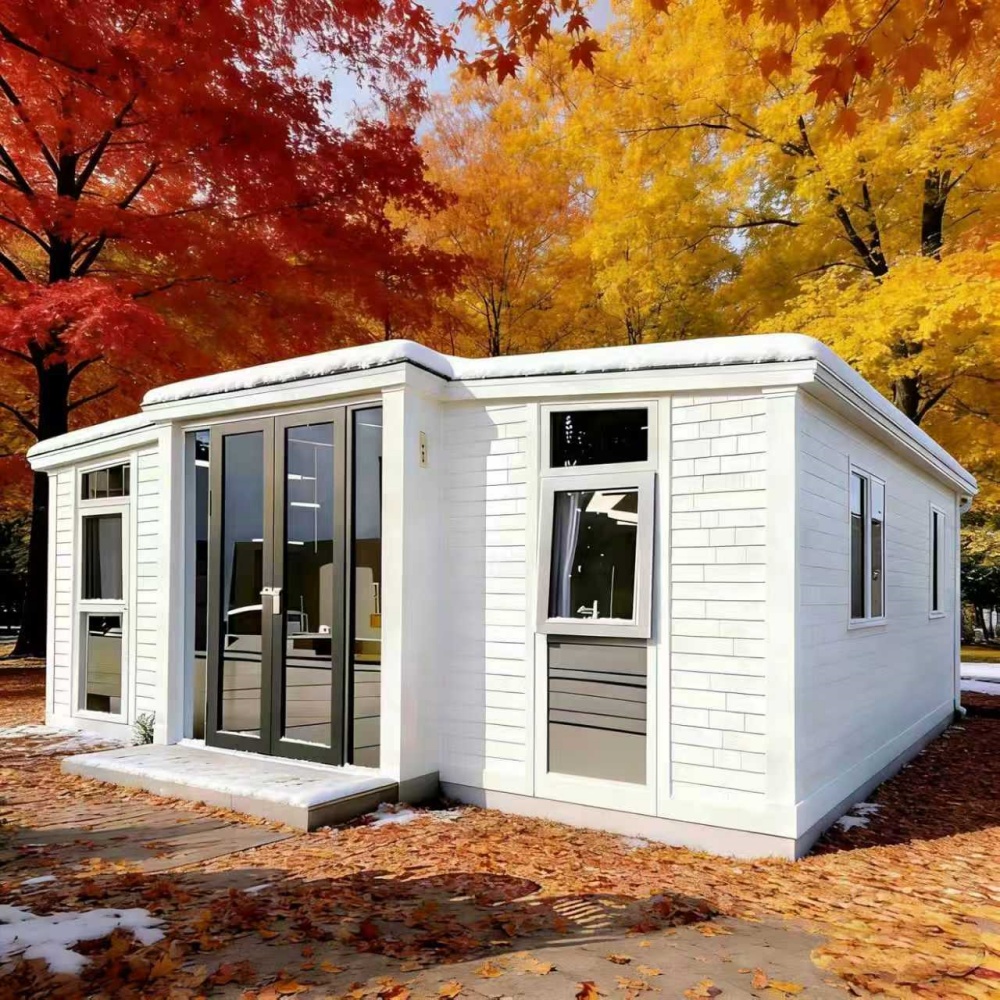
HG Prefab foldable expandable container homes — built to last, delivered worldwide.
The bedroom is where a folding container home either feels like a retreat or a cupboard. Because interior floor area is limited, the sleeping zone must be planned around three things: the bed footprint, walk-in clearance and storage volume. Done well, a container home bedroom delivers the quiet, dark, organized sleep space of a much larger house. This guide covers compact layouts, bed choices and built-in storage for 20FT, 30FT and 40FT HG Prefab units.
Planning the Sleeping Zone First
Start the whole floor plan from the bed, because it is the largest single object in the home. Three decisions drive everything else:
- Bed position — place the bed against the end wall so only two sides need walking clearance instead of three; this is the single biggest space saver in narrow units.
- Bed size — a full/double (1.35 x 1.9 m) fits most compact layouts; a queen (1.6 x 2.0 m) works when the room is at least 2.5 m across. Test both before committing.
- Head-to-toe orientation — in 20FT units, a bed running lengthwise along the wall keeps the central walkway open for the rest of the home.
If the bedroom shares space with a living area, a wall bed or partition lets the same floor serve two functions. Our interior design guide explains zoning and partitions in detail.
Compact Layouts for 20FT, 30FT and 40FT Units
- 20FT unit: a dedicated sleeping niche of 4–6 m² usually fits a full bed, a 1.2 m wardrobe and a nightstand. Choose sliding wardrobe doors so the swing of a hinged door never collides with the bed.
- 30FT unit: the mid-size floor plan supports a proper queen bedroom with a 1.5–1.8 m wardrobe run, two nightstands and enough clearance to open drawers fully.
- 40FT unit: full master-bedroom comfort — queen or king bed, walk-around clearance on two or three sides, a built-in wardrobe wall and space for a dressing seat or nursery corner in multi-room layouts.
For the bathroom and kitchen zones that share plumbing walls with the bedroom, see our bathroom design and kitchen design guides.
Choosing the Right Bed: Murphy, Loft or Standard
Bed style depends on whether the bedroom is private or doubles as daytime living space:
- Murphy (wall) beds — the best choice when the bedroom doubles as an office or living room. A full or queen wall bed folds into a 40–60 cm cabinet; quality units cost $400–$1,200. Anchor the frame into steel studs or a factory reinforcement plate.
- Standard beds with under-bed storage — in a dedicated bedroom, a standard bed on a high base with 15–20 cm drawers underneath maximizes storage without any fold mechanism to maintain.
- Loft beds — raised beds leave the floor below free for a desk or seating. They suit 20FT units and youth rooms, but confirm ceiling height, ladder safety and ease of making the bed.
- Daybeds — for guest corners, a daybed against the wall reads as seating by day and a bed by night, with a trundle for a second guest.
Built-In Wardrobes and Closet Solutions
Clothes storage is the storage task that fails most often in container homes. A built-in wardrobe planned to the ceiling beats freestanding furniture on every measure:
- Depth: 55–60 cm for hanging clothes; 35–40 cm for a shallow shelf-and-drawer wardrobe if space is tight.
- Doors: sliding or bifold doors save the 60–80 cm swing radius that hinged doors need next to a bed.
- Height: build to the ceiling — the top 30–40 cm holds seasonal items, luggage and bedding used only occasionally.
- Internal fit: combine a hanging rail at 1.5–1.7 m, shelves, and two or three drawers rather than one fixed layout.
HG Prefab can factory-build wardrobes and headboard joinery before shipping; specify sizes during design. See our customization guide for the options.
Headboard, Lighting and Window Details
Small bedrooms live or die on their details:
- Headboard shelving — a built-in headboard with side shelves replaces nightstands and keeps phones, glasses and books off the floor.
- Reading lights — wall-mounted sconces or gooseneck lamps on each side of the bed free nightstand surface; use warm 2700K–3000K bulbs.
- Blackout treatment — container homes sit in bright sites; blackout roller blinds or curtains are essential for shift workers and light sleepers.
- Low windows behind the bed — place the bed on a wall without windows where possible, or fit a headboard that covers the window sill for uninterrupted sleep.
For complete light-planning guidance, see our container home lighting guide.
Storage Inside the Bedroom
- Over-bed cabinets — slim ceiling-height cabinets above the foot of the bed suit 30FT and 40FT layouts.
- Bench with lift-up storage — a bedroom bench at the foot of the bed stores blankets and out-of-season clothes.
- Corner shelving — dead corners become angled shelves for folded items or display.
- Under-window chests — a low chest under a high window adds drawer volume without blocking light.
Bedroom Budget Summary
- 20FT unit: compact package — full bed, 1.2 m wardrobe, headboard shelves: $1,200–$2,500
- 30FT unit: mid package — queen bed, 1.5–1.8 m built-in wardrobe, two nightstands: $1,800–$3,500
- 40FT unit: full package — queen or king with under-bed drawers, full wardrobe wall, dressing seat: $2,500–$5,000
Prices cover retail furniture and basic installation. Factory-built joinery adds cost but is measured, fitted and finished before the unit leaves China, saving on-site labor.
Need a folding container house?
HG Prefab manufactures 20FT, 30FT and 40FT folding expandable container houses with customizable bedrooms, built-in wardrobes and finishes — shipped flat-packed worldwide.
Browse modelsFrequently Asked Questions
Can I fit a queen bed in a container home bedroom?
Yes. A queen bed (1.6 x 2.0 m) fits comfortably in a 30FT or 40FT unit when the room is at least 2.5 m across and you plan clearance on two sides only. In 20FT units, a full bed or a queen wall bed is usually the better fit.
Are murphy beds safe to use in a container home?
Yes, when mounted correctly. Anchor the frame into the container's steel wall studs or a factory-fitted reinforcement plate, never into thin interior paneling. Quality units with gas pistons and safety straps are safe for daily use.
What is the best wardrobe depth for a container home bedroom?
Use 55–60 cm depth if you want hanging clothes, and sliding or bifold doors so the doors do not swing into the bed. In very tight spaces, a 35–40 cm shallow wardrobe with shelves and drawers still works.
Should the bedroom have its own window?
Yes — an opening window provides ventilation and daylight, which small rooms need most. Fit blackout blinds or curtains because container homes often sit on bright, exposed sites.
How much does a container home bedroom cost to fit out?
Expect $1,200–$2,500 for a compact 20FT bedroom package, $1,800–$3,500 for a 30FT unit with a built-in wardrobe, and $2,500–$5,000 for a full 40FT master bedroom with factory or site-built joinery.