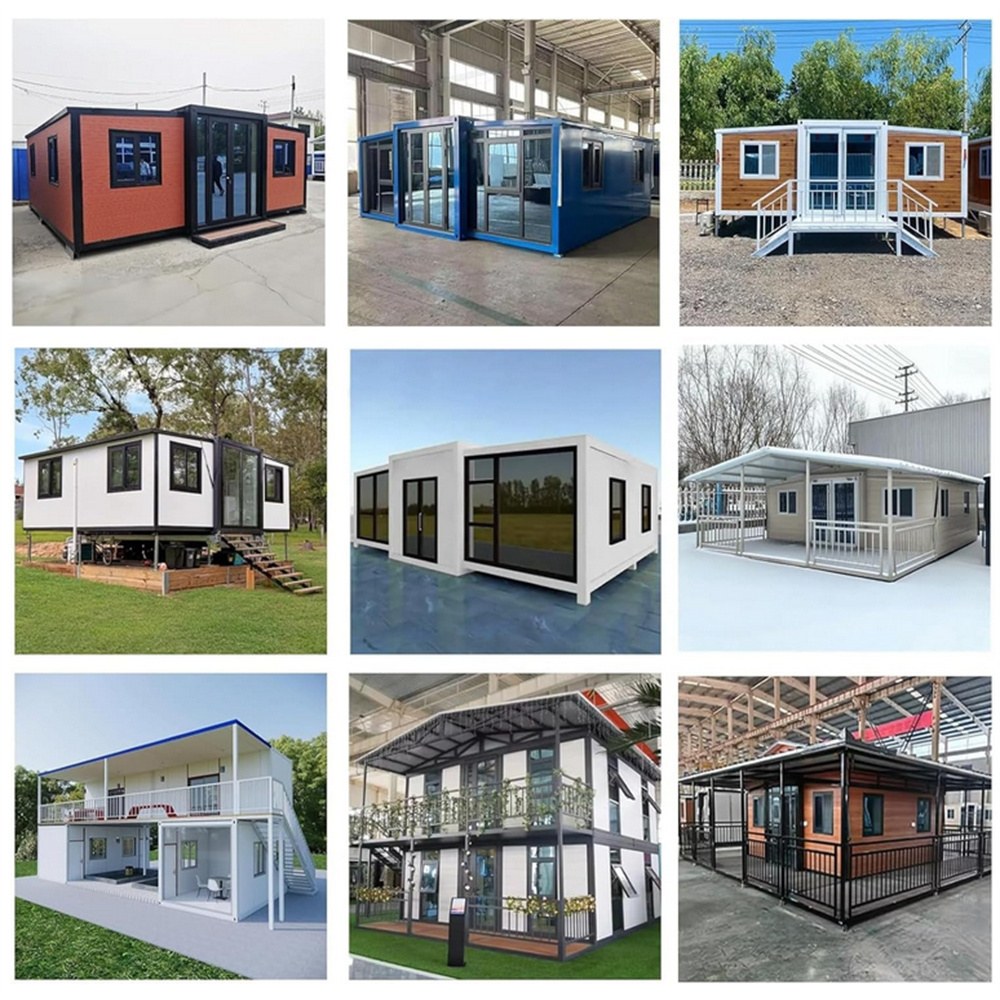
HG Prefab foldable expandable container homes — built to last, delivered worldwide.
Folding container houses have quietly become one of the most useful buildings a working beekeeper can add to an apiary. They arrive flat-packed, unfold into a clean rectangular room with a welded steel frame, insulated sandwich-panel walls and factory-routed electrical conduit, and they cost a fraction of a stick-built honey house. Whether you keep twenty hives behind an orchard fence or move two hundred colonies between pollination contracts, a 20FT, 30FT or 40FT expandable container house gives you a sealed, lockable, climate-controlled base for extracting honey, storing comb and frames, and running the office side of the business within a few steps of the hives.
This guide walks through every decision we see commercial beekeepers, smallholder farmers and pollinator-support businesses make when they convert one of our units into a honey house and apiary shelter: extraction-room workflow, sealed equipment storage, honey-storage climate, ventilation and bee escape strategy, solar power for remote sites, and floor plans for each container size. If you are still choosing a footprint, our container home unit size guide covers dimensions and ceiling heights. For airflow principles, see container home ventilation; for remote sites, our off-grid water and solar power setup guides apply directly, and the agricultural storage guide covers bulk storage planning.
The economics are part of the appeal. A dedicated extraction building is usually the single largest capital cost after the bees themselves, and renting shared extraction space raises biosecurity questions that matter more every year. A folding container house ships as a single ISO container footprint, deploys in a day, and can later be folded flat and trucked to a new yard when a pollination contract or land lease changes. The same unit serves as a honey house during the flow, a sealed comb store over winter, and an apiary office all year.
Why a folding container house works as an apiary base
A honey house has a short list of demands: a floor you can hose down after a sticky extraction day, walls that clean up between seasons, an envelope that keeps rodents, wax moths and small hive beetles away from stored comb, enough power for an extractor motor and a dehumidifier, and a door that locks. A folding container house meets every one of them, and it does so in a building that ships flat-packed to rural sites that conventional contractors rarely serve economically.
The structural advantages
Our frames are welded Q235B steel with a 2.5 mm wall thickness, hot-dip galvanized and powder-coated. The walls are 50 mm EPS or rock-wool sandwich panels, factory-cut with electrical conduit pre-routed through the columns. For a beekeeper, the numbers that matter are these:
- Interior ceiling height: 2.4 m on standard units — enough clearance for a 6-frame extractor on a stand, a raised settling tank and its bottom gate valve.
- Floor load: 250 kg/m² live load. Honey is dense — a full 200 L settling tank weighs around 280 kg — and the welded chassis carries it without complaint.
- Sealed envelope: closed-edge sandwich panels leave no gaps for mice, shrews or beetle larvae around stored comb.
- Electrical prep: conduit and a breaker panel are factory-installed, so adding extractor, dehumidifier and lighting circuits is a bolt-on job.
Biosecurity: sealed steel versus open wooden sheds
Biosecurity is where a steel honey house earns its keep. American and European foulbrood spores survive for decades on wooden equipment, and shared or open extraction spaces are classic transfer points for disease between apiaries. A container honey house can be washed down and disinfected at the end of each flow; the smooth panel faces have none of the crevices where wax debris and spores accumulate in a plank shed. The sealed door and screened vents mean drifting bees cannot rob spilled honey inside the room, and rodents cannot nest in your spare supers. Compared with the open-sided wooden sheds many beekeepers start with, the sealed steel envelope simply removes most of the paths by which pests and pathogens reach your equipment.
Apiary floor plans: 20FT, 30FT and 40FT compared
Picking the right size is the biggest decision, and it comes down to how many colonies you run and whether you bottle on site. All three sizes share the same steel frame system and fold flat for shipping; the difference is how much workflow fits inside.
20FT — extract and store
The 20FT unfolds to roughly 13 m²: an uncapping bench along one end wall, a 4-frame extractor in the corner beside it, and a 100 L settling tank on a low stand feeding a bench-level bottling table. The opposite wall holds rack storage for up to twenty supers plus suits, smokers and hand tools. This is the right size for a sideline beekeeper running 20–40 hives on a two-week extraction cycle through the main flow.
30FT — extract, bottle and cold room
The 30FT gives about 20 m², enough for a three-zone layout: an extraction bay, a settling and bottling bay, and an insulated cold-room partition — a small split system holding 10–14 °C for comb honey, pollen and crystallization control. A wash-up area with a deep sink and hot water sits between the zones. Operations running 40–80 hives, or beekeepers who sell bottled honey and need a clean bottling line, fit here.
40FT — full migratory base
The 40FT unfolds to about 27 m² and works as a complete migratory operations base: an extraction bay sized for a 12-frame motorized extractor, a double settling-tank and bottling line, a cold room, a lockable equipment store, and an office corner for pollination contracts and hive records. Operations moving 80–150 colonies between sites typically run one 40FT as the home-yard base and fold-ship it when a long-term contract justifies the move.
The table below compares the three sizes across the apiary metrics beekeepers ask about most: footprint, colony load, extractor fit, settling tank capacity, solar roof space and foundation.
| Spec / Apiary Use Case | 20FT (6 m) | 30FT (9 m) | 40FT (12 m) |
|---|---|---|---|
| Footprint (unfolded) | ~13 m² | ~20 m² | ~27 m² |
| Max hives supported | 20–40 | 40–80 | 80–150 |
| Extractor fit | 2–4 frame manual radial | 4–8 frame motorized radial | 12–24 frame motorized |
| Settling tank volume | 1 × 100 L | 2 × 200 L | 2 × 300 L + bottling day tank |
| Solar array fit (roof-mount) | 2–3 kW | 3–4 kW | 5–6 kW |
| Foundation | 6 concrete piers or gravel pad | 8 piers or 100 mm slab | 12 piers or reinforced slab |
| Typical role | Extract + store | Extract + bottle + cold room | Full migratory base |
| FOB price range | $7,200–$9,800 | $10,500–$14,500 | $12,500–$16,500 |
FOB pricing for the standard foldable expandable configuration — EPS sandwich panels, PVC interior finish, one pre-hung door, factory electrical prep and standard window openings — runs $7,200–$9,800 for the 20FT, $10,500–$14,500 for the 30FT and $12,500–$16,500 for the 40FT. Budget separately for extraction equipment, the cold-room split system and any solar package. For an overview of every model, see our full product catalog.
The honey extraction room: workflow and equipment
Uncapping and extraction
Extraction is a linear workflow, and the room should be laid out in the same direction the honey moves. Supers come in one door and go straight onto a rack; frames are uncapped on a heated bench over an uncapping tank, using an electric knife or an uncapping fork for stubborn corners; the same frames drop into a radial extractor, where the motor spins the honey out of both faces at once; and the honey drains through a coarse and fine strainer into the settling tank. Warm rooms extract faster — honey at 30–35 °C flows several times more freely than honey at 20 °C — so a small heater, or the dehumidifier's waste heat, is worth keeping in the bay on cool mornings.
Settling tanks and the bottling line
After straining, honey sits in the settling tank for 24–48 hours so wax particles and trapped air rise to the top. Bottling then runs from the tank's bottom gate valve through a heated bottler into jars. In the 30FT and 40FT layouts, the bottling bench sits on a 100 mm raised platform so gravity does all the work and the gate valve never needs a pump.
Core equipment checklist
A container honey house does not need much equipment, but every item below earns its floor space:
- Extractor — a 2–4 frame manual unit in the 20FT; a 6–12 frame motorized radial unit in the 30FT and 40FT.
- Settling tank — food-grade stainless, 100–300 L depending on layout, with a cone bottom and gate valve.
- Heated uncapping tank and electric knife — keeps cappings melting while you work.
- Refractometer — check every batch; honey above about 18.6% moisture risks fermentation in the jar.
- Dehumidifier — holds the room inside the storage humidity band.
- Smoker and hive tool — the daily drivers; keep spares in the sealed store.
- Wash-down kit — food-grade hose, squeegee and a wet-vac for the floor.
Climate control and ventilation for a honey house
Temperature and humidity targets
Honey is hygroscopic — it pulls moisture from the air — so the storage room's climate matters as much as the jars' seals. The target band is 18–22 °C at 55–60% relative humidity. Colder than about 10–14 °C and honey crystallizes fast; hotter than about 25 °C and it darkens, delicate aromatics fade and hydroxymethylfurfural (HMF) levels climb; damper air than the band and the surface of stored honey or comb slowly picks up moisture toward the fermentation threshold. The 50 mm insulated panels plus a small mini-split hold the temperature band through most climates, and a 20–30 L/day dehumidifier on a hygrostat covers the humidity side in all but the wettest coastal yards. Mount a data-logging thermo-hygrometer at honey height — not on the ceiling, where stratified warm air flatters the reading — and check each batch with the refractometer before bottling.
Colony-grade airflow
A honey house needs controllable airflow, but every opening is a potential bee entrance unless you treat it that way. During extraction, an inline extract fan over the uncapping bench removes steam and warm sticky air; during storage months the room stays closed. All vents and the exhaust inlet should be backed with 3 mm stainless mesh — fine enough to exclude worker bees and drones — and the fan should be interlocked so it cannot run with the intake uncovered. Point the exhaust away from hive entrances and the yard's main flight path; bees investigate any honey-scented airflow within minutes.
Keeping bees out of the honey room
Bee escape boards are the quiet tool that makes this work. Place a one-way escape board under each super 24–48 hours before you pull it, and the foragers walk down to the brood nest but cannot return up. The result is a nearly bee-free super at harvest, which means almost no flying bees follow the crate into the honey house. Inside, the container's single controlled door, a dark vestibule and a screened window with an outward one-way cone give any stray forager a bright exit path. Extracting in the late afternoon, when foragers are home, keeps the room calm.
Equipment storage, pest control and the apiary office
Sealed storage against beetles, moths and mice
Stored comb is the asset most worth protecting. Small hive beetle larvae tunnel through capped comb and leave it slime-fouled; greater and lesser wax moth larvae destroy empty frames in a single summer; mice shred comb for nesting. Sealed steel storage changes the math: supers and boxes stacked inside a closed container are physically excluded from adult moths and beetles looking for an egg-laying site, and from rodents entirely. Beekeepers in beetle territory add a screened bottom shelf and a diatomaceous-earth tray under the stack; those in moth territory freeze drawn comb for 24 hours at −18 °C before it goes into storage. Varroa control happens in the hives themselves, but sealed storage keeps treated equipment from being reinfested through contact with drifting bees and shared comb.
The apiary office and break room
The 30FT and 40FT layouts include a small office corner that earns its keep year-round: a desk for pollination contracts and hive records, a laptop for mapping forage and yard plans, a kettle and fridge, and a first-aid kit stocked for sting response. On remote sites the same corner hosts the solar controller and monitoring display. Beekeeping is hot, heavy, seasonal work — a shaded place to sit with water within reach is how you keep careful people making careful decisions at the end of a long day.
Site placement, solar power and off-grid operation
Bee-friendly siting
Where the container sits affects both the bees and the workflow. Three rules cover most yards:
- Face the long side and the hive rows toward the morning sun. Early light gets foragers flying sooner and warms the honey house after cold nights; in hot climates, shade the west face instead.
- Keep a reliable water source within 100 m of the hives — a trough with floating straw or a dripper over gravel. Bees collect water for brood rearing and hive cooling, and if the nearest source is a neighbor's swimming pool, they will find it.
- Break the prevailing wind with a hedge, fence line or stacked round bales on the windward side. Winter winds chill clusters and drive drifting bees away from their own hives.
Off-grid solar operation
Most good apiary sites are exactly where the power grid is not. The good news is that a honey house is a modest electrical load: an extractor motor draws 370–550 W for a few hours on extraction days, a dehumidifier about 300 W around the clock in season, lighting is LED-trivial, and the mini-split is the only heavy item. A 2–3 kW roof-mounted array with a 5 kWh lithium bank runs a 20FT honey house through a normal season; the 30FT and 40FT with cold rooms call for 4–6 kW or a small generator for cloudy extraction weeks. Mount the panels on the container roof with the frame's lifting points left clear, and plan conduit from the roof to the breaker panel during the factory electrical prep.
Migratory beekeeping, delivery and assembly
Truck-mounted handling and forklift loading
Migratory operations live on logistics, and the folding container house is built for them. Folded, each unit occupies a single ISO container footprint, so one flatbed truck carries a 40FT unit plus the forklift that will place it. At the new yard, the forklift lifts the folded unit from the truck bed directly onto pier blocks — the corner castings accept standard lifting points — and the unit can be skid-mounted for frequent moves. Some operators keep a 20FT extraction unit semi-permanently on a trailer chassis, deploying it at each pollination stop while hives come and go around it.
Delivery, foundation and on-site setup
A crane or forklift is required to offload the folded unit from the truck. Once it is set in position, four workers can unfold and assemble the main structure in about 2 hours. Foundations stay simple: six concrete pier blocks at the corners and mid-span for a 20FT, eight for a 30FT, twelve or a 100 mm slab for a 40FT with a cold room, and a compacted gravel pad on geotextile for semi-temporary yards. Utility hookup — power to the panel, water to the wash-up sink — adds about half a day with a local electrician and plumber. For international buyers, the full logistics walkthrough including HS codes and customs paperwork is in our container home shipping guide.
Ready to spec a honey house in a folding container?
HG Prefab manufactures 20FT, 30FT and 40FT folding expandable container homes with factory-prepped electrical, insulation, and customizable window, door and partition placements — shipped flat-packed worldwide. Tell us your hive count, extraction workflow, climate zone and solar requirements; we will spec a unit, send you a layout drawing, and quote FOB.
Browse apiary-ready modelsFrequently Asked Questions
Can a folding container house really work as a honey house?
Yes. The unfolded interior is a clean rectangular room with a 2.4 m ceiling, a floor rated at 250 kg/m² — enough for a full 200 L settling tank — and sealed insulated walls you can wash down after extraction. A 20FT unit comfortably holds an uncapping bench, a 4-frame extractor, a 100 L settling tank and rack storage for around twenty supers, which is a complete honey house for a 20–40 hive sideline operation.
How many hives can one container honey house support?
As a rule of thumb, the 20FT suits 20–40 hives on a two-week extraction cycle, the 30FT with its bottling bay and cold room suits 40–80 hives, and the 40FT full migratory base handles 80–150 colonies. The real limits are your extractor size and how often you extract through the flow, not the building itself.
How do I keep bees out of the honey room during extraction?
Place bee escape boards under each super 24–48 hours before harvest so foragers walk down to the brood nest and cannot return; extract late in the afternoon when foragers are home; and rely on the container's single controlled door plus mesh-backed screened vents. A dark vestibule or a screened window with a one-way cone gives any stray bee a bright exit path without letting new ones in.
What temperature and humidity does stored honey need inside the container?
Aim for 18–22 °C at 55–60% relative humidity. Colder storage accelerates crystallization, warmer storage darkens honey and raises HMF, and humid air lets hygroscopic honey pick up moisture toward the fermentation threshold. A small mini-split plus a hygrostat-controlled dehumidifier holds the band, and a data-logging thermo-hygrometer verifies it.
Can I move the container between apiary sites for migratory beekeeping?
Yes. Folded, each unit occupies a single ISO container footprint that ships on a standard flatbed truck, and the corner castings accept forklift or crane handling at every stop. Many migratory beekeepers keep one 40FT base unit at the home yard and truck it to long-term pollination contracts, unfolding it at each stop with a four-person crew.