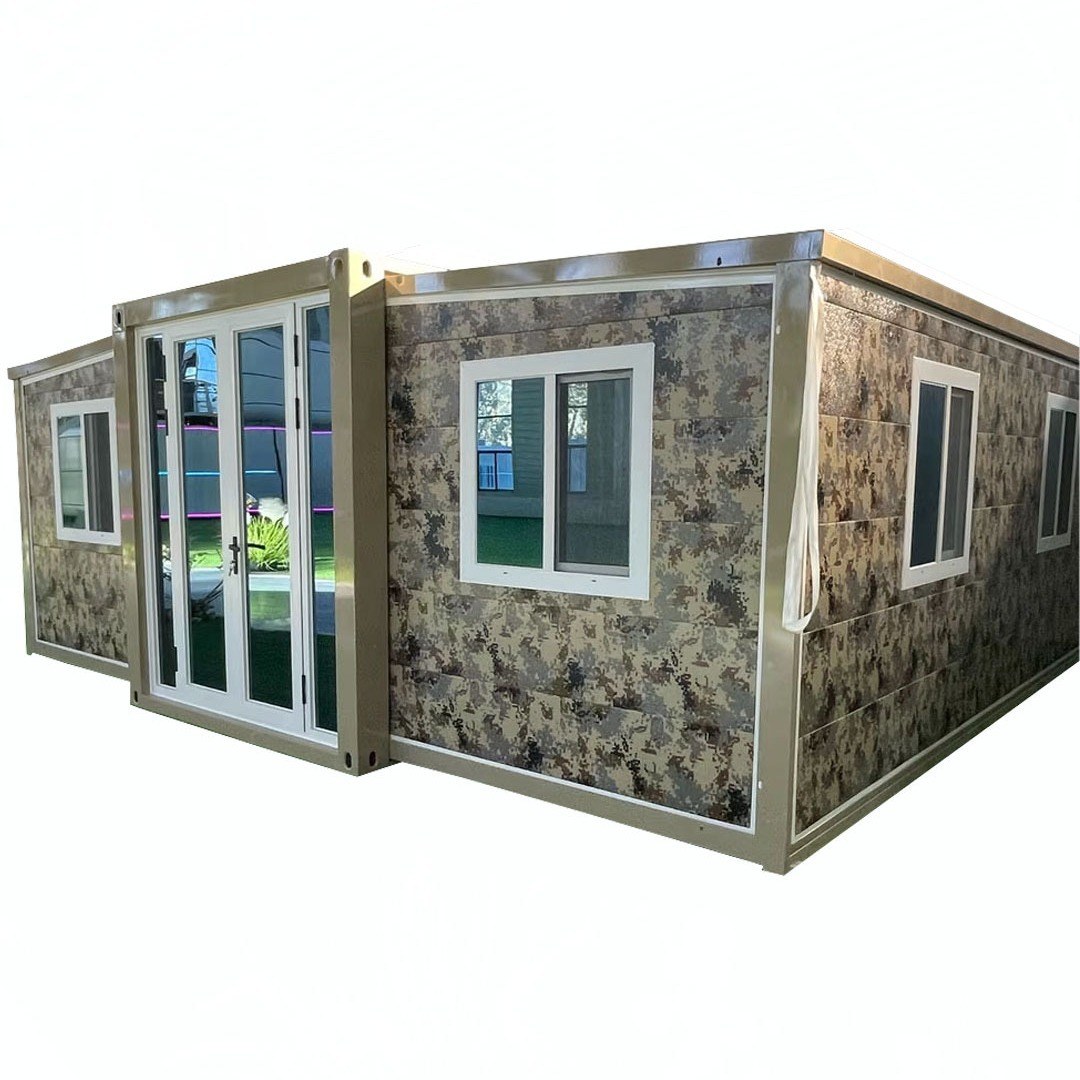
HG Prefab foldable expandable container homes — built to last, delivered worldwide.
The tiny house movement and the container home movement share a philosophy — live smaller, simpler, more efficiently. But they come from very different construction traditions. A tiny house on wheels (THOW) is built like a timber cabin on a trailer chassis. A folding container house is a steel-engineered structure that folds flat for shipping and expands on-site. If you are choosing between the two, the differences go far beyond aesthetics — they affect cost, durability, setup, zoning and long-term value.
Construction and Materials
The fundamental difference is in the building material:
| Factor | Folding Container House | Tiny House on Wheels |
|---|---|---|
| Primary structure | Welded steel frame (galvanized) | Timber frame on steel trailer |
| Wall material | 1.5–2.0 mm corrugated steel | Wood sheathing + siding |
| Insulation (standard) | Rock wool (A1 fire-rated) | Fiberglass or spray foam |
| Lifespan (estimated) | 25–30+ years | 10–15 years (trailer-dependent) |
| Weight (empty) | 1,800–3,500 kg | 2,500–5,000 kg |
| Floor area (deployed) | 14–38 m² | 15–28 m² |
Steel does not rot, warp, or attract termites. Timber does all three. However, steel requires rust prevention — a one-time factory treatment with anti-corrosive primer is standard. For a deeper comparison with traditional construction, see our container home vs traditional house analysis.
Cost Comparison
Cost is where the two diverge sharply. A THOW is typically built custom by a small workshop or DIY builder, with labor being the largest cost component. A folding container house is factory-produced at scale, which keeps costs competitive.
| Size | Folding Container House (FOB) | Tiny House on Wheels (comparable) |
|---|---|---|
| Small (~15 m²) | $7,200–$9,800 (20FT) | $25,000–$45,000 |
| Medium (~24 m²) | $10,500–$14,500 (30FT) | $35,000–$60,000 |
| Large (~38 m²) | $12,500–$16,500 (40FT) | $45,000–$80,000 |
Note: container house prices are FOB China. Add shipping, import duties and site preparation. Even with these costs, the total is typically 40–60% lower than a comparable THOW. For a full cost breakdown, see our folding container home cost guide.
Setup and Mobility
Transportation
Both are designed to be moved, but in very different ways:
- THOW — towed behind a heavy-duty truck. Maximum legal width is 2.44 m (8 ft) in most jurisdictions. Requires a vehicle with sufficient towing capacity (5,000+ kg). Can be moved by the owner if they have the right vehicle.
- Folding container house — shipped flat in a standard container truck. Once on-site, a crane or forklift is required to offload the folded unit from the truck. After placement, four workers unfold and assemble the main structure in about 2 hours. The unit is not designed to be towed regularly — it is semi-permanent.
Setup Time
A THOW arrives fully assembled — you level it, connect utilities and move in. A folding container house arrives flat-packed and requires assembly, but the process is fast: about 2 hours for the main structure, plus time for utility connections and interior finishing.
Space and Comfort
When folded, a container house is compact. When expanded, it opens up significantly. A 40FT unit deployed provides up to 38 m² — substantially more than most THOWs, which are constrained by road-legal width limits.
Ceiling height is another factor. THOWs typically have a maximum interior height of 3.3–3.5 m (constrained by total transport height). Folding container houses have a standard interior height of 2.5 m — adequate but lower. For those seeking more headroom, a two-story container home is an option that THOWs cannot match.
Zoning and Legal Status
This is where the two paths diverge most:
- THOW — In many jurisdictions, a THOW on a registered trailer is classified as an RV (recreational vehicle), not a dwelling. This means it can be parked in RV parks, on private land with RV permits, or in backyards under accessory dwelling unit (ADU) rules. However, full-time residential use may be restricted.
- Folding container house — Once deployed on a foundation and connected to utilities, it is typically treated as a permanent structure. This means it falls under residential building codes and may require permits. The upside: it is accepted as a permanent dwelling. The downside: more permitting requirements. See our permits and zoning guide for details.
Durability and Maintenance
Steel wins on durability. A well-maintained container house will last 25–30+ years with minimal structural degradation. A THOW, being timber, requires ongoing maintenance: re-sealing siding, treating for pests, checking the trailer chassis for rust, and replacing weathered roofing.
For maintenance planning, see our 10-year care checklist and lifespan analysis.
Which Is Right for You?
Choose a Tiny House on Wheels if:
- You need to move frequently (nomadic lifestyle, job relocations)
- You want to avoid building permits by classifying as an RV
- You value custom design control and are willing to pay for it
- You have access to a capable tow vehicle
Choose a Folding Container House if:
- You want a semi-permanent structure with lower total cost
- You need more space (20FT–40FT, up to 38 m²)
- You prioritize durability and fire resistance
- You are setting up multiple units (worker housing, Airbnb, clinic)
- You want factory-controlled quality at a competitive price