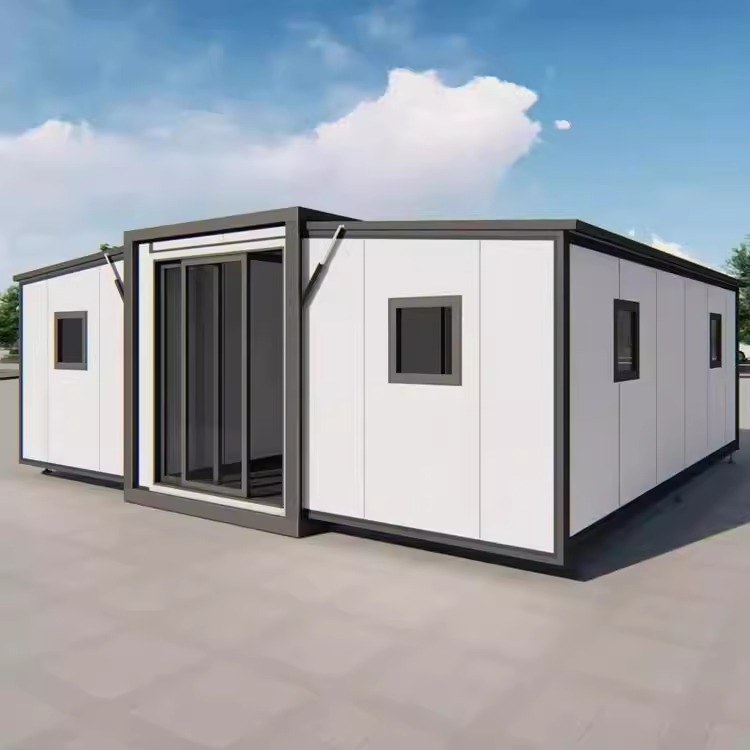
HG Prefab foldable expandable container houses — built to last, delivered worldwide.
The Philippines is one of the most attractive markets in Southeast Asia for a factory-built folding unit, and one of the least forgiving if you get the paperwork or the anchoring wrong. On the demand side, the country has a large and fast-moving tourism, resort and workforce-housing sector spread across more than seven thousand islands, where conventional construction is slow, expensive to mobilise and dependent on materials being ferried across water. On the compliance side, imports are cleared through a digital single-window customs system, value-added tax is charged on a landed base that already includes the duty, and a building has to be designed for wind speeds that have no equivalent in Europe or North America. A folding container home suits the physical part of that journey extremely well: it travels inside a standard ocean container envelope and opens into a finished, insulated shell in a single working morning. The paperwork and the anchoring still have to be right. This guide walks the sequence that works in practice — registration first, classification and duty simulation second, standards and permits third, then the port, the final mile and the crane. Wherever a figure needs confirming rather than assuming, it says so.
Why the Philippines Suits Folding Container Homes
Three features of the Philippine market make a factory-folded unit a rational purchase rather than a novelty:
- Island logistics reward anything that ships compactly. Every cubic metre delivered to a site in Palawan, Siargao or Bohol has usually crossed at least one body of water. A unit that folds flat for the voyage and needs no material yard, no batching plant and no wet trades on site removes most of that exposure from the programme.
- Resort, glamping and eco-tourism demand is year-round but capacity-constrained. Operators in the Visayas and Palawan frequently add rooms between seasons. A unit that is delivered, unfolded and fitted out inside a few weeks is capacity they can actually sell this year rather than next.
- Site offices, worker housing and disaster-response structures. Mining, infrastructure, agriculture and NGO programmes across the archipelago need durable, relocatable shelter that can be moved when the project moves. This is one of the most active use cases in the region.
Set against those advantages are two specific burdens: clearance requires the importer to be registered and accredited before a declaration can be filed at all, and the building itself has to be engineered for typhoon wind and coastal salt load. Both are manageable, but both must be settled before production starts rather than after the vessel sails. Buyers comparing markets should also read our guide on importing a folding container home to Brazil and the general Europe import guide.
Get Registered First: DTI, SEC, BIR, BOC and PSA Documents
Philippine imports are filed electronically, and the importer must exist in the system before the first entry is lodged. This is the step most first-time buyers underestimate.
Business buyers
A company importing for resale, rental or its own operations normally needs the following, in roughly this order: a business name registration with the Department of Trade and Industry (DTI) for sole proprietorships, or incorporation with the Securities and Exchange Commission (SEC) for partnerships and corporations; a Taxpayer Identification Number and Certificate of Registration from the Bureau of Internal Revenue (BIR), since customs entries cannot be filed without it; mayor's permit and barangay clearance from the local government unit where the business operates; and importer accreditation with the Bureau of Customs (BOC), completed through the BOC client registration process and the electronic customs system, with a licensed customs broker appointed to act on your behalf. Registration details and the current portal name change from time to time, so have your broker confirm the exact sequence for your entity type before you place the order.
Individual buyers and PSA-issued documents
PSA in Philippine paperwork means the Philippine Statistics Authority, which issues the civil registry documents — birth certificate, marriage certificate, and the certificate of no marriage record — that banks, land registries and some local government units ask for when an individual buyer registers a property, takes out a loan, or signs a long-term lease. These are ordered from PSA directly or through its appointment channels, and they are a recurring last-minute blocker: order them early if the purchase involves financing or land registration. Individual buyers who import a single unit for personal use still clear through BOC, and in practice still use a broker, because the entry is filed in the importer's registered name.
Documents to prepare before sailing
- Commercial invoice showing the AHTN code, incoterm, and freight and insurance separately — the customs value depends on it.
- Packing list with net and gross weights and the folded dimensions of the unit.
- Bill of lading, consigned to the registered importer, with details matching your BOC registration.
- Certificate of origin, and specifically a Form E if you intend to claim preferential treatment under the ASEAN–China Free Trade Area; without it the ordinary tariff rate applies.
- Wood packaging declaration for any dunnage, crating or pallets, treated and marked to the applicable ISPM standard.
- Technical file for the building official and the engineer: material certificates, insulation values, glazing data, coating specification and electrical test records.
Bureau of Customs Clearance: How It Runs
Classification under AHTN
The Philippines classifies imports under the ASEAN Harmonized Tariff Nomenclature (AHTN), whose first six digits follow the Harmonized System, and prefabricated buildings normally fall under heading 9406. The precise line your broker declares determines your duty rate, and it is not a formality: a mis-declared code is a liability that survives delivery and can be reassessed later. If your specification is unusual or straddles two headings, a binding classification ruling can be sought from the Tariff Commission before shipment — slower, but far cheaper than a post-clearance assessment. Invoice furniture, appliances and loose equipment on separate lines so they are not swept into the building classification.
Duties, VAT and charges
Two national imposts dominate the budget. Customs duty is assessed under the AHTN line, with the rate determined by the declared code and by whether a valid Form E is accepted for preferential treatment. Value-added tax at 12% is then assessed on a landed base that already includes the dutiable value plus the customs duty and other charges, so it compounds rather than stacks flat — the effective tax is meaningfully larger than 12% of the invoice. Philippine tariff schedules are periodically updated, so treat any rate quoted in a blog post, including this one, as a prompt to obtain a written simulation from your broker rather than as a final figure. On top of the national imposts come the local port and handling charges, which in the Philippines are a larger share of the total than many buyers expect.
Philippine Import Costs at a Glance
| Charge | Who sets it | Typical basis | Notes for buyers |
|---|---|---|---|
| Customs duty | Bureau of Customs, under the AHTN schedule | Percentage of dutiable value, per declared heading | Ask for the rate in writing for your exact line; Form E may reduce it |
| Value-added tax | Bureau of Internal Revenue | 12% on a base including duty and charges | Compounds on duty, so budget more than 12% of the invoice |
| Brokerage and processing | Licensed customs broker, BOC | Per entry, plus documentary and processing fees | Appoint the broker early; they file the electronic entry |
| Arrastre and wharfage | Terminal operator, Philippine Ports Authority | Per container or per gross tonne | Charged at both Manila and Cebu terminals; confirm who pays |
| Demurrage and detention | Shipping line and terminal | Per day after free time expires | The single most avoidable cost in the project |
| Inland haulage | Trucking operator | Per trip, by distance and road access | Island destinations may add a domestic sea leg and a second handling |
Read this as a checklist of what to ask your broker to price, not as a tariff. The only figures that should be treated as fixed are the ones in your written simulation.
Standards: BPS, PNS, the National Building Code and NSCP
BPS and the ICC system
The Bureau of Product Standards (BPS) sits under the DTI and administers Philippine National Standards (PNS) along with compulsory product certification schemes, including the Import Commodity Clearance (ICC) and the Philippine Standard (PS) mark. Those schemes apply to products inside their published coverage lists — electrical wiring devices, cables, certain appliances and other safety-critical goods — and a complete prefabricated building is not automatically inside them. The practical risk is therefore the components, not the shell. Confirm the current coverage list with BPS or your broker before ordering, and decide at specification stage whether electrical fittings ship from the factory or are completed locally.
Structural: the National Structural Code of the Philippines
Wind governs this design, not weight. Philippine structural design follows the National Structural Code of the Philippines (NSCP), whose wind provisions are based on the American load standard, and your Philippine structural engineer extracts the design wind speed for your site from the current NSCP wind map. Those speeds are far above anything used in temperate markets, and the governing failure mode for a light steel building is uplift: wind getting under the roof and peeling the envelope off the frame, not the frame buckling under gravity. That is why the anchoring calculation, not the wall thickness, decides whether a unit survives a storm.
Building permit and electrical code
Installation is a local matter under the National Building Code of the Philippines and its implementing rules, administered by the Office of the Building Official (OBO) of the city or municipality. Permits require plans signed by Philippine-licensed professionals, and coastal municipalities frequently add setback, height and environmental rules that override a rural expectation. Electrical work follows the Philippine Electrical Code, applied by a licensed electrician, with inspection before energisation. Get the OBO's position in writing before ordering, because the specification follows from it.
Typhoon-Ready Design Considerations
The Philippines sits in a typhoon belt, and PAGASA operates the public storm warning signal system that governs what happens on a site when a system approaches. A folding unit is a light steel-framed structure with a large roof area, which is exactly the geometry that wind uplift attacks. The measures below are the ones that matter, and all of them are engineering decisions rather than accessories.
Anchoring and wind uplift
- Design the foundation from the wind calculation. Cast-in anchors or a properly engineered slab, sized for uplift and overturning at your site's NSCP wind speed, with hold-downs at the specified spacing.
- Keep roof and wall panel fixings to the engineered spacing. Uplift failures start at a single missed fastener and propagate along a seam. Spacing is not a suggestion.
- Add a wind-rated entry door and protected glazing. Once the envelope is breached, internal pressure does the rest of the damage. Laminated glass or shutters are cheap relative to the alternative.
Driving rain, drainage and flooding
- Seal every penetration. Typhoon rain is driven horizontally. Service entries, roof penetrations and panel joints need sealed, mechanically fixed details rather than sealant alone.
- Raise above standing water. A plinth or pier foundation that lifts the floor above local flood levels costs little at build time and is nearly impossible to retrofit.
- Plan the water path. Gutters, downpipes and site drainage sized for tropical downpours, discharging away from the foundation, not onto it.
Coastal corrosion, heat and humidity
Most Philippine demand sits on or near the coast, and salt-laden humid air is the most aggressive environment a steel-framed building can sit in. Specify a marine-grade coating system and ask the factory for the full specification — surface preparation, primer type, dry film thickness and topcoat — rather than accepting the word "painted". Protect the cut edges, weld seams, fastener penetrations and the underside of the frame, which is where corrosion starts and is never seen. Pair it with insulated sandwich panels and thermal breaks at the steel frame to stop condensation on internal steel faces, and plan a rinse-and-inspect regime. Full detail is in our guides to rust and corrosion protection and tropical and humid climates.
Sea Freight to Manila and Cebu
Port of Manila
The Port of Manila, split between Manila South Harbor and the Manila North Harbour terminals, is the country's principal container gateway and the natural choice for Metro Manila, Batangas, Laguna, Pampanga, Bulacan and the rest of Luzon. It carries the densest coverage of short-sea services from South China, so sailings are frequent and transshipment is usually avoided. Its drawback is the Metro Manila road network: truck access is subject to city traffic restrictions and terminal queuing, so inland delivery windows should be planned conservatively.
Port of Cebu
The Port of Cebu is the main gateway for the Visayas and a sensible choice for Cebu, Bohol, Negros, Leyte and northern Mindanao. Discharging there removes an inter-island domestic leg and a second round of handling, which usually outweighs the higher ocean rate. Services are fewer and often routed via transshipment, so transit is longer — compare the two routings with the inland leg included and let the total decide.
40ft HC compatibility and loading
This is where a folding unit earns its keep. A 20FT, 30FT or 40FT folding model ships folded, so the whole shipment fits within the standard 40ft High Cube envelope rather than occupying an out-of-gauge or flat-rack slot. Practically, that means: standard container handling at both ends, no special equipment surcharge for unusual dimensions, and a straightforward booking on ordinary services. Confirm with the factory the folded dimensions, gross weight, centre of gravity and lifting points, and have them specified in writing before booking, because the terminal and the crane operator both work from those numbers. Ask also for internal securing, dunnage and moisture protection appropriate to a humid tropical voyage: desiccant, breathable wrapping and no direct contact between dissimilar metals.
Final-mile planning
The last few kilometres are where Philippine deliveries fail. Before dispatch, check access width, height and surface on approach roads, barangay lanes, gateways and under any overhead lines; ground bearing for the delivery truck and for the crane or forklift outriggers, since tropical downpours soften unpaved ground quickly; turning space on narrow island roads and steep resort tracks; and local timing restrictions on truck movements. Prepare the base, arrange the machine, and book the crew before the truck leaves the terminal.
Offload and assembly
Offloading is a plant operation and must be planned as one. Yes — a crane or forklift is required to offload the folded unit from the truck. Once it is set in position, four workers can unfold and assemble the main structure in about 2 hours. Keep the delivery crew on site through the opening so the unit is weathertight the same day it arrives — an afternoon squall on an unsealed unit does damage that no coating will undo.
Delivery Timeline
Order the sequence backwards from your target opening date. The ocean leg to the Philippines is one of the shortest from China, but it is only one of five stages:
- Factory production and specification freeze. Runs from the point the drawings, coating system, electrical plan and layout are agreed — which is why the specification decisions above belong at the front of the project.
- Inland haul to the Chinese port, export customs and loading. Usually the shortest stage, but sensitive to sailing schedules and cut-off dates.
- Ocean transit. Short-sea services to Manila are commonly measured in days; Cebu is usually longer because of transshipment. Confirm the actual transit with the carrier for your sailing.
- Terminal handling, clearance and release. The most variable stage, and the one that depends entirely on whether your registration, classification and documents were right.
- Inland haul, offload and opening. Half a day on site if the base and the machine are ready; several days if they are not.
Landed Cost Budget
HG Prefab factory prices for the folding unit itself are 20FT $7,200–$9,800; 30FT $10,500–$14,500; 40FT $12,500–$16,500, ex-works, before freight and Philippine compliance — a starting point rather than the landed cost. The table below converts it into an illustrative landed estimate per size. Every freight, duty and charge figure is an estimate for budgeting and must be replaced by a written simulation from your customs broker for your AHTN line, your port and your delivery address.
| Unit size | Unit price | Ocean freight (estimate) | Duty + 12% VAT (estimate) | Port, clearance & inland (estimate) | Landed estimate |
|---|---|---|---|---|---|
| 20FT | $7,200–$9,800 | $900–$1,800 | $1,600–$2,800 | $1,200–$2,200 | $10,900–$16,600 |
| 30FT | $10,500–$14,500 | $1,200–$2,400 | $2,300–$4,100 | $1,600–$3,000 | $15,600–$24,000 |
| 40FT | $12,500–$16,500 | $1,400–$2,800 | $2,800–$4,700 | $1,800–$3,400 | $18,500–$27,400 |
Read every column as a range, not a quote. Ocean freight moves with the market and with the service; the duty and VAT column assumes a mid-range AHTN duty rate plus 12% VAT on the landed base, and will fall if a valid ACFTA Form E is accepted or rise if the declared line carries a higher rate; and the port column bundles arrastre, wharfage, processing, brokerage and inland haulage, which vary by terminal and by distance. The landed estimate excludes site works, foundations and anchoring engineered to the NSCP wind speed, service connections, crane hire, engineer and OBO permit fees, and any inter-island domestic leg, all of which are local. Larger layouts such as the 30FT folding expandable model spread fixed clearance and freight costs across more floor area, which is why cost per square metre improves as size increases.
What to Agree With Your Supplier
The difference between a smooth Philippine import and a difficult one is usually decided before production starts. Agree the following with the factory in writing: the declared AHTN position and the documentation that supports it, including the Form E; the marine-grade coating specification, covering surface preparation, primer, film thickness and topcoat, with extra protection at cut edges, welds and fasteners; the tropical package, meaning insulation, thermal breaks at the steel frame, glazing and cross-ventilation; the typhoon anchoring package, meaning hold-down points and fixing spacing supplied to your engineer's calculation rather than guessed on site; the electrical strategy, meaning Philippine Electrical Code practice with fittings either supplied to suit or left ready for a Philippine-licensed electrician to complete; the shipping configuration, including folded dimensions, weight, lifting points, internal securing and moisture protection; and after-sales support, covering spare seals, panels, fixings and a named technical contact during installation.
Payment structure, production milestones and inspection arrangements are covered in our container home ordering and payment guide, the freight mechanics in our container home shipping and customs guide, and the full model range — including the 20FT, 30FT and 40FT platforms — is on the products page.
Planning a Philippine import?
HG Prefab, manufactured by Henan Huangang Machinery Equipment Co., Ltd., builds 20FT, 30FT and 40FT folding expandable container houses with marine-grade anti-corrosion packages, tropical insulation, typhoon anchoring provisions to your engineer's NSCP calculation, and 40ft HC sea-freight preparation for Manila and Cebu. Send your delivery address, intended use and target date for a landed-cost estimate. Email hgmechequip@gmail.com or WhatsApp +86 191 0388 7380. Full model range on the products page.
Browse modelsFrequently Asked Questions
What duties and taxes apply when importing a folding container home into the Philippines?
Two main national imposts apply. First, customs duty under the ASEAN Harmonized Tariff Nomenclature (AHTN) heading 9406 for prefabricated buildings, whose rate depends on the exact eight- to ten-digit line your broker declares and on whether an ASEAN-China Free Trade Area (ACFTA) Form E certificate of origin is accepted for preferential treatment; ask your broker to confirm the current line and rate in writing, because Philippine tariff schedules are updated. Second, value-added tax at 12 percent, computed on the landed cost base that includes the dutiable value plus customs duties and other charges. On top of these come port and clearance charges: arrastre and wharfage, terminal handling, customs processing and documentary stamps, brokerage fees, container deposit and any demurrage or detention if the box sits unpaid. Budget all of these as ranges, not as quotes.
Do I need BPS certification or an ICC sticker for a folding container house?
The Bureau of Product Standards (BPS) under the Department of Trade and Industry runs compulsory certification only for products inside its published ICC and PS coverage lists, such as certain electrical wiring devices, cables, appliances and safety-critical consumer goods. A complete prefabricated building is not automatically inside that list, but components shipped inside it can be. Practical rule: confirm the current coverage list with BPS or your broker before ordering, and decide at specification stage whether electrical fittings ship from the factory to Philippine Electrical Code practice or are completed locally by a Philippine-licensed electrician. Where regulated items are included, the importer normally registers with BPS and secures Import Commodity Clearance per shipment.
Which Philippine port should I ship to, Manila or Cebu?
Ship to Manila when your site is in Luzon, including Metro Manila, Batangas, Pampanga, Bulacan and the northern provinces: the Port of Manila, with its North Harbour and South Harbor terminals, carries the densest short-sea coverage from South China and the widest choice of trucking operators. Ship to Cebu when the site is in the Visayas or northern Mindanao, because a Cebu discharge removes a domestic inter-island leg and a second round of handling. Cebu often arrives via transshipment, so compare the two routings with inland delivery included rather than comparing ocean rates alone.
Is a crane or forklift required to offload the unit?
Yes — a crane or forklift is required to offload the folded unit from the truck. Once it is set in position, four workers can unfold and assemble the main structure in about 2 hours. Prepare the base first, confirm the machine has adequate reach and ground bearing for its outriggers, and keep the crew on site through the opening so the unit is weathertight the same day it arrives — an afternoon squall on an unsealed unit does damage no coating will undo.
How does typhoon exposure change the specification?
Wind, not weight, governs the design. Your Philippine structural engineer extracts the design wind speed for your site from the current National Structural Code of the Philippines wind map, which is far higher than anything used in temperate markets, then sizes the anchoring and hold-downs for uplift rather than for gravity alone. Specify the foundation to that calculation rather than improvising on site, keep roof and wall panel fixings to the engineered spacing, use laminated or shutter-protected glazing, seal every penetration against driving rain, and add a marine-grade coating system with sacrificial thickness at cut edges, weld seams and fastener penetrations for salt-laden coastal air.